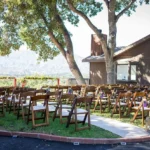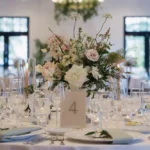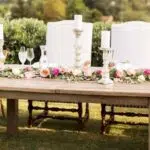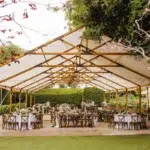

For a fall wedding, the venue should therefore come first. Existing furniture, architecture, outdoor areas, access points, service spaces, and the way guests will move through the property should all influence the rental plan. Ventura Rental Party & Events works across a variety of Santa Barbara venues, including Carousel House, Tuscan Hills Estate, Santa Barbara Club, Simpson House Inn, Dos Pueblos Orchid Farm, Santa Barbara Historical Museum, and other local properties. That range illustrates why the same rental formula does not work for every wedding.
Read the Venue Before You Build the Rental List
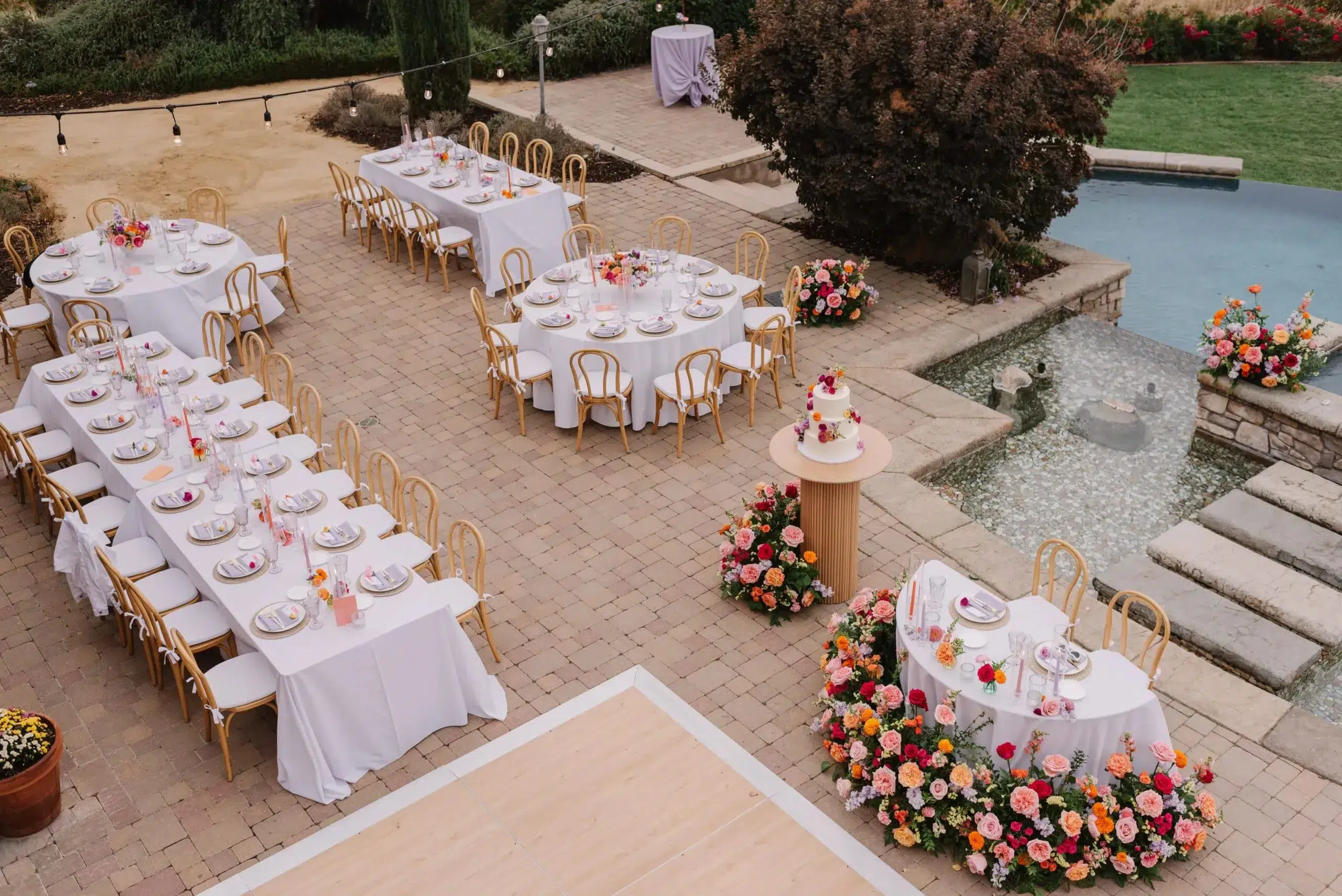
Before choosing chairs, tables, linens, bars, or decorative pieces, determine what the venue already gives you. Some properties provide strong architectural character and defined event spaces, while others offer an open setting that needs furniture and rentals to establish how the wedding will function.
Starting with the venue helps the rental plan fill genuine gaps instead of simply adding items that are common at weddings. The venue is one part of the broader planning process, and its requirements should be considered alongside the overall event format, guest experience, and major rental categories. A complete plan for fall private party rentals in Santa Barbara can help establish how furniture, tenting, lighting, tabletop pieces, catering equipment, and other elements work together before individual selections are finalized.
Separate What Is Already There From What Must Be Added
Begin by creating a simple inventory of the venue. Identify whether the property already has furniture, ceremony structures, dance space, covered areas, catering facilities, bars, or other useful event features. Also note which areas will be available exclusively for the wedding and whether any furniture shown during the venue tour is actually included.
Once those details are clear, create a second list of what still needs to be sourced. This makes it easier to distinguish foundational rentals from optional design pieces. A venue that already provides substantial furniture may only need supplemental items. A blank-canvas property may require the rental order to establish nearly every major event area.
Decide Which Areas Actually Need Transformation
Not every part of the venue needs the same level of design. A garden with mature landscaping may already provide a strong ceremony backdrop, while an open reception room may depend more heavily on tables, chairs, linens, or a dance floor to establish its identity. Likewise, a historic courtyard may need very little decorative intervention but still require carefully scaled furniture.
During the venue tour, ask what each space needs to become functional for your specific event rather than approaching the entire property with one decorating plan.
Let the Fall Timeline Influence the Starting Plan
A Santa Barbara venue can feel very different as a fall wedding moves from afternoon into evening.
Consider which areas will be used before sunset and which ones will remain active later. The ceremony may take advantage of an outdoor garden or coastal view, while dinner and dancing may shift to another part of the property.
Understanding that progression early helps determine where rentals need to stay in place throughout the event and where separate setups may be necessary.
Blank-Canvas Coastal Venues Put More Weight on the Rental Plan
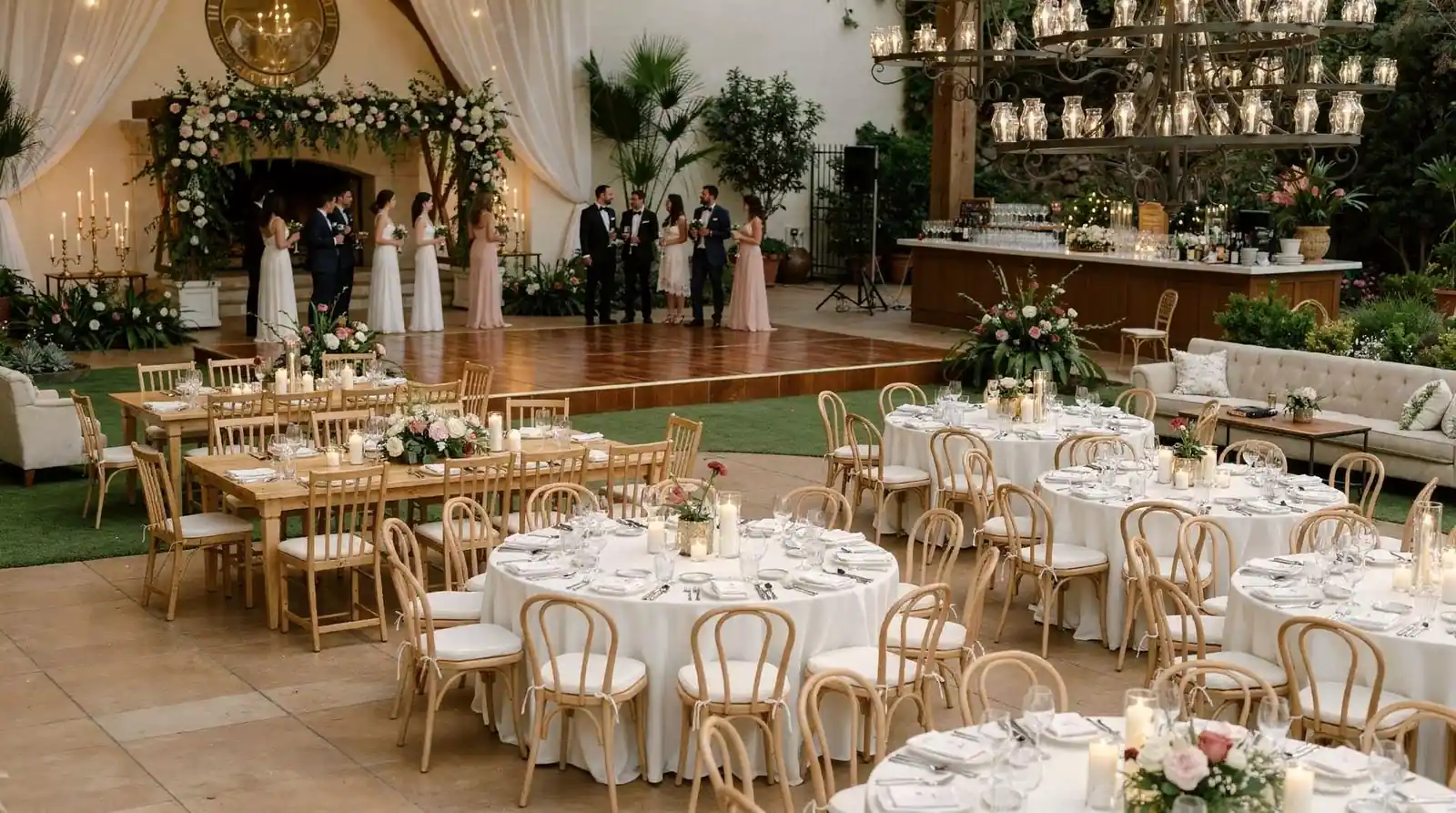
A relatively open coastal venue gives couples considerable design freedom, but it also places more responsibility on the rental plan. Furniture may need to define the ceremony, dining, cocktail, and reception areas rather than simply complementing spaces that are already furnished.
Carousel House is a useful Santa Barbara example. Its waterfront setting and connection to surrounding outdoor space allow couples to create an indoor-outdoor celebration, but the event plan needs to establish how each area will function.
Establish the Main Functions of the Space First
Before thinking about colors or chair styles, determine where the major activities will happen. Identify the ceremony location, cocktail area, dining space, dance area, and any service stations. Once those zones are established, the rental requirements become much easier to understand.
For couples using an outdoor area for the ceremony, the setup should also account for the sequence from guest arrival through the transition to cocktail hour. Planning an outdoor fall wedding ceremony in Santa Barbara involves coordinating seating, aisles, the ceremony focal point, surface conditions, access, lighting, and the route guests will take once the ceremony ends.
For example, an outdoor ceremony may only need seating and a small number of functional pieces, while the reception space may require dining tables, chairs, a dance floor, bar elements, and additional furnishings. The layout should determine the rental categories, not the other way around.
Use Furniture to Give Open Areas Definition
In an open venue, furniture performs both practical and spatial roles. A row of ceremony chairs establishes the focus of the ceremony. Dining tables organize the reception footprint. Lounge seating can distinguish a conversation area from a busier dance or bar zone. A bar can become a natural gathering point when its position is planned around the way guests enter and circulate.
The aim is to give each area a recognizable purpose without filling every open section of the venue.
Carry One Design Thread Between Outdoor and Indoor Areas
When a wedding moves between outdoor and indoor spaces, the furniture does not have to match exactly.
Instead, choose one or two elements that create continuity. This might be a consistent wood tone, similar chair silhouettes, a repeated neutral, or a tabletop detail that appears in both areas.
The ceremony and reception can then feel related without requiring identical setups.
Garden and Club Venues Reward a Lighter Rental Touch
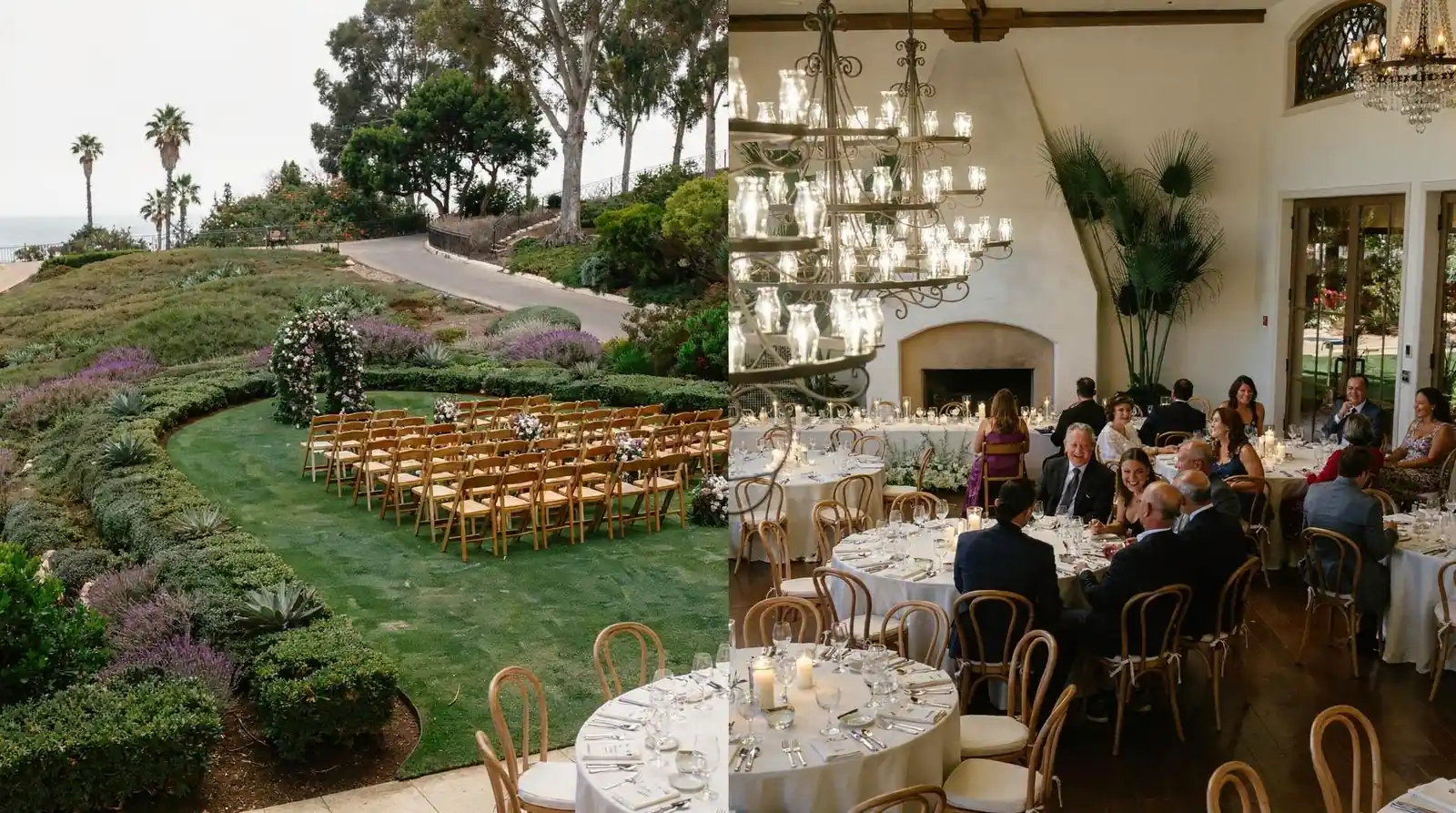
Established garden and club venues already contribute landscaping, architecture, and a clear sense of place. In these settings, the most successful rental plans often support what is present rather than trying to replace it with a separate theme.
Santa Barbara Club, Simpson House Inn, and Santa Barbara Women’s Club illustrate how existing surroundings can influence rental choices differently from a blank-canvas venue.
Let Existing Architecture Carry Part of the Design
Before adding decorative elements, identify the features that guests will already notice.
Gardens, mature trees, architectural details, courtyards, windows, fireplaces, and established interiors can all contribute visual interest. If those elements are already strong, furniture and linens can remain quieter.
This approach is particularly useful for fall weddings because seasonal character does not have to come entirely from obvious autumn colors. Natural wood, textured linens, warm neutrals, and understated tabletop details can complement the property without competing with it.
Choose Rentals According to the Actual Event Areas
A single venue may contain several environments. A ceremony could take place on a garden lawn, followed by cocktails on a patio and dinner inside a club or reception room. Each area performs a different function and may need a different amount of furnishing.
Rather than choosing one rental collection and repeating it everywhere, consider what works best in each location while maintaining enough visual consistency for the wedding to feel cohesive. Read more in How to Plan a Dream Wedding in Wine Country Santa Barbara.
Use the Setting to Guide the Level of Detail
Ventura Rental has documented a Santa Barbara Club wedding that used folding chairs for the garden ceremony, round reception tables, coordinated linen and tabletop pieces, and a defined dance floor for the evening celebration. For more detail, see our article Affordable Wedding Venues in Santa Barbara Revealed.
The useful lesson is not that every wedding at the property should use the same products. It is that the rentals were selected according to the role of each space. The garden needed practical ceremony seating, while dinner and dancing required more complete reception furnishings. We cover this further in Top Tips for Choosing Wine Country Wedding Rentals.
That venue-first approach can be applied to other garden and club settings as well.
Hillside Estates Make Access Part of the Rental Decision
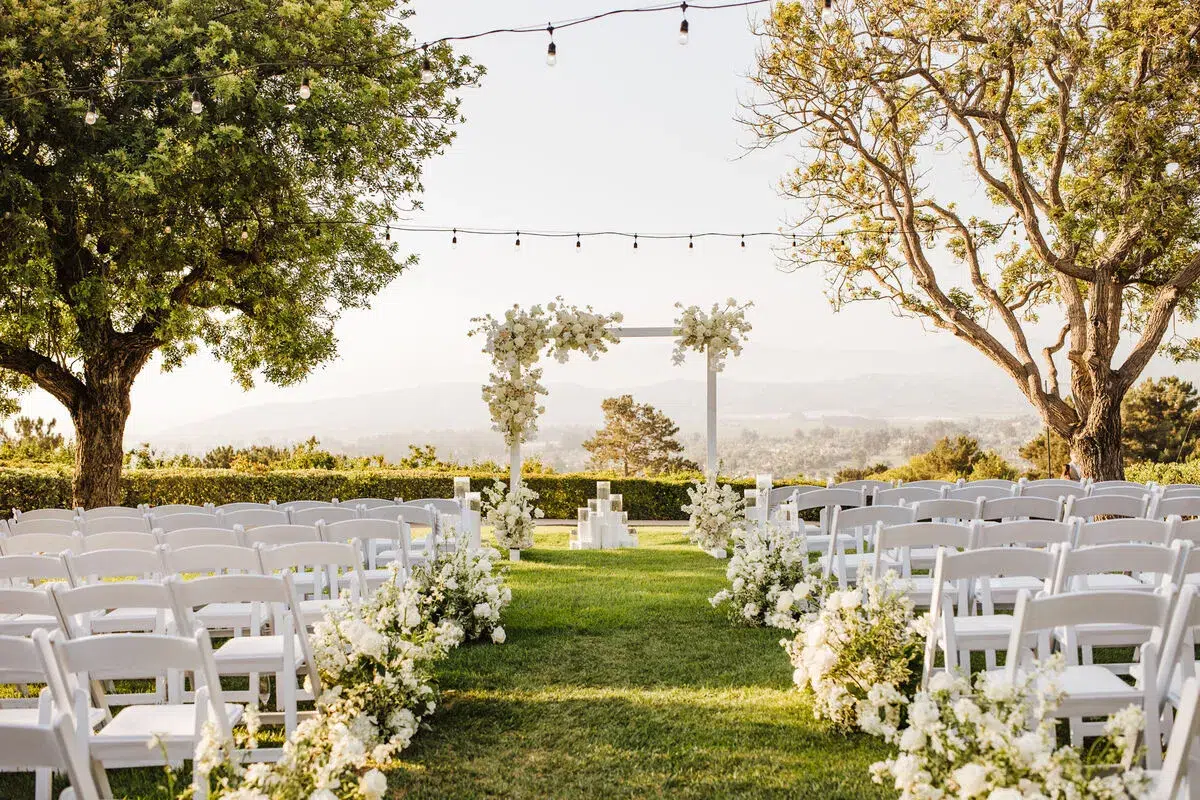
At a hillside or private-estate wedding, logistics can influence the rental plan before style is considered. Driveways, gates, changes in elevation, long carries, and separate event areas may all affect what can be delivered and how much installation time is required. You may also find Why Choose Santa Barbara for Your Outdoor Wedding helpful.
Couples comparing properties should also consider how much event infrastructure each venue already provides. Santa Barbara estate wedding venues for fall can differ substantially in included furniture, event spaces, catering infrastructure, vendor access, and outside rental requirements, so these details should be understood before the final rental order is built. Tuscan Hills Estate is one example of the hillside properties Ventura Rental serves in the Santa Barbara area.
Check the Delivery Route Before Finalizing Large Pieces
A venue tour should include the vendor route as well as the guest experience. Ask where rental trucks unload, how close vehicles can get to the ceremony and reception areas, and whether stairs, narrow gates, slopes, or long pathways separate the delivery point from the final setup.
This becomes particularly important when considering large or installation-heavy pieces. A rental may look ideal for the event but require additional planning if it needs to be transported across a difficult property.
Build the Order Around Separate Estate Zones
Large properties often spread the wedding across several areas. The ceremony, cocktail hour, reception, bar, and dancing may all take place in different parts of the estate. Review the rental order by location rather than simply by total quantity. We cover this further in Wedding Rental Walkthrough for Santa Barbara Venues.
For example, twenty cocktail tables are not especially useful as a planning figure unless the team also knows which event area receives them and when they need to be installed.
Thinking by zone reduces confusion during setup and helps prevent pieces from being repeatedly moved throughout the event.
Give Installation Time the Same Attention as Style
More complex properties often require more installation time. Before approving elaborate furniture arrangements, flooring, bars, or other substantial rentals, confirm when the venue allows vendors to enter and when installation must be complete.
A beautiful rental plan is only practical when the venue schedule gives the team enough time to execute it properly.
Greenhouse and Farm Properties Change the Role of Décor
Some venues already create such a distinctive visual environment that the rental plan can become more restrained. You may also find Santa Barbara Wedding Rental Checklist for Coastal Venues helpful.
Dos Pueblos Orchid Farm is one example. Its greenhouse and coastal surroundings provide texture, greenery, and a strong connection to the landscape before furniture or décor is added.
In settings like this, the goal should be to support the environment rather than layering an unrelated theme over it.
Treat the Setting as Part of the Tablescape
Look at the colors, textures, and materials already present around the dining area. A plant-filled greenhouse or garden may already provide enough visual complexity that the tables can remain comparatively simple. Neutral linens, natural finishes, understated glassware, or restrained tabletop accents may give the setting more room to stand out.
This approach can also prevent a fall wedding from becoming overly themed. Seasonal warmth can come through materials and smaller color accents rather than covering every surface in traditional autumn shades. You may also find Ideal Wedding Rental Booking Timeline in Santa Barbara helpful.
Prioritize Pieces Guests Will Actually Use
When the venue supplies much of the visual impact, direct more attention toward functional rentals. Dining furniture, tabletop pieces, bars, serving elements, and clearly defined gathering areas may contribute more to the guest experience than additional decorative layers.
Ask what each rental does for the event. If it improves comfort, service, flow, or the function of an area, it deserves consideration. If it only adds another decorative layer to an already distinctive setting, it may be unnecessary.
Check How the Space Changes After Sunset
A greenhouse, garden, or coastal property can have one character during the ceremony and another during the reception.
During the planning process, consider what the venue will look like when natural light fades. Furniture finishes, tabletop materials, and other rental details may read differently once the evening portion begins. For more detail, see our article What to Consider When Choosing a Santa Barbara Wedding Venue.
Evaluate the design for the full wedding timeline rather than judging it only from daytime venue photographs. Evening planning should also consider where guests may gather once dinner or formal activities begin to wind down. Where the venue permits them, fire pit rentals for outdoor Santa Barbara fall weddings can support a separate conversation area, but their location needs to be coordinated with surrounding seating, circulation, venue requirements, and the rest of the reception layout.
Historic Venues Need Rentals That Respect the Space
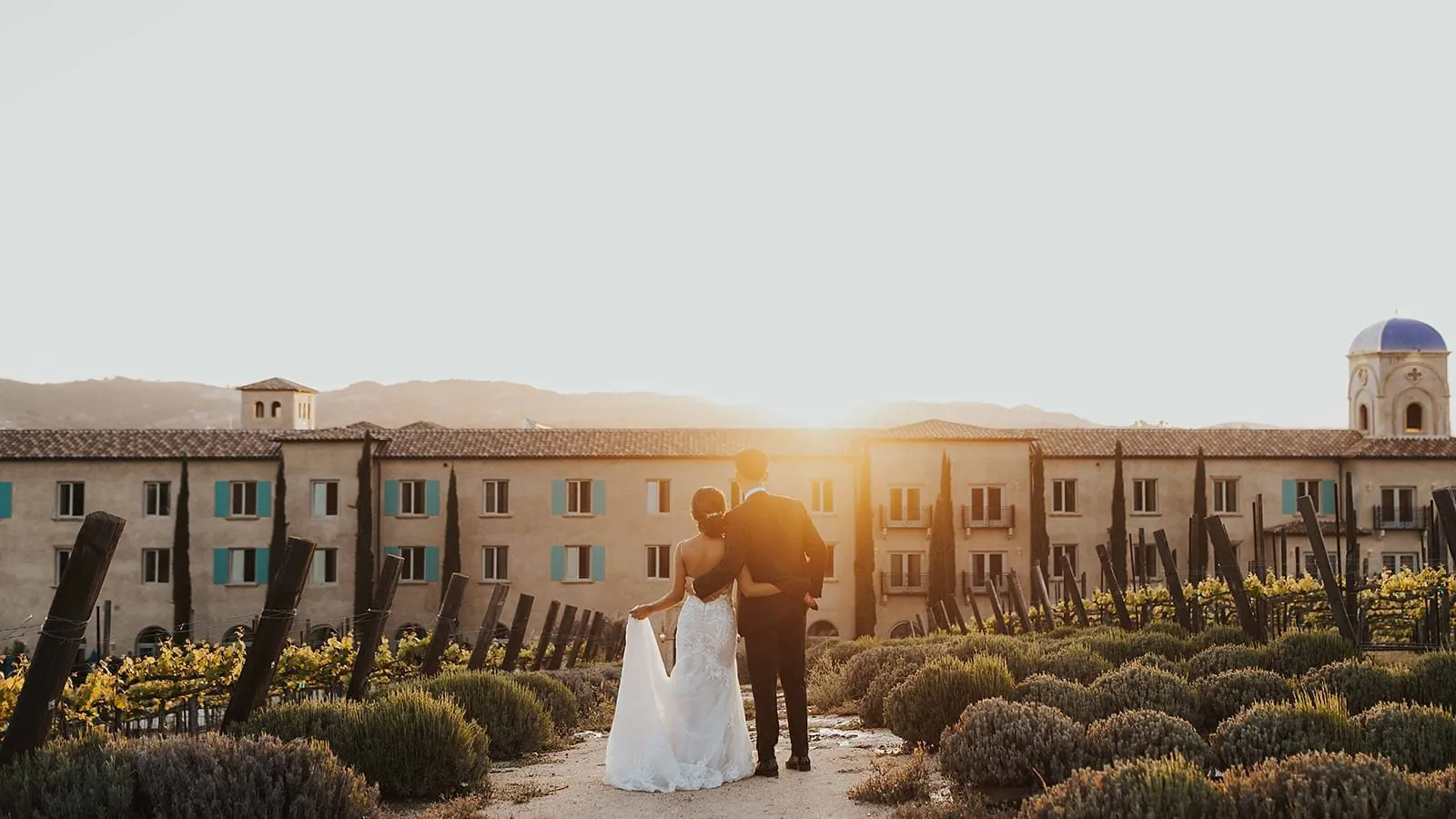
Historic Santa Barbara venues bring their own proportions, architecture, and circulation patterns. These spaces often benefit from a more measured rental approach because the building or courtyard itself is already a major design element. Read more in Santa Barbara Wedding Venues vs. Traditional Locations: Which Is Better.
Santa Barbara Historical Museum and other historic properties throughout the city illustrate why scale and access deserve careful consideration.
Work With Existing Architectural Focal Points
Identify which parts of the venue naturally draw attention. A courtyard, historic façade, arched doorway, fireplace, garden, or architectural wall may already provide the focal point that another venue would need to create through décor.
Furniture should frame these features rather than obstruct them. Keep important sightlines open and avoid placing oversized pieces where they compete with the setting.
The same principle applies to the ceremony focal point. When framing Santa Barbara wedding views with an arch, the structure should complement the scale and character of the venue while preserving important landscape, architectural, and photographic sightlines.
Watch Scale More Carefully in Defined Spaces
A furniture arrangement that works comfortably on an estate lawn may feel excessive inside a courtyard or established reception room. Check table dimensions, chair profiles, lounge proportions, and dance-floor size against the actual space before confirming the order.
In tighter environments, slightly smaller or visually lighter pieces can preserve circulation and make the venue feel more open.
Scale becomes even more important for intimate celebrations because a smaller guest count does not automatically mean every rental category can simply be reduced proportionally. Fall micro-wedding rentals should be selected around the actual ceremony and reception footprint so tables, seating, lounge pieces, and decorative elements feel appropriate for both the venue and the number of guests.
Confirm Downtown Delivery Conditions Early
Historic and downtown Santa Barbara locations can also present access considerations.
Ventura Rental notes experience working with the city’s narrower streets and established venue areas, where loading access and installation timing may require additional coordination.
Confirm delivery routes, loading areas, parking restrictions, stairs, and setup windows early so the final rental plan reflects how the venue actually operates.
Use the Venue to Decide What Deserves the Rental Budget
A venue can help determine where rentals will make the greatest difference.
Instead of distributing the budget evenly across every category, identify what the property already handles well and where the event still needs support. This keeps the order purposeful and can reduce spending on items that contribute little to the final experience.
Spend More Attention on Missing Infrastructure
If the venue provides no furniture, foundational pieces such as ceremony seating, dining tables, and reception chairs deserve priority.
If a property already includes significant furnishings, the rental budget may be better directed toward supplemental pieces that improve the design or support a specific function.
Start with what is necessary for the wedding to operate, then layer in optional elements.
Let Existing Character Reduce Unnecessary Décor
A garden, historic building, ocean view, or greenhouse can already provide the visual impact that couples sometimes try to create through additional rentals.
Before adding a decorative piece, ask whether it solves a design problem or simply repeats something the venue already accomplishes.
This does not mean the event should feel unfinished. It means the surroundings should be treated as part of the design.
Reserve Statement Pieces for Areas That Need a Focal Point
Not every part of the venue needs equal visual emphasis. A statement bar, distinctive lounge grouping, dance floor, or dining installation can be effective when it defines an area that otherwise lacks focus.
Choose these pieces strategically instead of spreading several competing focal points throughout the property.
Finalize the Fall Rental Plan With the Venue Team
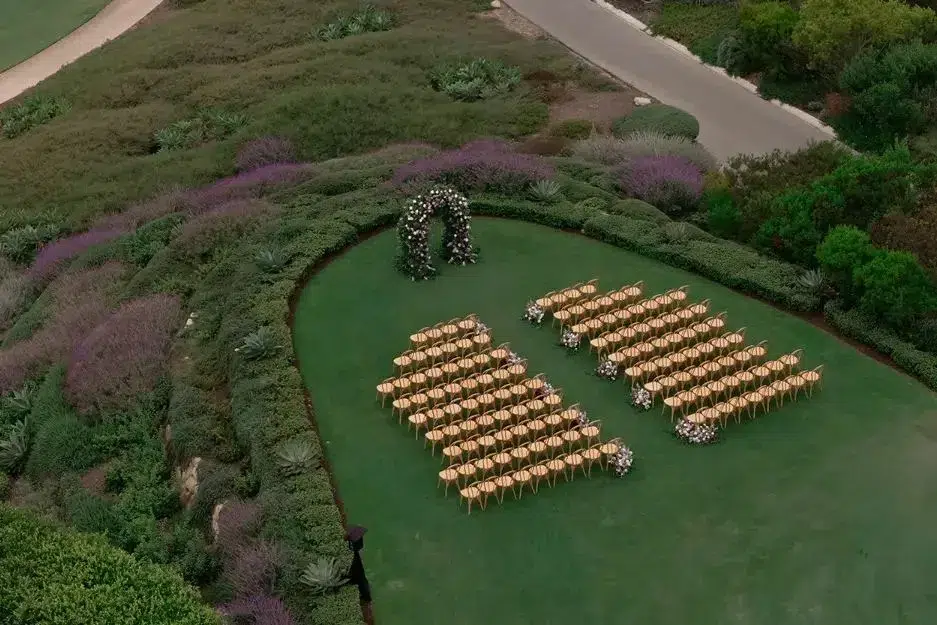
Once the overall design is clear, review the rental order against the actual venue plan.
The final check should confirm quantities, placement, access, installation timing, and responsibilities among the rental company, planner, venue, caterer, and other vendors.
Review the Order by Venue Area
Organize the final rental list according to where each item belongs.
Common categories may include:
-
Ceremony
-
Cocktail hour
-
Dining
-
Bar and beverage service
-
Dancing
-
Lounge or conversation areas
-
Catering and service spaces
The dancing area deserves the same venue-specific planning as the ceremony or dining layout. When selecting dance floor rentals for a Santa Barbara fall wedding, the available footprint, installation surface, entertainment setup, surrounding tables, guest circulation, and overall reception layout should all be reviewed together.
This makes it easier to identify missing items and prevents equipment intended for one area from being accidentally counted toward another.
Confirm Delivery and Installation Details
Before the wedding, verify when the rental team can arrive, where vehicles can unload, who provides placement instructions, and when breakdown can begin.
Also confirm whether any venue restrictions affect flooring, structures, furniture placement, or other installations.
Ventura Rental works with planners and Santa Barbara venues on delivery, setup, and pickup coordination, but the specific plan should always reflect the requirements of the chosen property.
Reserve Earlier for Popular Fall Dates
Fall is an active wedding season in Santa Barbara, so venue selection and major rental decisions should not be left until the final stages of planning. You may also find Top Tips for Finding Your Dream Santa Barbara Wedding Venue helpful.
Once the date, venue, approximate guest count, and major event areas are established, begin reserving priority pieces. Details can often be refined later as the floor plan and final attendance become clearer.
Frequently Asked Questions
Do all Santa Barbara wedding venues require outside rentals?
No. Some venues provide furniture or other event elements, while blank-canvas properties may require couples to source most of the ceremony and reception setup. Ask for an itemized list of venue inclusions before building the rental order.
Which Santa Barbara wedding venues does Ventura Rental serve?
Ventura Rental provides event rentals throughout the Santa Barbara area and has documented experience with venues including Carousel House, Tuscan Hills Estate, Santa Barbara Club, Santa Barbara Women’s Club, Simpson House Inn, Dos Pueblos Orchid Farm, Santa Barbara Historical Museum, and Cabrillo Pavilion, among others.
Does a blank-canvas venue require more rentals?
Usually, it requires more foundational planning because furniture and other rentals need to establish how the space functions. The exact requirements depend on what the venue provides and how the couple plans to use each area.
What should I ask a venue before choosing wedding rentals?
Ask what furniture is included, which areas are available, when vendors can load in and out, how delivery vehicles access the property, what installation restrictions apply, and what backup spaces are available.
How do estate wedding rentals differ from rentals for an indoor venue?
Estates may require more attention to access, surface conditions, separate event zones, catering infrastructure, and installation time. Established indoor venues may already provide more furniture and built-in event infrastructure.
Should the ceremony and reception use the same rental collection?
Not necessarily. The two areas can use different furniture when their functions or surroundings require it. Maintaining one or two shared design elements can create continuity without forcing every rental to match exactly.
How early should I reserve fall wedding rentals in Santa Barbara?
Popular fall dates and high-demand inventory should be discussed early once the venue and approximate guest count are confirmed. Booking ahead provides more flexibility in selecting specific styles and gives the rental team time to account for venue-specific logistics.
Let the Venue Lead the Rental Plan
The most effective wedding rental plan begins with the property rather than a catalog. A blank-canvas waterfront venue may rely on furniture to establish every major event zone, while a garden or historic property may need a lighter touch. A hillside estate places more emphasis on access and installation, while a greenhouse or farm setting may already provide much of the visual character the design needs.
By identifying what the venue provides, how each area will function, and where rentals can make the greatest difference, couples can build a more purposeful fall wedding setup without adding unnecessary elements. For a quote built around your venue and guest count, contact our event rental team.
Ventura Rental Party & Events provides wedding rentals throughout Santa Barbara and works across a range of local venue types. Once the venue, guest count, and event areas are defined, the rental plan can be shaped around what the property genuinely needs. Couples planning a full setup can start with our wedding rental services.