
A wedding arch should do more than decorate the ceremony. It should frame the couple, direct guests toward the venue’s strongest view, and create a clear focal point without hiding the Santa Barbara setting.
The right choice depends on what sits behind the ceremony, how the structure relates to the aisle and seating, and whether its shape suits the surrounding architecture or landscape. This guide explains how to select, scale, position, and decorate wedding arch rentals in Santa Barbara for fall ceremonies at courtyards, gardens, estates, coastal properties, and vineyard venues.
Decide What the Ceremony Frame Should Reveal
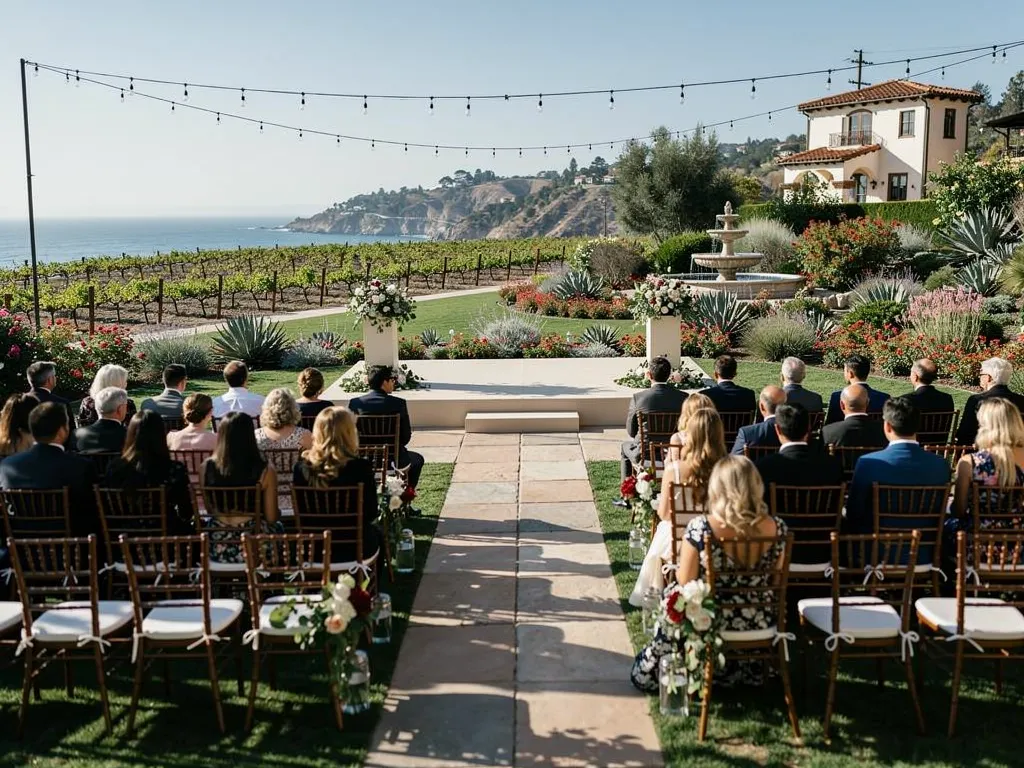
Choose the ceremony direction before selecting the arch. Santa Barbara venues may feature ocean views, mountains, vineyards, gardens, fountains, historic façades, or Spanish-Colonial architecture. The goal is to identify which feature should remain visible behind the couple.
Identify the Strongest Background
Walk the ceremony area from several directions before placing the altar. The largest open space is not always the best backdrop. An ocean-facing setup may reveal parked vehicles, while a garden angle may place guests in direct sun. At a vineyard, aligning the ceremony with the rows may create a stronger view toward the hills.
Possible backdrops include:
-
Courtyard walls or arched doorways
-
Fountains or mature trees
-
Ocean, mountain, or hillside views
-
Vineyard rows
-
Historic building façades
Courtyard walls or arched doorways
Fountains or mature trees
Ocean, mountain, or hillside views
Vineyard rows
Historic building façades
Once the strongest view is selected, align the arch, aisle, seating, and couple around it.
Choose One Visual Priority
The landscape, architecture, arch, and florals should not compete equally. For an ocean view, use an open frame and restrained florals. Against a plain wall, the arch may need more visual presence. In a historic courtyard, the structure should complement the architecture.
Choose one primary feature:
-
The landscape
-
The architecture
-
The arch shape
-
The floral installation
The landscape
The architecture
The arch shape
The floral installation
This keeps the ceremony design clear and balanced.
Check the View From Guest Level
Review the backdrop from the front, middle, back, outer seats, and aisle entrance. Side angles may reveal signs, equipment, utility boxes, neighboring structures, or parked vehicles. Moving the ceremony setup may solve these issues more effectively than adding flowers or fabric. Photographer and videographer sightlines should also be considered.
Review the Light Near Ceremony Time
The backdrop may look different as afternoon light shifts toward sunset. Glare, backlighting, shadows, coastal haze, and tree cover can affect the couple, arch, and florals. Review the ceremony location at roughly the same time as the planned vows so the planner, photographer, florist, venue, and rental team can account for changing light.
Let the Arch Geometry Echo the Setting
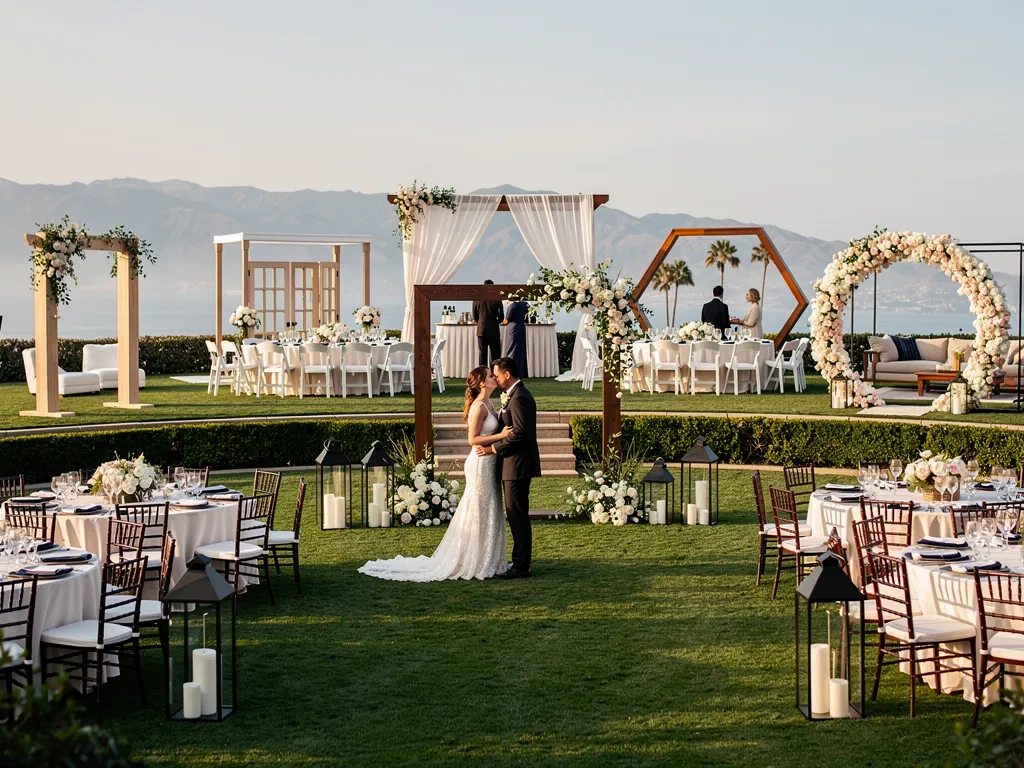
The arch shape determines how the scenery is framed around the couple. Rectangular, circular, geometric, iron, and four-post structures each create a different visual effect. Ventura Rental’s inventory includes wood arches, Moongate and Hexagon arches, chuppahs, French Door designs, and several iron frames. Availability should be confirmed for the event date.
Use Rectangular Frames for Structured Venues
Rectangular wood arches complement courtyards, doorways, pergolas, formal gardens, vineyard rows, and other settings with strong architectural lines. The Dark Oak Arch measures approximately 8 by 8 feet, while the Berkshire Arch is about 8 by 7 feet. Both provide a wide opening for the couple and officiant and can be left exposed or decorated selectively. Because rectangular frames create a strong upper boundary, lighter floral coverage may work better when preserving ocean or mountain views.
Use a Moongate for Open Views
A circular Moongate frames part of the landscape while keeping the surrounding scenery visible. It can work well for coastal, garden, vineyard, and lawn ceremonies. Ventura Rental’s Moongate Arch is approximately 108 inches wide and 98.5 inches high. Its wide footprint requires enough room for the base, florals, aisle alignment, and installation access. Asymmetrical flowers can highlight the circular shape without blocking the view.
Add Definition With a Hexagon Arch
A Hexagon Arch creates angular contrast against soft landscaping, curved hills, and loose floral designs. Ventura Rental’s Hexagon Arch is approximately 86 inches high and 87 inches long, with a base depth of about 43 inches. That depth should be included when planning the ceremony footprint. Keep some of the frame visible so the geometric shape remains part of the design.
Choose a Chuppah for a Defined Ceremony Space
A chuppah uses four posts and an overhead frame to create a complete ceremonial space rather than a single backdrop. The setup must allow room for all four posts, the couple, officiant, florals, and movement. Overhead clearance should also be checked for trees, ceilings, tents, and backup locations. Ventura Rental offers Fruitwood and White Birch chuppah options.
Use Iron Frames for a Lighter Outline
Iron arches create a defined focal point without heavily blocking the background. They are well suited to gardens, vineyards, courtyards, and historic properties. Available designs include the Iron Scrolled Flat Front Arch, Iron With Peak, and Iron Grape Leaf Arch. Decorative details may require only limited flowers or greenery, allowing the frame and scenery to remain visible.
Set the Structure at the Right Visual Scale
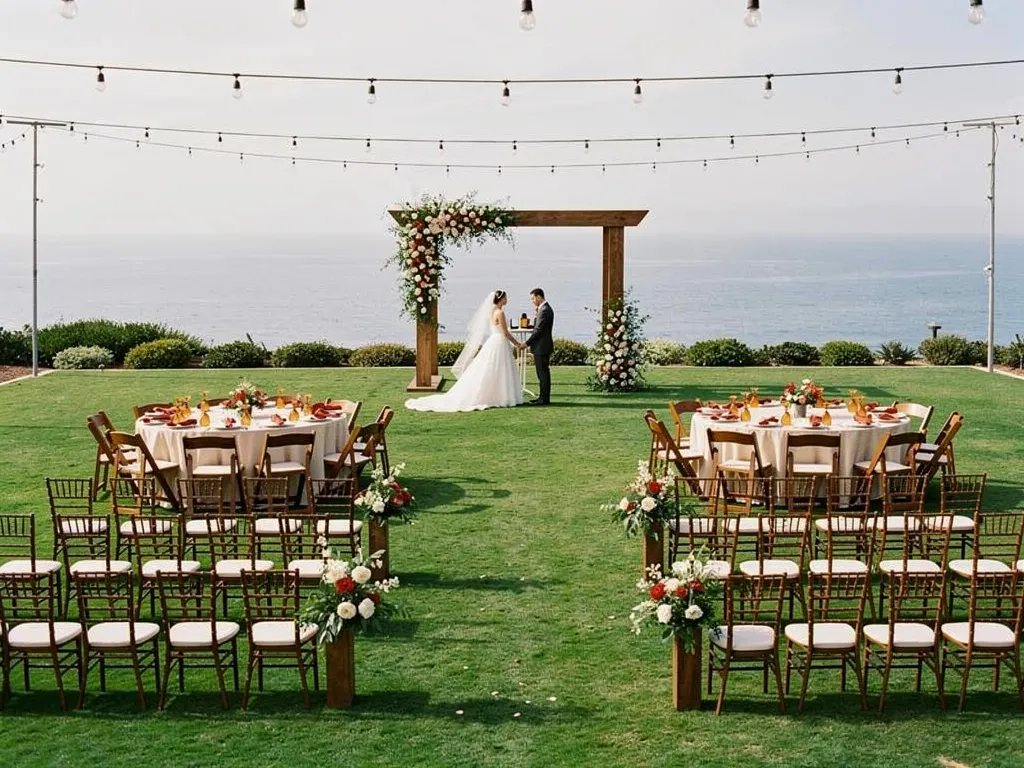
The arch should frame the couple and officiant while fitting the aisle, seating layout, backdrop, and overall ceremony space. A structure that looks balanced in a catalog may appear too small on an estate lawn or too large in a compact courtyard.
Allow Enough Interior Space
The opening should accommodate the couple, officiant, bouquets, attire, microphones, ceremonial items, and natural movement. Flowers and fabric can reduce the usable space, so the florist should receive the exact arch dimensions before finalizing the design.
Compare the Arch With the Aisle
The arch and aisle should feel visually connected. A wide aisle can make a narrow arch look undersized, while a broad structure may overwhelm a tight approach. Align the aisle center, arch center, and primary background feature to create a balanced composition.
Balance the Frame With the Seating Layout
Arch scale depends on more than guest count. Consider the number of chair rows, seating width, distance to the altar, and size of the property. A large frame may suit a spacious lawn but dominate a small courtyard. A narrow iron arch may work for an intimate ceremony but lose impact in a broad layout.
Consider the Distance to the Background
An arch placed against a wall creates a flatter composition. Positioning it in front of an ocean, vineyard, garden, or mountain view adds depth but may make the structure appear smaller. Check that the space behind the arch does not reveal pathways, equipment, vehicles, or passing guests.
Review Key Camera Angles
Inspect the setup from the aisle entrance, center and side seats, altar edges, entrance route, and likely photography positions. Small changes in placement, angle, or distance can improve the view without requiring a full layout change.
Dress the Frame Without Hiding Its Shape
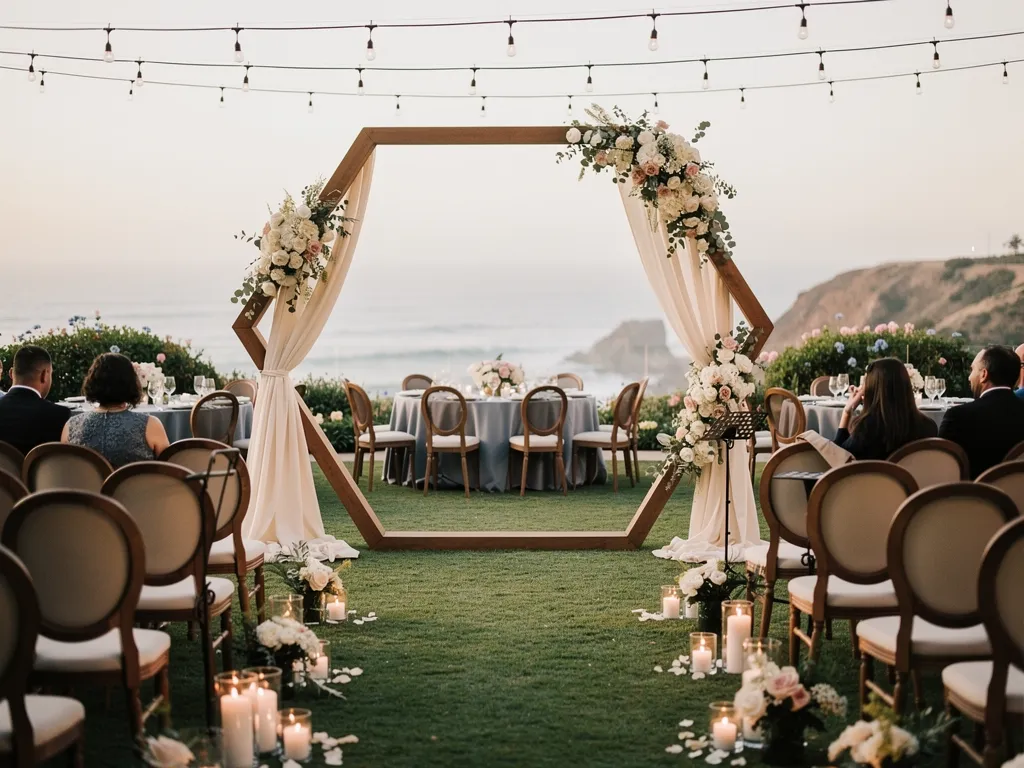
Flowers, greenery, and fabric should support the selected arch rather than disguise it. The design should respond to the structure’s outline, the existing background, the ceremony’s visual priority, and the outdoor conditions. A distinctive Moongate or Hexagon Arch loses much of its purpose when its complete shape is buried beneath dense coverage. We cover this further in Top Wedding Decor Ideas for Stunning Outdoor Events.
Decide Between Minimal, Asymmetrical, and Full Coverage
Minimal accents preserve the structure and background. Asymmetrical florals add movement while keeping part of the frame open. Full coverage creates a stronger floral backdrop but may hide the arch and surrounding view. Decide on coverage early because it affects materials, installation time, attachments, weight, and final dimensions.
Keep the Shape Visible
The arch should remain recognizable after decorating. Leave part of a Moongate curve, Hexagon outline, rectangular frame, or decorative ironwork exposed. The design should read clearly from the back row, not only in close-up photographs.
Pull Fall Colors From the Venue
Use the property as the starting point rather than relying on a standard autumn palette.
-
Olive, ivory, and terracotta for gardens and stucco
-
Burgundy and warm neutrals for vineyards
-
Blush and greenery for historic architecture
-
Rust, amber, and gold for hillside estates
-
Cream, green, and pale peach for coastal views
Olive, ivory, and terracotta for gardens and stucco
Burgundy and warm neutrals for vineyards
Blush and greenery for historic architecture
Rust, amber, and gold for hillside estates
Cream, green, and pale peach for coastal views
The frame finish should also influence the palette. Dark wood supports deeper tones, while white birch and lighter iron frames suit softer colors.
Use Fabric Carefully
Fabric can soften the structure but may block the view, hide its geometry, or move in coastal wind. Decide whether it will hang behind the couple, wrap the posts, cross the top, fall asymmetrically, or be omitted entirely. All attachment methods should be approved by the rental company.
Plan for Outdoor Exposure
Florals may be exposed to sun, wind, coastal air, and temperature changes before the ceremony begins. The florist should account for the location, ceremony time, shade, flower varieties, structure material, and installation schedule. Ventura Rental supplies the frame, while the florist determines the appropriate floral materials and installation methods.
Build the Ceremony Axis Around the Arch
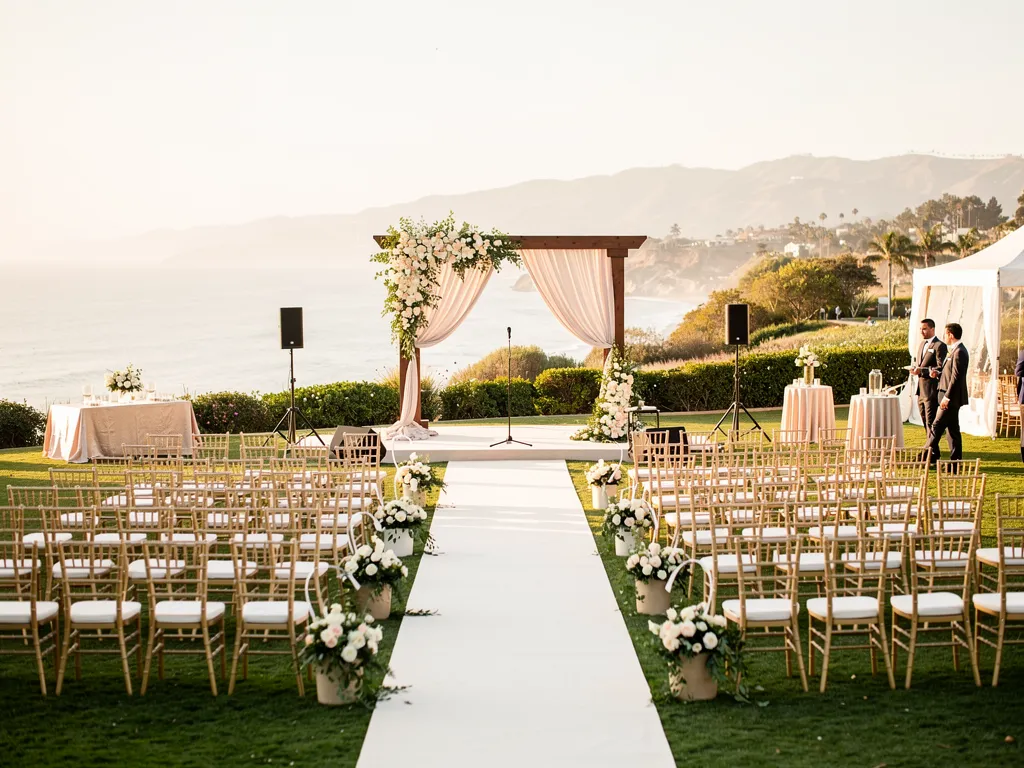
The arch should establish the ceremony’s central line. Chairs, aisle markers, floral arrangements, microphones, and guest entrances should reinforce that same direction.
Placing the structure after the seating plan has already been finalized can result in misalignment, blocked views, or insufficient working space around the altar.
Establish the Centerline Before Placing Chairs
The team should identify the exact center of the desired background and use it to position the arch.
From there, the centerline should extend through:
-
The couple’s standing positions
-
The officiant
-
The aisle
-
The ceremony entrance
-
The central camera angle
The couple’s standing positions
The officiant
The aisle
The ceremony entrance
The central camera angle
Chair rows should be measured from that line rather than placed according to the nearest wall, tree, or property boundary. At asymmetrical venues, the ceremony may not need to sit in the physical center of the property. It should sit on the strongest visual axis. For more detail, see our article Rental Décor that Adds Whimsy and Elegance to Wedding Venues.
Leave Working Space Around the Altar
The area surrounding the arch must support the ceremony, not only the structure. The plan should allow space for the officiant, wedding party, musicians, photographers, videographers, speakers, microphones, ceremonial items, and floral bases. For more detail, see our article Fun Add-Ons That Elevate Wedding Celebrations.
The couple should be able to enter, stand, turn, exchange vows, and exit without brushing against flowers, fabric, or structural supports. If large floral arrangements extend beyond the arch, the usable altar area may be wider than the rental dimensions suggest. That full installed width should be shown on the floor plan.
Protect Guest Sightlines From Every Row
Wide floral clusters and heavy fabric can obstruct guests seated near the outer edges. The team should sit temporarily in several chairs after setup and check whether the couple’s faces remain visible. The view should be tested from the sides as well as the center.
Low floral arrangements at the base can also block the lower portion of the ceremony for front-row guests. Raised platforms, broad planters, microphone stands, and speakers should be evaluated in the same way. If a guest needs an accessible seating position, the location should provide a clear view without requiring that person to sit in a circulation route.
Preserve an Accessible Route
The ceremony entrance and seating plan should account for the actual surface and any changes in elevation. Lawns, gravel, tile, sand-adjacent areas, slopes, and historic paving can affect how easily guests move through the space. The arch should not force the accessible route behind the seating or through service areas. The venue and planning team should confirm aisle width, stable routes, seating positions, and any surface support required for the specific attendees. Read more in Stand Out With Unique Décor Rentals for Any Event.
Keep Operational Equipment Outside the Main Composition
Speakers, microphone stands, power cables, floral buckets, tools, sandbags, packaging, and installation equipment can quickly become visible around a lightly decorated arch. Necessary equipment should be integrated discreetly, hidden where appropriate, or removed before guests arrive. The photographer’s wider angles should be considered when placing speakers and cables. Moving equipment only a short distance may keep it outside the ceremony composition without reducing its function.
Sequence the Rental, Floral, and Venue Work
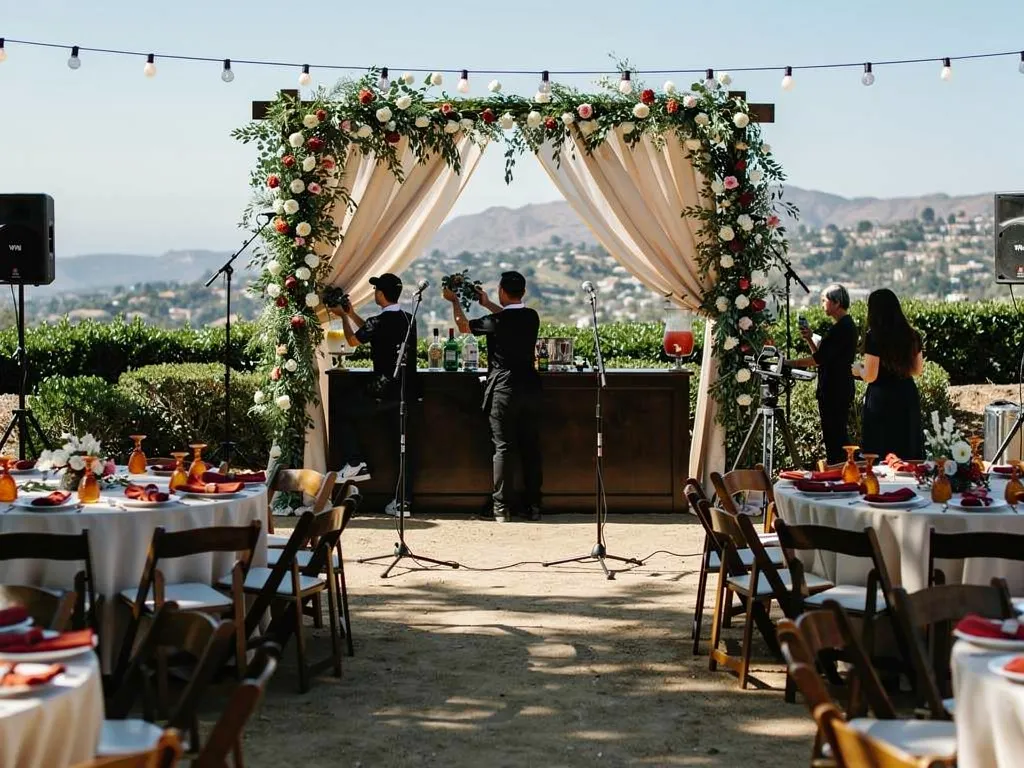
The rental structure, flowers, fabric, lighting, chairs, and audio equipment may be supplied by different companies. Their responsibilities and access times should be documented before the event. The most efficient installation begins with a confirmed structure in its final position, followed by decorative work and the surrounding ceremony elements.
Define Who Supplies Each Component
The planning document should identify responsibility for:
-
The structural arch or chuppah
-
Delivery and assembly
-
Final placement
-
Flowers and greenery
-
Fabric and draping
-
Floral mechanics
-
Any approved lighting
-
Removal of flowers and fabric
-
Structure breakdown
-
Rental pickup
The structural arch or chuppah
Delivery and assembly
Final placement
Flowers and greenery
Fabric and draping
Floral mechanics
Any approved lighting
Removal of flowers and fabric
Structure breakdown
Rental pickup
The florist should not arrive expecting a structure that has not yet been assembled, and the rental team should not be expected to remove floral mechanics without prior coordination. The venue should also know which company is responsible for each phase so access, staging, and breakdown can be managed correctly.
Build the Installation Timeline in the Correct Order
The rental frame should generally be delivered, assembled, positioned, and approved before floral decoration begins.
The sequence may include:
-
Confirming the ceremony location
-
Delivering and assembling the arch
-
Checking alignment and stability
-
Adding flowers, greenery, or fabric
-
Positioning audio equipment
-
Placing chairs and aisle details
-
Testing sightlines and camera angles
-
Removing tools, packaging, and staging materials
Confirming the ceremony location
Delivering and assembling the arch
Checking alignment and stability
Adding flowers, greenery, or fabric
Positioning audio equipment
Placing chairs and aisle details
Testing sightlines and camera angles
Removing tools, packaging, and staging materials
The exact schedule depends on the venue and setup window. Enough time should remain for adjustments if the arch needs to move after the first visual review.
Share the Exact Product Dimensions With the Florist
The florist should receive the confirmed model and dimensions rather than a generic description such as “eight-foot arch.” Accurate dimensions help the florist determine coverage, fabric length, arrangement size, and transport needs. They also reduce the risk of creating floral pieces that block the interior opening or fail to fit the frame.
Preplan Any Post-Ceremony Reuse
An arch may sometimes be repositioned behind a sweetheart table, cake display, lounge, band, or reception focal point. That reuse should never be assumed.
The team must confirm whether:
-
The assembled structure can be moved safely
-
The flowers can withstand movement
-
The route is wide and level enough
-
The second location has sufficient clearance
-
Staff will be available during the transition
-
Guests will be present along the route
-
Ventura Rental permits the relocation
-
The venue allows the structure in both locations
The assembled structure can be moved safely
The flowers can withstand movement
The route is wide and level enough
The second location has sufficient clearance
Staff will be available during the transition
Guests will be present along the route
Ventura Rental permits the relocation
The venue allows the structure in both locations
A fully decorated structure may be substantially heavier and more difficult to handle than the undecorated rental frame. When movement is impractical, the ceremony arch should remain in place rather than creating risk or disrupting the reception timeline.
Select a Ventura Rental Frame for the Composition
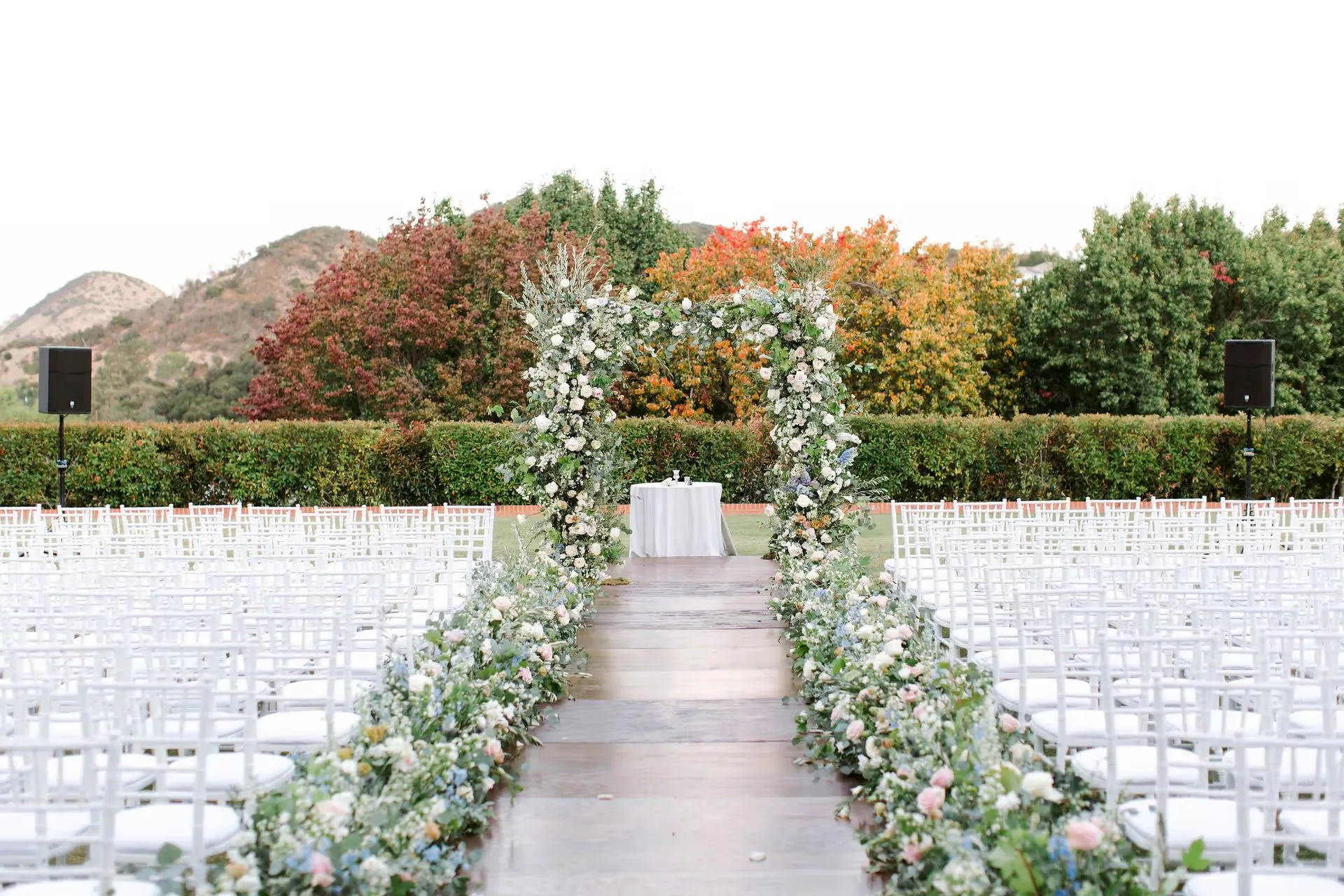
Ventura Rental offers several forms of wedding arch rentals in Santa Barbara, allowing couples to compare wood, iron, circular, geometric, and four-post structures. The selection should be based on the ceremony view, venue proportions, floral concept, surface, and installation conditions rather than style alone. For more detail, see our article Rustic vs. Glam Wedding Décor Rentals.
Dark Oak and Berkshire Arches for Strong Rectangular Framing
The Dark Oak and Berkshire arches create clear rectangular outlines that can complement courtyards, garden walls, vineyards, and estate lawns.
The Dark Oak Arch measures 8 feet high by 8 feet wide, while the Berkshire Arch is approximately 8 feet high by 7 feet wide. Both are listed as unavailable for client pickup, so delivery and installation should be coordinated through Ventura Rental.
These frames can support exposed wood, asymmetrical florals, corner arrangements, or restrained fabric. Their broad upper lines are particularly effective when the ceremony needs a strong visual boundary.
Moongate Arch for a Broader Scenic Opening
The Moongate’s circular outline can frame an ocean, garden, vineyard, or hillside view while preserving openness around the couple.
At approximately 108 inches wide and 98.5 inches high, it requires a larger footprint than several rectangular or geometric options. Ventura Rental also lists the Moongate as unavailable for customer pickup.
Its full circle should remain at least partly visible after decoration. Concentrating flowers along one side or at opposing points can maintain the shape while allowing the background to show through.
Hexagon Arch for a Clean Geometric Contrast
The Hexagon Arch can provide angular definition against organic landscaping and loose floral arrangements.
It measures approximately 86 inches high and 87 inches long, with a base depth of around 43 inches. The base should be included in the floor plan so it does not interfere with ceremony movement or outer floral arrangements.
This structure suits designs that deliberately contrast geometric lines with softer surroundings. Partial floral coverage generally preserves that distinction more effectively than hiding the entire frame.
Chuppahs and Four-Post Structures for Defined Ceremony Space
Ventura Rental’s arch inventory includes Fruitwood and White Birch chuppahs. These structures establish a four-sided ceremonial area with an overhead component rather than a flat backdrop.
The layout must account for all four posts, interior standing room, the overhead frame, floral or fabric coverage, and the movement of ceremony participants.
The backup location should also provide sufficient ceiling height and floor space for the complete structure.
Iron and Decorative Frames for a More Open Silhouette
The Iron Scrolled Flat Front, Iron With Peak, and Iron Grape Leaf arches offer lighter profiles that can preserve more of the background. The Iron With Peak provides an interior width of approximately 6 feet 3 inches and reaches roughly 8 feet 9 inches at its highest point. The Iron Grape Leaf Arch measures approximately 7 feet 9 inches tall by 7 feet 8 inches wide. These frames may require less decoration because their scrollwork, peaked lines, or grape-leaf details already contribute visual interest.
Confirm Current Condition, Appearance, and Availability
Ventura Rental’s catalog states that product images are references and that actual items may look different. Availability and current appearance should therefore be confirmed before the florist develops a final rendering or orders materials. Couples should review the exact item, dimensions, delivery requirements, and approved decorating methods through the rental proposal.
Frequently Asked Questions
What Is the Difference Between an Arch, Arbor, and Chuppah?
A wedding arch frames the couple from the front. An arbor often has more depth or overhead structure, while a chuppah typically has four posts and a canopy. Because terminology varies, compare the structure’s actual shape and dimensions before selecting one.
How Wide Should a Wedding Arch Be?
The arch should comfortably frame the couple, officiant, attire, and ceremony details without looking crowded. Consider the aisle width, seating layout, floral coverage, and interior opening after decorations are added.
Which Arch Shape Works Best for an Ocean View?
Open-profile designs, such as circular or iron arches, often preserve more of the horizon. Rectangular wood arches provide stronger definition against wide, open scenery. Choose based on the ceremony direction, wind exposure, footprint, guest sightlines, and floral design.
Can Florals and Fabric Be Attached to a Rental Arch?
Florals, greenery, and fabric may be attached using methods approved by Ventura Rental. Confirm permitted materials and attachment points with the rental team and florist. Avoid drilling, staples, adhesives, paint, or permanent alterations.
Frame the View, Not Just the Vows
A well-placed wedding arch creates a focal point without blocking Santa Barbara’s ocean views, gardens, vineyards, mountains, courtyards, or Spanish-Colonial architecture. See everything we rent for ceremonies and receptions on our wedding rentals page.
Begin with the ceremony backdrop, then select a structure that fits the setting, aisle, seating layout, and floral design. Wind, surface conditions, venue restrictions, access, and backup locations should also be confirmed before installation.
Ventura Rental Party & Events offers wood, iron, circular, geometric, and four-post wedding arch rentals for Santa Barbara ceremonies, along with coordinated delivery, setup, breakdown, and pickup. See what’s available in our event décor rentals.