

A ceremony-to-reception transition does not have to mean dismantling one event space and rebuilding another while guests wait through cocktail hour. At many weddings, the smoothest transitions happen because most of the reception is already complete before the ceremony begins, leaving only a limited number of elements that genuinely need to change once the vows are complete.
That approach reframes how to think about Santa Barbara wedding rentals: divide the setup into rentals that should be pre-set for the reception, pieces that can remain in the ceremony area, and items worth repurposing. The less that has to move once guests are on-site, the easier it becomes to protect the timeline.
First Determine Whether the Wedding Actually Needs a Flip
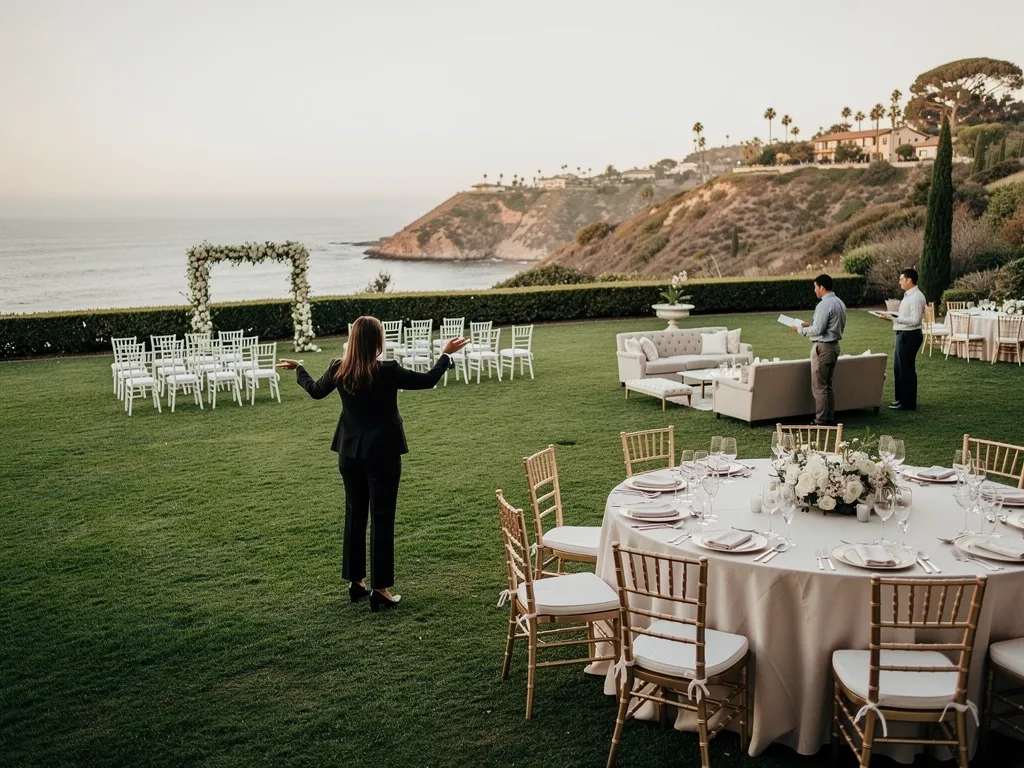
Not every ceremony-to-reception transition requires the same amount of physical change. Some properties provide separate areas for the ceremony, cocktail hour, and reception, while others require one lawn, courtyard, room, or covered space to serve several functions throughout the day. Before deciding which rentals might move, planners should first determine how much of the property actually needs to change between the ceremony and reception — a wedding with separate ceremony and dining areas may need almost no furniture movement, while a shared courtyard may depend on a carefully timed reset.
Separate Ceremony and Reception Spaces Reduce the Reset
When the ceremony and reception take place in different areas, much of the reception can often be completed before guests arrive, so guests make the primary transition rather than the furniture. Dining tables, reception chairs, linens, tabletop pieces, bars, lounge furniture, dance flooring, and entertainment infrastructure can remain untouched while the ceremony is underway, leaving vendors to focus on only a small number of remaining tasks once the recessional ends.
Shared Spaces Require a More Deliberate Reset
A different approach is necessary when the same physical area serves as both ceremony and reception. A lawn may begin with rows of ceremony seating before being reset for dinner, or a courtyard may have limited room for separate installations. Planners can reduce the reset by separating what truly has to move from what can remain in place or be staged elsewhere in advance — the more work completed before the ceremony, the less pressure falls on the period immediately afterward.
Many Weddings Use a Partial Transition
Ceremony-to-reception planning is rarely limited to a complete flip or no flip at all. Many events use separate dining and ceremony areas while repurposing only a few pieces, such as selected chairs or small tables, or reset just one portion of a shared site while the rest of the reception is already established. The central planning question should remain simple: what genuinely needs to change once the ceremony ends? If that list becomes too long, it may indicate that more of the reception should be established in advance.
Pre-Set as Much of the Reception as the Venue Allows
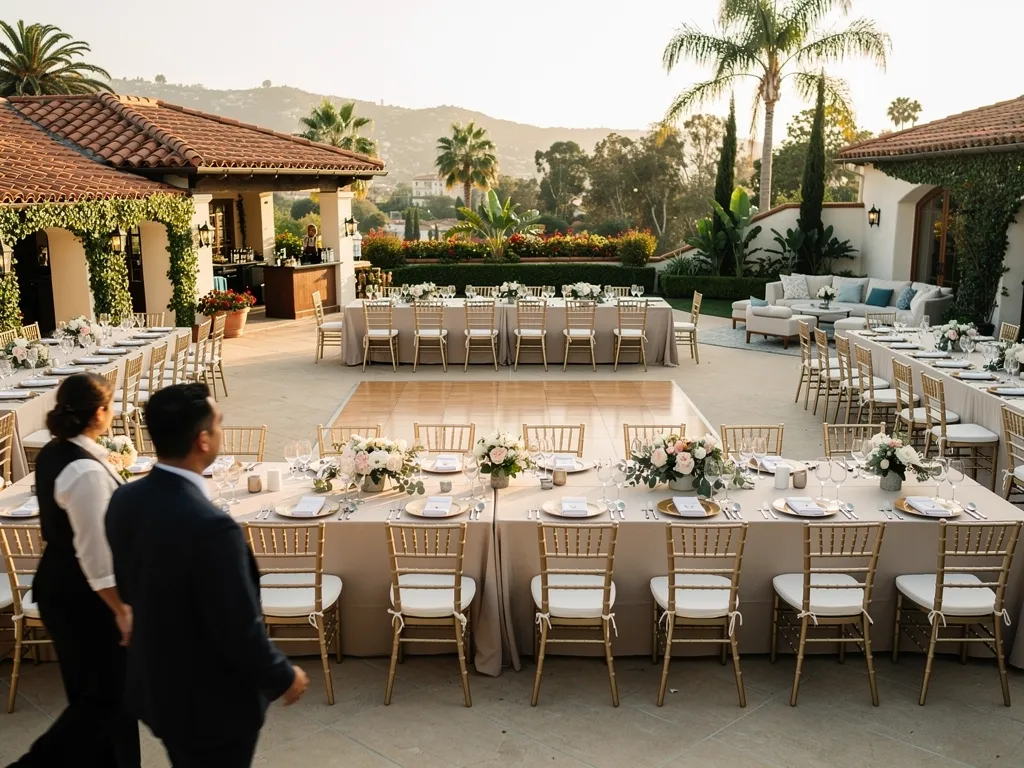
One of the most effective ways to simplify the transition is to complete every reception area that does not depend on the ceremony space being released. This does not mean that every finishing detail must be exposed or guest-ready hours in advance, but the major rental components should be positioned whenever the venue, vendor schedule, and event plan allow.
Pre-setting also gives the planning team more time to review the reception as a finished environment before guests enter it. Furniture placement, tabletop details, service requirements, and visual consistency can be checked while the site is still relatively calm, rather than being evaluated during a compressed cocktail-hour changeover.
Complete the Dining Area Before the Ceremony
When the reception occupies a separate space, the dining area can often be largely finished before guests take their ceremony seats. Tables and reception chairs can be placed, linens installed, and tabletop selections arranged according to the meal and service plan. China, flatware, glassware, chargers, and other components can then be reviewed as part of the complete dining environment rather than introduced during the transition.
This approach does more than save time. It gives planners and catering teams an opportunity to confirm that the dining setup works as intended before guests arrive. The reception does not depend on a large furniture move or rushed tabletop installation after the ceremony, and cocktail hour can remain a genuine part of the guest experience instead of becoming the primary setup window for dinner.
Establish Bars and Lounge Areas in Advance
Bars and lounge areas are also strong candidates for early setup because they generally do not depend on the ceremony ending. A rental bar can be installed and coordinated with the appropriate surrounding furniture before guests arrive, while cocktail tables, lounge seating, coffee tables, and side tables can be positioned in the areas where they will remain throughout the reception.
Having these areas ready early is especially useful when cocktail hour begins immediately after the ceremony. Guests enter a space that already feels deliberate and complete rather than arriving while furniture is still being moved into place. These areas can then function as intended from the beginning, giving guests somewhere to gather and settle into the next phase of the event while limited ceremony-area changes happen elsewhere.
Install Large Infrastructure Before Guests Arrive
Large rental elements should generally be treated as part of the installed event environment rather than as pieces involved in a ceremony-to-reception flip. Depending on the event, these may include dance floors, general event flooring, staging, tents or covered structures, major lighting installations, and other structural components.
Their scale and installation requirements make them poor candidates for last-minute relocation, and they often interact with several other parts of the reception. Even when the ceremony and reception share the same general footprint, these larger pieces can usually remain fixed while furniture or smaller decorative elements change around them. A transition should ideally involve a limited amount of movable inventory, not the reconstruction of the event’s major infrastructure while guests are already on-site.
Decide What Should Stay in the Ceremony Area
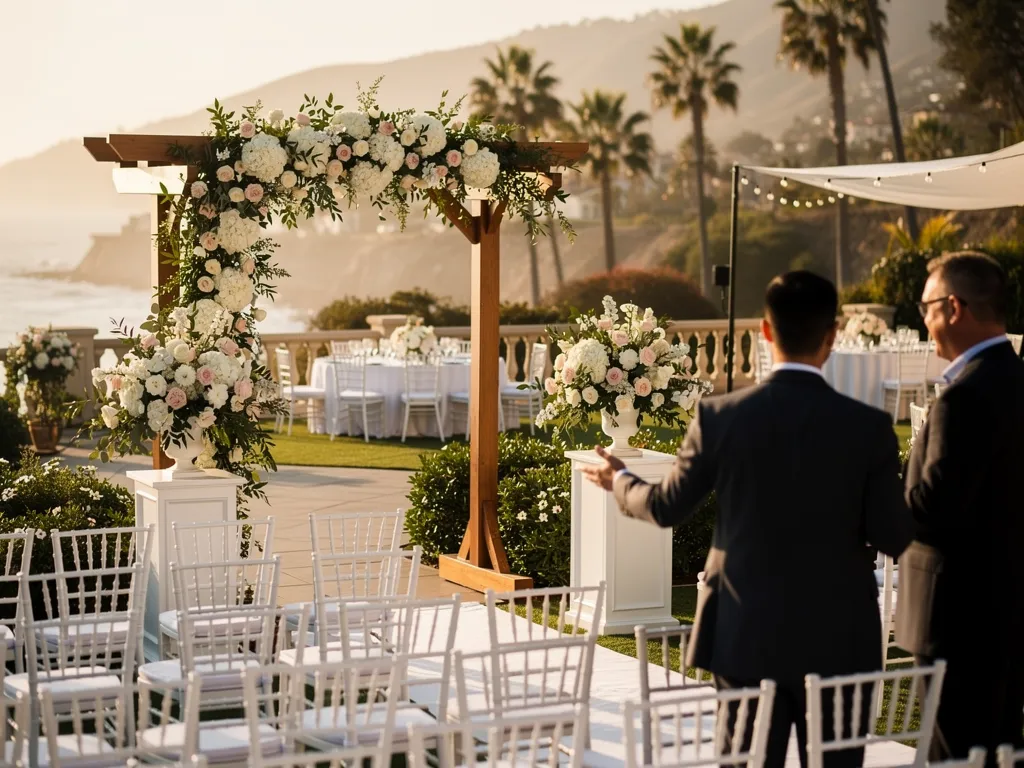
Reuse can be practical, but not every ceremony rental needs to appear again during the reception. In some cases, leaving an element where it was originally placed is the more efficient and visually appropriate decision. The fact that something can move does not automatically mean that moving it creates meaningful value for the event.
This distinction is especially important when ceremony elements continue to serve a purpose after the vows are complete. Photography, venue presentation, or later guest use may all justify keeping selected rentals or décor in place. The transition plan should therefore account not only for what the reception needs, but also for whether the ceremony area still has work to do.
Leave Pieces in Place When Moving Them Adds Little Value
A ceremony focal structure, selected décor, welcome furniture, or other design elements may have fulfilled their primary function once the ceremony ends, but that does not mean they need to be moved elsewhere. Relocating those pieces simply to give them a second use can create additional work without improving the reception in a meaningful way.
The ceremony and reception can still feel visually connected through repeated materials, finishes, or design details without physically transferring every element from one space to another. In some cases, the strongest choice is to let the ceremony setting remain intact while the reception develops its own layered environment nearby.
Protect the Ceremony Setting for Photography
The ceremony space may remain important immediately after guests leave because family photographs, wedding-party portraits, or couple portraits can take place there. If the ceremony structure, floral installation, or seating arrangement contributes to those photographs, dismantling the area too quickly can interfere with the photography plan.
For that reason, planners should distinguish between the moment guests are finished with the ceremony area and the moment the event team is finished with it. Those are not always the same point in the timeline. A rental or decorative piece should only be added to the move list after confirming that photography and other post-ceremony uses have been accounted for.
Separate Ceremony Breakdown From Reception Setup
Ceremony breakdown and reception setup are related, but they do not need to happen as one combined process. Guests can move into cocktail hour while ceremony-only pieces begin to come down on a separate timeline, with no expectation that every item will be carried forward into the reception.
This distinction can reduce congestion and simplify vendor responsibilities. The reception team can concentrate on the few changes that genuinely affect dinner or entertainment, while ceremony breakdown proceeds independently. Treating the two processes separately makes it easier to avoid unnecessary movement and keeps the transition focused on the parts of the event that guests will actually experience next.
Use Cocktail Hour as Guest Time, Not Emergency Setup Time

Cocktail hour naturally creates some separation between the ceremony and dinner, but it should not become an emergency construction window for the reception. The strongest transition plans use that period for a limited number of predictable tasks while guests are already comfortable in another area.
This keeps the event from feeling unfinished and prevents the entire reception from depending on a narrow window of vendor activity. Rather than asking how much can possibly be accomplished during cocktail hour, planners should focus on how little genuinely needs to happen once it begins.
Identify the Few Tasks That Depend on the Ceremony Ending
Some changes cannot take place until the ceremony is complete. Selected chairs may need to be relocated, ceremony-only accessories may need to be removed, or an area previously occupied by guests may need to be released before final adjustments can happen.
Ideally, that list should remain short. Major infrastructure, complete dining setups, large furniture areas, and extensive decorative installations should already be addressed whenever the property and schedule allow. Cocktail hour works best as the final transition period, not the beginning of reception setup.
Keep Guests Separate From the Working Area
Guests should not have to navigate an active reset whenever the venue provides another practical option. A defined cocktail area can provide a natural destination while photography, breakdown, and limited rental movement take place elsewhere. Lounge furniture, cocktail tables, and an established bar can help that area feel like an intentional stage of the event rather than somewhere guests have simply been directed to wait.
Separating guests from the working zone also gives vendors more room to complete their tasks efficiently. Weddings are live events, so some activity will always remain visible, but the guest experience is stronger when vendor movement does not dominate the transition.
Build the Timeline Around Real Tasks
A scheduled cocktail hour may appear to provide a generous amount of time on paper, but that entire period is rarely available for resetting. Guests need time to leave the ceremony area, photographs may still be underway, vendors need access to the site, and some tasks can only happen in sequence.
The transition timeline should therefore reflect confirmed responsibilities rather than an idealized assumption that all work starts the moment the recessional ends. A smaller, clearly defined move list is usually easier to execute than a complex flip that depends on several vendors beginning simultaneously and completing every task without delay.
Assign Responsibility for Every Item That Moves
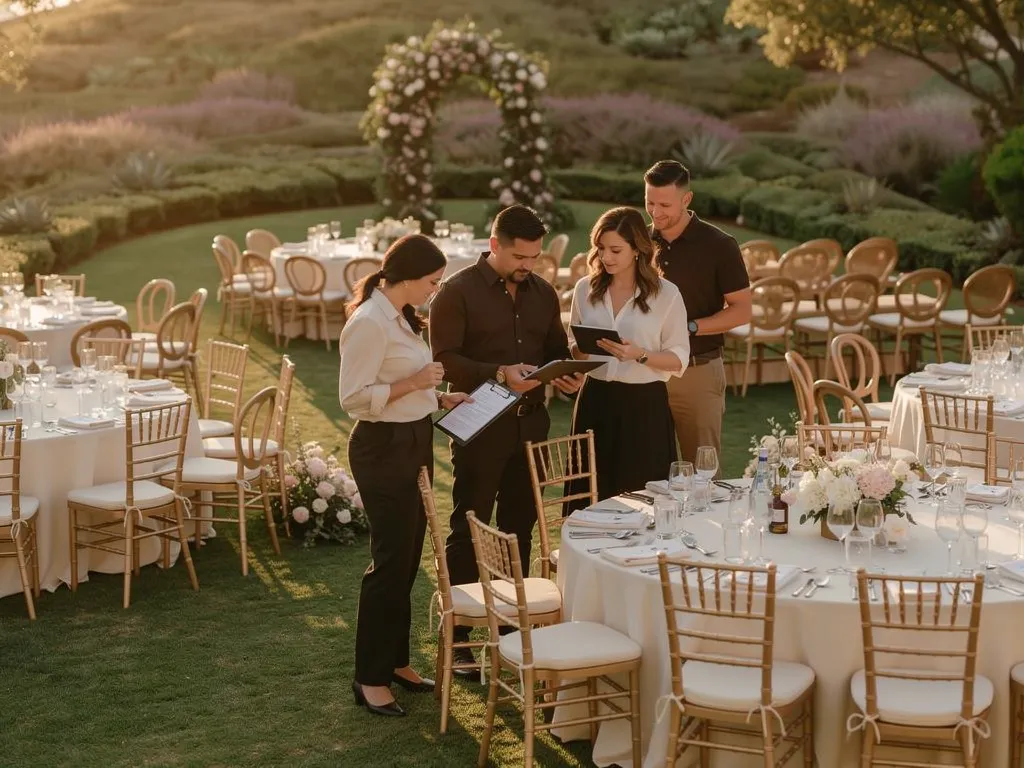
One of the most important parts of ceremony-to-reception planning has little to do with furniture style or rental quantity. It comes down to responsibility. If an item is expected to change location, someone needs to know that the task belongs to them before the wedding begins.
This is where a simple operational plan can prevent considerable confusion. Rentals, décor, florals, signage, and other elements may all involve different vendors, and being present on-site does not automatically mean a particular team is responsible for moving everything that needs to change.
Create a Simple Move List
A useful move list does not have to be complicated. For every item expected to change location, identify what moves, where it begins, where it goes, when it should move, and who is responsible. That small amount of detail turns a vague assumption into an executable plan.
For example, “ceremony chairs move to dinner” is not complete enough. The team still needs to know which chairs, how many, when the ceremony area becomes available, who physically moves them, and whether photography or another activity delays the relocation. The same structure can be applied to small tables, florals, décor, signage, or any rental expected to serve more than one purpose.
Separate Rental Responsibilities From Other Vendor Roles
Different pieces may fall under different teams. A rental provider may be responsible for specified rental setup and pickup, while the planner coordinates timing and vendor communication. A florist may handle floral installations, and the venue may control when particular areas become available. Other vendors may be responsible for their own equipment or styling elements.
These roles should be confirmed rather than inferred. The presence of a rental team on-site does not automatically mean that every chair move, floral transfer, decorative adjustment, or signage relocation falls within the rental agreement. Clear responsibilities help prevent vendors from reaching cocktail hour only to discover that each team expected someone else to handle the same task.
Confirm What Should Not Be Relocated
The transition plan should also identify what stays in place. Some elements may be too large to move practically, professionally installed, connected to other equipment, decorated by another vendor, or still needed in their original position. Moving them may also create unnecessary handling or interfere with another part of the event.
Creating both a move list and a do-not-move list gives the planning team a clearer understanding of the transition. Knowing what remains untouched can be just as important as knowing what changes.
Keep the Ceremony and Reception Visually Connected
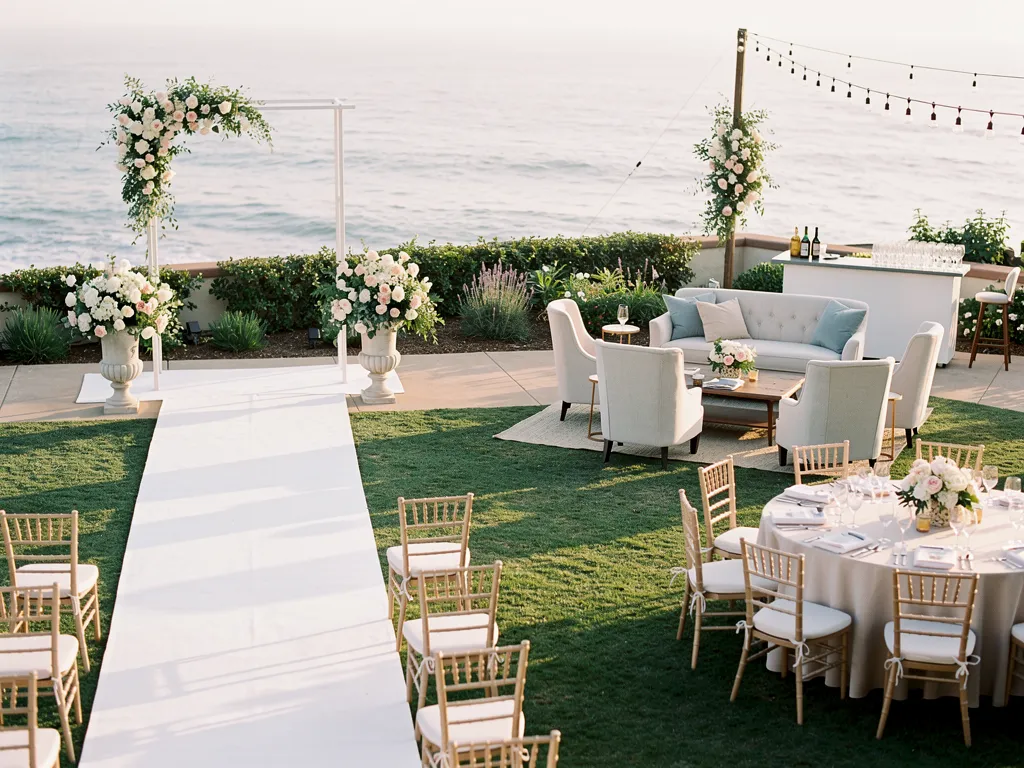
The ceremony and reception do not need identical rental setups to feel like parts of the same wedding. Visual continuity can come from a few repeated details rather than from physically transferring every element from one space to another.
This approach gives both parts of the event room to serve their own functions. The ceremony can remain relatively focused and restrained, while the reception becomes more layered with dining, lounge, bar, and entertainment elements. A consistent design thread can connect those environments without creating unnecessary relocation work.
Repeat One or Two Design Elements
A chair finish, linen tone, material, glassware style, or another selected detail can provide enough continuity between different areas. Ceremony seating may share a finish with selected reception furniture without being the exact same chairs, while a material introduced during the ceremony might reappear in the bar, tabletop, or lounge design.
These smaller connections help the event feel cohesive while allowing the actual rental inventories to remain distinct. Repetition becomes a design choice rather than a logistical requirement.
Let Each Part of the Wedding Do Its Own Job
The ceremony and reception have different functional needs. A ceremony may primarily require seating, a focal structure, and a small number of decorative or welcome elements, while the reception may need dining furniture, complete tabletop rentals, bars, lounge seating, dance flooring, staging, lighting, and catering support.
Trying to make the same group of rentals perform all of those functions can complicate the transition without improving the event. Cohesion comes from planning both spaces as parts of the same celebration, not from forcing every ceremony item into a reception role.
Use Continuity Instead of Literal Repetition
Two spaces can share a visual language without duplicating the same furniture. A ceremony may feel lighter and more understated, while the reception introduces additional layers as guests move into dining and entertainment. Shared finishes, materials, shapes, or levels of formality can create enough connection to make the progression feel intentional.
This gives planners more flexibility and keeps the transition from becoming dependent on moving pieces simply to preserve visual consistency.
Review the Transition Plan Before the Wedding
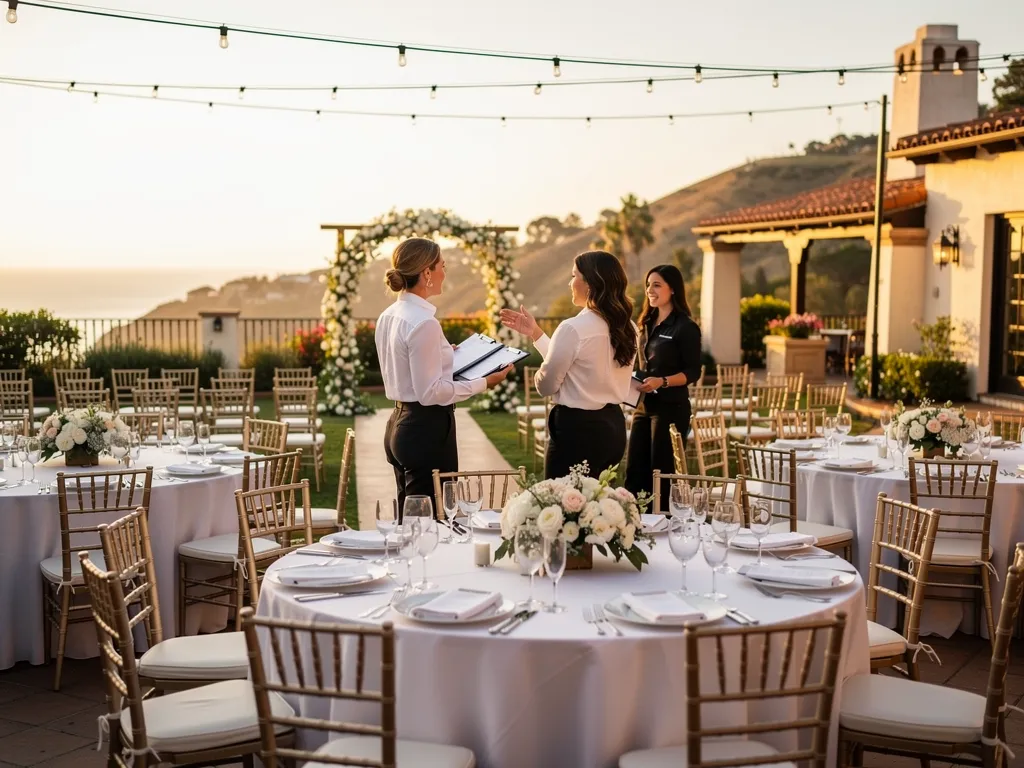
Once the rental order and event spaces are established, the final review should focus specifically on what happens after the ceremony. The objective is not to create another broad wedding checklist, but to make sure the transition itself is as simple and well assigned as possible.
A strong review should confirm which reception areas are already complete, which tasks genuinely depend on the recessional, who handles each change, and whether the event can continue comfortably if one element takes longer than expected.
What Is Already Complete Before Guests Arrive?
Start with the reception and identify everything that can be finished in advance. Where the venue allows, dining furniture, tabletop rentals, bars, lounge areas, flooring, staging, lighting, and other major components should already be in place before the ceremony begins.
Every element completed beforehand reduces pressure on the transition period and gives the event team more time to review the space before guests enter it.
What Must Change After the Recessional?
The list of post-ceremony tasks should be intentionally limited. If it includes an entire dining room, large infrastructure, several major furniture areas, and extensive décor installation, the plan may rely too heavily on cocktail hour.
A stronger approach isolates only those changes that truly depend on the ceremony ending, then completes everything else earlier. The shorter and clearer the post-ceremony list becomes, the more resilient the event timeline is likely to be.
Who Is Responsible for Every Change?
Every item on the move list should have an assigned person or vendor. “Someone will move it” is not enough when several teams are working on the same property and each one has its own responsibilities.
Timing and destination should be confirmed alongside ownership of the task so there is no uncertainty once the event is underway. This is particularly important for items that cross vendor boundaries, such as florals placed on rented structures or décor expected to move between ceremony and reception spaces.
What Happens if Something Cannot Move on Schedule?
A useful final test is whether the reception can still proceed if one part of the transition takes longer than expected. If ceremony chairs remain in place for additional photographs, is there still adequate seating for the next part of the event? If a decorative piece cannot be relocated immediately, does the reception still feel complete? If breakdown begins later than planned, can guests remain comfortable elsewhere?
A transition plan with some flexibility is usually stronger than one that depends on every item moving at precisely the right moment. The goal is not to eliminate every possible adjustment, but to prevent one delayed task from disrupting the entire reception.
Frequently Asked Questions
Should ceremony chairs be reused for the reception?
Reuse works well when the spaces are close together, enough transition time is available, and someone is clearly assigned to move the chairs. Separate seating may be more practical when relocation would delay dinner, interfere with photography, or leave guests without seats during cocktail hour.
What wedding rentals should be set before the ceremony begins?
Where the venue allows, reception tables and chairs, linens, tabletop rentals, bars, lounge furniture, dance flooring, staging, lighting, and tents should generally be set up before the ceremony so cocktail hour can function as part of the celebration rather than a primary setup window.
Who moves wedding rentals between the ceremony and reception?
Responsibilities vary by item and agreement — rental companies, planners, venues, and florists may each handle different parts of the transition, so every planned relocation should be confirmed before the event.
Does every ceremony-to-reception transition require a full room flip?
No. Many weddings use separate ceremony and reception spaces, or only a partial reset, with major reception elements installed in advance so just a few pieces need to move after the ceremony.
Plan for Less Movement, Not a Faster Flip
A smooth ceremony-to-reception transition isn’t about how fast the space can be flipped — it’s about reducing how much needs to change in the first place. Pre-setting the reception, leaving ceremony pieces in place when they still serve a purpose, and repurposing only what can move efficiently creates a more manageable transition for planners, vendors, and guests alike.
For couples and planners coordinating Santa Barbara wedding rentals, Ventura Rental Party & Events can support the furniture, tabletop pieces, bars, lounge rentals, flooring, staging, tenting, and lighting needed across both parts of the celebration — with setup, relocation, and pickup confirmed in advance.