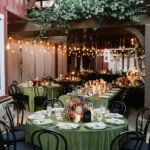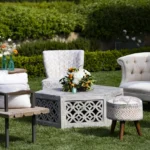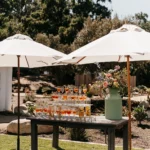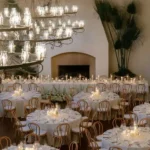

A polished wedding reception does not require every rental to match perfectly. In fact, receptions often feel more considered when tables, chairs, linens, glassware, lounge furniture, bars, and accent pieces have enough variation to create depth. The challenge is making those differences feel intentional rather than allowing the room to look like a collection of unrelated selections.
That is where layering becomes useful. Rather than treating every rental category as an independent choice, couples and planners can consider how one element supports, contrasts with, or quiets another. A distinctive chair may need a simpler linen behind it. A textured tablecloth may work best with restrained tabletop pieces. A statement bar can carry more visual weight when the nearby lounge furniture plays a supporting role. Thoughtfully layered Santa Barbara wedding rentals create these relationships across the reception so the finished environment feels collected, cohesive, and visually balanced without becoming overly matched.
Start With One Clear Design Anchor
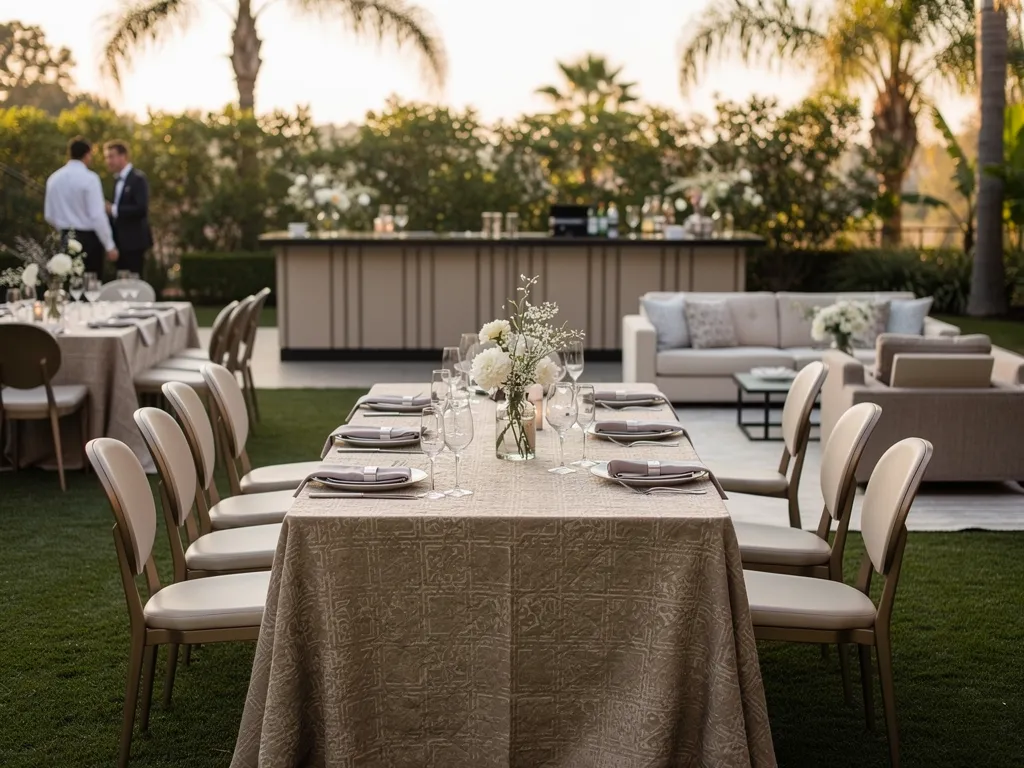
A layered reception is easier to build when one element establishes the visual direction before every other category begins competing for attention. The anchor does not have to be the largest or most expensive rental in the room. It simply needs enough character to give the surrounding selections something to respond to.
For one reception, that anchor might be a distinctive chair finish. At another, it could be the linen treatment, a statement bar, a strong tabletop direction, or a lounge collection with a recognizable material or shape. Once that decision is established, the remaining rentals can be evaluated according to whether they reinforce, soften, or intentionally contrast with it.
Decide Which Rental Category Carries the Strongest Visual Identity
Not every rental category needs to perform at the same visual level. If the dining chairs have a distinctive silhouette or finish, they may already contribute substantial character to the reception. Adding equally elaborate linens, glassware, chargers, and table accessories can make the dining area feel crowded rather than layered.
The same principle applies elsewhere. A sculptural bar can become a natural focal point without requiring equally bold cocktail furniture beside it. An upholstered lounge collection may introduce enough texture that the surrounding accent tables can remain simpler. A highly detailed linen can provide the visual interest at a guest table while the place settings take on a more restrained role.
Identifying the strongest visual element early creates hierarchy. Instead of asking how to make every rental more interesting, the design can focus on deciding where interest belongs.
Let Supporting Rentals Play a Quieter Role
Supporting pieces are not less important simply because they are visually quieter. Their role is to make the stronger elements feel intentional.
A simple dining table can allow a distinctive chair to stand out. Restrained glassware can make a charger or linen treatment more noticeable. Clean-lined side tables can give textured lounge seating more room to carry the design. These relationships create contrast without requiring obvious differences in color or style.
This is especially useful when a reception includes several rental categories with their own personalities. Furniture, tabletop pieces, lounge areas, and bars can all contribute to the event, but they do not need to compete equally for attention. Allowing some elements to recede gives the overall design more structure.
Avoid Choosing Every Item as a Standalone Favorite
One of the easiest ways to lose cohesion is to choose each rental because it looks impressive on its own. A chair, linen, charger, glass, table, sofa, and bar can each be beautiful individually while creating an incoherent room when assembled together.
The better question is not whether a piece is attractive by itself, but how it behaves beside the selections already made. Does its finish repeat something already present? Does its texture create useful contrast? Is its level of formality consistent with the surrounding rentals? Does it introduce a new idea that the reception actually needs?
Evaluating combinations rather than isolated pieces helps prevent the design from becoming a collection of favorites without a common visual logic.
Layer Materials Instead of Matching Everything Exactly
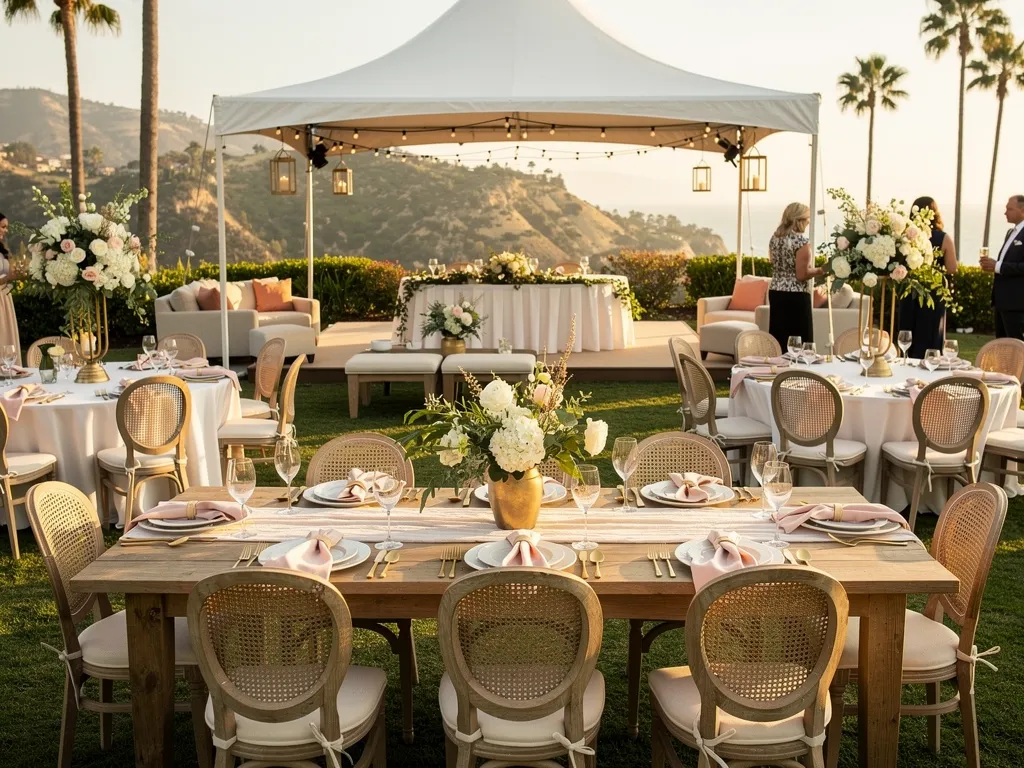
A cohesive reception does not need one finish repeated across every table, chair, bar, and lounge piece. Layering works because different materials can coexist while sharing enough visual qualities to feel related.
Wood, metal, glass, upholstery, linen, and other materials each bring a different texture and level of visual weight. The goal is not to limit that variety, but to introduce it deliberately so one material complements the next rather than creating a series of unrelated contrasts.
Mix Finishes With a Common Thread
Different materials can feel connected through subtler characteristics than exact color matching. Warm undertones can link a wood table with metallic accents. Matte finishes can soften highly reflective tabletop pieces. Clean lines can create continuity between furniture made from completely different materials.
The shared quality might also be the overall level of formality. Refined upholstery, polished metal, crisp linen, and clear glass can feel cohesive even though none of those materials match literally. Conversely, a more relaxed reception may bring together natural textures, softer fabrics, warm finishes, and less formal silhouettes.
This approach gives planners more freedom than selecting an entire room from a single matching collection. The pieces can vary while still speaking the same visual language.
Use Contrast Deliberately
Contrast can make individual rentals more noticeable when it is used selectively. A softly textured linen may provide an effective background for a more structured chair. Clear glassware can introduce lightness against a substantial tabletop. Metallic or reflective details may add refinement alongside matte or natural materials.
The important distinction is between intentional contrast and accidental difference. Two pieces do not need to resemble each other, but there should be a reason they work together. That relationship may come from proportion, finish, formality, or the way one material balances another.
When contrast has a purpose, it creates depth. When every category introduces an unrelated idea, the design begins to feel fragmented.
Know When Another Material Is Too Much
Layering should not be confused with accumulation. Once a reception already combines several strong finishes, adding another material can weaken the composition rather than enrich it.
A dining area that includes textured linens, detailed chairs, metallic chargers, colored glassware, and substantial florals may already have enough variation. Introducing another highly visible surface or finish simply because it is available can make the table harder to read.
This is where editing becomes part of the design process. Before adding another material, consider whether it creates a useful connection or merely introduces another point of attention. A layered reception should feel dimensional, not overloaded.
Vary Table Shapes Without Making the Dining Area Feel Disconnected
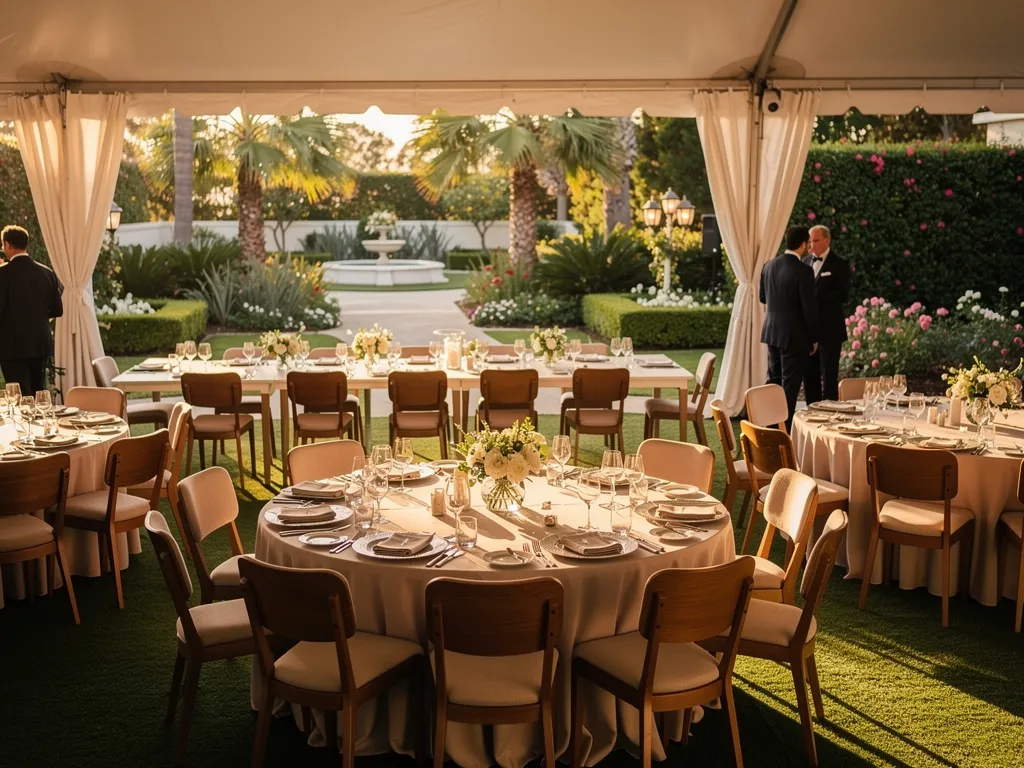
Table shape can contribute significantly to the overall character of a reception. Different shapes create different visual rhythms, and mixing them can prevent a large dining area from feeling repetitive. The effect is strongest when the tables are intentionally related through other rental choices.
Rather than treating every table format as a separate design, planners can use chairs, linens, tabletop pieces, or finishes to create continuity. This allows the dining area to have variation while still reading as one environment.
Use Table Shape as a Design Element
Round tables create repeated clusters throughout a reception, while long or rectangular tables establish stronger visual lines. Combining the two can introduce variation, especially when different areas of the reception need slightly different visual identities.
The decision does not need to become a complicated styling exercise. A mixed-table reception can still feel calm when the shapes are allowed to provide the variation while other elements remain consistent.
For example, the same chair finish may appear across several table types, or a similar linen treatment may connect rounds and rectangles. This creates enough repetition to make the difference in shape feel deliberate.
Connect Different Tables Through Shared Details
Mixed table shapes work best when at least one or two visible details carry across the dining area. That might be the same chair, related linen tones, consistent glassware, a shared charger, or a common floral direction.
These connections do not need to appear identically on every table. A long table might use a runner while rounds use full linens in a related tone. One table format might carry slightly more layered tabletop details while another remains simpler. The relationship can be flexible as long as guests can still see that the settings belong to the same reception.
This approach creates variation without making each table feel like a separate design concept.
Let Special Tables Be Intentionally Different
Sweetheart tables, head tables, cake tables, or other focal tables do not have to duplicate the guest tables exactly. In many receptions, giving these areas an additional layer helps establish visual emphasis where it is useful.
A focal table might introduce a different linen texture, a stronger chair silhouette, or a more detailed tabletop while still repeating materials used elsewhere. The connection can be subtle, such as carrying over the same glassware or metal finish rather than recreating the guest-table design piece by piece.
The distinction should feel intentional enough to signal that the table has a different role without making it look unrelated to the rest of the reception.
Build Tabletop Layers From the Table Up
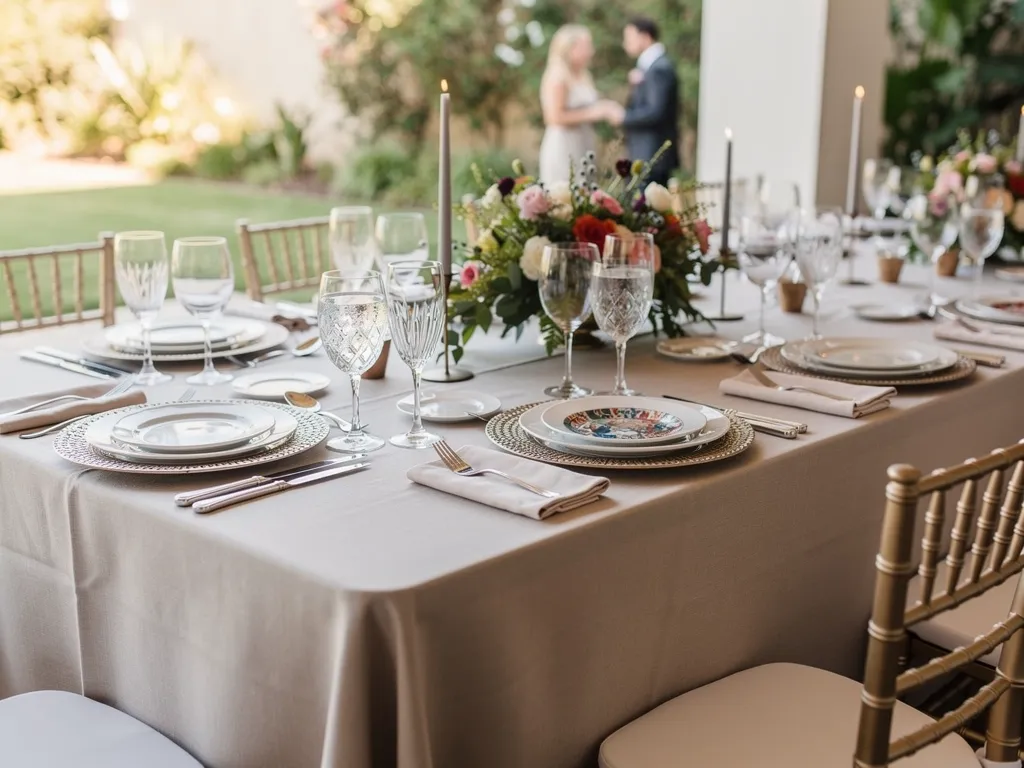
Tabletop design provides one of the clearest opportunities for layering because several materials and finishes naturally come together within a small area. Linens, chargers, china, flatware, glassware, and decorative elements can each contribute to the table, but they should not all demand the same level of attention.
A successful tabletop has hierarchy. Some elements establish the background, others introduce texture or contrast, and a smaller number may provide the strongest visual detail. Thinking about those roles makes it easier to create richness without adding unnecessary complexity.
Treat the Linen as Background, Texture, or Statement
The linen is often one of the largest uninterrupted surfaces at the table, which means it can influence how every smaller element is perceived. It can function quietly as a background, introduce a tactile layer, or become one of the strongest design features in the setting.
When a linen already carries substantial texture, pattern, or sheen, the surrounding tabletop may benefit from greater restraint. A simpler linen, by contrast, may create room for stronger glassware, more detailed chargers, or a distinctive place setting.
The key is deciding what the linen is supposed to contribute rather than adding visual interest to every layer simultaneously.
Let China, Flatware, and Glassware Work at Different Visual Levels
The smaller pieces on the table do not need equal prominence. A distinctive charger can create enough detail beneath a relatively simple plate. Statement glassware may provide color or shape while flatware remains understated. Detailed china can take the lead when the surrounding pieces are quieter.
This approach makes the tabletop easier to read because guests are not confronted with several equally strong details at once. Instead, attention moves naturally across the setting, allowing individual choices to be appreciated without becoming visually competitive.
The same principle also helps connect tabletop selections with furniture and linens. If the dining chairs already have a strong presence, the tabletop can carry detail at a smaller scale rather than repeating that visual weight.
Stop Layering When the Table Already Feels Complete
A sophisticated table is not necessarily the one with the most pieces. Additional layers should serve a clear visual or functional purpose rather than being included because another decorative opportunity remains.
One useful way to evaluate the table is to view it from more than one perspective. Close up, smaller details such as glassware and chargers may feel important. From across the reception, the linen, chair silhouette, floral scale, and overall density of the table become more noticeable.
If the table already feels balanced from both distances, another layer may not improve it. Knowing when to stop is part of creating an intentional composition.
Make Lounge Furniture Related to the Reception Without Making It Match
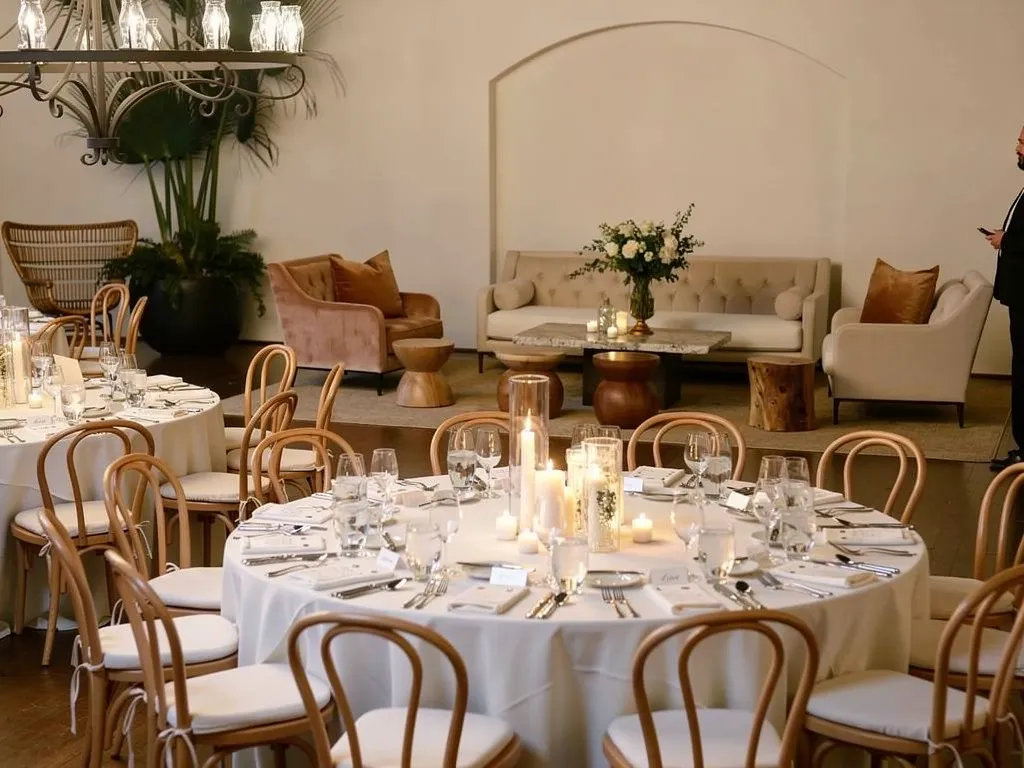
Lounge furniture gives a reception an opportunity to introduce materials and textures that may not appear in the dining area. Upholstery, softer forms, accent tables, and more substantial furniture can add depth to the overall environment without requiring the lounge to duplicate the dining design.
The strongest lounge areas feel like an extension of the reception rather than a separate room assembled from an unrelated collection. That connection can be created through only a few shared cues.
Carry One Design Cue From Dining Into Lounge Areas
A lounge grouping may share a finish, tone, material, or level of formality with the dining area without repeating the same furniture style. A metal detail from the dining chairs might reappear in accent tables. A linen tone may relate to the upholstery palette. Clean dining furniture may be paired with lounge pieces that carry similarly restrained lines.
These relationships can be subtle. Guests do not need to identify the repeated detail consciously for the spaces to feel connected.
The goal is not to convert dining chairs into sofas or reproduce the tabletop palette in upholstery. It is simply to give the two environments enough shared visual language that the transition feels natural.
Use Upholstery to Add a New Texture
Lounge furniture can introduce softness and tactile interest that may be impractical to repeat across the entire dining setup. Upholstery allows for deeper texture, more substantial materials, and a different sense of comfort without changing the broader visual direction.
This makes the lounge an ideal place to add a new layer. A reception dominated by harder surfaces such as wood, metal, glass, and tabletop pieces can benefit from the contrast of upholstered furniture, provided its tone and style remain connected to the rest of the event.
That difference gives the lounge its own identity while still allowing it to belong within the larger reception.
Keep Lounge Groupings From Becoming a Separate Design Story
Because lounge furniture often comes in visually complete groupings, it can be tempting to treat the area as an entirely separate styling opportunity. Too much separation, however, can make the lounge feel detached from the reception around it.
A new upholstery color, furniture shape, accent-table material, rug treatment, and decorative palette introduced all at once may create a space that looks appealing on its own but no longer relates to the dining or bar areas.
Keeping one or two connections in place prevents that divide. The lounge can still have a different level of softness and personality without becoming an unrelated design concept.
Treat the Bar as Either a Focal Point or a Supporting Element

Bars tend to carry more visual weight than many other rental pieces because of their scale and their role as active gathering points. That makes it useful to decide early whether the bar should become a design feature or remain a quieter part of the overall reception.
Either approach can work. What creates problems is allowing a substantial bar to compete unintentionally with several other focal elements nearby.
Decide Whether the Bar Should Stand Out
A statement bar can anchor part of the reception and create a recognizable point of interest. When the bar already has strong shape, finish, texture, or architectural presence, nearby cocktail furniture and decorative pieces can remain more restrained.
A simpler bar can work differently. It may support a stronger lounge grouping, elaborate tabletop design, or another focal rental without demanding attention for itself.
Giving the bar a defined visual role helps control how many competing statements appear within the reception.
Connect the Bar to the Rest of the Reception Through Details
Even when the bar is deliberately distinct, it can still connect to surrounding areas through smaller details. A finish may repeat from dining furniture, glassware can relate to the tabletop design, or nearby cocktail tables can carry a material used elsewhere.
These repeated cues keep the bar from appearing as an isolated installation. They also allow planners to introduce variety without relying on exact matching.
The strongest connections are often the quietest ones. One repeated finish may be enough to integrate a bold bar into an otherwise restrained design.
Avoid Adding Layers Simply Because the Bar Area Feels Empty
A large bar does not necessarily need extensive surrounding décor, multiple accent pieces, or additional furniture simply because open space remains nearby. Negative space can help the bar read more clearly and prevent the surrounding area from becoming visually congested.
Before adding another decorative layer, consider whether the bar itself already provides enough presence. Leaving room around a strong element can make it feel more intentional than surrounding it with additional pieces competing for the same attention.
Know When the Reception Has Enough Layers

Layering is most effective when each addition creates a meaningful relationship with what is already present. Once every rental category begins demanding attention, the reception can lose the hierarchy that made the individual choices effective in the first place.
Editing is therefore just as important as selecting. The final composition should contain enough variety to create depth without allowing that variety to become visual noise.
Too Many Statement Pieces Compete for Attention
A statement chair, elaborate linen, detailed tabletop, sculptural bar, textured lounge collection, and prominent decorative installation may each work individually. Placed together, they can make it difficult to determine where attention should settle.
Choosing a few areas to carry stronger visual weight allows the remaining rentals to support them. This gives statement pieces more impact because they are not surrounded by elements trying to accomplish the same thing.
Too Much Matching Can Feel Flat
The opposite problem occurs when every rental uses the same finish, color, material, or style. While the room may technically coordinate, it can lack depth because nothing changes enough to create contrast.
A layered design benefits from controlled variation. Different textures, shapes, or materials can keep the reception visually interesting while selective repetition maintains cohesion.
The objective is neither perfect matching nor constant contrast. The strongest results usually occupy the space between those two extremes.
Too Many Unrelated Ideas Feel Accidental
Variation only works when there is a connecting logic. If several rental pieces share no relationship in finish, scale, shape, material, or formality, the reception can begin to feel assembled rather than designed.
When a piece seems disconnected, consider whether its contrast serves a purpose. If it does not strengthen another element or introduce a useful new layer, it may not belong in the composition.
This is particularly important late in the planning process, when additional rentals can be tempting simply because another option becomes available.
Edit Before Adding Another Rental
Before introducing another accent, review what the current design already accomplishes. A lounge area may not need another side table. A dining table may not need another tabletop layer. A bar may not need a separate decorative installation if its finish already carries enough visual impact.
Removing or declining a piece can sometimes strengthen the reception more than adding something new. The finished design should feel complete because the relationships between the rentals are resolved, not because every possible layer has been used.
Frequently Asked Questions
Can different chair and table styles work in the same reception?
Yes. Different chair and table styles can work together when another design element creates continuity between them. A shared finish, linen treatment, tabletop direction, or overall level of formality can make mixed furniture feel intentional rather than mismatched. The goal is not to make each piece identical, but to establish enough visual connection that the differences feel deliberate.
Do all wedding rentals need to match?
No. A cohesive reception can include varied materials, furniture styles, textures, and finishes. Exact matching can sometimes make a design feel flat, while controlled contrast adds depth. Cohesion comes from creating relationships between the pieces through repeated materials, shapes, tones, finishes, or levels of formality.
How many different materials should a reception use?
There is no fixed number because some materials carry far more visual weight than others. A reception might comfortably combine several subtle materials while becoming crowded with only a few highly distinctive ones. Rather than counting finishes, planners should consider whether each new material has a clear relationship with the existing design and whether another layer genuinely improves the composition.
How can lounge furniture coordinate with the dining area?
Lounge furniture can relate to the dining area through one or two shared design cues, such as finish, tone, shape, material, or level of formality. It does not need to match the dining chairs or tables exactly. Upholstery can introduce a softer texture while repeated accents help the lounge remain connected to the larger reception.
Create Depth Without Losing Cohesion
A layered reception should not look as though every rental came from the same matching set, but it should not feel like unrelated pieces were selected independently either. The strongest designs occupy the space between those two extremes, using controlled repetition, material contrast, varied scale, and clear visual hierarchy to create depth without sacrificing cohesion.
When selecting Santa Barbara wedding rentals, couples and planners can achieve that balance by evaluating combinations rather than individual pieces. Tables can vary while sharing a common detail, lounge furniture can introduce new texture without becoming a separate design story, and statement pieces can stand out because quieter rentals give them room to do so. Ventura Rental Party & Events can help bring those interconnected categories together so the final reception feels layered, deliberate, and complete without becoming overdesigned.