
For a Santa Barbara fall wedding, those responsibilities should be established well before event day. A planner, caterer, venue team, florist, rental provider, and other vendors may all be involved in preparing the reception, but they do not necessarily handle the same parts of the setup.
Knowing where one vendor’s responsibilities end and another’s begin can prevent missing place settings, delayed floral installation, crowded vendor access, or a reception space that is still being assembled as guests approach.
Understand What “Setup” Means for Wedding Rentals
Wedding rental setup can refer to several different tasks. Delivery, furniture placement, structural installation, linen placement, and tabletop setup should not be treated as interchangeable terms.
Before finalizing the event schedule, couples and planners should understand exactly what each vendor will do once rentals reach the venue.
Separate Delivery From Event-Day Placement
A rental delivery confirms that the selected items have arrived at the property, but it does not necessarily mean every piece will be arranged in its final event-day position.
Larger rentals may require professional placement or installation. Dining tables and chairs, for example, need to follow the approved reception layout before place settings can be prepared. At an outdoor wedding, tents, flooring, lighting, or other structural elements may also need to be completed before the dining area can be dressed.
Tabletop setup is a separate stage. Depending on the reception, this may include arranging:
-
Table linens and runners
-
Napkins
-
Charger plates
-
Dinnerware
-
Flatware
-
Water, wine, and other glassware
Florals, candles, table numbers, menus, place cards, and other decorative details may then be added by other members of the event team.
Treating these as separate stages makes it easier to build a realistic setup plan.
Assign Responsibilities Before the Wedding Day
There is no universal rule that determines who sets every wedding table. Responsibilities depend on the venue, caterer, planner, rental agreement, and other vendors involved.
Before the wedding, confirm responsibilities with the:
-
Rental provider
-
Wedding planner or coordinator
-
Caterer
-
Venue team
-
Florist or event designer
The goal is to eliminate assumptions. If the caterer expects the planner to arrange flatware while the planner expects the caterer to handle it, the issue may not become obvious until setup is already underway.
A simple responsibility list can prevent that problem.
Know What Ventura Rental Sets Up and What Requires Another Plan
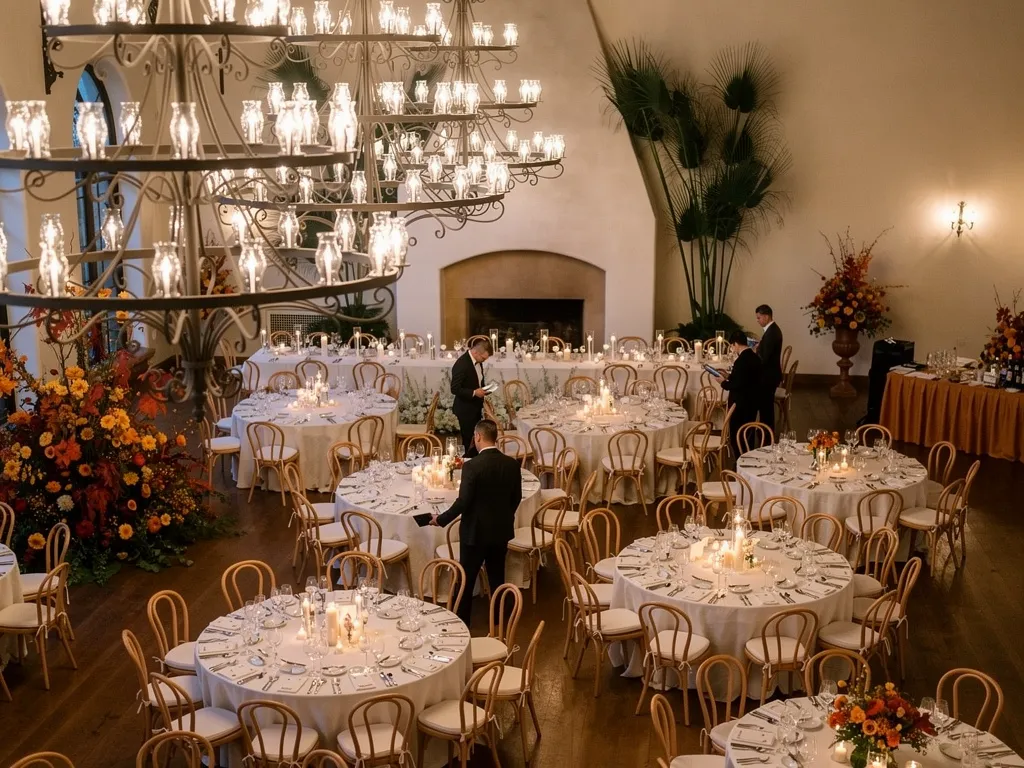
Ventura Rental offers a broad selection of wedding rentals, but not every rental category includes the same type of setup.
The company’s current FAQ states that setup is available for tables, chairs, pop-up tents, and umbrellas, while tabletop items such as linens, glassware, china, and flatware are not set up by the rental team.
That distinction is important when building the event-day schedule.
Complete the Larger Rental Placement First
Dining tables and chairs establish the reception layout. These foundational pieces should be in their intended locations before anyone begins dressing the tables.
The final placement should reflect the approved floor plan, including space for guest circulation, catering service, bars, entertainment, and other reception functions.
Once the furniture layout is established, the team responsible for tabletop preparation can work from the confirmed arrangement rather than having to reset tables after place settings have already been added.
At tented or more complex outdoor events, the same principle applies to structural rentals. The physical reception environment should be ready before the smaller decorative and dining pieces are introduced.
Create a Separate Plan for Linens and Tabletop Items
Because tabletop rentals require a separate setup plan, identify who will handle each category.
For example, one team may place the linens while another arranges china, glassware, and flatware. In other cases, a caterer or planner may manage most of the tabletop preparation.
Whatever arrangement is chosen, it should be documented before the event.
A useful tabletop responsibility list can include:
-
Who places the tablecloths or runners?
-
Who folds or positions the napkins?
-
Who sets chargers and china?
-
Who arranges flatware?
-
Who places beverage glassware?
-
Who adds menus or place cards?
-
Who performs the final check?
This is especially important for receptions with several different table types or place-setting requirements.
Coordinate the Planner, Caterer, Florist, and Rental Team
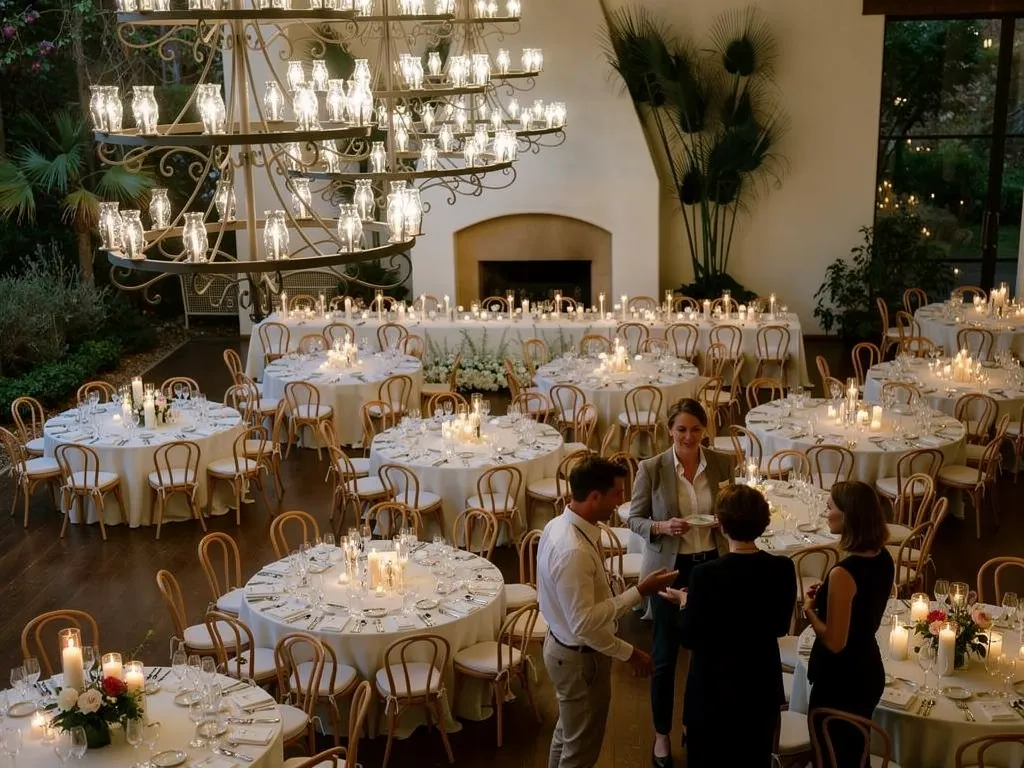
A finished wedding table may look like a single composition, but several vendors are often responsible for creating it.
Good coordination allows each team to complete its portion of the setup without interfering with the work that comes before or after it.
Coordinate Tabletop Placement With the Caterer
The catering team should be involved in tabletop planning because the food and beverage service determines what guests actually need at their seats.
Before setup begins, confirm which plates, utensils, glasses, and service pieces belong at the table and which items will be introduced later during the meal.
The caterer may also need to confirm details such as:
-
The china required for the selected menu
-
The appropriate flatware for each course
-
Water and beverage glassware
-
Bread or side plates when applicable
-
Serving pieces required near the dining area
-
Items the catering team intends to place itself
This coordination helps prevent tables from being dressed with unnecessary pieces or missing something essential to the planned service.
The discussion should happen before event day rather than being resolved while the reception is being assembled.
Coordinate Florals and Finishing Details With Tabletop Setup
The florist, event designer, stationery team, or planner may also need access to the same tables.
Centerpieces, candles, menus, table numbers, and place cards should therefore be considered when setting the order of work.
For example, installing a large floral arrangement before linens and place settings are complete may make it harder for the tabletop team to work efficiently. Conversely, waiting until the last possible moment to add florals may create unnecessary pressure immediately before guest arrival.
A coordinated sequence allows each vendor enough working room while protecting the finished pieces already in place.
The objective is not simply to make the table attractive. It is to give every vendor a practical window in which to complete the work correctly.
Build a Clear Setup Sequence for the Reception
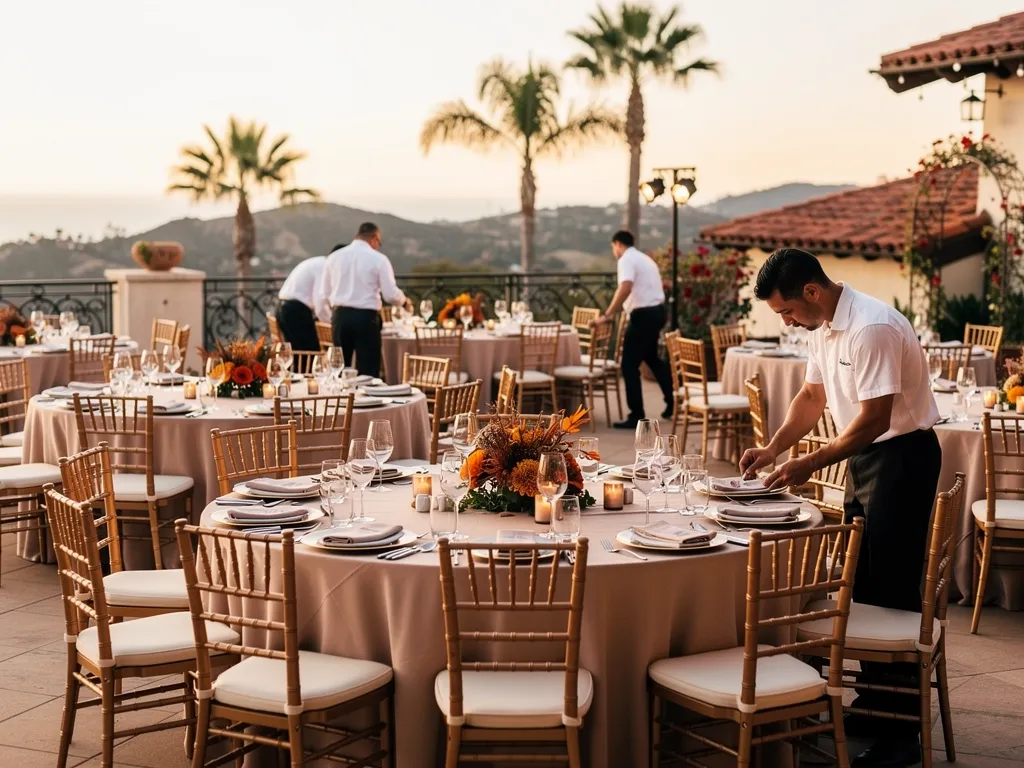
An organized wedding setup follows a sequence. The exact order will vary by venue and vendor team, but foundational elements generally need to be completed before detailed tabletop work begins.
Rather than giving every vendor the same broad setup window, build the reception schedule around dependencies between tasks.
Complete the Foundational Setup Before Dressing the Tables
A typical reception setup may progress through stages such as:
-
Structural or flooring installation, where required
-
Dining table and chair placement
-
Linen placement
-
China, chargers, flatware, glassware, and napkin setup
-
Florals, candles, menus, place cards, and table numbers
-
Final planner and catering review
This should be treated as a planning framework rather than a rigid rule.
Some vendors may be able to work simultaneously in different parts of the property, while certain venue restrictions may require a different sequence. What matters is that the team agrees on the order before arriving.
Give Each Vendor a Defined Setup Window
A schedule that simply says “vendor setup” may not provide enough guidance for a multi-vendor reception.
Instead, identify when each team can enter the dining area and what needs to be completed before the next stage begins.
For example, the team arranging china should know when dining tables will be in position. The florist should know when linens and tabletop pieces are expected to be ready. The caterer should know when the dining area will be clear for a final service review.
Defined setup windows also help keep vendor traffic under control at properties where loading areas, entrances, or pathways are shared.
Account for Santa Barbara Venue Access
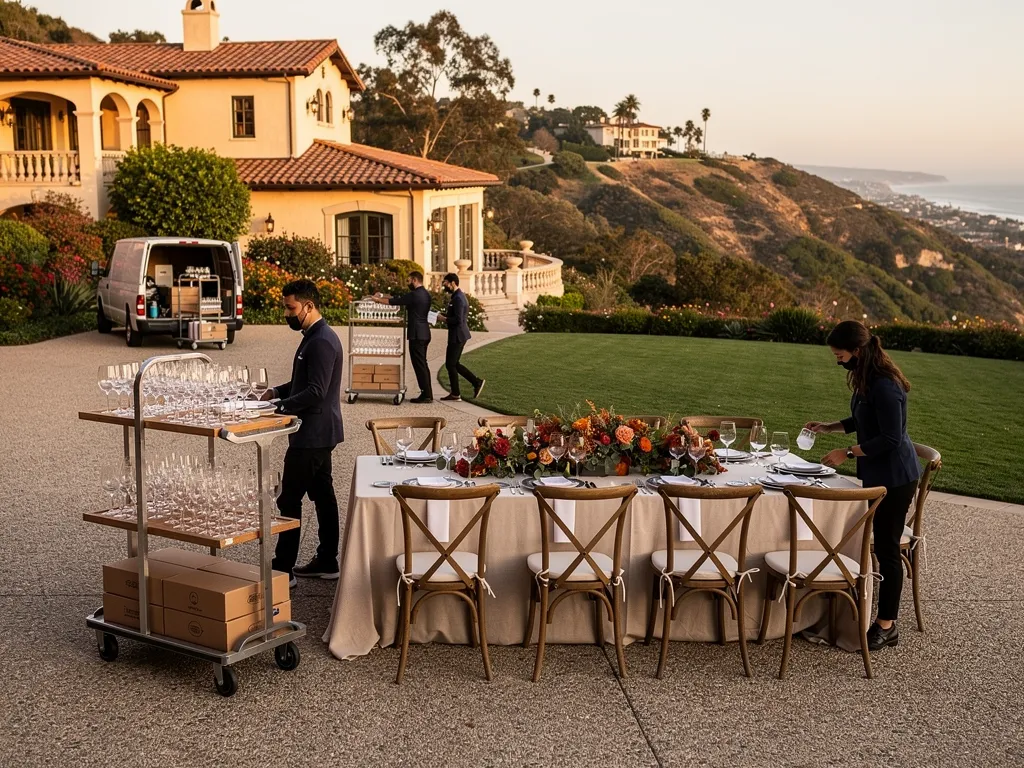
Santa Barbara weddings take place across a wide variety of properties, from downtown and historic settings to gardens, coastal venues, hillside estates, and nearby communities such as Montecito, Goleta, and Carpinteria. Ventura Rental serves events across these areas, so the physical setup plan should reflect the property rather than rely on a standard timeline.
A ballroom with direct service access can operate very differently from an estate reception where rentals must travel farther between the unloading area and dining space.
Confirm Load-In and Setup Windows
Before finalizing the reception schedule, confirm the venue’s requirements for:
-
Rental delivery times
-
Vendor arrival times
-
Loading and unloading areas
-
Vendor entrances
-
Parking or access restrictions
-
Temporary rental staging
-
Reception-space availability
-
Setup completion deadlines
The planner or venue coordinator should also determine whether multiple vendors can load in simultaneously or whether arrivals need to be staggered.
Ventura Rental notes that it regularly works with Santa Barbara venues, planners, and caterers, making venue-specific coordination an important part of local event preparation.
Consider the Actual Route to the Reception Tables
The loading area may not be immediately beside the dining space.
Historic properties, estates, gardens, coastal locations, and other outdoor settings can involve gates, pathways, stairs, service corridors, or longer distances between unloading and setup areas.
Knowing that route in advance helps determine how much time vendors realistically need.
It can also identify areas that should remain clear while rentals and décor are being moved through the property.
This planning does not need to be complicated. The important step is simply to evaluate the actual site rather than assuming every Santa Barbara wedding venue provides the same access conditions.
Prepare the Tabletop Plan for a Fall Reception
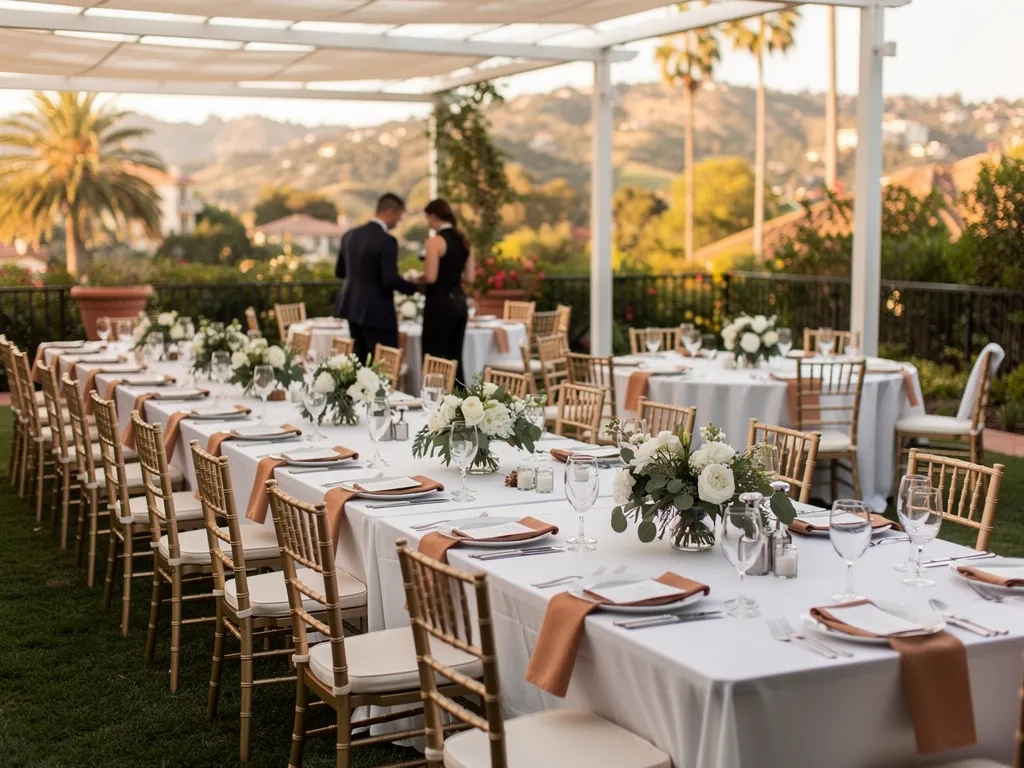
A fall wedding does not require an entirely different approach to tabletop setup, but seasonal timing and the way the venue is being used can affect the event-day plan.
The focus should remain on making the dining area functional and guest-ready rather than adding seasonal details simply for their own sake.
Plan Around Indoor-Outdoor Transitions
Many Santa Barbara weddings use more than one event area. A ceremony, cocktail hour, dinner, and dancing may take place across different indoor and outdoor spaces.
When the reception dining area is separate from the earlier portions of the event, confirm when vendors can begin working there and whether guest movement will cross through the setup zone.
For a reception that moves between indoor and outdoor areas, also verify which dining rentals belong in each space.
The goal is to keep setup activity separate from guest circulation whenever possible.
Keep Seasonal Styling Secondary to Function
Fall can influence the linens, florals, tabletop finishes, and overall visual direction of the reception, but those details should still support the way the table functions.
A complete place setting needs sufficient room for guests. Floral arrangements should not interfere with meal service. Glassware and flatware should reflect the planned menu and beverage service rather than being added only for visual effect.
Ventura Rental has already covered fall tabletop styling in depth, including the coordination of linens, chargers, china, flatware, and glassware. For event-day preparation, the more important question is whether those selected pieces can be arranged efficiently and consistently across the reception.
Complete a Final Tabletop Check Before Guests Arrive

Once the rental, catering, floral, and stationery teams have completed their portions of the setup, the reception tables should receive a final review.
This check is less about redesigning the tables and more about catching practical issues while there is still time to correct them.
Compare the Tables With the Final Seating Plan
Start by confirming that each dining table has the expected number of settings.
Then check tables that may require a different arrangement, such as:
-
Sweetheart tables
-
Head tables
-
Family tables
-
Children’s tables
-
Vendor dining areas, when applicable
If the seating plan changed after the rental quantities were finalized, the planner should verify that those changes have been reflected in the tabletop setup.
Special meal requirements or other guest-specific notes should also be coordinated with the caterer rather than assumed from the place setting alone.
Review the Complete Guest Experience
Walk through the dining area from the perspective of a guest and the catering team.
Look for:
-
Missing plates, glasses, or flatware
-
Inconsistent place settings
-
Chairs that cannot be pulled out comfortably
-
Décor occupying necessary dining space
-
Menus or place cards in incorrect positions
-
Glassware that conflicts with the beverage plan
-
Tables that have not been completely dressed
-
Service paths blocked by furniture or décor
The final review should be practical and quick. It is the last opportunity to make sure the reception setup works as planned before guests enter the space.
Frequently Asked Questions
Does Ventura Rental Set Up China, Flatware, and Glassware?
No. Ventura Rental’s current FAQ states that its team does not set up tabletop items such as linens, glassware, china, and flatware. Setup is available for certain other rental categories, including tables and chairs. Couples and planners should determine in advance who will handle tabletop placement.
Who Usually Sets Up Wedding Place Settings?
It depends on the event. The planner, caterer, venue team, or another designated vendor may handle some or all of the tabletop setup. Confirm each vendor’s responsibilities before the wedding rather than assuming who will complete the work.
When Should Wedding Tabletop Rentals Be Set Up?
Tabletop items should generally be arranged after the dining tables are in their final positions and before the reception space needs to be guest-ready. Exact timing depends on venue access and the schedules of the planner, caterer, florist, and other vendors.
What Should Be Confirmed With a Santa Barbara Venue Before Setup?
Confirm vendor access times, loading instructions, entry points, parking or unloading restrictions, reception-space availability, staging areas, and the deadline for completing setup.
Can Ventura Rental Help With Tabletop Rental Selection?
Yes. Ventura Rental offers event consultation and carries tabletop rentals alongside linens, furniture, tents, lighting, and other event rentals. Its team can help clients review rental selections for weddings and events throughout Santa Barbara and surrounding communities.
Coordinate Your Santa Barbara Wedding Rentals With Confidence
A polished wedding table depends on more than selecting the right china, flatware, glassware, chargers, and linens. Every item also needs to reach the correct table, be placed at the right point in the setup process, and work with the plans established by the caterer, planner, florist, and venue.
For a fall wedding in Santa Barbara, defining those responsibilities early can make the final hours before the reception far more organized.
Ventura Rental provides wedding and event rentals throughout Santa Barbara and nearby communities, with a broad inventory that can support the dining area as well as the larger event environment. Couples and planners can browse the available rental collections or connect with an event consultant to begin coordinating the pieces required for the celebration.