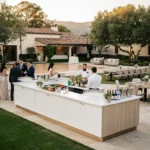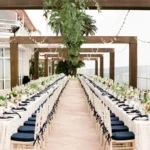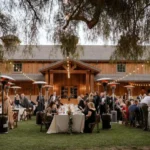

Catering a private estate wedding requires a different kind of planning than serving dinner in a venue with a permanent kitchen, built-in service stations, and predetermined dining areas. At a Montecito estate, food preparation, guest dining, beverage service, and back-of-house operations may all occupy separate parts of the property. The equipment plan needs to support those relationships from the beginning.
That makes catering equipment rental in Montecito less about assembling a generic list of chafing dishes and serving pieces and more about understanding how the meal will actually be served. A plated dinner, buffet, family-style meal, or collection of food stations each creates different requirements for tableware, service tables, holding equipment, serving pieces, and staff circulation.
Ventura Rental Party & Events serves Santa Barbara County, including Montecito, and its available catering-related inventory includes items such as chafing dishes, serving pieces, flatware, and glassware that can be coordinated with the wider reception rental plan.
Why Estate Catering Requires Its Own Rental Plan

Private estates offer flexibility, but that flexibility also means the catering environment often has to be created around the property.
Unlike a traditional event venue, an estate may not have a permanent service area positioned conveniently beside the reception. The catering team may need to work from a temporary preparation or staging area and move between that space and guest-facing dining areas throughout the event.
The rental plan should account for those practical needs before decorative decisions begin to dominate the conversation.
Private Estates May Not Have Built-In Event Infrastructure
Every estate functions differently.
Some may offer convenient preparation areas close to the reception, while others may require a more distinct back-of-house zone. Outdoor dining may also take place on a lawn, terrace, courtyard, or under a tent rather than in a room designed specifically for food service.
That can affect where service tables are positioned, how equipment is staged, and how catering staff move throughout the evening.
Rather than assuming the property will accommodate a standard catering setup, the caterer, planner, and rental team should review how the selected area will actually function.
The Menu Determines the Equipment
The menu and service format should drive the catering equipment order.
A plated dinner depends heavily on coordinated place settings and back-of-house organization. A buffet requires service surfaces, serving pieces, and equipment appropriate to the caterer’s menu. Family-style dining shifts more of the service equipment directly onto guest tables, while stations create several smaller service areas that may each need their own supporting pieces.
Starting with the food and service plan prevents unnecessary rentals while reducing the chance that essential equipment is discovered late in the process.
Catering Equipment Should Be Planned With the Layout
The location of the dining area matters just as much as what is being served.
Service staff need practical routes between preparation areas, guest tables, buffets, beverage service, and clearing areas. If those routes cross the busiest guest pathways repeatedly, even a beautiful reception can become unnecessarily difficult to operate.
The dining layout should therefore be evaluated from both the guest and catering perspectives.
Start With the Style of Meal Service

The same guest count can require very different equipment depending on how dinner will be presented. Before creating an equipment list, establish whether the reception will use plated service, a buffet, family-style dining, stations, or a combination of formats.
Plated Dinner Service
A plated dinner places greater emphasis on coordinated place settings and service organization.
China, flatware, and glassware need to reflect the number and type of courses being served, while the catering team may also require staging surfaces and service pieces away from the guest tables.
Because much of the activity happens behind the scenes, the back-of-house area deserves just as much planning as the tables guests see. A formal plated dinner may look effortless from the dining area, but that simplicity depends on having the correct pieces available in the correct quantities before service begins.
Buffet Service
Buffets shift more of the food-service activity into the guest area. The caterer may need chafing or other holding equipment appropriate to the menu, along with service tables, utensils, platters, and enough room for guests to approach and leave the station comfortably.
The buffet should also fit within the larger reception layout. Placing it too close to dining tables can create congestion, while putting it too far away may disconnect dinner service from the event.
Equipment choices and station placement should therefore be developed together.
Family-Style Service
Family-style dining brings serving pieces directly to the guest tables. That makes tabletop space particularly important. Plates, glassware, flatware, centerpieces, candles, and serving platters or bowls all need to coexist comfortably.
A table that works well for plated service may feel crowded once shared dishes are introduced. For that reason, family-style meals should be discussed early with both the caterer and the team planning tables and tabletop rentals.
Food Stations or Cocktail-Style Service
Stations create a more distributed service environment. Rather than relying on one central buffet, the reception may include several smaller food or beverage points throughout the space.
This can work particularly well for events designed around mingling, but each station needs enough surface area, serving equipment, and surrounding circulation to operate independently.
The broader floor plan should make it easy for guests to move between stations without allowing food service to take over major walkways.
What Catering Equipment May Be Needed?
There is no universal equipment package for an estate wedding. The specific list should follow the menu and the caterer’s preferred service approach, but several broad categories commonly shape the rental conversation.
Chafing and Holding Equipment
For buffet or station service, the caterer may require equipment that supports the chosen menu and service plan. The rental team should not determine food-handling procedures on the caterer’s behalf. Instead, the caterer should specify the type and quantity of holding equipment required for the dishes being served.
Ventura Rental’s supplied inventory information identifies chafing dishes among the catering equipment available for estate events.
Serving Platters, Bowls, and Utensils
Serving pieces are easy to overlook because they sit between the food preparation and guest place settings.
Their requirements vary according to service style. A buffet may use a different mix from a family-style dinner, while cocktail or station service can introduce several smaller serving formats.
These pieces should be reviewed alongside the menu rather than added generically at the end of the rental order.
Service and Prep Tables
Not every rental table needs to be visible to guests. Caterers may require work surfaces for staging, organizing service pieces, or supporting the flow between preparation and guest-facing service.
These tables should be positioned according to how the catering team intends to use the space, not simply wherever there is room left after the reception layout is complete.
Glassware, China, and Flatware
Tableware is both operational and visual. The number of courses, beverage plan, meal format, and style of service all influence what is required.
Ventura Rental’s available catering-related inventory includes flatware and glassware, allowing those pieces to be considered alongside the wider reception rental order rather than as completely separate decisions.
Plan the Back-of-House Service Area
One of the most important parts of an estate reception may be an area most guests never see.
The back-of-house zone gives the catering team somewhere to stage equipment, organize service, prepare for courses, and manage the practical side of dinner away from the guest environment.
Give the Catering Team Adequate Working Space
A back-of-house area should not be treated as whatever space remains after the guest layout is finished. The catering team needs enough room to use the equipment required by the menu and service style.
That may include staging tables, service pieces, dish organization, or other temporary infrastructure identified by the caterer.
Planning this space early can prevent the service operation from spilling into visible guest areas later.
Keep Service Routes Separate From Guest Traffic
Catering staff should be able to move efficiently without repeatedly crossing the busiest areas of the reception.
This does not always mean completely separate pathways are possible. On an estate, existing paths and property dimensions may limit the options.
The objective is to reduce unnecessary conflict between staff movement and major guest routes, particularly near entrances, bars, dance areas, or heavily used aisles.
Position Equipment Where It Supports the Caterer’s Workflow
Equipment placement should follow the service plan. A service table is useful only if it is positioned where the team actually needs it. The same applies to holding equipment, serving pieces, or staging surfaces.
This is why the caterer’s input should shape the final rental layout rather than having the equipment plan developed independently.
How the Dining Layout Affects Catering Service

Dining design is often discussed in terms of aesthetics and guest comfort, but the same layout also determines how easily service staff can work.
Tables need enough surrounding space for both guests and catering staff, and the location of buffets or stations can influence movement across the entire reception.
Leave Space for Service Between Tables
Beautiful tables do not work well if staff cannot move comfortably between them.
Chair position, table dimensions, surrounding décor, and the width of the available space all affect service circulation.
The layout should allow the catering team to reach guests without repeatedly squeezing through narrow gaps or interrupting adjacent tables.
Consider the Location of Buffets or Stations
A buffet or food station naturally attracts traffic. It should be accessible without sitting directly in a major entrance, guest pathway, or high-activity social area.
When several stations are used, distributing them thoughtfully can help prevent one portion of the reception from becoming unnecessarily crowded.
Coordinate Table Size With the Service Style
The meal itself affects how much tabletop space is needed.
A plated dinner leaves different space requirements than family-style service, where shared bowls and platters may occupy the center of the table throughout the meal.
Glassware, place settings, linens, candles, floral arrangements, and other tabletop elements also need to be considered before the final table dimensions are confirmed.
Coordinate Tableware With the Menu
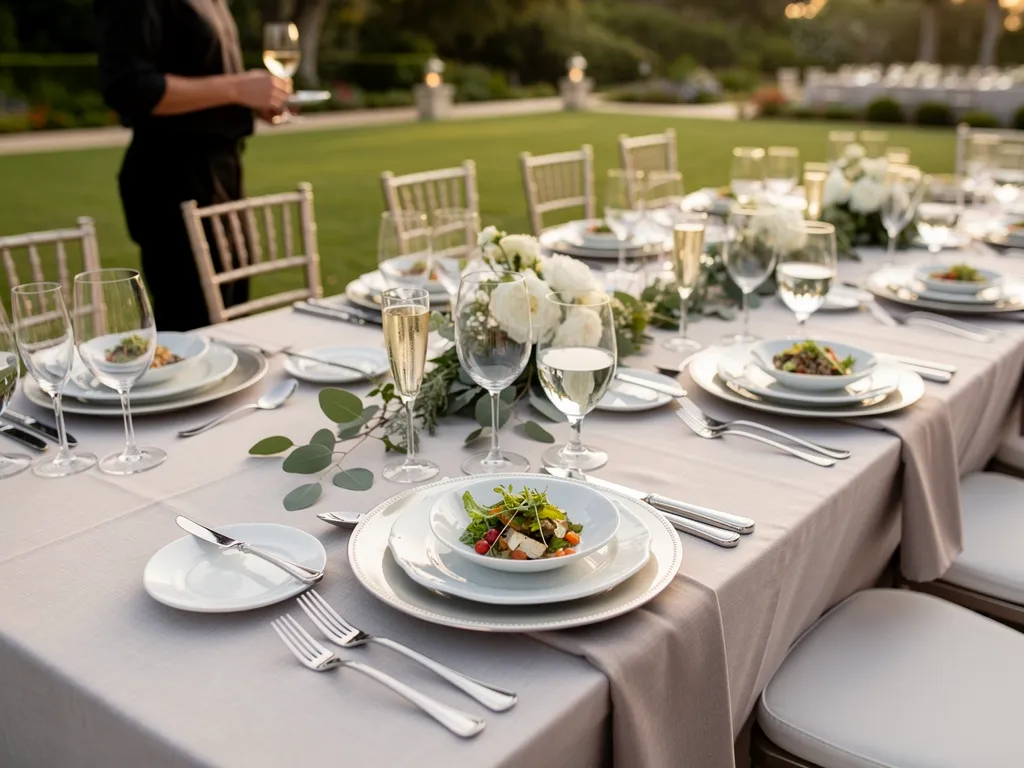
Tableware should not be selected only for appearance. The menu and beverage plan determine what guests actually need at each place setting.
Match China to the Number and Type of Courses
Different menus may call for different combinations of plates, bowls, or other pieces. The caterer should help determine those requirements before quantities are finalized.
This prevents both over-ordering and discovering during setup that an additional course requires a piece that was never included.
Choose Glassware Around Beverage Service
Glassware requirements depend on what will actually be served. Rather than placing every possible glass at every seat, the tableware plan can be built around the beverage program and level of formality of the event.
This can also help keep tables from becoming visually crowded before food service begins.
Make Sure Serving Pieces Are Included
Guest place settings and serving equipment are separate needs. Platters, bowls, utensils, and other shared pieces may be required depending on how the meal is presented.
Reviewing these with the caterer prevents the rental order from focusing entirely on what appears at each individual seat.
Plan Buffet and Station Areas Around Guest Flow
A buffet or food station should function as part of the reception rather than as an obstacle within it. Placement affects both how comfortably guests can access food and how easily catering staff can replenish or maintain the station.
Avoid Placing Service Directly in Major Walkways
A buffet creates a gathering point even when service moves quickly. If that gathering area overlaps with the main route to the bar, restrooms, dining tables, or another event zone, congestion can develop quickly.
The station should be easy to find without occupying the path everyone else needs to use.
Give Guests Room to Approach and Leave the Station
The space around the buffet matters as much as the tables themselves. Guests need room to approach, make selections, and move away without immediately encountering another queue or tightly arranged dining furniture.
Considering that circulation footprint during layout planning helps the station feel integrated rather than squeezed into the reception.
Consider Multiple Service Points for Larger or Spread-Out Layouts
Some estate layouts may work better with more than one service location.
That does not mean every large reception automatically needs multiple buffets. The decision depends on the property, guest distribution, menu, and catering plan.
When several stations are used, each should have a specific function and enough surrounding space to operate comfortably.
Coordinate Catering Rentals With the Caterer Early

The caterer should play a central role in determining what food-service equipment is actually needed.
A rental company can provide inventory and help coordinate the broader order, but the catering team understands the menu, preparation process, and service style that equipment must support.
Confirm the Menu First
The menu is the starting point. Once the caterer knows what is being served and how it will be presented, the equipment requirements become much clearer.
Trying to finalize chafing equipment, serving pieces, or tableware before the menu is sufficiently developed can lead to unnecessary revisions later.
Review Quantities With the Catering Team
Equipment quantities should follow the caterer’s actual needs rather than a generic guest-count formula.
Two events with the same attendance may require different equipment because they have different menus, numbers of stations, table configurations, or service approaches.
The caterer should therefore confirm quantities for food-service pieces before the rental order is finalized.
Finalize the Estate Layout Before Locking the Order
The physical setup can also change what is needed. Moving a buffet, changing table shapes, adjusting the back-of-house location, or altering the dining footprint may affect the service plan.
The catering equipment order should be reviewed once these major layout decisions are reasonably stable.
How Catering Equipment Fits Into the Wider Wedding Rental Plan
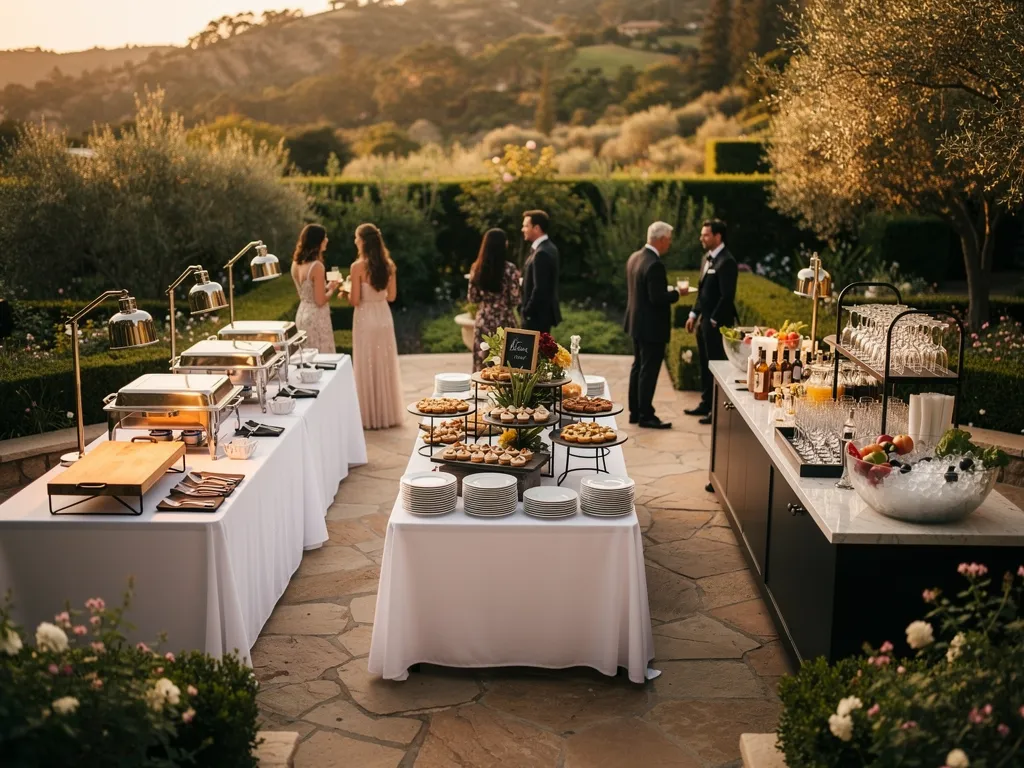
Catering equipment has a distinct function, but it does not operate separately from the rest of the event.
Tables, chairs, bars, linens, and tabletop pieces all influence how food and beverage service works.
Dining Tables and Chairs
The dining layout determines how staff reach guests and how much tabletop space is available for the selected service style.
Table and chair selection can therefore be coordinated with the catering plan without turning the catering-equipment order into another general furniture package.
Bars and Beverage Stations
Food and beverage service often share circulation routes and guest gathering areas.
Their locations should be considered together so a buffet line does not interrupt access to the bar and beverage activity does not interfere with dining service.
Linens and Tabletop
Linens and decorative tabletop pieces complete the visual design, while china, glassware, flatware, and serving equipment support the meal itself.
Planning them together makes it easier to balance aesthetics with the practical space required for service.
Planning Catering Equipment Rentals With Ventura Rental
A useful catering rental plan begins with information rather than inventory browsing.
The caterer, menu, guest count, service style, estate layout, and dining plan should all be sufficiently developed before the final equipment list is confirmed.
Start With the Caterer, Menu, and Guest Count
These three factors provide the foundation for the order.
The caterer establishes how food will be prepared and served. The menu determines the type of service pieces and equipment required, while guest count helps establish overall quantities.
Identify the Equipment Needed for the Selected Service Style
Once the meal format is clear, build the order around what that service actually requires.
Plated dinners, buffets, family-style meals, and stations should not all be approached with the same checklist.
Coordinate Catering Items With Related Event Rentals
Ventura Rental Party & Events can coordinate catering-related pieces alongside other wedding rentals for Montecito celebrations, including tables, chairs, flatware, glassware, and broader reception equipment.
Bringing these categories into the same planning conversation can help ensure the dining environment supports both the service plan and the wider event layout.
FAQs About Catering Equipment Rentals in Montecito
What catering equipment is typically needed for an estate wedding?
The list depends on the menu and style of service. It may include chafing or holding equipment, serving pieces, service tables, china, flatware, glassware, and other items identified by the catering team.
Does a plated dinner require different rentals than a buffet?
Yes. A plated dinner typically places more emphasis on individual place settings and back-of-house service organization, while a buffet requires guest-facing service surfaces, serving pieces, and equipment appropriate to the selected menu.
Who should determine how many chafing dishes are needed?
The caterer should determine the quantity and type of holding equipment based on the menu, number of dishes, service format, and their own operating procedures. A fixed guest-count formula is not appropriate for every event.
Should caterers and rental companies coordinate directly?
Coordination can be useful because the caterer understands the service requirements while the rental provider knows the available equipment. Clear communication between the caterer, planner, and rental team can help ensure the order reflects the actual menu and estate layout.
When should catering equipment be finalized for a Montecito wedding?
The equipment order should be developed once the menu, service style, approximate guest count, and reception layout are established. Final quantities can then be reviewed with the caterer before the event.
Build the Rental Plan Around the Meal
Successful catering equipment rental in Montecito begins with understanding how dinner will actually be served.
The meal format determines the equipment. The estate layout shapes service routes and back-of-house needs. Tableware supports both the menu and guest experience, while buffet and station placement affects the flow of the reception.
When those decisions are made together, catering equipment becomes part of a coordinated service plan rather than a collection of items added at the end.
Planners and catering teams can work with Ventura Rental Party & Events to coordinate catering equipment, tableware, dining furniture, and related reception rentals for Montecito estate weddings.