
At a Montecito estate wedding, the bar is rarely just a place where drinks are served. During cocktail hour, it often becomes one of the busiest gathering points on the property. Later in the evening, it continues to shape how guests move between dinner, lounge areas, and the dance floor. Because it remains visible throughout much of the celebration, its placement and design deserve the same consideration as dining furniture or other major reception elements.
Planning bar rentals in Montecito therefore involves more than choosing a style from an inventory. The bar needs to work with the estate setting, support smooth beverage service, fit naturally into the reception layout, and relate visually to the furniture and surrounding design.
When those decisions are made early, the bar can become an intentional part of the event rather than a functional station added after the rest of the reception has already been designed.
Why the Bar Should Be Planned Early
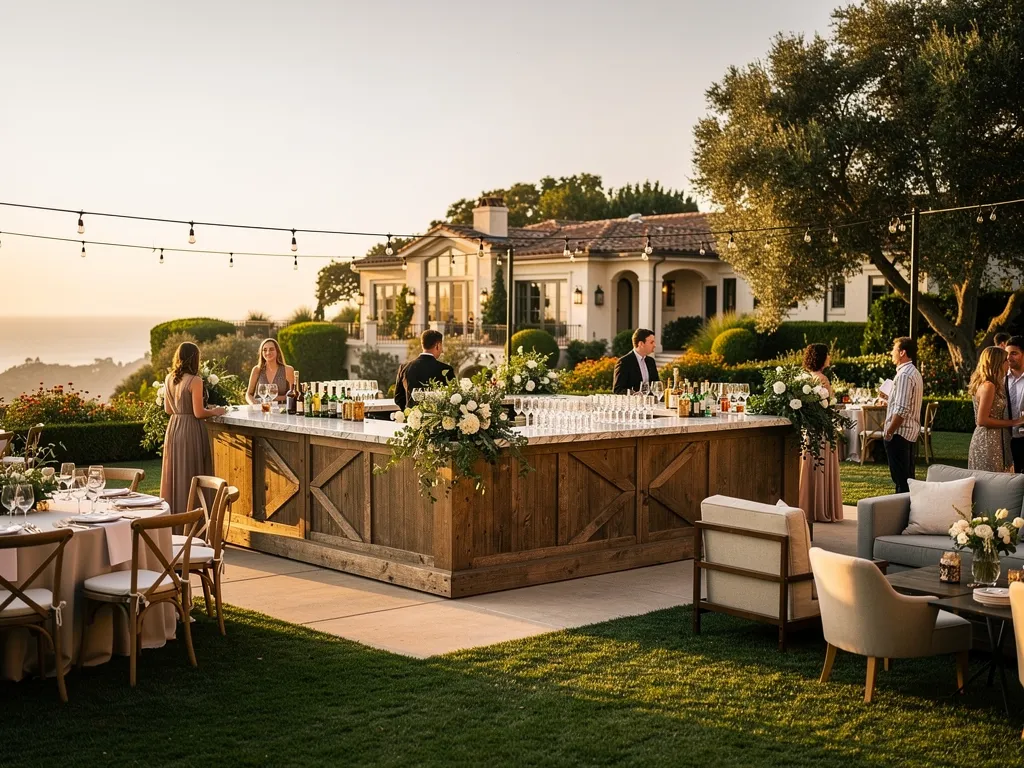
Bars naturally attract guests, particularly during cocktail hour and immediately after dinner. Their placement can influence traffic throughout the reception, which means they should be considered while the larger floor plan is still being developed.
Waiting until tables, lounges, and entertainment areas have already been positioned can leave limited options for a service point that needs both visibility and adequate circulation.
The Bar Naturally Becomes a Gathering Point
During cocktail hour, guests often move between the bar and nearby conversation areas. A bar positioned near lounge furniture or cocktail tables can help create a social zone without requiring everyone to remain in one concentrated area.
As the event progresses, the pattern may change. Guests may return to the bar between dinner and dancing, making its relationship to the dance floor and evening gathering spaces increasingly important.
The goal is not necessarily to place the bar at the center of everything. It is to make it easy to find and reach without allowing queues or groups of standing guests to interrupt other parts of the event.
Bar Placement Affects the Rest of the Layout
A bar takes up more space than its physical footprint alone. Guests need room to approach, order, wait, and move away comfortably.
That circulation area should be considered alongside dining aisles, lounge groupings, entrances, catering routes, and the dance floor. A bar positioned too close to a major pathway can create congestion, while one located too far from the reception may feel disconnected from the event.
Planning the bar at the same time as the larger furniture layout makes these relationships easier to resolve.
Design Matters Because the Bar Stays Visible
At an estate reception, the bar may sit within a garden, terrace, tent, or other highly visible gathering space. Its finish and scale therefore contribute to the broader event design.
Rather than treating the bar as separate from the furniture plan, consider how it relates to nearby tables, chairs, cocktail furniture, linens, and lounge pieces. A bar does not need to match those elements exactly, but it should feel like it belongs within the same environment.
Choosing a Bar Style That Works With the Estate
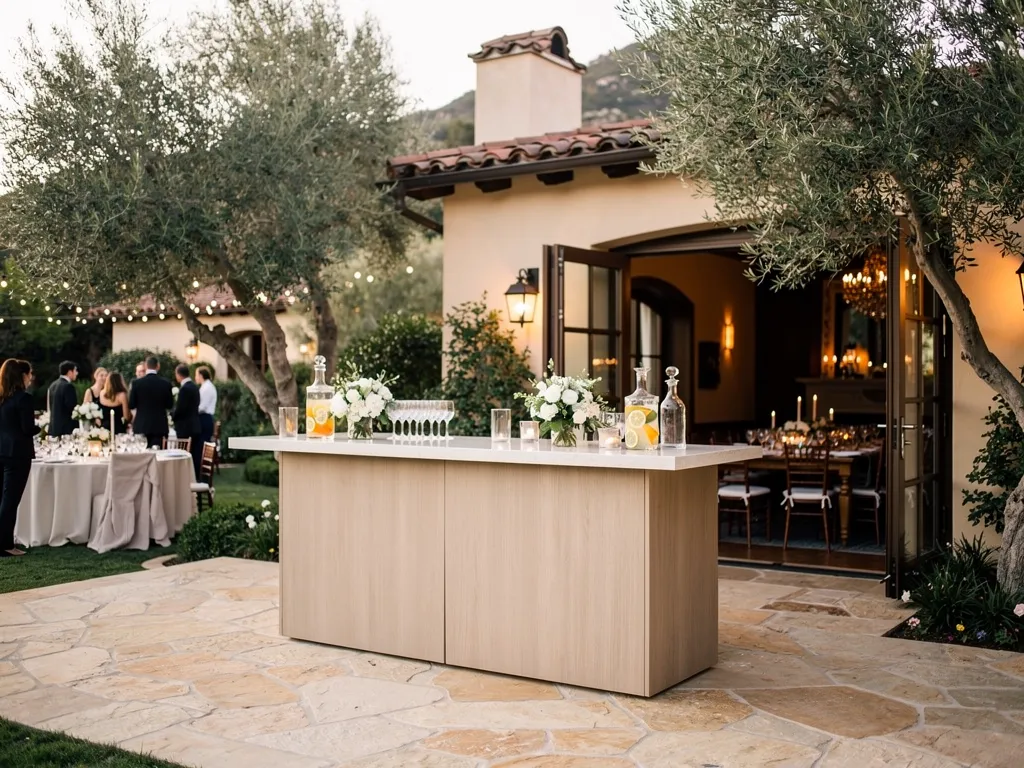
The right bar style depends on both the property and the atmosphere of the celebration. A garden reception may call for something visually different from a formal evening dinner, even when both events take place in Montecito.
Instead of selecting a bar based solely on appearance, consider how much visual attention it should command and how it will relate to the surrounding materials.
Natural and Wood-Forward Bar Styles
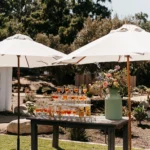
Wood-forward bars can work well when the reception draws heavily from the surrounding landscape or incorporates natural materials elsewhere in the design.
They may complement exposed wood dining tables, garden settings, neutral lounge pieces, or a more relaxed estate aesthetic. The effect can feel warm and integrated when the finish relates naturally to nearby furniture.
This does not mean a garden event automatically requires a rustic bar. A natural finish can still feel refined when the proportions and surrounding selections are thoughtfully coordinated.
Clean and Refined Finishes
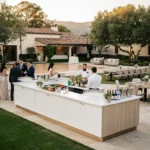
A cleaner or more polished bar style may suit receptions with a formal or contemporary direction.
Light finishes can keep the station visually quiet within a detailed reception, while darker or more distinctive surfaces can create contrast against a neutral setting.
These styles can be particularly effective when the surrounding furniture, tabletop, and lighting already establish a clear design language. The bar then becomes part of that larger composition instead of introducing an unrelated material or finish.
Decide Whether the Bar Should Blend In or Stand Out
Some receptions benefit from a bar that recedes visually into the background, allowing florals, dining tables, or the setting itself to remain dominant. Others can use the bar as a focal point within cocktail hour.
Both approaches can work.
The important decision is whether prominence is intentional. A visually distinctive bar placed in a quiet garden area will naturally attract attention, while a restrained finish can allow the surrounding estate and furniture to carry more of the design.
Make the Bar Part of the Overall Reception Design

A cohesive reception does not require every rental piece to match. It does, however, benefit from a clear relationship between the materials, proportions, and level of formality used throughout the event.
The bar should participate in that relationship.
Coordinate With Tables and Chairs
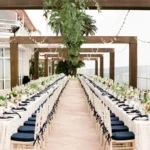
Dining furniture often establishes much of the reception’s visual character. An exposed wood table, linen-covered banquet table, or more formal chair selection each creates a different foundation.
The bar can reinforce that direction through complementary material or contrast. A natural finish might echo exposed furniture elsewhere in the reception, while a cleaner bar may provide balance within a room already rich in wood and texture.
Thinking about those relationships across the entire reception creates a more collected look than selecting each piece independently.
Connect the Bar With Lounge Furniture
Bars and lounge areas often function well together because both support the social portions of an event.
A nearby lounge gives guests somewhere to settle after picking up a drink, while occasional tables or cocktail tables can provide additional surfaces without overcrowding the service area.
The furniture does not need to sit directly against the bar. In fact, leaving some space between service and seating generally creates a more comfortable environment. The goal is to establish a connected zone while preserving enough room for guests to circulate.
Use Glassware and Accessories to Complete the Setting
Glassware is both functional and highly visible, particularly when drinks are carried throughout the reception.
Clear, textured, or more decorative glassware can subtly reinforce the event’s overall level of formality. The choice should work with the bar, tabletop, and broader reception design rather than becoming another unrelated statement.
Ventura Rental Party & Events offers bar and glassware options alongside broader wedding and event rentals, making it possible to consider these pieces as part of the same reception plan.
Where Should the Bar Go at a Montecito Estate Wedding?
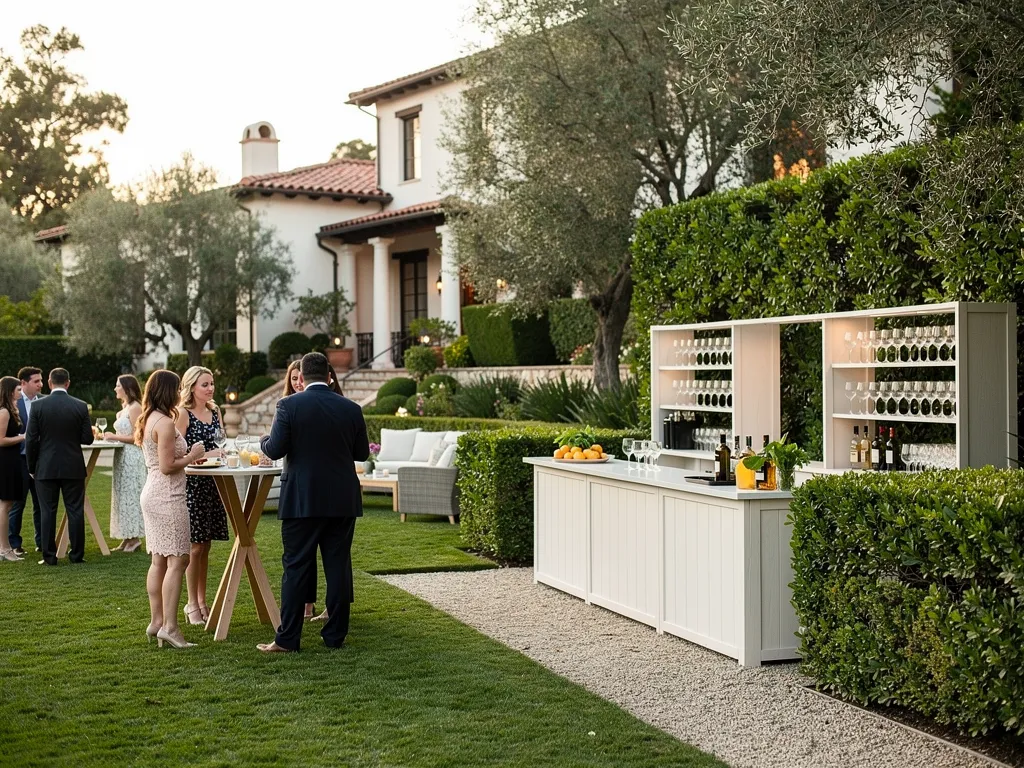
Bar placement should support the event rather than interrupt it. On an estate property, this often means considering not only furniture and guest movement but also existing architecture, landscaping, and outdoor gathering areas.
The best location balances accessibility with enough separation to keep service activity from overwhelming nearby spaces.
Keep Major Guest Routes Clear
The bar should not sit directly within the primary route between major parts of the reception.
If guests need to pass through a bar queue to reach dinner, the dance floor, or another gathering area, even a beautiful layout can become frustrating once the celebration is underway.
Allowing space around the station helps guests approach from different directions and move away without blocking others.
Keep It Close Enough to the Social Areas
Accessibility still matters. A bar positioned too far from the main celebration can pull guests out of the reception environment and weaken the connection between different event zones.
During cocktail hour, proximity to lounge furniture and cocktail tables can make sense. Later, access from the dining area and dance floor becomes more important.
Thinking through the complete event timeline helps identify a location that works beyond the first hour of the reception.
Consider Sightlines and the Property
Private estates are often selected in part because of their gardens, architecture, or surrounding views. A large service station should not unnecessarily interrupt those elements.
Before finalizing placement, consider how the bar will appear from major guest areas and in relation to the property’s strongest visual features.
Sometimes shifting it slightly away from the most prominent sightline can preserve the character of the setting without compromising accessibility.
One Bar or Multiple Beverage Stations?
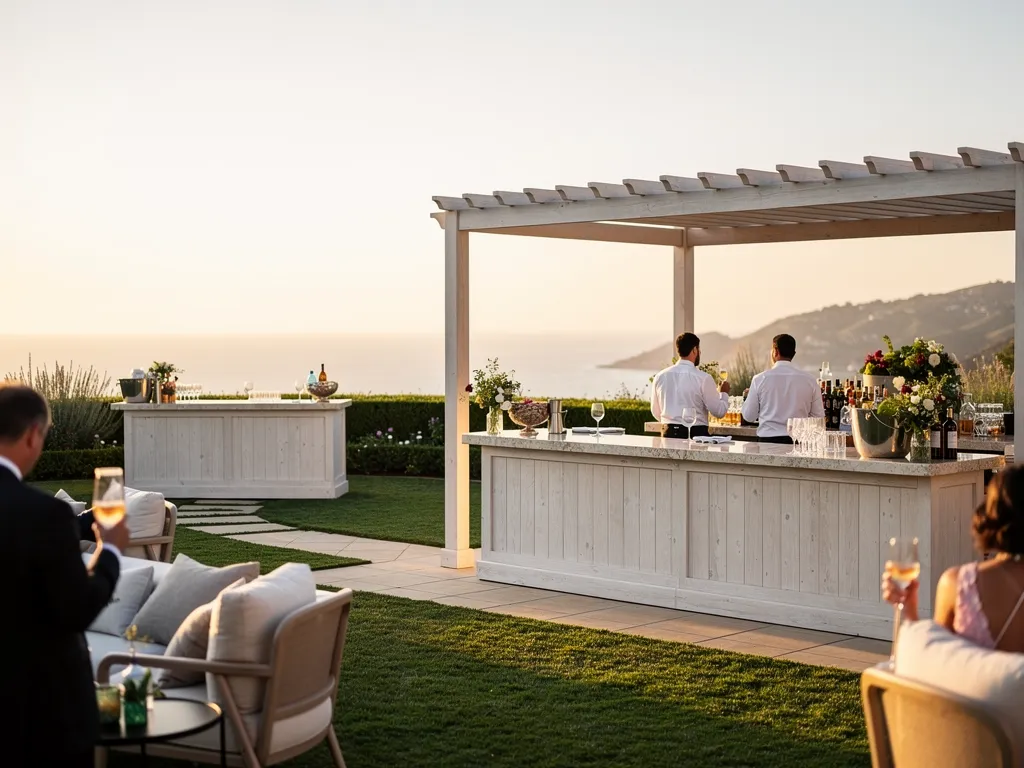
Not every reception needs several beverage stations. Adding more bars can improve service in the right layout, but it can also fragment the event or consume space that could serve another function.
The decision should be based on the size and shape of the reception rather than on a fixed rule.
When One Central Bar Can Work
A single bar can work well when the reception is relatively concentrated and guests can reach the station easily from the main gathering areas.
Keeping service centralized can also create a clear social destination during cocktail hour.
The surrounding space needs to accommodate the activity the bar generates, particularly if most guests arrive at the same time.
When Multiple Stations May Improve Flow
A larger property or reception spread across several distinct areas may benefit from more than one beverage point.
For example, cocktail hour may take place in one part of the estate while dinner and dancing happen elsewhere. In that situation, relying on a single fixed station throughout the event may be less convenient than planning beverage service around the changing layout.
Multiple stations can also distribute guest traffic when a single service point would otherwise create a concentrated queue.
Avoid Creating Competing Gathering Areas
More stations are not automatically better.
If bars are positioned too far apart or in unrelated parts of the property, they can divide guests into separate groups and weaken the energy of the reception.
Each station should have a specific purpose within the event plan rather than being added simply because space is available.
Plan the Bar Around Cocktail Hour, Dinner, and Dancing
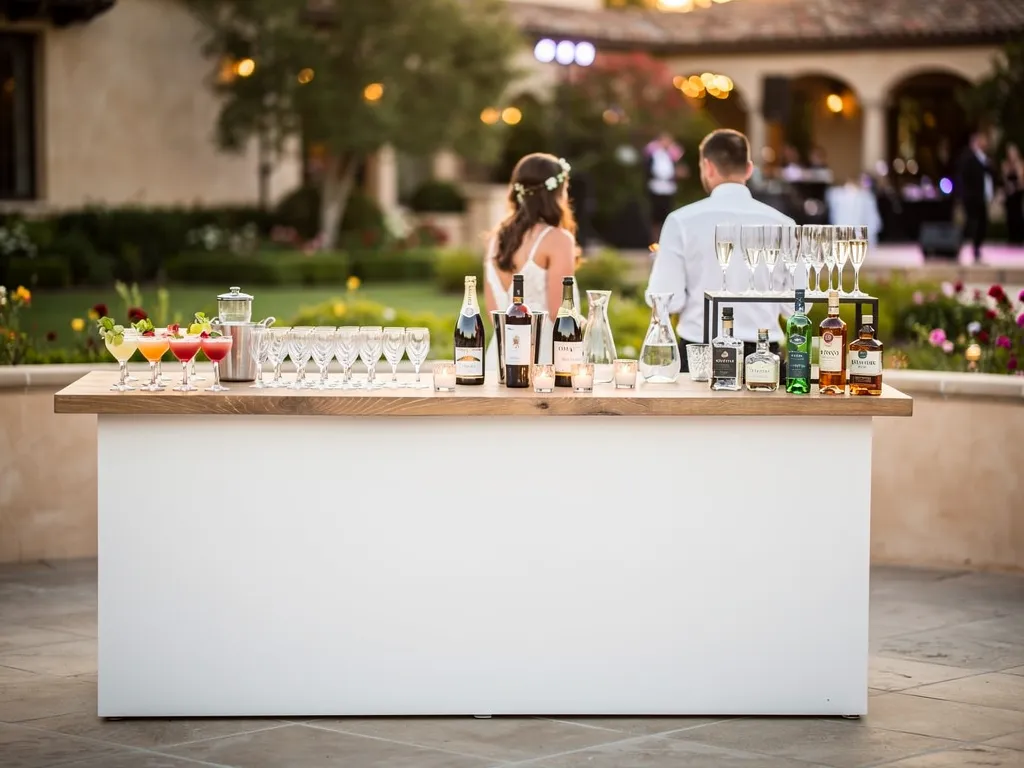
The role of the bar can change throughout the celebration. Planning around these transitions helps the setup remain useful from the first drink through the final portion of the reception.
Cocktail Hour
During cocktail hour, the bar may be one of the primary destinations for arriving guests.
This is when comfortable surrounding circulation matters most. Nearby cocktail tables and lounge areas can help guests spread out naturally instead of remaining clustered directly around the service point.
The bar’s visual role may also be strongest during this portion of the event, particularly if it sits within an open garden or terrace.
During Dinner
Once guests are seated, bar traffic often becomes more dispersed.
The station should remain accessible without interfering with dinner service or creating unnecessary movement through dining aisles.
If the bar is located near the reception tables, enough separation should remain so standing guests do not crowd seated areas.
After Dinner
As dancing begins, the social center of the event often shifts.
Guests may spend more time near the dance floor, entertainment, and lounge spaces, making convenient access from those areas valuable.
A strong layout anticipates this transition rather than planning the bar only for cocktail hour.
Coordinate Bars With Cocktail Tables and Lounge Areas

Cocktail tables and lounge furniture can help turn the bar into a complete social environment rather than an isolated service point.
The relationship between those elements should feel comfortable and intentional.
Create Comfortable Places to Gather
Guests generally need somewhere to pause after visiting the bar.
Cocktail tables can support shorter conversations and provide surfaces for drinks, while lounge furniture creates more relaxed gathering areas.
Using both can accommodate different types of interaction without requiring everyone to move immediately to the dining area.
Leave Enough Circulation Between Zones
Furniture should support the bar without crowding it.
Placing lounge pieces too close to the service area can restrict movement, while tightly packed cocktail tables may make queues difficult to navigate.
Allowing some separation helps each element serve its purpose while maintaining a connection between the areas.
Keep the Furniture Language Consistent
The bar, cocktail tables, and lounge furniture do not have to match exactly.
They should, however, share enough visual language to feel intentional. Similar finishes, complementary materials, or a consistent degree of formality can connect the zone without making it appear overly coordinated.
Do Not Forget Glassware and Beverage-Service Support
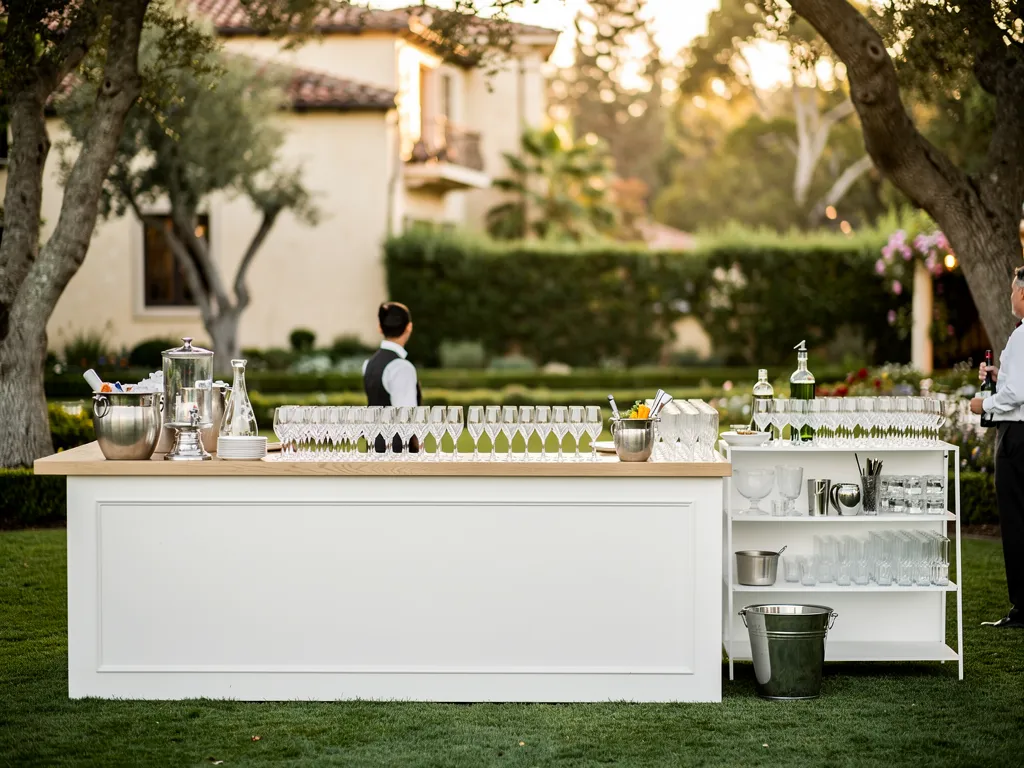
The bar itself is only one part of beverage service. Glassware and supporting rental pieces influence both function and appearance throughout the reception.
These details are easier to coordinate when considered alongside the bar from the beginning.
Choose Glassware for the Event Style
A formal seated wedding may call for a different glassware approach than a relaxed outdoor cocktail reception.
The number and style of glasses used at each stage should reflect the beverage plan and broader event design rather than being selected solely for appearance.
Because glassware appears both on tables and in guests’ hands throughout the event, it also provides an opportunity to create continuity between the bar and dining areas.
Plan Quantities Alongside the Guest Experience
Glassware quantities depend on more than the number of guests.
The duration of the event, type of beverage service, number of drink styles, and whether glassware is being used at the dining tables can all affect the order.
Those needs should be discussed as part of the overall rental plan rather than treated as a last-minute calculation.
Coordinate Service Pieces With the Bar Setup
Supporting pieces should feel connected to the station rather than collected from unrelated parts of the rental order.
Thinking about the bar, glassware, cocktail furniture, and nearby guest areas as one environment creates a more cohesive result.
A Montecito Estate Example
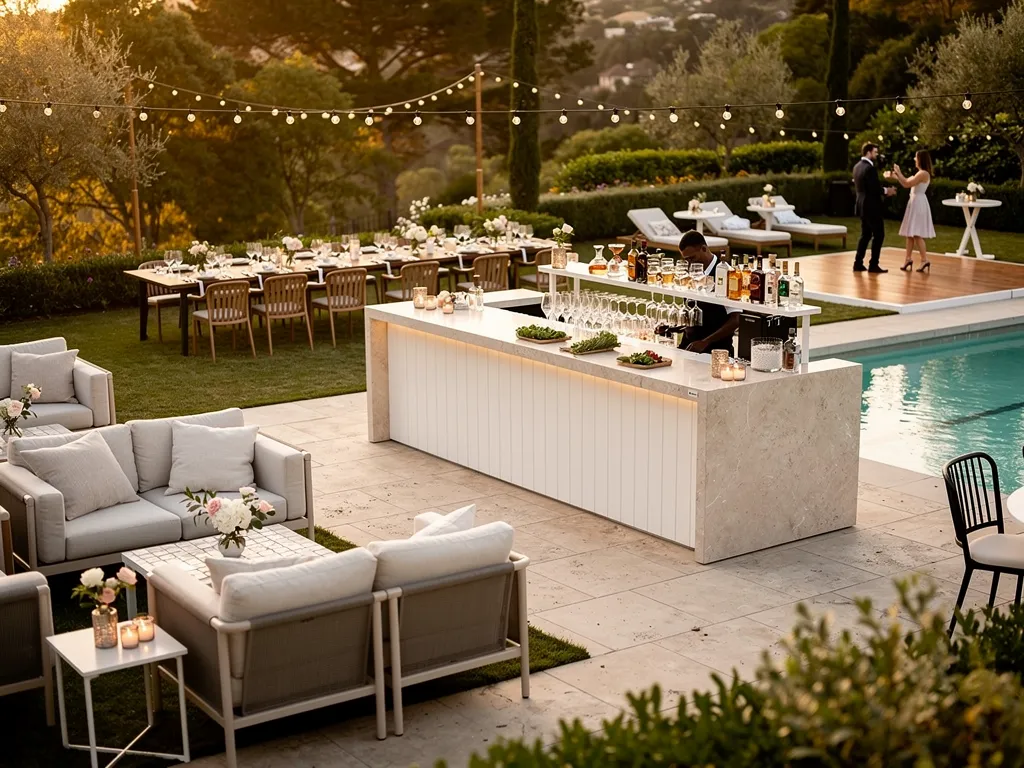
An estate reception such as Montecito Riviera Orchard demonstrates why bar planning should be considered within the larger event layout.
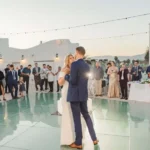
A celebration on a property with dining, cocktail areas, a poolside environment, furniture, tabletop pieces, and a dance floor involves several distinct guest zones. The bar becomes one component within that wider system rather than an isolated station.
Its success depends on how comfortably guests can reach it, how it relates to the nearby furniture, and whether it supports movement between different parts of the reception.
That principle applies to other private-property celebrations as well. The bar should serve the event while respecting the setting and the way guests will use it throughout the evening.
Planning Bar Rentals With Ventura Rental
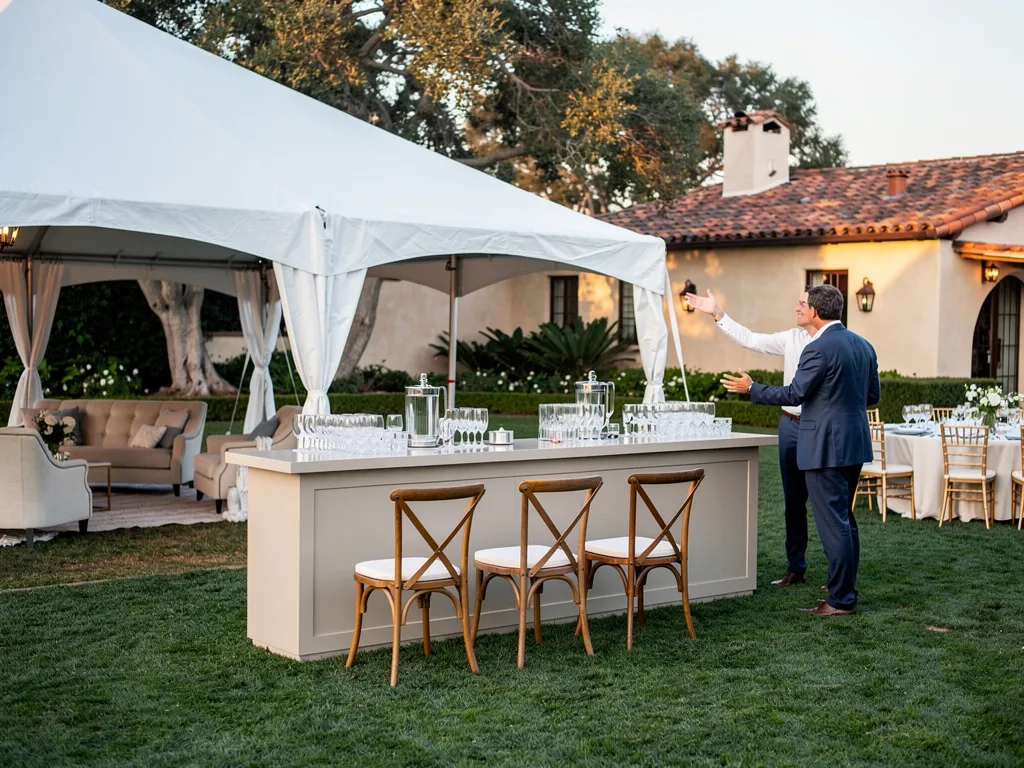
A successful bar plan begins with understanding the property and the overall reception layout before selecting individual pieces.
Ventura Rental Party & Events provides bar rentals alongside glassware, tables, chairs, lounge furniture, tabletop pieces, tents, and other event rentals for celebrations throughout Santa Barbara County, including Montecito.
Start With the Venue and Reception Layout
Before selecting the bar, establish the major event zones.
Identify where cocktail hour, dinner, dancing, and lounge areas will take place, then consider where beverage service can remain accessible without disrupting those spaces.
The guest count and overall event format also provide useful context for determining whether one service point is enough.
Select the Bar Alongside the Other Furniture
Review bar finishes in relation to the furniture already being considered for the event.
Tables, chairs, lounge pieces, and cocktail furniture create the surrounding design language, making it easier to determine whether the bar should complement those materials quietly or provide deliberate contrast.
Confirm Access, Delivery, and Setup Requirements
Private properties can have specific access and scheduling considerations.
Before finalizing the rental plan, confirm delivery timing, the intended bar location, property access, setup requirements, and any other relevant venue or estate guidelines.
Resolving those details early helps ensure the selected bar works not only visually but operationally.
FAQs About Bar Rentals in Montecito
What type of bar works best for a Montecito estate wedding?
The best style depends on the property, overall wedding design, surrounding furniture, and how visually prominent the bar should be. Natural finishes can complement garden settings, while cleaner or more polished styles may support a formal or contemporary reception.
Where should the bar be placed at an outdoor reception?
The bar should be easy to reach without blocking important pathways, dining areas, or major views. Its relationship to cocktail-hour seating, lounge furniture, dinner, and the dance floor should also be considered.
Does a large wedding need more than one bar?
Not necessarily. The number of service points should depend on the guest count, property layout, and how the event moves between different areas. Larger or more spread-out receptions may benefit from multiple beverage stations, while a concentrated layout may work well with one central bar.
Should the bar match the tables and lounge furniture?
Exact matching is not necessary. The bar should relate to the surrounding pieces through finish, material, proportion, or overall level of formality so the reception feels cohesive.
When should couples reserve bar rentals for a Montecito wedding?
Bar rentals should be considered while the reception layout and other major furniture selections are being developed. Planning early gives couples and planners more flexibility to coordinate the bar with glassware, lounge furniture, cocktail tables, and the rest of the wedding rental plan.
Make the Bar Part of the Celebration
Successful bar rentals in Montecito are about more than selecting an attractive service station. The bar needs to work with the estate, support guest movement, complement nearby furniture, and remain functional as the celebration progresses from cocktail hour through dinner and dancing.
When those considerations are addressed together, the bar becomes part of the reception rather than an addition to it.
Ventura Rental Party & Events can help couples and planners coordinate bars, glassware, lounge furniture, tables, and related wedding rentals as part of a complete Montecito event plan.