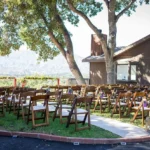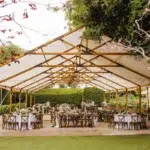

Fall is an inviting time to hold an outdoor wedding ceremony in Santa Barbara. Gardens, courtyards, historic properties, coastal locations, and private estates can provide a beautiful natural setting, while the season’s warm afternoons and softer light support celebrations that move comfortably between outdoor spaces.
The ceremony itself may be brief compared with the rest of the wedding, but the area must support several distinct moments. Guests need to arrive, find their seats, watch the processional and vows, and move toward cocktail hour after the recessional. The wedding party, officiant, photographers, florist, rental team, and other vendors also need enough space and time to complete their work. You may also find The Complete Guide to Wedding Rentals in Santa Barbara CA helpful.
A successful ceremony setup is therefore more than rows of chairs facing an arch. The seating, aisle, focal point, shade, lighting, flooring, and arrival area should work together as one complete guest experience.
Ventura Rental Party & Events serves Santa Barbara County and carries ceremony-related rentals such as chairs, arches and installations, tents and canopies, umbrellas, flooring, lighting, heaters, décor, tables, and power equipment. This guide explains how to coordinate those elements around the ceremony sequence, property, time of day, and transition into the next part of the wedding.
Build the Rental Plan Around the Ceremony Sequence
Instead of beginning with a list of products, walk through the ceremony in chronological order. Consider what guests experience from the moment they arrive until they leave for cocktail hour.
This approach makes it easier to identify which rentals have a practical purpose and where they should be positioned.
Welcome Guests Before They Take Their Seats
The guest experience begins before anyone enters the main seating area. At a large estate, garden, or unfamiliar venue, guests may need a clear arrival point that confirms they are in the right place and directs them toward the ceremony.
A welcome table can hold programs, ceremony information, or other items being distributed before guests sit down. Depending on the property and time of day, the arrival area may also include a small water station, shade, or limited seating for guests who need to rest.
Position these elements far enough from the ceremony entrance to prevent a line from forming at the top of the aisle. The arrival point should also remain separate from the route used by the wedding party.
Keep the Processional Route Clear
The visible aisle is only one part of the processional route. The wedding party also needs a place to gather and an unobstructed path from that waiting area to the ceremony entrance.
Walk through the entire route before approving the floor plan. Check for furniture, rental storage, vendor equipment, landscaping, stairs, gates, and service activity that could interrupt the processional.
The wedding party’s waiting area should remain out of guests’ direct view where the property allows. It may also need shade, seating, or a stable surface, particularly if participants will gather there well before the ceremony begins.
Prepare the Ceremony Area for Key Moments
The central ceremony area must accommodate more than the couple and officiant. Readings, cultural traditions, musical performances, or additional family members may require more space or specific pieces of furniture.
Couples should share the ceremony format with the planner and rental team before the layout is finalized. A ceremony that includes a chuppah, signing table, unity ritual, several attendants, or live musicians may need a different arrangement from a brief ceremony with only the couple and officiant.
The setup should also preserve enough space for everyone to enter, stand, sit, and exit without moving chairs or décor once the ceremony has begun.
Plan the Exit Toward Cocktail Hour
After the recessional, guests need clear direction toward the next part of the celebration. At some venues, cocktail hour may be located nearby. At others, guests may need to follow a garden path, move indoors, board transportation, or cross to another part of the property.
The ceremony exit should connect naturally to this route. Avoid creating a situation in which guests must cross the wedding party’s photography area or walk through rental breakdown activity.
Signage, staff guidance, and the placement of the next event area can all help make the transition easier to understand.
Read the Santa Barbara Ceremony Site Before Selecting Rentals
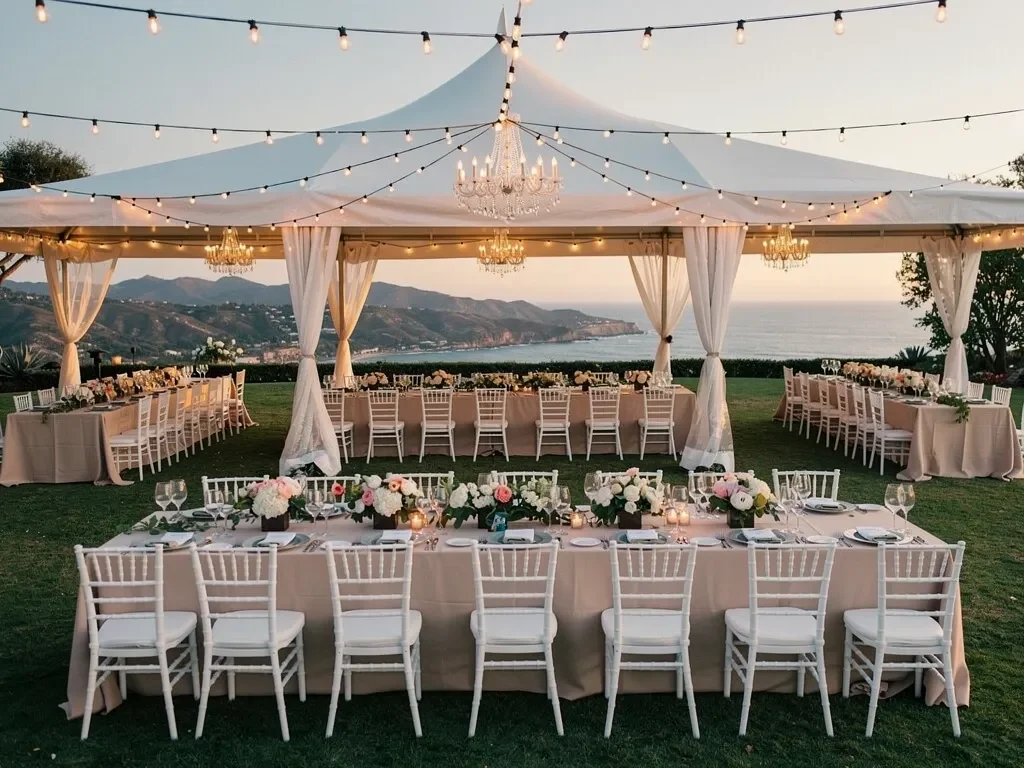
The property should guide the ceremony design. A garden, courtyard, coastal setting, hillside estate, historic property, or private residence may each require a different arrangement, even when the guest counts are similar.
Reviewing the site first prevents rentals from being selected for a layout the property cannot comfortably support.
Identify the Existing Features Worth Preserving
Santa Barbara outdoor venues often already contain a strong visual feature. It might be a garden, mature tree, courtyard wall, coastal view, historic façade, or architectural doorway.
Identify which feature should frame the ceremony before adding an arch or installation. The rental design should support the setting rather than conceal the element that made the property appealing in the first place.
A naturally defined area may require only chairs and a restrained focal arrangement. A wide, open lawn may benefit from an arch or another structure that gives guests a clear point of focus.
Review Sun Direction and Ceremony Timing
A beautiful view is not the only consideration when choosing the ceremony orientation. Afternoon sun can affect guest comfort, visibility, photography, and the experience of the couple and wedding party.
Whenever possible, visit the ceremony area at approximately the same time of day as the planned wedding. Notice where the sun falls, which seating areas receive shade, and whether guests would be looking directly into bright light.
The ceremony may also begin in full daylight and end closer to sunset. Consider how the changing light will affect pathways, exits, and the transition to cocktail hour.
Examine the Ground Beneath the Setup
Grass, gravel, stone, concrete, patios, slopes, and uneven transitions all affect ceremony planning. The surface may influence chair stability, aisle placement, accessible movement, and whether flooring should be considered in a particular area.
Walk the proposed seating and processional areas instead of evaluating them only from photographs. Look for changes in level, soft ground, irrigation, roots, loose gravel, and transitions between materials.
Surface conditions should be shared with the rental team so the suitability of the proposed setup can be reviewed.
Confirm Delivery and Installation Access
The ceremony area may have enough space for the rentals but still be difficult to reach. Narrow gates, stairs, elevators, long paths, restricted parking, and limited vehicle access can affect delivery and installation.
Provide clear access information before the order is finalized. Photos, measurements, maps, and venue instructions can help identify logistical issues in advance.
Installation times should also be confirmed with the venue. Some properties limit when rental teams can arrive or how long they have to complete the setup.
Arrange Ceremony Seating Around Comfort and Sightlines
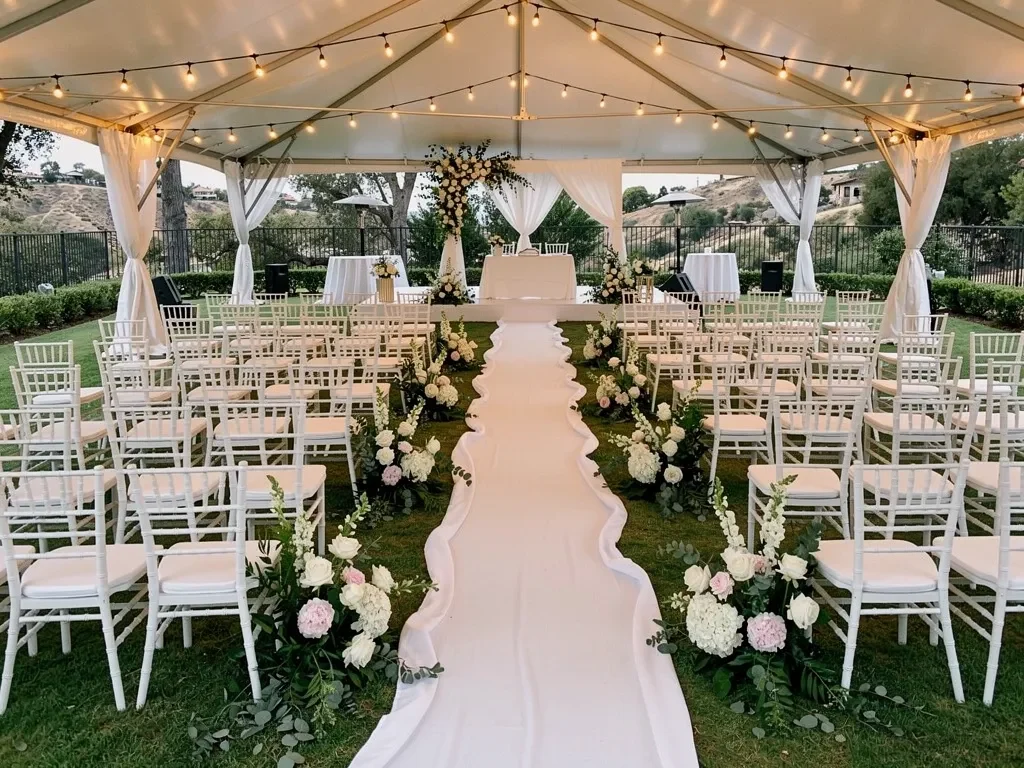
Ceremony chairs create the basic structure of the space. Their arrangement determines how guests enter, what they can see, and how the wedding party moves through the processional.
Chair style contributes to the design, but the layout and suitability for the property are equally important.
Select Chairs That Suit the Property
Choose ceremony chairs according to the surface, architecture, degree of formality, ceremony length, and overall rental design.
A style that looks appropriate in a formal courtyard may create a different effect on a lawn or beside a coastal view. Chair dimensions also affect how many seats can fit in each row and how much room remains between seating sections.
Browse Ventura Rental’s current chair collection and confirm availability for the wedding date before building the design around a particular style.
Determine the Number of Rows and Seats
Begin with the confirmed guest count, then account for reserved family seating, wedding-party members who will sit after entering, guests who require accessible spaces, and any seats intentionally left open.
The number of chairs in each row should reflect the available width and aisle arrangement. Avoid forcing too many seats into a row merely to reduce the number of rows. Guests should be able to enter and leave without repeatedly asking an entire section to stand.
The final seating count and arrangement should be reviewed against the actual chair dimensions rather than a generic diagram.
Balance the Aisle With the Seating Blocks
The aisle should feel proportionate to the seating area while giving the wedding party enough room to move comfortably.
Consider how many people may walk side by side, the width of formal attire, floral or lantern arrangements along the aisle, and the photographer’s working position. An aisle that appears wide enough when empty may feel much narrower once chairs and decorations are installed.
Multiple seating blocks or side aisles may work better than one large block at certain properties. The best arrangement depends on the site and the number of guests.
Include Accessible Seating From the Beginning
Accessible spaces should be incorporated into the primary floor plan, not added after every other chair has been positioned.
Guests who use wheelchairs or mobility devices should have a clear route to their seats and an unobstructed view. Space should also be available for accompanying family members to sit nearby.
Review slopes, gravel, grass, steps, and surface transitions along the entire route from arrival to seating. The accessibility of the parking or drop-off area is just as important as the final chair position.
Preserve Clear Side and Rear Routes
The center aisle should not be the only way to move through the ceremony area. Guests who arrive late, photographers, officiants, musicians, and wedding-party members may need to use side or rear routes.
These paths should remain clear of chairs, welcome tables, floral pieces, power cables, and vendor equipment. Secondary routes also give guests another way to leave after the recessional without creating congestion at the main aisle.
Create a Ceremony Focal Point That Belongs in the Setting
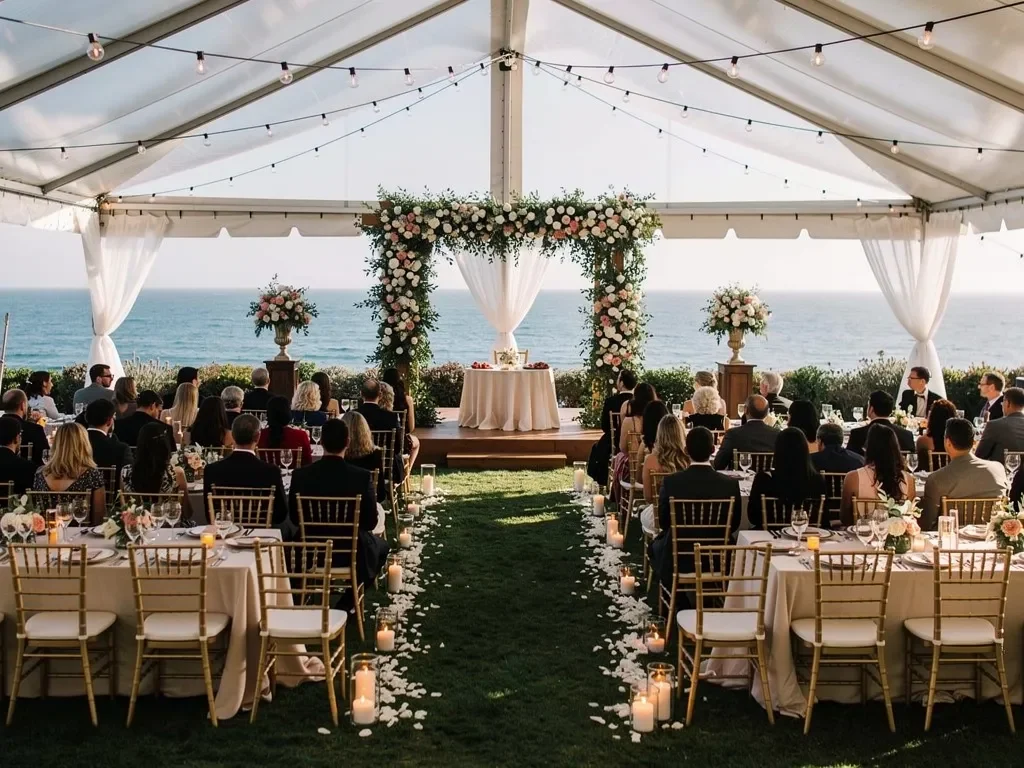
The focal point frames the couple during the vows and appears in many of the wedding photographs. It should be visually distinct without competing with the landscape or architecture.
Ventura Rental’s current catalog includes options such as dark oak, fruitwood, iron, hexagon, moongate, A-frame, white birch, chuppah, and French-door installations. Each produces a different visual effect and may have different installation requirements.
Decide Whether the Site Needs a Structure
Not every outdoor ceremony requires an arch. A garden feature, mature tree, courtyard wall, doorway, or coastal view may already create a natural focal point.
Before adding a structure, determine what it contributes. An arch may frame an open view, provide a defined place for the couple, or support an approved floral design. If the venue already has a strong architectural feature, a large installation may obscure rather than enhance it.
The goal is to establish a clear ceremony focus without covering the qualities that make the setting distinctive.
Match the Structure to the Venue
Consider how the structure’s shape, finish, and scale relate to the property.
Dark oak or fruitwood can connect with natural surroundings and warm furniture finishes. Iron may complement a garden or historic property, while geometric arches can introduce a more architectural element.
Scale is also important. A structure that works on an expansive lawn may overwhelm an intimate courtyard. Conversely, a small arch can disappear against a large landscape.
Review the structure from the back row as well as from the couple’s position.
Coordinate Florals and Décor Before Installation
The rental team, florist, venue, and planner should confirm how the selected structure will be delivered, installed, decorated, and removed.
Share the structure’s dimensions and design with the florist before the wedding day. Discuss the proposed floral weight, attachment method, installation time, and whether any arrangements need to be prepared in advance.
Do not assume that every floral design can be attached to every arch. Rental restrictions and the structure’s design may affect what is possible.
Protect Views and Photographic Sightlines
Place the focal structure where it frames the setting without blocking the primary view. The final position should account for the couple, officiant, attendants, florals, and equipment supplied by other vendors.
The photographer and videographer also need clear angles from the aisle and sides of the ceremony. Large floral arrangements, speakers, lighting equipment, or decorative objects should not block key moments.
A site plan can help the participating vendors agree on these positions before installation begins.
Plan for the Comfort of Waiting and Seated Guests
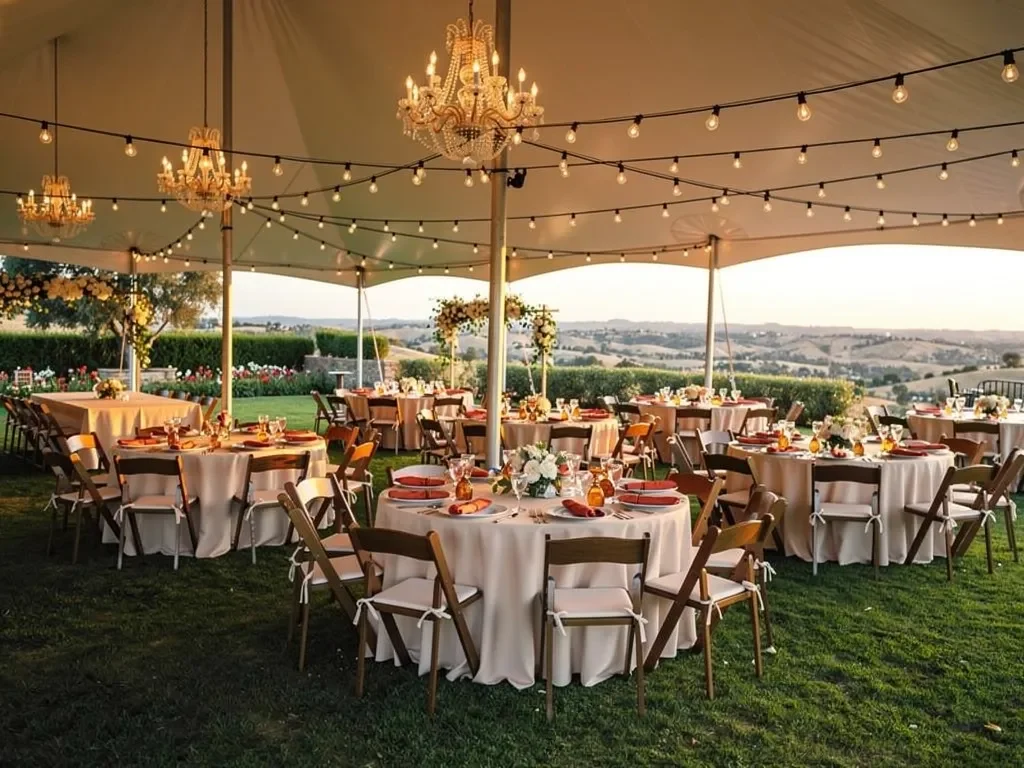
Guest comfort begins before the processional. Many guests arrive early, and transportation schedules or unfamiliar properties may increase the amount of time they spend waiting outdoors.
Fall in Santa Barbara can include warm afternoons followed by cooler conditions later in the day. The rental plan should support the full period from arrival through the recessional.
Provide Shade for an Earlier Ceremony
For a ceremony held while the sun is still strong, shade may be useful at arrival points, waiting areas, refreshment stations, or selected seating sections.
Umbrellas and canopies can provide targeted coverage where appropriate for the site. Their size, placement, installation surface, and suitability should be reviewed with the venue and rental team.
Avoid positioning umbrellas where they obstruct views or interfere with the processional. A shaded waiting area may be more useful than attempting to cover every ceremony chair.
Prepare for a Cooler Late-Afternoon Ceremony
Temperatures may feel cooler as the sun lowers, particularly at coastal, garden, or exposed properties.
Heaters may be considered in appropriate waiting or gathering areas when venue rules and placement requirements allow. They should not be added directly beside seating, fabric, florals, or pathways without professional review.
The reception comfort plan should also reflect how quickly guests will move indoors or into a covered area after the ceremony. Read more in How to Plan Ceremony-to-Reception Rentals in Santa Barbara.
Add a Water or Refreshment Station Where Appropriate
A simple water or beverage station can be helpful when guests arrive before an outdoor ceremony.
Place it near the arrival area rather than beside the processional entrance. This keeps lines, cups, glassware, and service activity away from the main seating and aisle.
A small table and appropriate beverage-service rentals may be enough. The station should remain easy for vendors to replenish without crossing through seated guests.
Offer Limited Seating Before the Ceremony
At a large property, guests may travel some distance between the parking or drop-off area and the ceremony. A few chairs or a small seating group near the arrival area can assist guests who need to rest.
This does not need to become a complete lounge. It should be positioned for a specific functional purpose and should not discourage guests from moving into the ceremony area when seating begins.
Prepare the Ceremony for Changing Fall Conditions
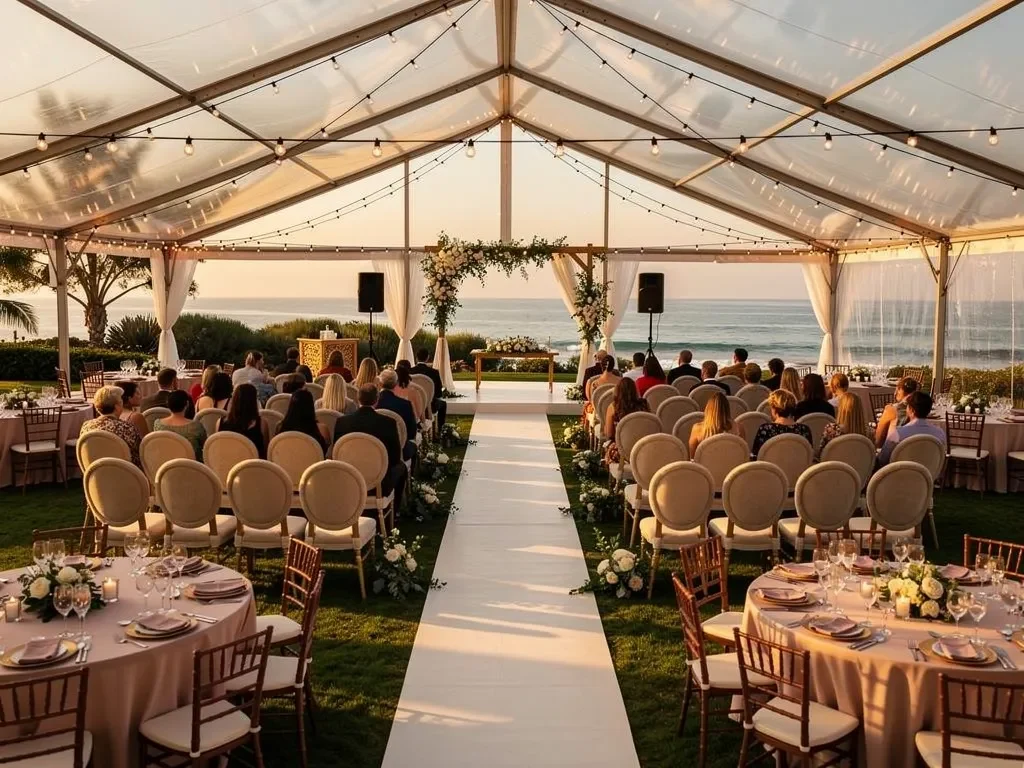
An outdoor ceremony needs a plan for changing conditions, but that plan should be specific to the property. Automatically adding a tent is not the only solution, and not every venue can accommodate one in the proposed ceremony area.
The priority is to identify what must remain protected and how the ceremony can continue if the original setup is no longer appropriate.
Decide What Must Remain Protected
List the essential ceremony elements that could be affected by changing conditions. These may include:
-
Guest seating
-
The focal structure
-
Florals and ceremony décor
-
Programs and signage
-
The processional route
-
Equipment supplied by other vendors
-
Accessible paths
-
Musicians or other participants
Once the essential elements are identified, the venue, planner, and rental team can evaluate what the alternative ceremony area must accommodate.
Evaluate a Covered or Alternate Ceremony Area
The ceremony may be able to move beneath an existing structure, into an indoor room, or under a suitable tent or canopy.
Confirm that the alternate area can accommodate the actual guest count, chairs, aisle, focal point, and wedding party. A space may appear large enough when empty but become crowded once the full ceremony layout is added.
The alternative should also provide suitable access and a clear route toward the next part of the wedding.
Create a Decision Process With the Venue and Planner
Determine who has the authority to modify or move the ceremony and when the decision will be made.
The venue, planner, and appropriate vendors should understand how a change will affect installation, florals, photography, transportation, and guest communication. Waiting until guests begin arriving may leave too little time for a coordinated adjustment.
The decision process should be documented and shared with the people responsible for carrying it out.
Plan How Rentals Will Be Repositioned
If the alternative plan requires moving chairs, an arch, or other rentals, confirm who will perform that work and how much time is needed.
Do not assume that guests, venue employees, or unrelated vendors can relocate rental items. Some pieces may require professional handling, while others may not be suitable for repeated movement after installation.
The backup plan is only workable when the relocation responsibilities have been assigned in advance.
Use Lighting to Support a Late-Afternoon Ceremony
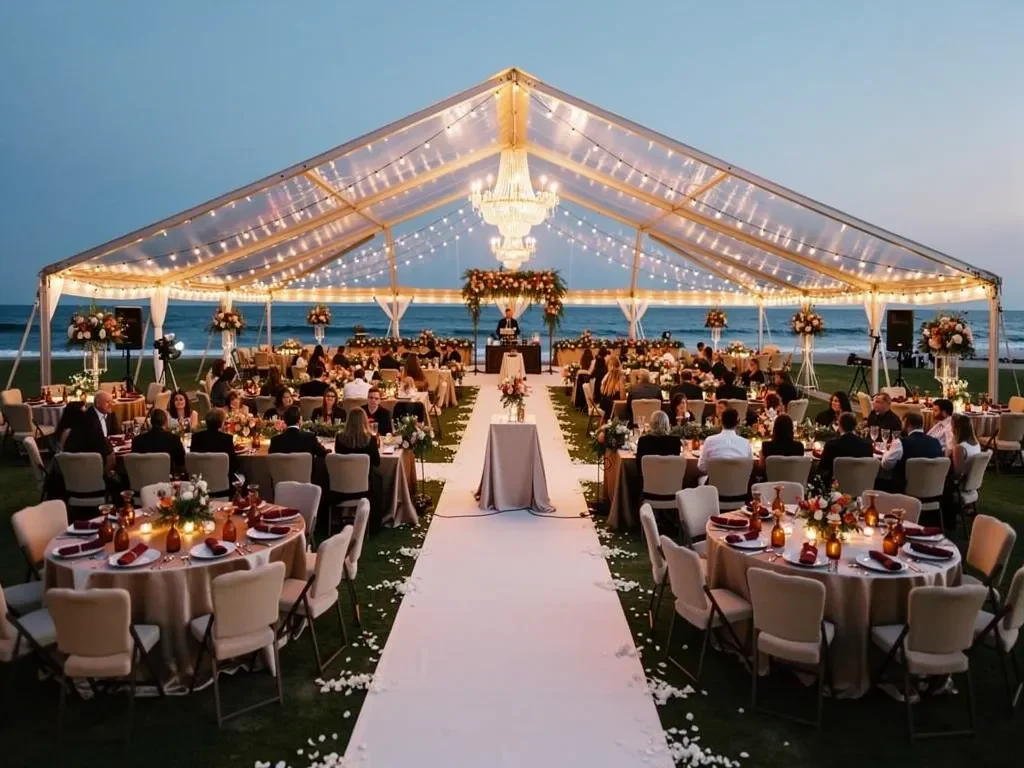
A fall ceremony may begin in natural light but conclude close to sunset. Lighting should therefore be considered across the full timeline, including guest arrival and movement toward cocktail hour.
The ceremony does not necessarily need an elaborate lighting design, but entrances, aisles, surface transitions, and exits must remain visible.
Review the Expected Light From Start to Finish
Consider the lighting conditions when guests begin arriving, when the processional starts, during the vows, and after the recessional.
A location that feels bright during setup may look very different by the time the ceremony ends. Trees, buildings, hills, and tent structures can also affect when a particular area falls into shade.
Reviewing the site at a similar time of day can provide a more accurate sense of what will be needed.
Keep Entrances, Aisles, and Exits Visible
Decorative lighting at the focal point does not replace functional lighting along guest routes.
Pay particular attention to stairs, pathway changes, edges of temporary flooring, and transitions between grass, gravel, patios, and indoor spaces. Guests should be able to move toward cocktail hour without entering an unlit section of the property.
Lighting equipment should remain outside the processional route and accessible pathways.
Coordinate Fixtures With the Photographer
Photographers and videographers should understand the ceremony orientation, timing, and planned lighting. They may need to adjust their positions as natural light changes.
Fixture placement should preserve clear photographs of the couple and focal area. Stands, cables, and lighting equipment should not become prominent distractions within the ceremony backdrop.
Early coordination helps balance visibility with the intended atmosphere.
Confirm Power and Cable Routes
Lighting and equipment supplied by other vendors may require power near the ceremony area. Confirm outlet locations and cable routes before chairs and décor are installed.
Cables should not cross the aisle, accessible routes, or major guest pathways without appropriate professional planning. Power requirements should be reviewed across participating vendors rather than addressed one item at a time.
Manage the Transition After the Recessional
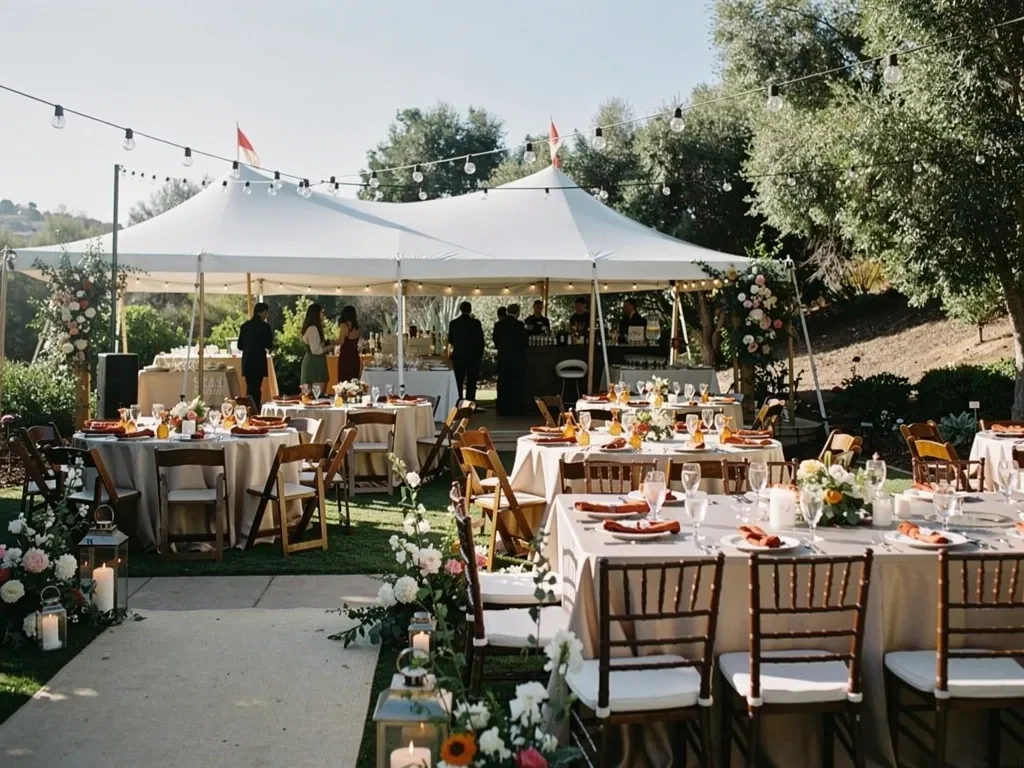
The ceremony setup continues to affect the wedding after the couple exits. Guests must move toward the next space, photographers may remain in the area, and some rentals may need to stay in place or be relocated.
Planning this transition helps prevent congestion and protects the couple’s photography schedule.
Direct Guests Away From the Ceremony Area
Guests should be able to identify where cocktail hour begins without gathering at the end of the aisle for too long.
The route may be established through signage, staff guidance, an open pathway, or the visible position of the next event space. Avoid directing guests through vendor service areas or across the route used by the wedding party.
If transportation is required, provide a defined waiting location that does not block the ceremony breakdown area.
Preserve Space for Family Photographs
Formal photographs often take place at the ceremony focal point immediately after the recessional. If this is part of the schedule, chairs, arches, florals, and lighting may need to remain in place until photography is complete.
Confirm which guests should remain for photographs and how others will be guided away. This prevents large groups from lingering in the working area or moving rental items prematurely.
The photographer, planner, and rental team should understand when the area will be released for breakdown.
Decide Whether Ceremony Rentals Will Be Reused
Some chairs, tables, décor, or other items may be intended for use elsewhere after the ceremony. Whether this is practical depends on the schedule, distance between spaces, venue restrictions, available labor, and photography plan.
Moving the same chairs from the ceremony to dinner can delay the reception if the transition has not been planned carefully. It may also leave guests without seating during cocktail hour.
Any rental relocation should be confirmed with Ventura Rental, the venue, and the planner before the event.
Schedule Breakdown Without Interrupting Cocktail Hour
Chair removal and installation breakdown can create noise and visible activity. Whenever possible, the vendor route should remain separate from cocktail hour and guest pathways.
Confirm when breakdown can begin, which pieces must remain for photographs, and where equipment will be taken after removal.
A clear sequence allows the ceremony area to be cleared without making guests feel as though the event is being dismantled around them.
Coordinate the Ceremony Installation in the Right Order
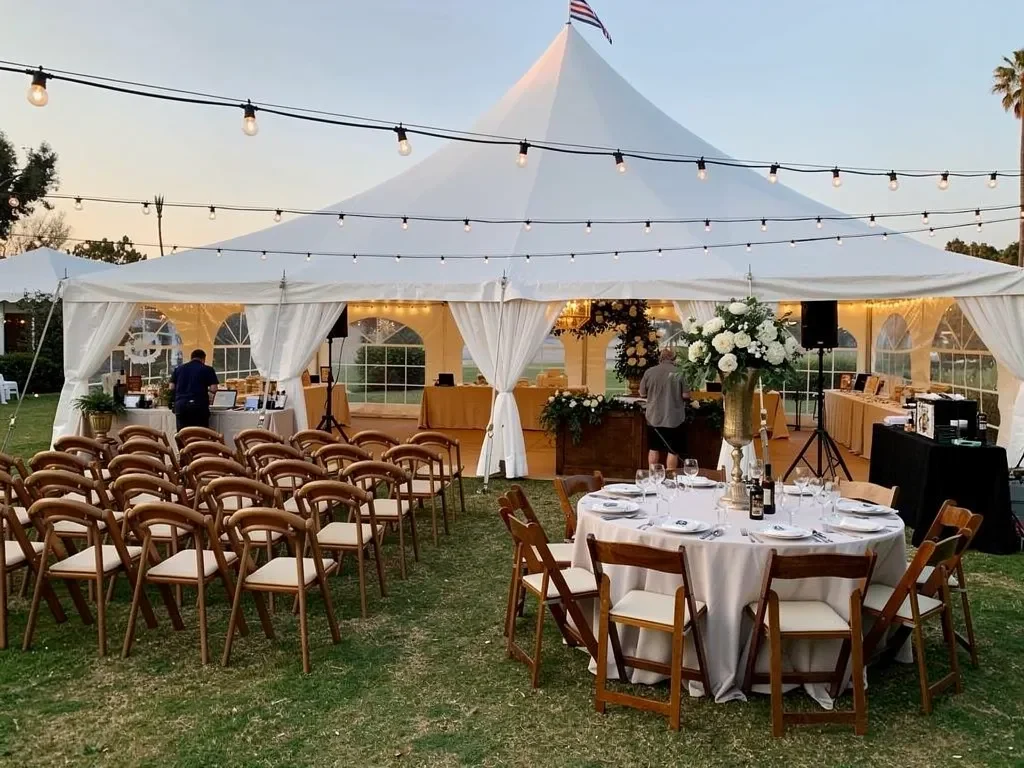
Outdoor ceremony setups often involve several vendors whose work depends on the previous installation being complete. Tents, flooring, arches, chairs, florals, lighting, and finishing details cannot always be installed simultaneously.
A shared schedule helps prevent conflicts and protects completed work.
Confirm the Venue Access Window
Determine when the property becomes available, where delivery vehicles can park, and when the ceremony must be fully installed.
Venue access may also depend on another event, landscaping work, guest check-in, or restrictions on vehicle movement. Share the confirmed window with every vendor working in the ceremony area.
Allow enough time for the completed layout to be inspected before guests arrive.
Install Structural Rentals Before Decorative Details
Structural items such as tents, canopies, flooring, staging, and arches generally need to be positioned before flowers, signage, aisle décor, and smaller details are added.
This order reduces the likelihood that finishing pieces will need to be removed or adjusted to complete the rental installation.
The exact sequence should be confirmed among the rental team, florist, lighting provider, planner, and venue.
Verify Chair Placement Against the Final Floor Plan
Before decorative items are placed, check the number of rows, chair count, reserved spaces, aisle location, side routes, and accessible seating.
View the ceremony from the back row and from both sides. Confirm that the focal point is visible and that no chair sections have shifted away from the intended orientation.
Correcting the layout at this stage is easier than moving rows after floral pieces or aisle markers have been installed.
Assign Responsibility for Every Setup Element
Create a clear list identifying who handles each part of the ceremony, including:
-
Chairs and seating rows
-
Arch or focal installation
-
Floral attachments
-
Aisle décor
-
Welcome table
-
Programs and signage
-
Water station
-
Lighting
-
Power equipment
-
Post-ceremony relocation
-
Breakdown and pickup
Ventura Rental’s setup services vary by item. Confirm what is included with the order and what must be completed by the planner, florist, venue, or another vendor.
Plan the Ceremony With Ventura Rental Party & Events
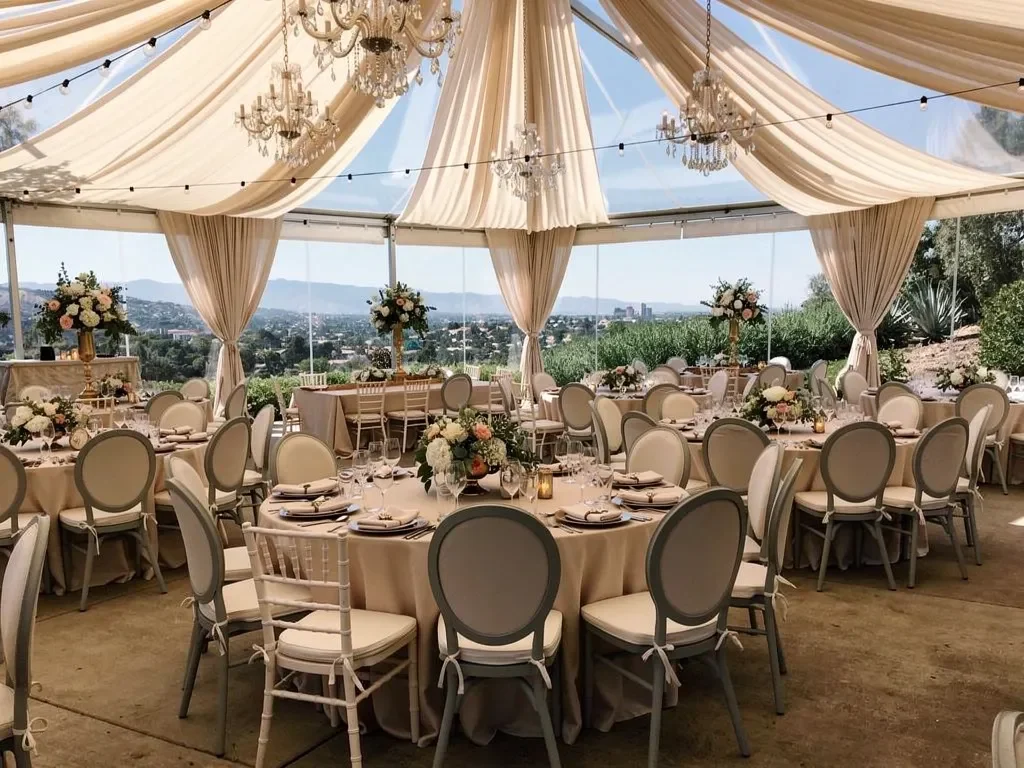
Ventura Rental Party & Events serves weddings throughout Santa Barbara County and offers rentals for ceremonies at gardens, courtyards, coastal properties, historic settings, private estates, and other indoor-outdoor venues.
Its team can assist with rental selection and layout guidance while working alongside the wedding planner, venue coordinator, florist, photographer, and other vendors.
Browse Ceremony-Related Rental Categories
Review Ventura Rental’s current inventory of chairs, arches and installations, tents and canopies, umbrellas, flooring, lighting, heaters, tables, décor, and power equipment.
The online catalog can help establish the desired style and identify relevant categories. Specific products and quantities should be confirmed for the wedding date.
Couples may also benefit from viewing related pieces together instead of choosing the chairs, arch, and arrival-area furniture separately.
Share the Ceremony Details With the Rental Team
When requesting rental guidance, provide:
-
Wedding date and venue
-
Ceremony time
-
Confirmed or estimated guest count
-
Seating and aisle plan
-
Installation surface
-
Preferred focal structure
-
Arrival and waiting areas
-
Property access information
-
Weather alternative
-
Vendor installation schedule
-
Post-ceremony plans for the rentals
Complete information helps the rental team understand how the ceremony must function from arrival through breakdown.
Visit the Showroom by Appointment
Ventura Rental’s showroom is located at 1601 Callens Road in Ventura. Seeing chairs, installations, linens, furniture, and décor together can make coordinated selection easier.
Showroom visits are by appointment, so couples should contact the company before arriving.
Bringing venue photographs, color references, an estimated guest count, and a preliminary layout can make the consultation more productive.
Confirm Delivery, Setup, Relocation, and Pickup
Before the wedding, confirm which services apply to each item in the rental order.
Delivery does not automatically mean that every decorative element will be styled or arranged. Likewise, rental setup does not necessarily include floral installation, signage placement, chair relocation after the ceremony, or handling by other vendors.
Documenting these responsibilities prevents assumptions and gives the planner a complete installation schedule.
Frequently Asked Questions
What rentals are commonly needed for an outdoor ceremony?
Common rentals include guest chairs, a focal structure where desired, a welcome or program table, umbrellas or another shade option, lighting for later ceremonies, and temporary flooring where appropriate.
Additional rentals depend on what the venue already provides and whether the ceremony needs a covered alternative.
Does every outdoor ceremony need a wedding arch?
No. A garden, tree, courtyard wall, doorway, coastal view, or architectural feature may already provide a natural focal point.
An arch or installation is useful when the space needs greater definition or when the structure supports the couple’s chosen design.
How should ceremony chairs be selected?
Consider the installation surface, venue architecture, ceremony duration, guest needs, chair dimensions, and overall wedding design.
Review Ventura Rental’s current catalog and confirm which chair styles are available for the wedding date. Couples planning a full setup can start with our wedding rental services.
Should couples reserve a second set of chairs for the reception?
Not necessarily. The right decision depends on the schedule, distance between the ceremony and reception, venue rules, available labor, and whether the chairs can be moved without delaying photographs or dinner.
If ceremony chairs will be reused, the relocation plan and responsibility should be confirmed in advance.
What should couples share before a ceremony site review?
Provide the guest count, ceremony time, site photographs, measurements, installation surface, access route, proposed aisle, focal point, weather alternative, and participating vendor information.
Sharing the expected ceremony format is also helpful when it involves additional participants, performances, or furniture.
Can ceremony rentals be installed on grass?
Some ceremony rentals may be installed on grass, but the area should be reviewed for slope, stability, moisture, access, and accessible movement.
The rental team should evaluate the specific property rather than relying on general assumptions about lawn installations.
How should a late-afternoon fall ceremony be planned?
Review the entire timeline from guest arrival through the recessional. Consider changing light, the position of the sun, cooler conditions, pathway visibility, photography, and the route toward cocktail hour.
Lighting and comfort measures should support the full timeline rather than only the scheduled ceremony start.
Does Ventura Rental provide ceremony setup?
Setup is available for certain eligible rental items, while other arrangements require separate coordination.
Couples should confirm which items will be installed by Ventura Rental and which details are the responsibility of the planner, florist, venue, or another vendor.
Conclusion
A fall outdoor wedding ceremony in Santa Barbara should not be planned as a simple row of chairs facing an arch. The complete rental plan should consider how guests arrive, where they wait, how the wedding party enters, what everyone can see, and where guests go once the ceremony ends. You may also find What to Consider for Your Outdoor Wedding Ceremony helpful.
The property provides the foundation. From there, seating, aisles, focal installations, shade, lighting, flooring, and arrival-area rentals can be selected to support the location rather than compete with it.
Planning the ceremony as a sequence also makes practical details easier to resolve. The couple and vendors can identify when rentals must be installed, what needs protection if conditions change, which pieces must remain for photographs, and whether anything will be relocated after the recessional.
Ventura Rental Party & Events offers ceremony-related rentals for outdoor weddings throughout Santa Barbara County. Couples can browse the current catalog or schedule a showroom consultation to begin coordinating a ceremony that works smoothly from the first guest’s arrival through the final walk back up the aisle. For a quote built around your venue and guest count, contact our event rental team.