
A wedding ceremony is the emotional center of the day. It is the moment guests gather, the couple makes their entrance, vows are exchanged, and the entire celebration begins with intention. Because of that, the ceremony setup deserves more than a few rows of chairs and a decorative arch. It should be designed around the setting, the couple, the guest experience, and the way the moment will look and feel in person and on camera.
In Santa Barbara, ceremony design is especially important because the location often plays a major role in the atmosphere. Vineyard rows, garden paths, historic courtyards, estate lawns, ocean views, mountain backdrops, and Spanish-style architecture can all become part of the ceremony. The right setup frames these features without distracting from the couple.
A strong ceremony setup considers the focal point, seating arrangement, aisle design, shade, sound, lighting, guest flow, accessibility, and the transition into cocktail hour. Whether the wedding is taking place at a vineyard, garden venue, coastal property, historic courtyard, or private estate, these setup ideas can help create a ceremony that feels beautiful, comfortable, and well planned.
Start with the Ceremony Focal Point

Choose the Best Natural Backdrop
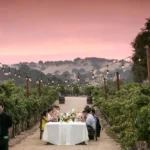
Santa Barbara offers many natural and architectural ceremony backdrops. A vineyard ceremony may face rows of vines or rolling hills. A coastal ceremony may frame the ocean or palm-lined horizon. A garden ceremony may use flowering paths, trees, hedges, or an existing arbor. A historic venue may offer courtyards, archways, tilework, or classic Santa Barbara architecture.
The best backdrop should support the ceremony without overwhelming it. Guests should immediately understand where to look, and the couple should remain the clear focus. If the view is already strong, the rental and décor choices can stay simple. A low floral installation, clean arbor, or subtle aisle markers may be enough.
Consider Sun Direction Before Finalizing the Altar
Sun direction can affect guest comfort, photography, and the couple’s experience during the ceremony. If the altar faces harsh direct sun, guests may squint through the ceremony, and the couple may be uncomfortable in photos and video. Coastal glare can also be an issue, especially for ceremonies near the water.
Whenever possible, visit the venue at the same time of day as the planned ceremony. Look at where the sun falls, where shade appears, and how the light affects the backdrop. Late-afternoon light can be beautiful in Santa Barbara, but the setup should still protect guests from uncomfortable exposure.
Keep the View Clear for Photography and Video
A ceremony setup should allow photographers and videographers to capture the processional, vows, ring exchange, kiss, recessional, and guest reactions without obstruction. Leave enough space around the altar for movement. Avoid placing tall speakers, oversized floral arrangements, signage, or rental structures where they block the main angles.
If the venue has a dramatic view, make sure the design frames it rather than covering it. Low florals, grounded arrangements, and clean-lined ceremony structures often work better than heavy installations in scenic outdoor settings.
Match the Focal Point to the Venue Style
The focal point should feel appropriate for the venue. For a vineyard ceremony, a wooden arbor, wine-country florals, greenery, and natural textures can work well. For a garden ceremony, a soft floral arch or delicate fabric accents may feel more connected to the space. Historic venues often need minimal altar décor because the architecture already provides structure. Coastal ceremonies usually benefit from wind-safe arches, clean lines, and low-profile florals that do not fight the breeze or block the view.
Choose a Ceremony Seating Layout That Fits the Space
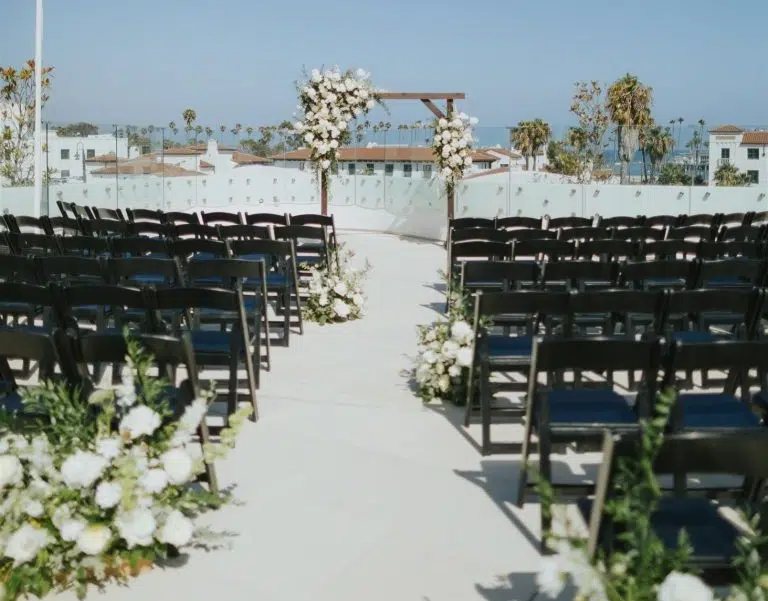
Seating layout affects how intimate the ceremony feels, how well guests can see, how the aisle photographs, and how easily everyone moves before and after the ceremony. The best arrangement depends on the venue size, guest count, terrain, and focal point.
Traditional Straight-Row Seating
Straight-row seating is the most classic ceremony layout. It works well for formal ceremonies, historic venues, long aisles, and symmetrical photography. This setup creates a clear processional path and keeps the visual focus on the altar.
Straight rows pair well with Chiavari chairs, folding chairs, crossback chairs, or other ceremony seating styles. Reserved-row markers can help guide family members and VIP guests to the correct seats.
Curved Seating for a More Intimate Feel
Curved seating brings guests visually closer to the couple. Instead of pushing the back rows far from the altar, the curve wraps the audience around the ceremony space. This can be especially effective for garden weddings, small vineyard ceremonies, and estate lawns.
A curved layout also softens the look of the ceremony and can feel more natural in outdoor spaces. It works best when the venue has enough width to accommodate the curve without crowding the aisle or blocking photographer movement.
Semi-Circle Seating for Scenic Venues
Semi-circle seating creates an immersive ceremony experience. It works well for open lawns, mountain views, ocean-facing ceremonies, and venues where the backdrop is wide rather than narrow.
This layout makes the ceremony feel less rigid and allows more guests to feel close to the couple. It is also a strong option for couples who want a modern or less traditional ceremony format.
Angled Seating for Better Sightlines
Angled seating can improve visibility in wide outdoor spaces or venues with uneven sightlines. Instead of placing chairs in straight rows facing forward, each section is angled slightly toward the altar. This helps guests see the couple without leaning around other attendees.
This setup is useful for larger guest counts, outdoor lawns, and spaces where the ceremony backdrop is wider than the seating area.
Mixed Seating for Relaxed Santa Barbara Weddings
Some Santa Barbara ceremonies benefit from a mixed seating approach. Chairs, benches, lounge pieces, and reserved family seating can be combined for a relaxed garden, coastal, or boho-inspired ceremony.
Mixed seating should still be planned carefully. It should look intentional, preserve clear aisles, and provide comfortable seating for older guests and family members. Lounge pieces can add style, but they should not replace practical seating for guests who need back support.
Design the Aisle as Part of the Experience
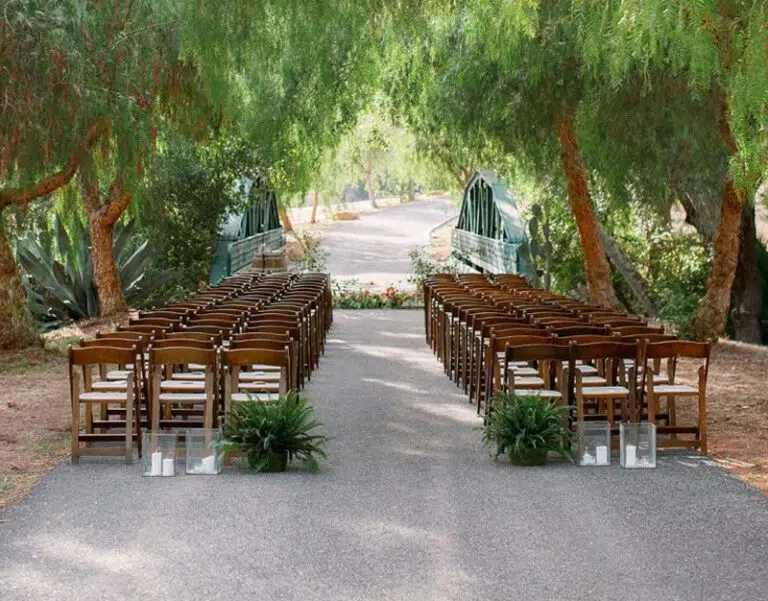
The aisle is not just a path. It is part of the ceremony story. It determines how the wedding party enters, how the couple is revealed, how the recessional feels, and how guests experience the beginning of the ceremony.
Decide on a Central, Split, or Side Entrance
A central aisle is the most classic option. It creates a strong visual line and works well for formal ceremonies, vineyard rows, garden lawns, and historic courtyards.
A split aisle can be useful for unique venue layouts or ceremonies where the couple wants a less traditional entrance. This can work well in round or semi-circle seating arrangements.
A side entrance may be better for gardens, courtyards, or venues with limited space. It can also help preserve a natural focal point when a central aisle would interrupt the best view.
Use Aisle Width to Improve Flow and Photography
The aisle should be wide enough for the couple, wedding party, family members, and photographer to move comfortably. It should also accommodate formal attire, bouquets, veils, trains, and any cultural or ceremonial traditions.
An aisle that is too narrow can make the processional feel cramped and can limit photography angles. Outdoor ceremonies often need a slightly wider aisle than indoor ceremonies because surfaces may be uneven and movement may require more space.
Add Aisle Décor Without Creating Obstacles
Aisle décor should guide the eye toward the altar without blocking movement. Low floral markers, lanterns, greenery, petals, fabric ties, and reserved signs can all work well.
For coastal or open-air venues, décor should be wind-safe. Lightweight pieces, tall unstable arrangements, and loose paper elements may not perform well outdoors. Aisle pieces should also be positioned so they do not interfere with guests entering rows or photographers moving along the edges.
Plan the Processional and Recessional Route
The entrance and exit routes should be clear before the wedding day. The planner, photographer, videographer, musicians, officiant, and rental team should all understand where the couple and wedding party will enter, stand, and exit.
After the ceremony, guests should know where to go next. If cocktail hour is in another area, signage, ushers, or a planned pathway can help prevent confusion.
Select Ceremony Chairs Based on Style, Surface, and Comfort
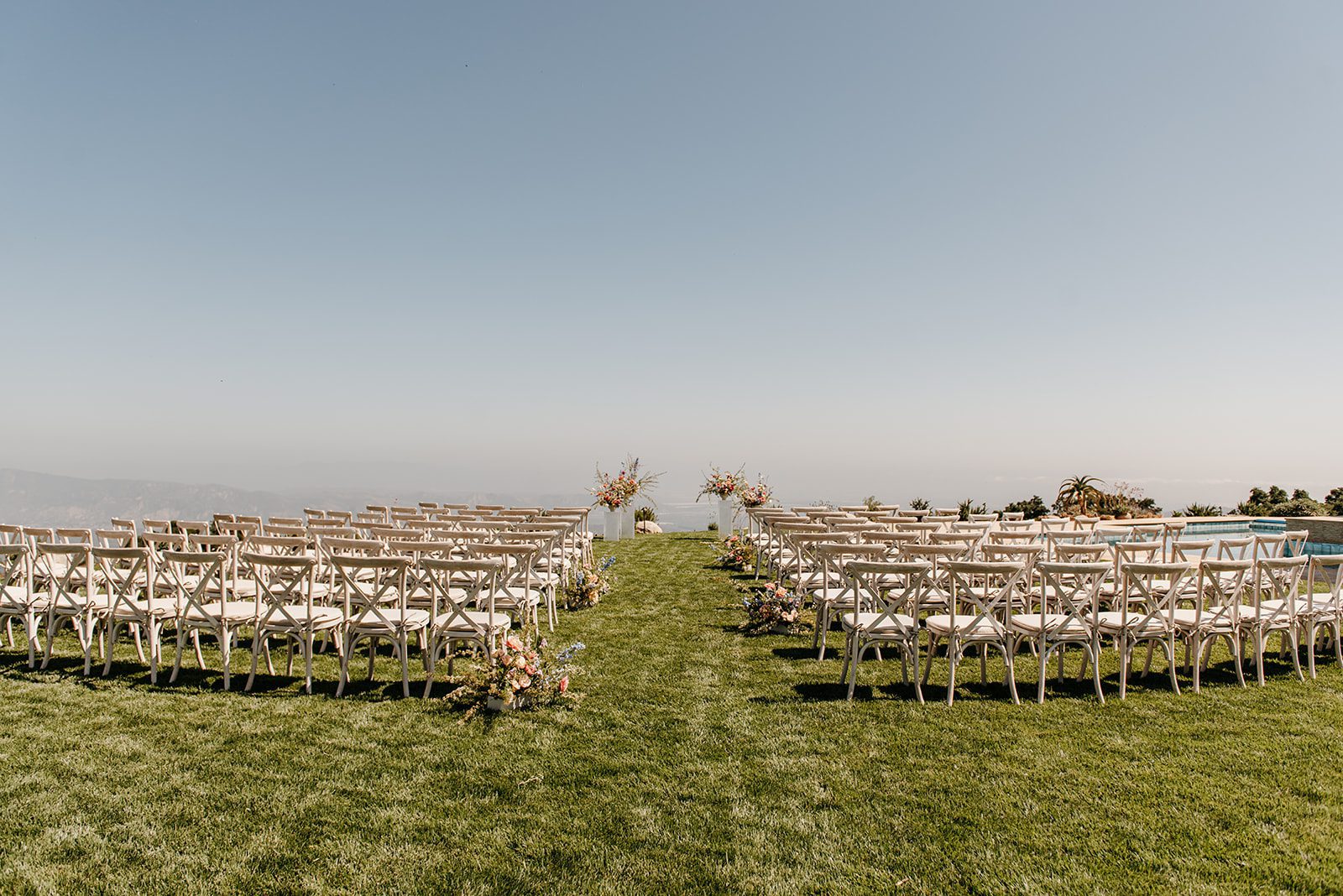
Chairs are one of the most visible ceremony rentals. They define the ceremony layout and appear in many of the most important photos. They also affect guest comfort, accessibility, and setup timing.
Chiavari Chairs for Elegant Santa Barbara Ceremonies
Chiavari chairs are a strong choice for elegant ceremonies, garden estates, historic venues, and formal outdoor settings. They create a polished look without feeling too heavy. They also work well with floral aisle markers, reserved signs, and classic altar designs.
This chair style is especially fitting for venues with historic architecture, refined gardens, or formal courtyards.
Folding Chairs for Outdoor Flexibility
Folding chairs are practical, versatile, and efficient for outdoor ceremonies. They work well on lawns, gardens, beach-adjacent spaces, and venues that need quick setup and breakdown.
They can be arranged cleanly in straight rows, curved layouts, or angled sections. For outdoor ceremonies, confirm that the chair style is stable on the venue surface.
Crossback Chairs for Vineyard and Rustic-Elegant Ceremonies
Crossback chairs are a natural fit for vineyard, wine country, and estate lawn ceremonies. Their wood texture pairs well with natural landscapes, wooden arbors, greenery, and rustic-elegant design.
They can also be reused later at the reception if the timeline and labor plan allow it, especially when paired with harvest tables or wood dining tables.
Benches for Intimate or Casual Ceremonies
Benches can create a relaxed and intimate ceremony look. They work well for smaller guest counts, garden settings, boho ceremonies, and shorter ceremonies.
However, benches may not be ideal for long ceremonies or guests who need back support. If using benches, consider reserving chairs for older guests, immediate family members, and anyone who may need more comfortable seating.
Reserved Seating for Family and VIP Guests
Reserved seating should be clear and accessible. Front-row markers, reserved signs, extra spacing, and shade planning can help make family and VIP guests comfortable.
For older guests or guests with mobility considerations, place seats near accessible pathways and avoid uneven surfaces whenever possible.
Use Tents, Canopies, or Shade Structures Only Where They Support the Ceremony

Not every Santa Barbara ceremony needs a full tent. Some ceremonies only need partial shade, an altar canopy, or a small covered area for musicians. The goal is to use structure where it improves the ceremony experience without hiding the setting.
When a Full Ceremony Tent Makes Sense
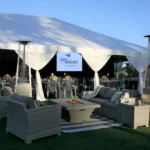
A full ceremony tent may be appropriate for rain backup, full sun exposure, larger guest counts, outdoor-only venues, or high-comfort events. It can protect guests, create a defined ceremony space, and support lighting or sound needs.
For ceremonies where weather is uncertain, a tent can provide peace of mind. It should be sized for the seating layout, aisle, altar area, and guest movement.
When a Canopy or Pergola Is Better Than a Tent
A canopy or pergola may be better when the couple wants to preserve the open-air feel while still adding structure. These smaller elements can frame the altar, protect musicians, cover family seating, or create partial shade.
They are especially useful for garden ceremonies, estate lawns, and spaces where a full tent would feel too large or visually heavy.
Clear-Top Structures for Scenic Ceremony Views
Clear-top structures allow guests to experience the surrounding environment while still providing coverage. They can work well for gardens, vineyards, estate lawns, and evening ceremonies.
However, clear-top structures should be planned carefully for daytime events because they may increase heat in full sun. Shade, timing, and ventilation should be considered.
Sailcloth Tents for Soft, Romantic Ceremony Design
Sailcloth tents create a soft, romantic look and are well suited for elegant outdoor ceremonies, estate venues, and coastal-inspired weddings. Their translucent fabric allows natural light to filter through, creating a warm atmosphere.
This option works best when the ceremony style calls for a refined outdoor structure rather than a purely functional cover.
Frame Tents for Practical Ceremony Coverage
Frame tents are practical for hard surfaces, courtyards, venues with limited staking options, and smaller ceremony spaces. Because they do not require center poles, they can support cleaner layouts and unobstructed sightlines.
Plan Ceremony Flooring and Pathways for Outdoor Surfaces
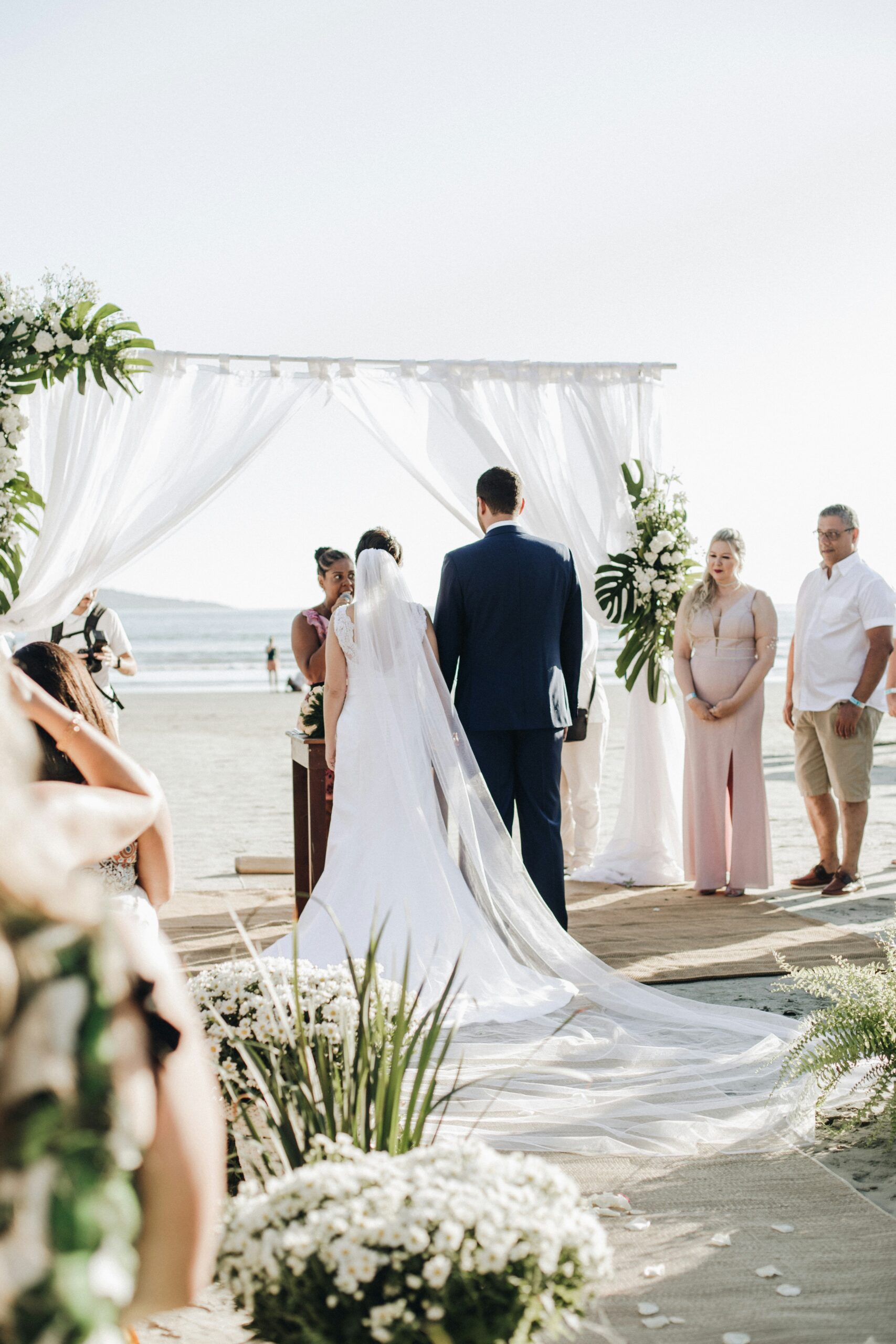
Outdoor ceremony surfaces are not always guest-friendly. Grass, gravel, soft soil, slopes, and uneven courtyards can affect walking, seating, accessibility, and photography. Flooring and pathways help make the ceremony safer and more polished.
When an Aisle Runner Is Not Enough
An aisle runner is decorative, but it may not solve surface issues. On soft grass, gravel, or uneven ground, a fabric runner may bunch, shift, or create a trip hazard.
If the ceremony surface is difficult to walk on, a stronger walkway or portable flooring solution may be needed.
Portable Flooring for Guest Safety and Accessibility
Portable flooring can help stabilize uneven lawns, vineyard terrain, soft ground, and outdoor ceremony paths. It is especially useful for wheelchair access, formal shoes, and long processional routes.
Ramps and smooth transitions should be included when needed. Flooring should feel integrated into the design rather than added as an afterthought.
Low-Profile Carpeting for a Finished Look
Low-profile carpeting can create a more finished ceremony space while still feeling soft and elegant. It can be used for garden ceremonies, estate lawns, altar zones, and ceremony platforms.
This option can help define the ceremony area and make the space feel more intentional.
Staging for Visibility in Large Ceremonies
Staging is not necessary for every ceremony, but it can improve visibility for larger guest counts, sloped venues, wide seating layouts, cultural ceremonies, live musicians, or officiant visibility.
If staging is used, it should be safe, stable, and visually aligned with the ceremony design. Ramps, edge treatments, and cable management should be planned in advance.
Mark Guest Pathways Clearly
Guests should know where to walk when they arrive. Signs, lanterns, floral markers, path lighting, and ushers can help guide them to the ceremony seating area.
Clear pathways are especially important at large venues, private estates, vineyards, and properties with multiple event zones.
Build the Altar or Ceremony Backdrop with Restraint

The altar or ceremony backdrop should frame the couple and support the setting. In Santa Barbara, restraint often works better than excess because many venues already have strong natural or architectural beauty.
Floral Arches for Garden and Estate Weddings
Floral arches are a classic choice for garden and estate weddings. Soft florals, greenery, and seasonal blooms can create a romantic focal point.
The arch should match the scale of the venue. A small garden may need a delicate floral structure, while a large estate lawn may support a fuller design.
Minimalist Frames for Modern Santa Barbara Ceremonies
Minimalist frames work well for modern venues, rooftop-style settings, urban ceremonies, and contemporary couples. Acrylic, metal, or clean-lined structures can create a refined look without overwhelming the space.
This style pairs well with simple chairs, neutral florals, and modern lounge or cocktail-hour design.
Wooden Arbors for Vineyard and Wine Country Weddings
Wooden arbors are a natural fit for vineyard and wine country ceremonies. They work well with crossback chairs, greenery, warm neutral palettes, and rustic-elegant décor.
The wood tone should coordinate with other rental elements, especially if the reception will include harvest tables, wine-barrel bars, or natural wood accents.
Fabric Draping for Romantic Outdoor Ceremonies
Fabric draping can soften a ceremony structure and add movement. It works well for sailcloth-inspired designs, garden ceremonies, and coastal settings.
For outdoor installations, fabric should be secured carefully. Wind-safe installation is essential, especially near the coast or in open vineyard spaces.
Grounded Floral Installations for Open-View Venues
Grounded floral installations are a strong option when the venue has a beautiful ocean, vineyard, mountain, or garden view. Instead of building upward and blocking the scenery, low florals frame the couple from the ground.
This approach keeps the ceremony visually open while still making the altar area feel intentional.
Think Through Ceremony Sound Before Guests Arrive
Sound is often overlooked, but it can determine whether guests actually experience the ceremony. Outdoor spaces do not hold sound the way indoor rooms do, so audio support should be planned early.
Outdoor Ceremonies Need Audio Support
Wind, waves, open lawns, fountains, traffic, and large guest counts can make vows difficult to hear. Microphones should be considered for the officiant, couple, musicians, readers, and anyone giving a ceremony speech or blessing.
Even a small outdoor ceremony can benefit from discreet sound support.
Place Speakers Without Disrupting the Design
Speakers should be positioned where guests can hear clearly, but they should not dominate the design or block photography angles. They can often be placed near chair sections, florals, ceremony structures, or side pathways.
The goal is clear sound with minimal visual disruption.
Plan Power Access for Audio Equipment
Ceremony sound may require power access, cable routing, battery backup, generator support, and weather protection. These details should be confirmed before setup.
Cable paths should avoid guest walkways whenever possible. If cables must cross a pathway, they should be protected and safely covered.
Coordinate Sound with Musicians and DJ
The ceremony sound plan should include processional music, microphone cues, readings, vows, recessional music, and any live musician needs. The planner, DJ, musicians, officiant, and rental team should all understand the ceremony timeline.
Coordinate Ceremony Lighting for Late-Afternoon or Evening Weddings
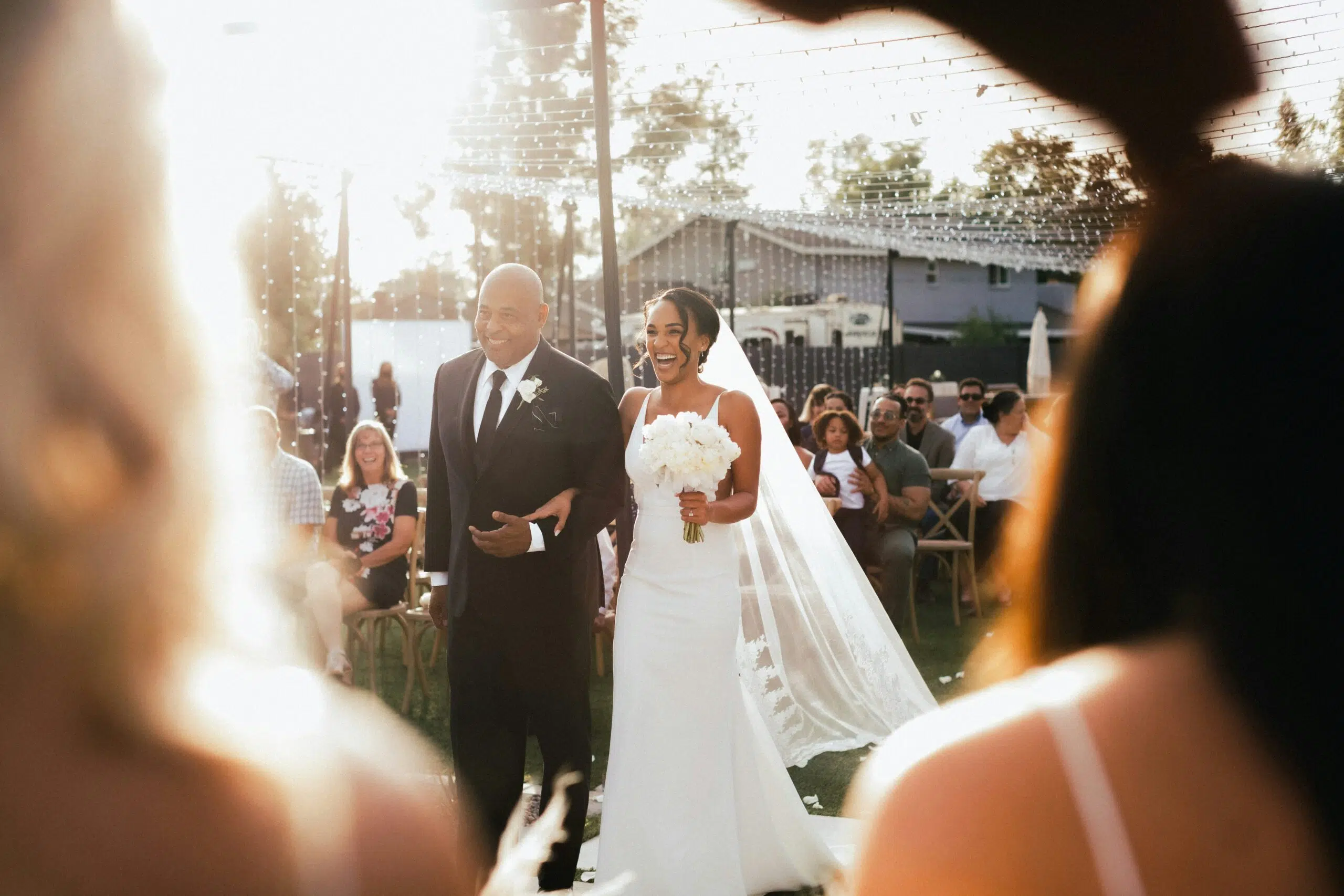
Ceremony lighting is not always necessary for daytime weddings, but it becomes important for late-afternoon, sunset, winter, shaded, courtyard, or evening ceremonies.
When Ceremony Lighting Is Needed
Lighting may be needed for sunset ceremonies, winter ceremonies, shaded garden spaces, courtyards, and indoor-outdoor transitions. Even if the ceremony begins in daylight, lighting may be needed by the recessional or for post-ceremony photos.
Use Lighting to Highlight the Couple
Soft uplighting, lanterns, low aisle lighting, altar lighting, and tree lighting can help define the ceremony area. Lighting should feel warm and subtle, not harsh or distracting.
The couple should remain the focus. Avoid lighting that creates glare, strong shadows, or color casts that affect photography.
Pathway Lighting for Guest Movement
Pathway lighting helps guests move safely before and after the ceremony. It can be used near entrances, walkways, steps, exits, restroom paths, and transitions to cocktail hour.
For outdoor venues, this is both a design and safety consideration.
Transition Lighting from Ceremony to Cocktail Hour
Lighting can also help guide guests from the ceremony space to the next event area. Lanterns, path lights, string lights, or uplighting can create a natural flow from vows to cocktail hour.
Ceremony Setup Mistakes to Avoid
Even beautiful ceremony ideas can create problems if the practical details are overlooked. These are some of the most common mistakes to avoid.
Placing the Altar Without Checking Sun Direction
Poor sun placement can make guests uncomfortable and create difficult lighting for photography. Always check the ceremony site at the planned ceremony time before finalizing altar placement.
Choosing Chairs That Do Not Work on the Venue Surface
Some chairs are not ideal for grass, gravel, sand, slopes, or uneven courtyards. Chair stability should be confirmed before the wedding day.
Forgetting Sound Support
Outdoor vows can be difficult to hear without microphones. Do not assume a small guest count means sound is unnecessary.
Overdecorating a Naturally Beautiful Backdrop
Santa Barbara venues often need framing, not visual clutter. Too much décor can distract from the view and the couple.
Making the Aisle Too Narrow
A narrow aisle can interfere with the processional, formal attire, floral arrangements, and photography. Leave enough room for comfortable movement.
Not Planning Accessibility
Ceremony access should include clear pathways, ramps when needed, accessible seating, and shade for guests who need extra comfort.
Waiting Until the Rehearsal to Solve Layout Problems
The rehearsal is not the right time to discover that the aisle is too narrow, the sun is too harsh, or the chairs do not fit. A layout plan and site walk-through should happen well before the wedding week.
Frequently Asked Questions
What is the best ceremony setup for an outdoor Santa Barbara wedding?
The best setup depends on the venue type, guest count, sun direction, surface, and backdrop. Vineyard ceremonies often work well with crossback chairs and wood arbors. Garden ceremonies may use curved seating and floral arches. Historic courtyards often need minimal décor and classic seating. Coastal ceremonies should prioritize wind-safe designs and clear views.
Do I need a tent for my ceremony?
Not every ceremony needs a full tent. However, shade, canopy coverage, or rain backup may be useful depending on the season, venue exposure, and guest comfort needs. A full tent is most helpful for ceremonies in strong sun, uncertain weather, or outdoor-only venues.
What chair style works best for outdoor ceremonies?
Chiavari chairs work well for elegant and historic settings. Folding chairs are practical for lawns, gardens, and beach-adjacent venues. Crossback chairs are a strong fit for vineyard and rustic-elegant ceremonies. Benches can work for intimate or casual setups, but they may not be ideal for longer ceremonies.
How wide should a wedding ceremony aisle be?
The aisle should be wide enough for the couple, wedding party, family members, photographer, and videographer to move comfortably. It should also account for formal attire, bouquets, veils, and accessibility. Outdoor ceremonies often need more aisle width than indoor ceremonies because surfaces can be uneven.
How do I keep guests comfortable during an outdoor ceremony?
Guest comfort can be improved with shade, water stations, fans, heaters, accessible seating, clear pathways, and thoughtful ceremony timing. Avoid placing guests in harsh sun or on unstable surfaces whenever possible.
How can I decorate a ceremony without blocking the view?
Use low florals, simple arches, grounded arrangements, and minimal décor that frames the couple rather than covering the scenery. This works especially well for ocean, vineyard, mountain, and garden backdrops.
What ceremony rentals are often forgotten?
Commonly forgotten ceremony rentals include microphones, speaker stands, reserved signs, aisle markers, welcome tables, water stations, pathway lighting, ramps, and small tables for programs, memorial items, or unity ceremonies.
Can ceremony rentals be reused for the reception?
Yes, some ceremony rentals can be reused for the reception if timing, labor, and distance between spaces allow. Chairs, florals, signage, and décor may be moved, but the plan should be confirmed before the wedding day.
Conclusion
The best Santa Barbara wedding ceremony setups begin with the setting. The view, sun direction, guest comfort, aisle flow, sound, and photography angles should guide the design before rental selections are finalized.
Tents, chairs, canopies, flooring, staging, lighting, florals, and décor should frame the ceremony moment rather than overpower it. Whether the wedding takes place in a vineyard, garden, historic courtyard, coastal venue, or estate lawn, the right ceremony setup will make the vows feel clear, comfortable, and visually memorable.
For help planning a ceremony setup in Santa Barbara, Ventura Rental can assist with chairs, tents, canopies, ceremony structures, lighting, flooring, staging, and décor tailored to the venue, guest count, and wedding style.