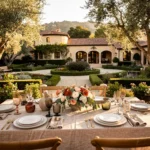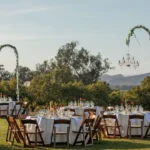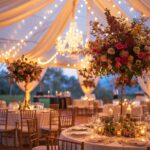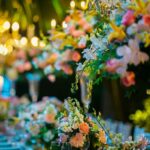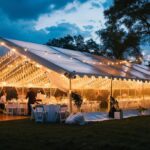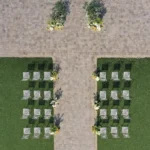

An elegant autumn tablescape begins long before the centerpieces, candles, and place settings are added. The tables establish the structure of the dining area, while the chairs create a repeating visual pattern that can shape the appearance of the entire reception. Once those foundational pieces are selected, linens and tabletop rentals can bring warmth, texture, and seasonal character to the design.
For weddings and private celebrations in Santa Barbara, the strongest tablescapes also respond to their surroundings. A garden estate, Spanish-inspired courtyard, coastal property, and open outdoor venue may each call for a different combination of materials, colors, and furniture profiles. The objective is not to cover the venue with obvious fall decorations, but to create a dining setting that feels connected to both the season and the location.
Ventura Rental Party & Events offers standard and specialty tables, dining chairs, linens, china, glassware, chargers, flatware, and décor for Santa Barbara celebrations. Coordinating these rentals as one collection helps create a reception that feels polished from every viewpoint rather than assembled one item at a time.
Begin With the Character of the Santa Barbara Venue
Before choosing a table shape or linen color, consider what already gives the venue its identity. Architecture, landscaping, natural views, flooring, and surrounding colors should influence the rental design.
Santa Barbara celebrations can take place in settings ranging from coastal properties and landscaped estates to courtyards, vineyards, and elegant indoor venues. A well-designed tablescape should complement those surroundings rather than compete with them.
Garden and Estate Settings
Garden and estate venues already contain a range of natural colors and textures. Trees, hedges, flowers, stone pathways, fountains, and surrounding architecture may all appear within the guests’ view of the reception.
In these settings, tables with visible wood finishes can help the dining area feel grounded within the landscape. Neutral linens can create a softer and more formal appearance, while chairs with open backs or natural finishes can preserve visual space around the table.
Avoid adding too many unrelated botanical patterns or rustic accessories simply because the event is outdoors. A restrained combination of wood, woven texture, neutral fabric, and selected floral color usually allows the property to remain part of the design.
Spanish-Inspired Courtyards and Historic Properties
Santa Barbara’s Spanish-influenced settings often feature warm stucco, tile, stone, arches, dark wood, and landscaped courtyards. The table-and-chair combination can reflect these architectural elements without turning the reception into a literal theme.
Natural or darker wood tones can relate to beams, doors, and surrounding architectural details. Ivory, taupe, clay, or muted terracotta accents can introduce warmth without overwhelming the space.
Metallic finishes can also be used selectively through flatware, charger details, candleholders, or chair finishes. The goal is to repeat a few materials from the environment instead of introducing an entirely separate color story.
Coastal and Open-Air Locations
Coastal venues often benefit from a lighter visual approach. Pale linens, clear glassware, natural wood, and chairs with open silhouettes can keep the dining area from appearing too heavy against an expansive outdoor view.
An elegant coastal tablescape does not require nautical decorations, seashells, or an entirely blue-and-white palette. Warm ivory, sand, muted green, soft clay, and natural wood can acknowledge both the coast and the autumn season without relying on literal motifs.
Centerpieces should also be considered in relation to the view. Low arrangements or smaller groupings can preserve sightlines and allow the setting to remain visible from the dining tables.
Blank-Slate Outdoor Spaces
Some outdoor venues provide an open lawn, courtyard, or patio without strong decorative features. In these spaces, the rental collection must do more of the visual work.
A specialty table, distinctive chair, textured linen, or repeated tabletop color can give the dining area a clear identity. However, using several dominant elements at once can make the reception feel visually disorganized.
Select one or two defining choices, such as exposed wood tables and contrasting chairs or full neutral linens paired with rich autumn napkins. Allow the remaining rentals to reinforce those choices.
Choose the Table Shape Around the Dining Experience
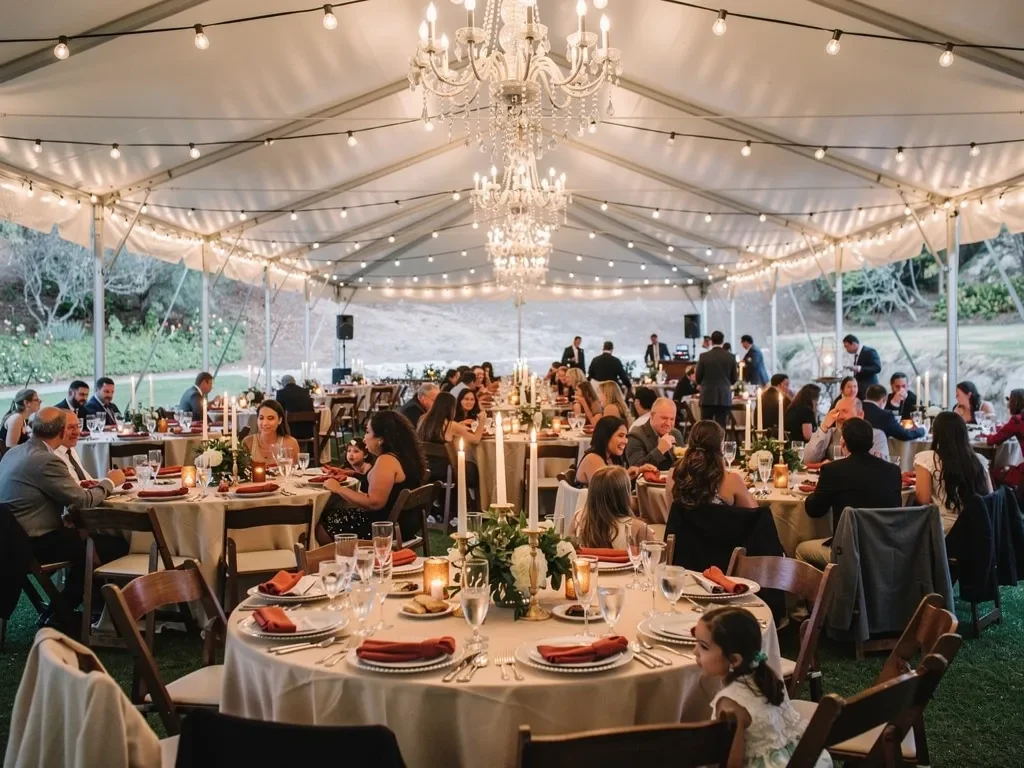
Table shape influences the way guests interact, how florals are arranged, where service pieces are placed, and how the dining area appears from across the venue.
Ventura Rental’s catalog includes standard banquet, round, square, and serpentine tables, along with specialty options such as farm tables, modern natural tables, round wood tables, Botanical tables, Topa tables, and the Noir Farm Table. This range allows the reception design to be developed around both function and style.
Round Tables for a Balanced Reception
Round tables create individual guest groupings and establish a consistent rhythm throughout the reception. When the same chair and linen combination is repeated around each table, the room or outdoor dining area can feel balanced and orderly.
They also provide a natural central location for a floral arrangement, candles, or another decorative focal point. A full linen can create a soft, formal base, while a specialty round wood table can make the material itself part of the design.
Because the chair backs form a visible ring around every table, chair selection has a particularly strong effect on the overall appearance. A dark chair can create a defined outline, while a pale, clear, or natural chair can produce a lighter effect.
Long Tables for a Dinner-Party Atmosphere
Long tables create strong lines through the reception and can make a large celebration feel more like a shared dinner. They work particularly well for designs that use repeated floral groupings, candles, runners, or a continuous arrangement through the center.
An exposed farm or specialty wood table can introduce natural texture, while a linen-covered banquet table can create a softer and more formal foundation. Ventura Rental’s specialty inventory includes multiple long wood-table options, including Faria Farm, Ranchero, Modern Natural, Topa, Botanical, and Noir designs.
Long tables require careful coordination between the tabletop design and meal service. Centerpieces, candles, place settings, menus, water service, and shared dishes may all compete for the same central space.
Before finalizing the decorative plan, confirm how food will be served and what the caterer needs to place on the table.
Exposed Wood Tables for a Material-Led Design
A specialty wood table does not always need to be hidden beneath a full tablecloth. Allowing the surface to remain visible can give the reception warmth and definition, particularly in a garden, vineyard, courtyard, or estate setting.
The table can be softened with a runner, napkin color, floral design, and coordinated place settings. Chairs may continue the wood story or create a deliberate contrast through a lighter, darker, upholstered, or clear profile.
The finish of the table should be evaluated in the actual event design. Several unrelated wood tones can appear accidental, while subtle differences can add depth when they share a similar level of warmth.
Mixed Table Shapes for a Tailored Reception
A reception does not need to use one table shape throughout the entire space. Mixing round and long tables can help the layout respond to pathways, architectural features, landscaping, and different guest groupings.
The combination should still have a visual connection. Using the same chairs throughout the reception is one way to unify mixed tables. Consistent linens, napkins, florals, or place settings can provide the same effect.
A real Santa Barbara wedding featured by Brides combined round and long reception tables while maintaining consistency through embroidered white linens, white floral arrangements, and a distinctive chair selection. The furniture mix supported the layout, while repeated materials kept the dining area cohesive.
Pair the Chair With the Table’s Visual Weight
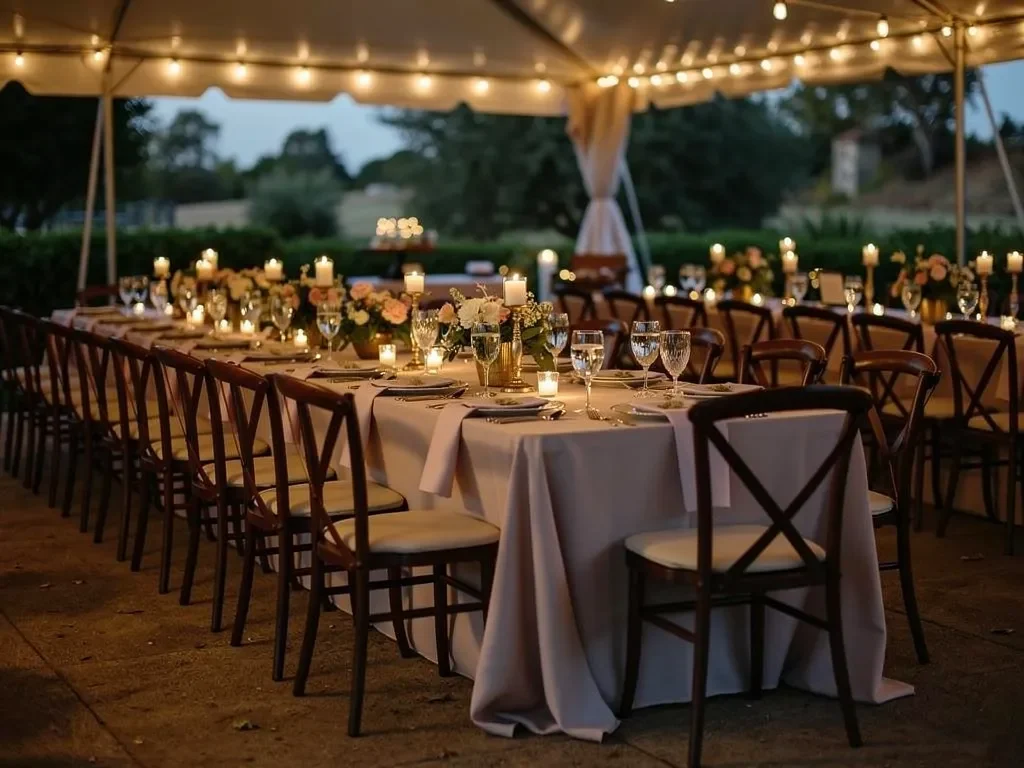
Chairs are sometimes treated as a practical selection that can be finalized after the tables. Visually, however, they are one of the most prominent parts of the reception.
A single chair may appear understated in a showroom, but the same chair repeated around every dining table can become a defining feature of the event. Its color, material, back design, seat, and proportions should be considered in relation to the table and linen.
Ventura Rental’s dining-chair inventory includes Bentwood chairs in several finishes, Botanical chairs with rattan seats, Willow antique oak chairs, oval-back chairs, Bianca dining chairs, Chiavari chairs, Sophia clear chairs, weathered wood Vineyard chairs, and white-washed X-back chairs.
Pairing Chairs With Exposed Wood Tables
When the table surface remains visible, the chair can either continue the natural material or create a controlled contrast.
A wood chair paired with a wood table can create a warm, unified design. The finishes do not need to be identical, but their undertones should feel compatible. A pale chair beside a deep brown table may create attractive definition, while a dark chair can give a lighter table more structure.
Clear or upholstered seating can also offset a substantial wood table. This approach places more emphasis on the table while preventing the full furniture collection from appearing too heavy.
Pairing Chairs With Linen-Covered Tables
A full linen hides most of the table structure and creates a large field of color or texture. As a result, the chair silhouette becomes more visible.
Against a simple ivory or neutral linen, a Bentwood, oval-back, Chiavari, or woven chair can introduce shape and detail. When the linen is printed or heavily textured, a simpler chair may provide better balance.
The chair should not compete with the tablecloth for attention. When one element contains a strong color, pattern, or texture, the other can provide a quieter frame.
Using Chair Color to Establish Contrast
Contrast helps prevent the dining area from appearing flat. Dark chairs against light linens can create a crisp outline, while natural chairs against muted autumn colors can produce a softer effect.
Pale or white-washed chairs may complement garden settings and lighter palettes. Clear seating can reduce visual weight in a space that already contains detailed linens, florals, or architecture.
The most effective contrast is usually repeated intentionally across the reception. Introducing several chair colors without a clear purpose may make the design feel fragmented.
Consider the Chair From Every Direction
Guests do not experience chairs only while seated at the table. Chair backs appear in entrance views, ceremony-to-reception transitions, photographs, and sightlines from the dance floor or lounge area.
Open-back, oval-back, woven, cross-back, and Chiavari styles each create a different repeated pattern when viewed from a distance. Before choosing a chair, look at photographs showing the full back and side profile rather than focusing only on the front.
Balance Appearance With Guest Comfort
Style matters, but guests may remain seated through several courses, speeches, and other reception moments. The chair should feel appropriate for the duration and format of the event.
Seat construction, back support, and spacing should be reviewed alongside appearance. Decorative cushions should also be confirmed early because they may change the chair’s final color and profile.
Create an Autumn Palette Without Seasonal Clichés
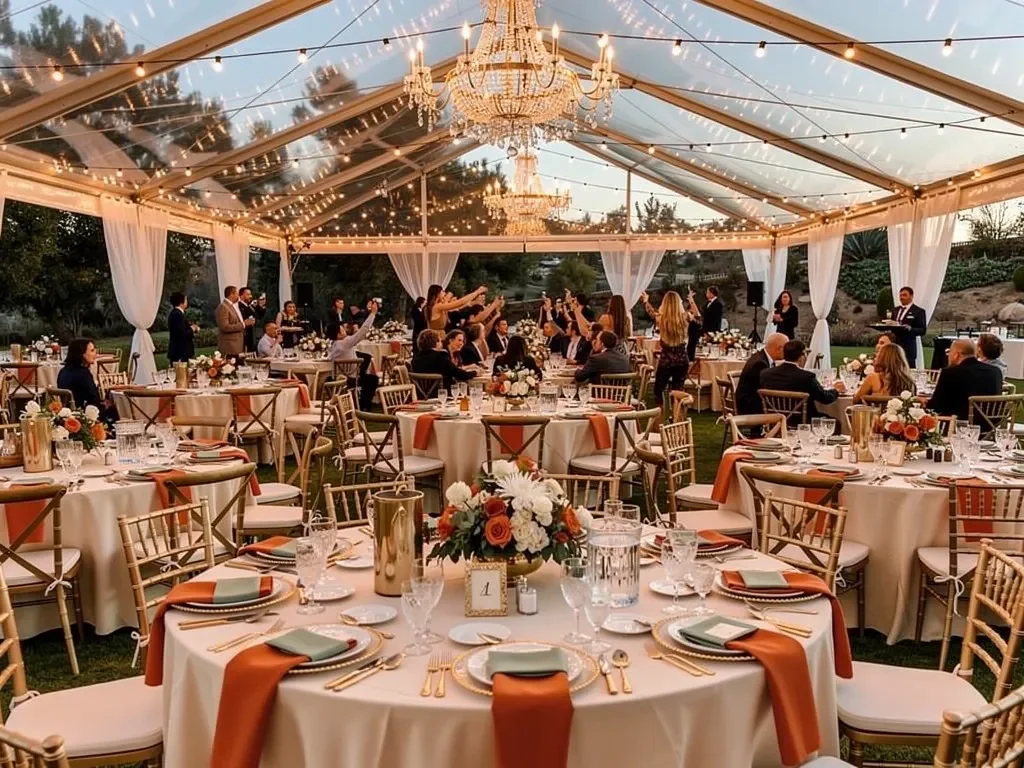
An autumn tablescape does not need to rely on bright orange linens, miniature pumpkins, pinecones, or every traditional fall color used at once.
A more refined approach communicates the season through warmth, material, and selected accents. Santa Barbara’s landscapes and architecture provide a natural foundation for palettes built around stone, clay, sand, wood, foliage, and muted floral color.
Warm Neutrals With Natural Wood
Ivory, cream, sand, taupe, mushroom, and stone tones can create a warm base without making the design feel overly themed.
When paired with natural wood tables or chairs, these colors allow the furniture material to remain prominent. Warm neutral linens can also support more expressive flowers, stoneware, or glassware without causing the table to feel crowded. Read more in Matching Event Tables and Chairs to Your Theme.
For added depth, use slight tonal variation. An ivory tablecloth, taupe napkin, cream plate, and natural wood chair can feel layered even when the overall palette remains neutral.
Terracotta, Clay, and Muted Rust Accents
Terracotta and clay tones can relate naturally to tile, stucco, gardens, and warm Santa Barbara architecture. They are particularly effective when used as accents rather than applied across every table surface.
A clay-colored napkin, warm stoneware plate, selected linen, or candle can introduce the season without dominating the tablescape. Ventura Rental’s current china catalog includes warm and earthy options such as Taupe Stoneware, Stella Adobe Stoneware, and several cream or ivory collections.
Muted rust may also work through floral details or paper elements. Pair it with ivory, natural wood, clear glass, or soft green to keep the design balanced.
Olive, Sage, and Botanical Tones
Muted green can connect the tablescape to landscaped estates, gardens, vineyards, and coastal foliage.
Instead of covering every table in green, consider using the color in napkins, glassware, candles, china, or floral foliage. The shade can be balanced with cream linens, wood furniture, and neutral tabletop pieces.
Ventura Rental’s current china collection includes green and botanical options such as Stella Forest Stoneware, Glass Archie Verde, and the Eleanor Fern Collection, providing several ways to introduce the color through tabletop rentals.
Richer Color for Evening Receptions
Evening receptions can support deeper tones such as burgundy, plum, bronze, chocolate, forest green, or black. These colors can become more dramatic as natural light fades and candles or overhead lighting become more prominent.
Use darker colors selectively. A deep napkin, dark chair, colored plate, or rich floral accent may be enough to establish the mood.
Combining burgundy, orange, mustard, brown, and dark green at the same table can make the design feel more themed than elegant. Select one deeper shade and support it with quieter neutrals.
Use Linens to Connect the Tables and Chairs
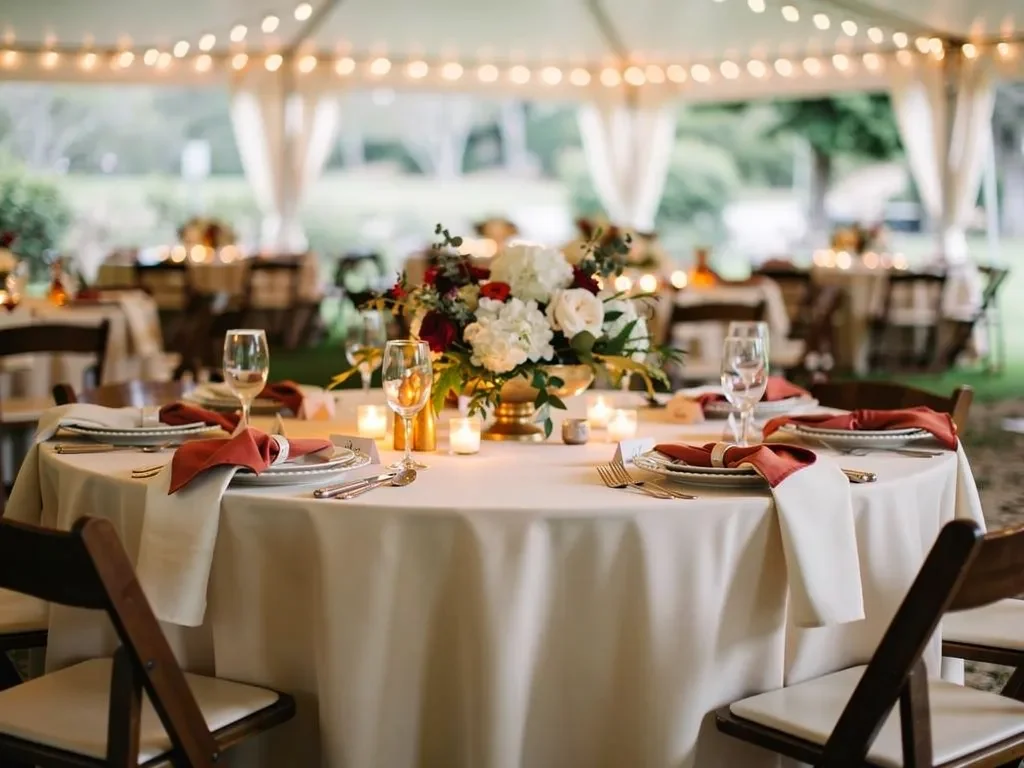
Linens cover a large amount of visual space, which makes them one of the most influential parts of a tablescape. They can soften standard tables, emphasize specialty surfaces, repeat a seasonal color, or connect the chair finish with the place settings.
Ventura Rental’s linen catalog includes Cambria and woven styles, Lamour, polyester, printed and Shantung options, as well as napkins and runners.
Full Linens for a Soft Foundation
A full tablecloth creates a finished, continuous surface and conceals the structure of a standard rental table. This treatment works well when the desired look is soft, formal, or strongly color-driven.
The drop and size should be selected for the specific table. The chair should also be viewed against the linen because the two pieces will create the main repeated contrast throughout the reception. We cover this further in Table and Chair Rentals Coastal California Pairing Guide.
For a restrained autumn design, consider a warm neutral base rather than a highly saturated seasonal color. Deeper shades can then appear through napkins, florals, china, or candles.
Runners for Exposed Tables
A runner adds fabric and color without hiding a specialty wood table. It can provide a defined path for centerpieces and candles while preserving the surrounding surface for place settings.
The runner should not be so wide that plates, glassware, and flatware feel crowded. Its texture should also relate to the rest of the design.
A heavily textured runner may pair best with simple china and glassware, while a smooth fabric can support more detailed place settings.
Napkins as a Controlled Seasonal Accent
Napkins provide an effective way to introduce autumn color without committing the full table to a darker shade.
Clay, olive, muted rust, plum, or bronze napkins can add warmth to neutral linens or exposed wood. Their placement can also connect the tabletop design to the chair or floral palette.
Because a napkin appears at every place setting, even a subtle color becomes prominent when repeated across the room.
Limit Competing Textures
Texture adds depth, but too many textured elements can make the table feel visually dense. A woven linen, rattan chair, patterned plate, colored glass, carved charger, and elaborate floral arrangement may each be attractive separately but overwhelming together.
Select one dominant texture, then allow the other rentals to support it. A woven chair can be paired with a smoother linen, while a textured tablecloth may work better with simpler seating and china.
Coordinate the Tabletop With the Furniture
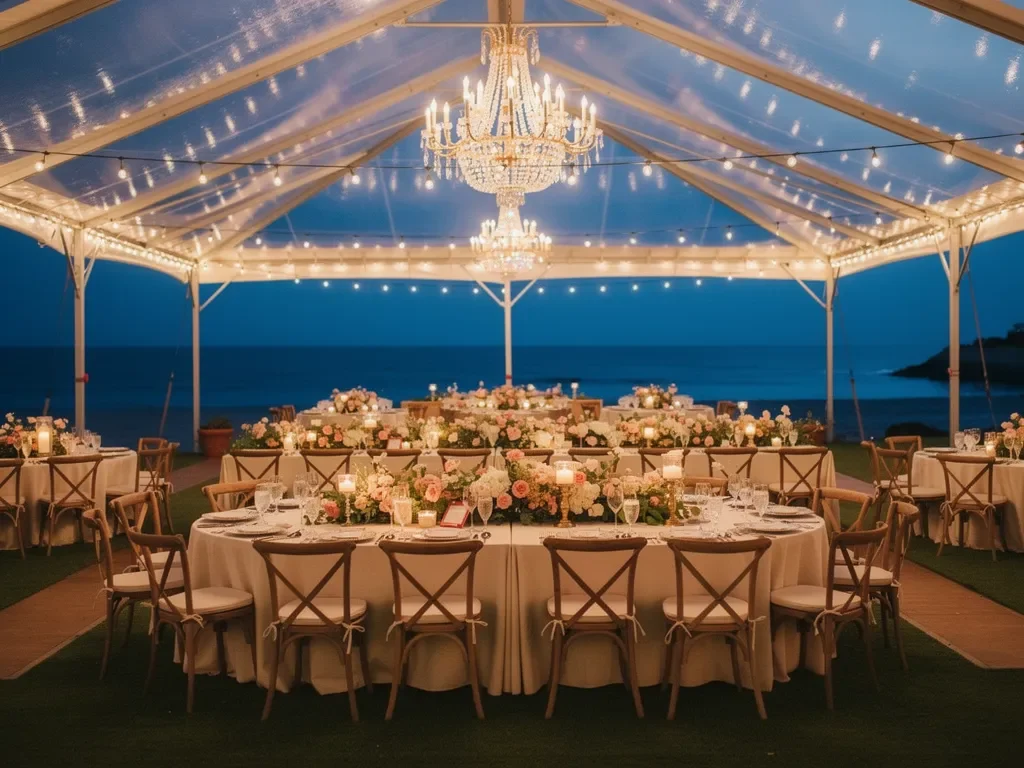
China, chargers, flatware, glassware, and centerpieces should complete the table-and-chair combination rather than introduce a separate design concept.
Ventura Rental’s wedding inventory includes linens, tableware, centerpieces, chairs, farm tables, china, and décor, allowing the main rental elements to be reviewed as a coordinated collection. We cover this further in Choosing Chairs and Tables that Match Your Wedding Story.
Select Place Settings After the Furniture
Confirm the table and chair before finalizing the place setting. An exposed wood table may call for a different plate, charger, and napkin treatment from a table covered in a patterned linen.
A substantial wood table may need lighter china or clear glassware to preserve balance. A simple linen-covered table may support a more detailed charger, colored plate, or textured glass.
Repeat Materials With Restraint
Small repetitions can make a tablescape feel cohesive. A warm chair finish might be echoed through charger edges, flatware, candleholders, or menu details.
The pieces do not need to match exactly. In fact, a collection can feel more considered when the materials relate without appearing identical.
Use repetition selectively. When every tabletop component has the same metallic finish or color, the design may lose depth.
Use Glassware to Add Light or Color
Clear glassware preserves an open appearance and allows the linens, china, or flowers to carry the color. It can be particularly effective on a detailed table or against a scenic outdoor backdrop.
Colored or textured glassware can introduce a controlled accent. Repeating one selected tone across water goblets or another specific glass can add color without making the entire place setting feel busy.
Keep Centerpieces Proportional
The table shape should guide the floral or decorative arrangement.
Round tables naturally support a centered arrangement, while long tables can use a series of smaller groupings, candles, or a continuous design. Mixed table shapes do not need identical centerpieces, but the arrangements should share a consistent palette or material.
Height and width matter as much as style. Centerpieces should leave enough room for the place settings and preserve comfortable sightlines across the table.
Give Special Tables a Distinct but Related Identity
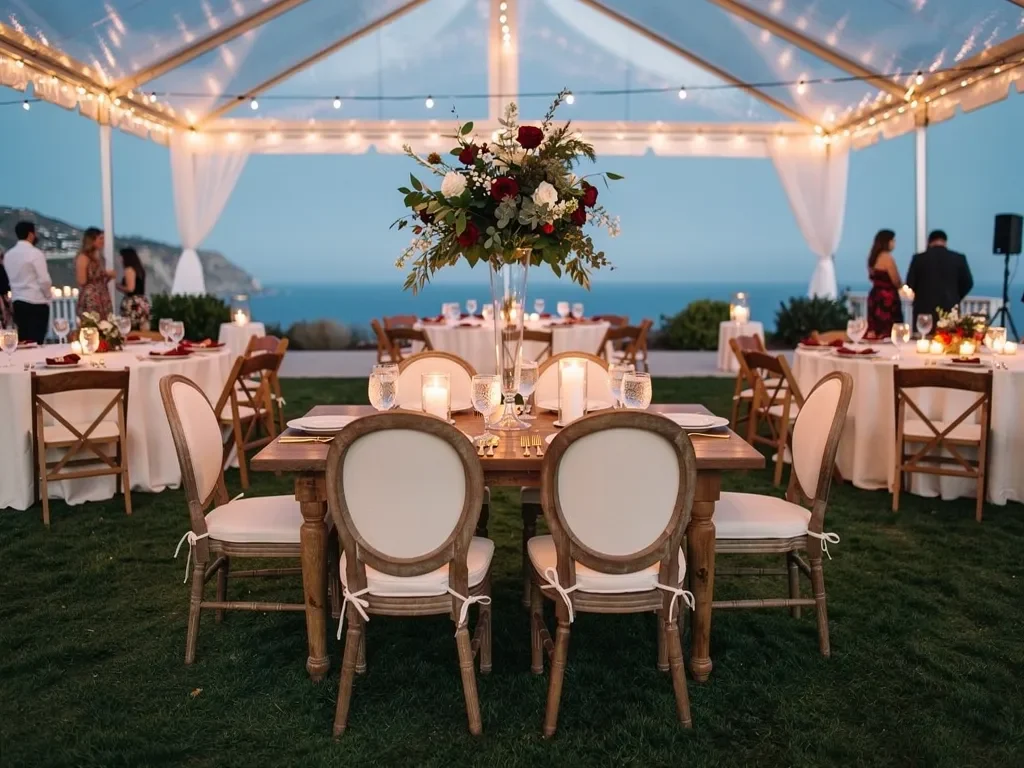
The sweetheart table, head table, family table, cake display, and welcome table may need additional visual emphasis. They should stand out while still appearing connected to the guest dining area.
The most effective approach is usually to retain the main rental language and adjust one or two elements.
Sweetheart Tables
A sweetheart table can repeat the guest chairs or introduce a related statement chair. It may use the same linen in a different treatment, a fuller floral arrangement, or a slightly richer tabletop design.
Avoid changing the table, chairs, linen, china, florals, and backdrop all at once. Keeping at least two or three elements consistent with the guest tables will help the design remain cohesive.
Head and Family Tables
A long head or family table can form a visual anchor within a room or outdoor reception. Its placement, length, chair arrangement, and central decoration can make it prominent even when it uses the same rental collection as the guest tables.
A different linen shade, more continuous floral treatment, or distinctive chairs at the ends may provide enough separation.
Welcome, Dessert, and Display Tables
Secondary tables often become disconnected from the main design because they are planned later. Repeating a linen, wood finish, vessel, or floral color can make them feel like part of the same event.
They do not need to recreate the dining tables exactly. One recognizably repeated material is often sufficient.
Review the Complete Design From Across the Venue
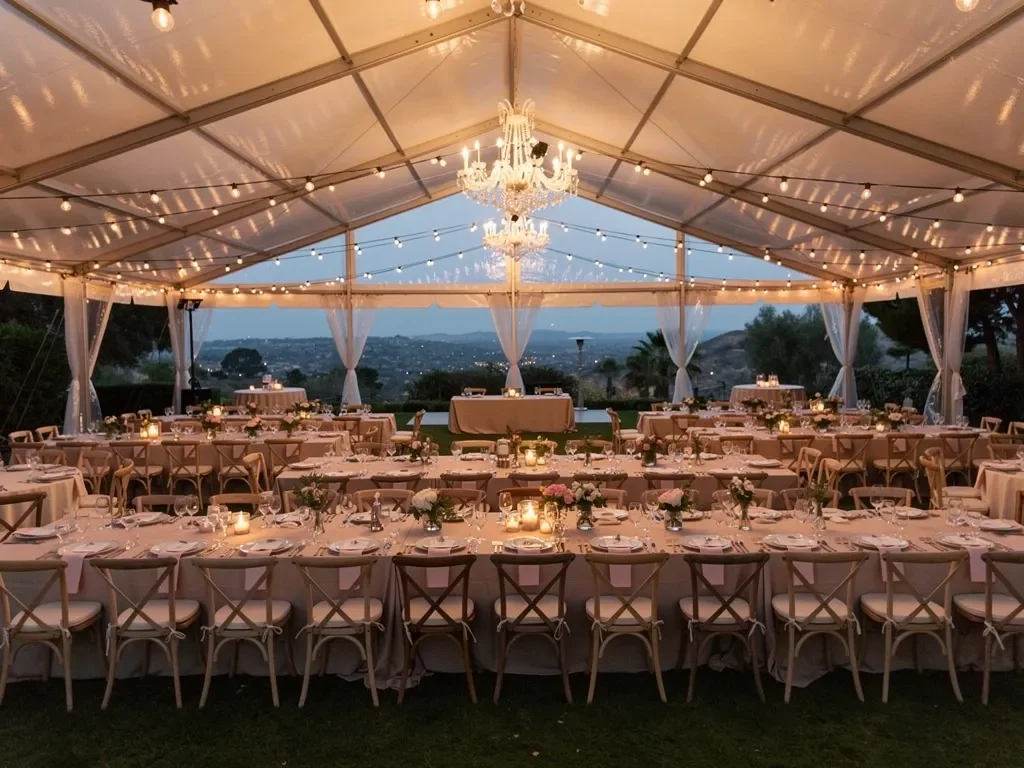
Tablescapes are frequently designed while standing close to a sample place setting. Guests, however, first experience the dining area from a distance.
The overall view reveals whether the chairs are too visually heavy, the mixed table shapes appear intentional, or the color palette has become more complicated than expected.
Look at the Repetition of Chairs
Review a photograph showing several tables rather than a single chair. The chair backs will create one of the strongest repeated patterns in the reception.
Check whether the finish works with the floor, landscape, linen color, and table surface. A chair that looks understated by itself may become a major design statement when repeated many times.
Check the Balance of Table Shapes
When combining round and long tables, assess how they relate to the property and one another. Mixed shapes should support the venue’s natural layout instead of appearing randomly distributed.
Use consistent chairs or tabletop materials to visually connect them.
Review the Design in Daylight and After Sunset
Natural wood, pale linens, metallic details, glassware, and deeper autumn colors may look different as daylight fades.
Review how the reception will appear during guest arrival and later in the evening. A dark chair that creates elegant contrast during the day may become more prominent at night, while clear or pale furniture may visually recede.
Lighting should support the rental design rather than introduce an unrelated color temperature or focal point.
Remove Details That Do Not Support the Composition
Editing is an essential part of an elegant tablescape. Once the full rental collection is assembled, remove items that do not strengthen the primary design.
The final composition should have a clear hierarchy: venue, tables and chairs, linens, tabletop rentals, and decorative accents. When every element demands equal attention, the dining area can feel crowded. We cover this further in Selcting Perfect Wedding Chairs and Tables Fitting The Venue.
Coordinate Rentals With the Event Team
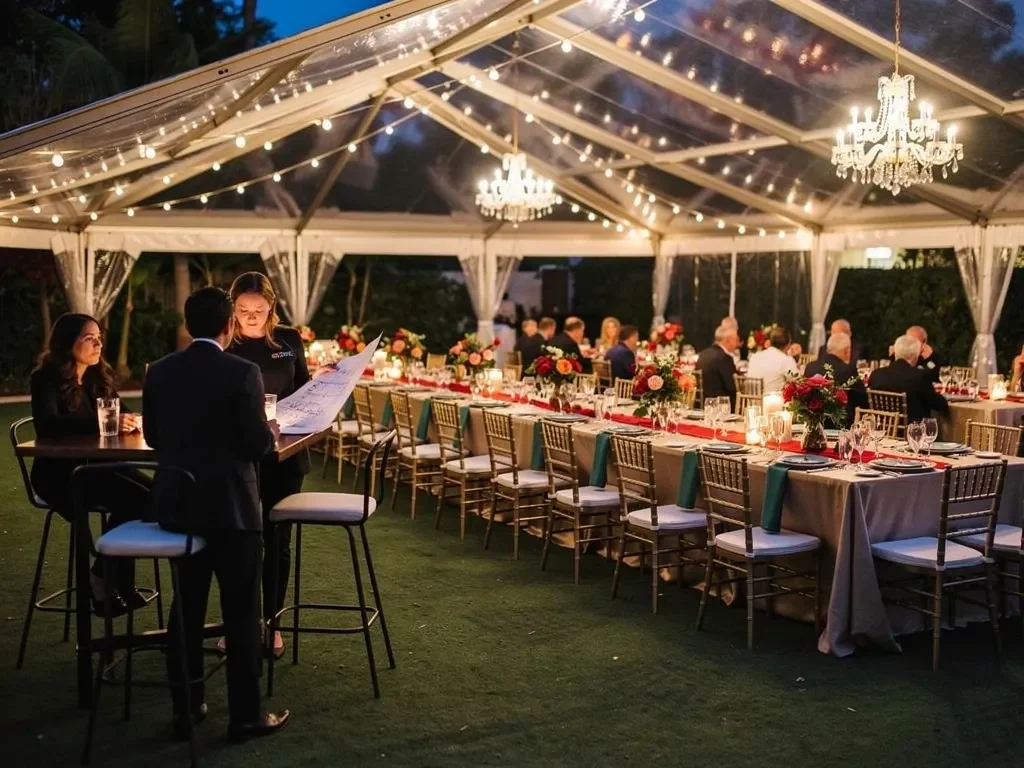
Table and chair decisions affect more than the visual design. The venue, planner, caterer, florist, and rental team all need accurate information about the furniture and tabletop plan.
Reviewing the complete collection together helps prevent conflicts between place settings, centerpieces, service pieces, and guest seating.
Confirm What the Venue Provides
Determine which tables and chairs are already available at the venue and whether they must be used. Existing items may be suitable for support areas but not for the primary dining design.
Confirm storage and removal requirements when replacing venue furniture with rental pieces.
Share the Floor Plan With the Rental Provider
The rental team should receive the venue layout, table plan, focal-table locations, and approximate guest count.
This information helps confirm that the selected combination is appropriate for the available space and that specialty pieces can be delivered and placed as planned.
Coordinate Tabletop Space With the Caterer and Florist
Before approving centerpieces and place settings, confirm the meal-service format. Family-style dishes, bread service, wine bottles, water carafes, menus, and shared condiments may require substantial tabletop space.
The florist should also know the table width, shape, runner dimensions, and complete place-setting footprint.
Approve the Rentals as One Collection
Review tables, chairs, linens, china, chargers, glassware, and flatware together whenever possible. Making each decision separately can lead to a collection of individually attractive pieces that do not work as one design.
Ventura Rental offers showroom consultations and a broad wedding inventory for Santa Barbara events, allowing clients and event teams to compare major rental elements before finalizing the reception design.
Frequently Asked Questions
Should Round or Long Tables Be Used for a Fall Reception?
Neither shape is automatically more elegant. Round tables create balanced guest groupings and a repeated reception pattern, while long tables can produce a shared dinner-party atmosphere.
The choice should reflect the venue, desired dining experience, service format, and overall design.
Can Different Table Shapes Be Used in the Same Reception?
Yes. Mixed table shapes can help the layout fit around landscaping, architecture, pathways, and focal areas.
Use consistent chairs, linens, florals, or tabletop rentals to connect the different shapes visually.
Do the Tables and Chairs Need to Match?
Exact matching is not necessary. The pieces should have compatible visual weight, proportions, finishes, or design characteristics.
A contrasting chair can make an exposed wood table more distinctive, while a related wood finish can create a quieter and more unified appearance.
Should Wood Tables Be Covered With Linens?
A specialty wood table can remain exposed, be partially covered with a runner, or receive a full linen. The right approach depends on the table finish and intended design.
If the wood is meant to be a primary feature, a runner or uncovered surface can preserve it. Full linens can create a softer and more formal setting.
How Can a Tablescape Feel Autumnal Without Pumpkins?
Use warm neutrals, natural wood, woven textures, muted green, terracotta, clay, rust, burgundy, or bronze accents.
Introduce the seasonal color through napkins, china, glassware, florals, or candles rather than applying every fall shade across the entire table.
When Should Tables and Chairs Be Selected?
Begin once the venue, general guest count, event format, and initial layout are known.
Tables and chairs should be confirmed before final decisions are made about linens, flowers, place settings, and other tabletop details.
What Should Be Brought to a Rental Consultation?
Bring venue details, a preliminary floor plan, event inspiration, preferred colors, seating requirements, meal-service information, and a list of items already supplied by the venue or caterer.
Reviewing these details together helps the rental provider recommend pieces that fit both the setting and the event design.
Conclusion
An elegant autumn tablescape begins with the relationship between the venue, table, and chair. The table shape establishes the dining experience, while the chairs create a repeated visual pattern throughout the reception. Linens, china, glassware, and decorative details then bring those foundational choices together. Browse farm, round and cocktail tables in our table rental catalog.
For Santa Barbara events, the strongest designs respond to the setting. Natural wood and warm neutrals may complement an estate or courtyard, while pale linens and lighter furniture profiles can preserve the open character of a coastal venue. Muted clay, olive, bronze, plum, or rust can communicate the season without relying on obvious autumn decorations.
Ventura Rental Party & Events provides tables, chairs, linens, china, glassware, chargers, flatware, and décor rentals for Santa Barbara weddings and private celebrations. By selecting these pieces as one coordinated collection, hosts can create a dining setting that feels intentional, comfortable, and connected to the surrounding venue. When your date and guest count are set, request a rental quote from our team.