For Santa Barbara fall events, table runners can be especially useful when the goal is to introduce warmth without relying on heavy seasonal décor. Whether the event takes place in a garden, courtyard, private estate, or indoor dining space, the right runner should feel proportionate to the table, work with the surrounding colors, and leave enough usable space for the meal itself.
Give the Runner One Clear Job
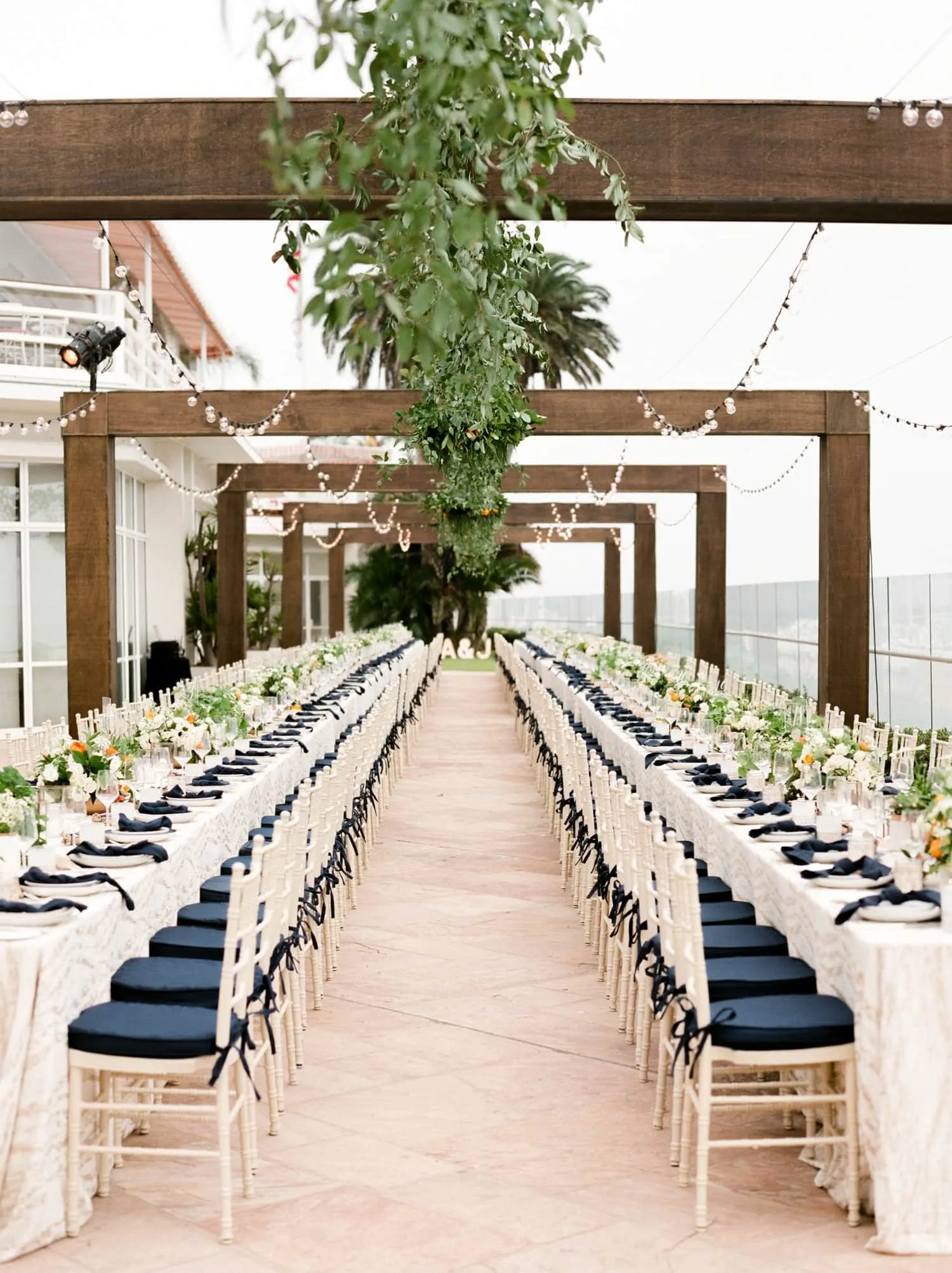
Before choosing a color or fabric, decide what the runner needs to accomplish. A runner can highlight an exposed table surface, introduce a controlled accent color, or create a visual center for decorative elements. Giving it one primary purpose makes the overall table easier to design.
Trying to use the runner as the main color statement, a texture layer, a centerpiece base, and a decorative focal point all at once can make the setting feel crowded.
Use It to Preserve an Exposed Table Surface
A runner can be a strong choice when the table itself is part of the design. Wood grain, natural finishes, and distinctive tabletop details remain visible while the fabric adds softness through the center.
This approach works particularly well when the goal is to keep the table feeling open rather than covering it completely with a tablecloth. The runner should leave enough visible surface on both sides to make the exposed table feel intentional.
A wider runner may reduce that effect, while a narrower one can create contrast without hiding the character of the table.
Use It to Create a Controlled Color Accent
Fall color does not need to cover the entire table. A runner provides a more restrained way to introduce rust, muted green, clay, burgundy, warm brown, or another seasonal shade.
This can be especially useful when the chairs, table, or venue already contribute strong colors. Instead of repeating the accent in every detail, allow the runner to establish a single concentrated line of color.
Napkins, florals, and candles can then support the palette through related shades rather than exact matches.
Use It to Define the Decorative Center
A runner can also create a natural visual zone for flowers, candles, and decorative pieces. That does not mean every centerpiece element needs to sit directly on the fabric. The runner simply creates a central axis that helps organize the arrangement.
This approach works best when the width of the runner and the centerpiece footprint are planned together. If both are too wide, the middle of the table can quickly become visually heavy and leave too little space for dinner service.
Get the Runner Proportion Right Before Choosing a Color
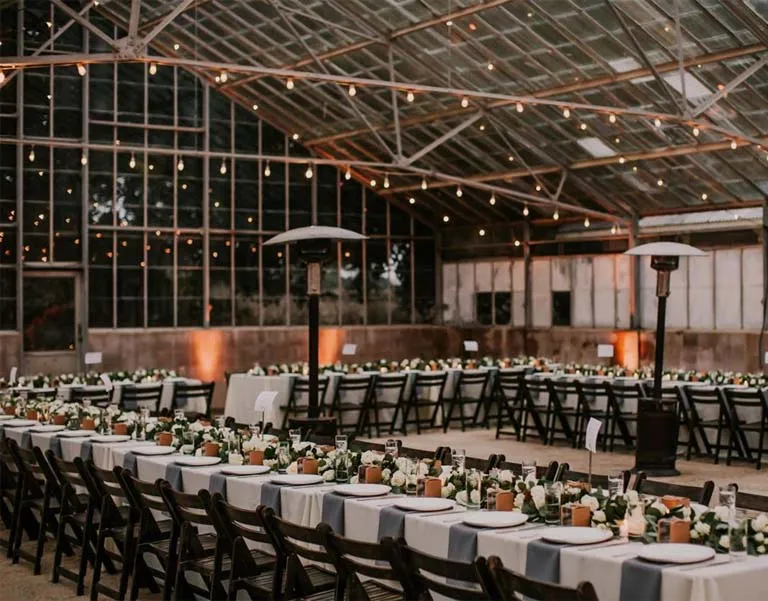
Color tends to receive the most attention when selecting fall linens, but proportion has a greater effect on whether the finished table functions well. The runner needs to relate to the width and length of the table as well as the amount of space required for place settings.
A runner that looks balanced on an empty table may feel too large once chargers, flatware, glassware, menus, flowers, and candles are added.
Measure the Table Width, Not Only Its Length
Length determines how the runner finishes at the ends of the table, but width determines how much usable dining space remains.
Before selecting a runner, consider how much space each place setting will occupy. Chargers and dinner plates need room, while multiple glasses, bread plates, flatware, and menus can extend farther toward the center than expected.
The runner should create a defined center without competing with those items. On narrower tables, this may call for a more restrained runner width. Wider tables provide more flexibility.
The goal is not to follow one standard measurement. It is to preserve enough space for both the decorative center and the people dining around it.
Decide How Much Overhang Fits the Look
A table runner can end within the tabletop, finish near the edge, or extend beyond the ends. Each treatment creates a different visual effect.
A shorter runner feels contained and can work well when the table ends need to remain clear. A runner that reaches the edge gives the design a more complete line from end to end. An extended runner creates a softer, more traditional drape.
The best option depends on the table shape, fabric, and overall level of formality. A loosely woven fabric may look natural with some movement at the ends, while a more structured runner may feel cleaner when kept closer to the tabletop.
Check the Runner Against the Full Place Setting
Do not judge runner width using an empty table. Set out at least one complete place setting with the actual or planned charger, plate, flatware, water glass, wine glass, napkin, and menu. Then check how close those items come to the runner.
If the setup feels compressed, the runner may be too wide even if its proportions looked correct before the place settings were added.
This simple test can prevent one of the most common tablescape problems: designing the decorative center first and leaving too little room for guests.
Build Fall Color Through Contrast, Not Matching
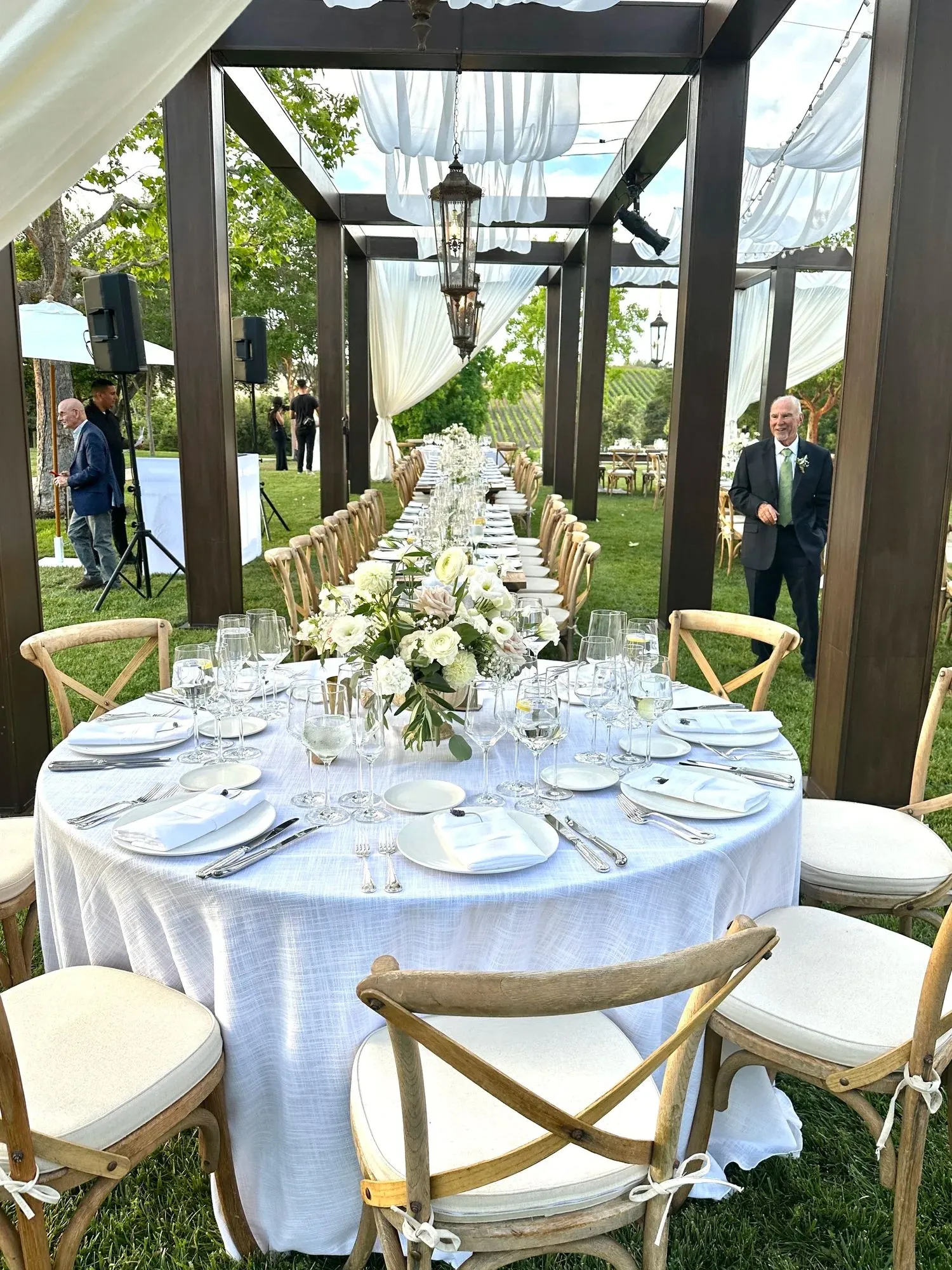
A fall tablescape does not need every element to repeat the same seasonal shades. In many cases, contrast creates a more refined result than matching the runner directly to the napkins, florals, and other decorative pieces.
Think about the runner in relation to the table surface, base linen, chairs, and the surrounding venue before deciding where other colors should appear. You may also find How Table Linen Sets the Mood in Santa Barbara Events helpful.
Pair a Quiet Base With a Stronger Runner
A neutral foundation can give a deeper runner more visual impact. Cream, ivory, taupe, soft gray, and natural wood surfaces can support stronger fall shades such as rust, wine, olive, clay, or deep brown. Because the base is restrained, the runner can carry more color without overwhelming the table.
This approach also makes it easier to keep the rest of the setting subtle. Glassware, plates, and florals can contribute texture and smaller amounts of color without competing with the central accent.
Use Tonal Layering for a Softer Effect
Contrast does not always need to be dramatic. Tonal layering uses neighboring shades to create depth while maintaining a calm overall palette.
A cream tablecloth with a taupe runner, for example, creates a softer transition than pairing cream with a saturated burgundy. Clay, muted rust, terracotta, and warm brown can also work together when the goal is a more understated fall look.
This type of layering can suit Santa Barbara events particularly well because it brings seasonal warmth without making the design feel heavy.
Let the Runner Carry the Accent Color
If the runner already provides the strongest color on the table, other pieces do not need to repeat it exactly.
A rust runner does not require rust napkins, rust florals, and rust candles. Instead, nearby elements can use complementary or quieter shades such as cream, olive, warm wood, soft gold, or muted pink.
This creates a clearer hierarchy. The runner introduces the accent, while the surrounding pieces support it.
Let Fabric Change the Way the Color Reads
Color is only part of the runner’s visual effect. Texture, opacity, and sheen influence how light interacts with the fabric and how strong the color appears once it is placed on the table.
Two runners in nearly the same shade can produce very different results if one is matte and structured while the other is sheer or reflective.
Matte Fabrics Keep Deep Colors Understated
Matte and woven fabrics absorb more light, which can make deeper colors feel softer and less intense. This makes them useful for burgundy, brown, forest green, rust, and other strong fall shades. The color remains noticeable without becoming the most reflective element on the table. You may also find Trending Colors for Table Linen Rentals You Should Know helpful.
Textured matte fabrics can also introduce visual interest even when the color palette remains simple.
Sheer and Loosely Woven Runners Allow the Base to Show Through
Sheer or loosely woven runners interact with the table or linen beneath them. Over exposed wood, this can create a blended effect where the grain remains part of the overall design. Over a tablecloth, the base color influences how the runner appears, especially if the runner is lightweight or semi-transparent. For more detail, see our article Linen & Tabletop Style Guide for Ventura Weddings.
This type of layering works well when you want texture and movement without adding a solid block of color.
Reflective Fabrics Make Color More Prominent
Fabric with sheen can make a color appear brighter or richer, especially under evening lighting. Because reflective materials naturally attract the eye, they usually work best when the surrounding table details are more restrained. Strong florals, highly decorative chargers, reflective glassware, and a glossy runner can compete when all are used at once.
If the runner has a noticeable sheen, let it provide some of the visual emphasis rather than adding several other equally strong elements.
Protect the Working Space Down the Center of the Table
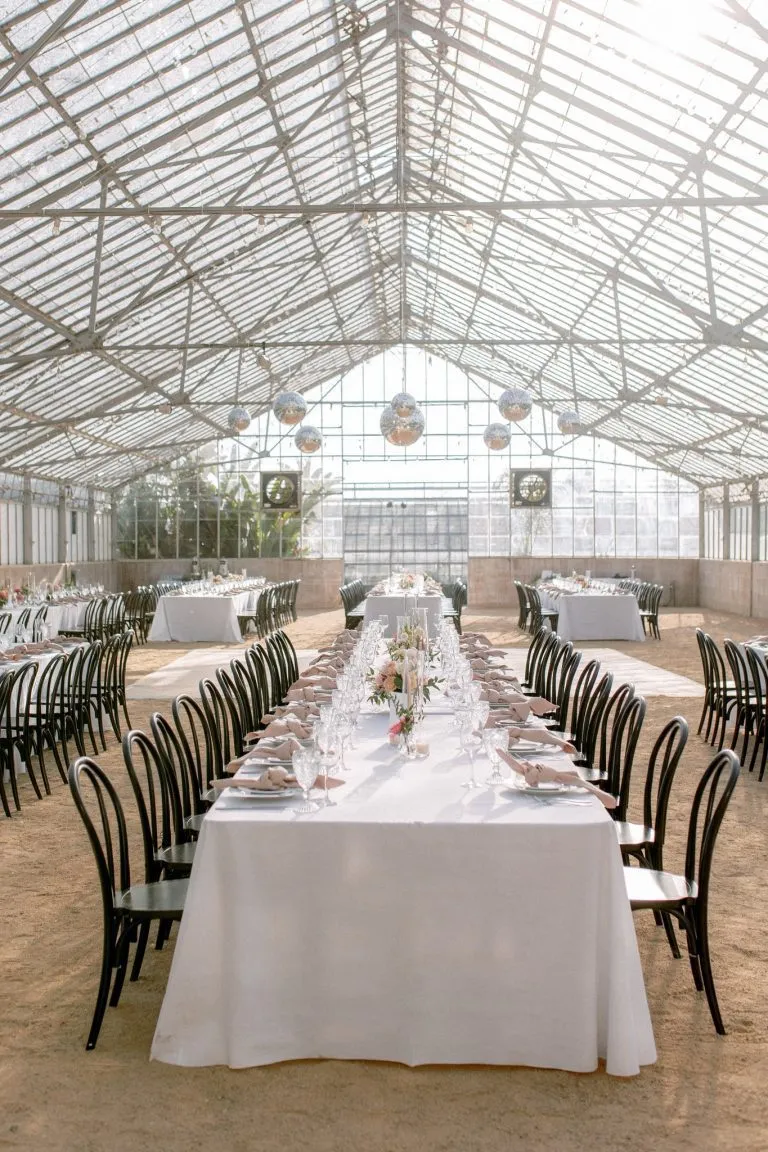
The center of a dining table has to do more than hold décor. Depending on the service style, it may also need to accommodate water bottles, wine, shared plates, bread, condiments, or additional serving pieces.
A runner should help organize this area rather than make it harder to use.
Map the Centerpiece Footprint First
Before finalizing the runner, estimate how much table width the florals, candles, and decorative objects will occupy. A narrow floral arrangement may work comfortably on a wider runner, while larger arrangements may need more breathing room around them.
Also consider the vertical scale. A long runner paired with several large floral pieces can make the center feel dense even when the physical dimensions fit.
The design should leave enough open space for the table to feel functional rather than completely filled.
Leave Room for Food and Beverage Service
If shared dishes will be placed on the table, plan for them before the decorative arrangement is complete. Family-style service can require considerably more center space than plated dining. In that case, a narrower runner and simpler centerpiece treatment may work better than a wide fabric layer covered with candles and florals.
Water and wine service also need accessible areas where bottles can be placed and reached without moving decorative pieces.
Keep Fabric Clear of High-Traffic Service Areas
Long runner ends can be attractive, but they should not interfere with the way guests and staff use the table. At busy ends, consider whether extended fabric could be brushed by chairs, serving trays, or people moving around the space. In tighter layouts, a runner that stops closer to the table edge may be more practical.
The final choice should support the look of the table without creating an obstacle during dinner.
Choose a Runner Treatment That Fits the Table Shape
Runner placement should respond to the shape and proportions of the table rather than following the same formula for every setup.
Long rectangular tables naturally lend themselves to a central runner, while round tables and other layouts can require a different approach.
Center Lengthwise Runners on Long Tables
A single lengthwise runner is one of the clearest treatments for rectangular, banquet, and farm-style tables. It creates a continuous visual line and gives florals or candles a defined central area. This approach is especially effective when the table itself will remain visible on both sides.
For very long tables, check whether the runner length creates the desired finish at each end and whether seams or overlapping pieces will be visible.
Use Crosswise Runners for a Different Rhythm
Multiple runners placed across the width of a table can create repeated sections rather than one continuous center line.
This treatment works best when it supports the place-setting plan. For example, a runner may visually connect opposite seats while leaving the center more open.
Because this approach creates more intersections between fabric and place settings, test it carefully before committing to the full table.
Adapt Runner Placement for Round Tables
A runner can also work on a round table when its placement feels deliberate. One runner across the diameter can create a strong axis through the center. Depending on the table size and guest count, crossed runners can create additional structure, although they also introduce more fabric near the place settings.
Test the arrangement with the full place settings in position to make sure the runner does not make the tabletop feel crowded.
Test the Runner With a Complete Sample Setting
A fabric sample viewed by itself cannot show how the finished table will feel. The most reliable way to judge a runner is to see it alongside the actual elements that will surround it.
This makes it easier to evaluate scale, color, texture, and usable space before the final rental quantities are confirmed.
Build One Finished Place Setting
Start with one complete setting using the intended plate or charger, flatware, glassware, napkin, and menu if one will be used.
Check how these pieces interact with the runner. Make sure nothing feels pushed toward the edge of the table or compressed into a narrow area.
This is also a good opportunity to compare runner widths if more than one option is being considered.
Add the Planned Centerpieces and Candles
Once the place setting is established, add the center décor. Look at how much of the runner remains visible and whether the combination feels balanced. If most of the fabric disappears under flowers and candles, the runner may not need to carry a strong pattern or elaborate texture.
If the centerpiece is minimal, the runner will have a greater visual role.
View Several Repeated Settings Together
A runner may look balanced beside one place setting but feel different when repeated across an eight-foot table or several connected tables.
Step back and look at the overall rhythm. Check the spacing between centerpieces, the repetition of place settings, and how the runner leads the eye through the table. For more detail, see our article Elegant Table Settings With Linens and Centerpieces.
Ventura Rental offers table runners and other linen options that can be reviewed as part of the overall table plan, making it easier to compare how different fabrics and proportions work with the event setup.
Frequently Asked Questions
Should a table runner be longer than the table?
It can be, but it does not have to be. Some runners extend beyond the ends for a softer draped effect, while others stop within the tabletop for a cleaner look. Choose the treatment according to the table, fabric, and event style.
How wide should a table runner be for an event table?
The runner should leave enough room for complete place settings on both sides. Rather than relying only on a standard width, test the runner against the table width, plates, flatware, and glassware.
Can a table runner be used over a tablecloth?
Yes. A runner over a tablecloth can introduce contrast in color or texture. For a balanced look, choose fabrics that differ enough to create definition without making the table feel overly layered.
Can you use a runner on an exposed wood table?
Yes. A runner is particularly useful when you want the wood finish to remain visible while still adding softness, color, or a defined decorative center.
Can a table runner be shorter than the table?
Yes. A shorter runner can stay entirely on the tabletop and create a more contained design. This can work well when you want to keep the ends clear.
Do table runners work on round tables?
They can. A runner may cross the diameter of the table or be incorporated into a crossed arrangement. The layout should be tested with the actual number of place settings to make sure it remains functional.
Should the runner match the napkins?
Not necessarily. Coordinating shades often create a more layered result than exact matches. The runner can carry the main accent color while napkins use a complementary neutral or related tone.
How do you keep a fall runner from making the table look too busy?
Limit the number of competing colors and textures. If the runner is bold, keep nearby elements quieter. If the runner is subtle, florals, napkins, or tabletop details can carry more visual interest.
Choose a Runner That Supports the Whole Table
A well-chosen fall table runner starts with four decisions: what role it needs to play, how its proportions fit the table, how its color relates to the surrounding palette, and how much functional space the dining setup requires.
When those details are considered together, the runner can bring seasonal warmth to a Santa Barbara event without making the tablescape feel overly themed or crowded. The result is a table that looks layered and intentional while still giving guests and service staff the room they need. Our planners can help you size everything for your site, so get in touch for a quote.
Ventura Rental Party & Events offers table runners and linen rentals for Santa Barbara gatherings. Review available options with the table dimensions, place settings, and overall design in mind so the final selection works as well in use as it does visually. See tablecloths, runners and napkins in our linen rentals.