
Santa Barbara weddings often take place in scenic outdoor locations, including coastal venues, garden estates, vineyards, ranches, private homes, and open-air event spaces. These settings are beautiful, but they do not always function like traditional venues. A lawn, courtyard, terrace, or backyard may need tenting to define the event space, guide guests, protect key areas, and support the vendors working behind the scenes.
A single tent can create one central location for the celebration. Multiple tents can divide the property into purposeful zones for the ceremony, cocktail hour, dinner, dancing, catering, and guest arrival. The right approach depends on how the site will be used from the first guest arrival to the final send-off.
Why Tent Layout Strategy Matters Before Choosing a Tent
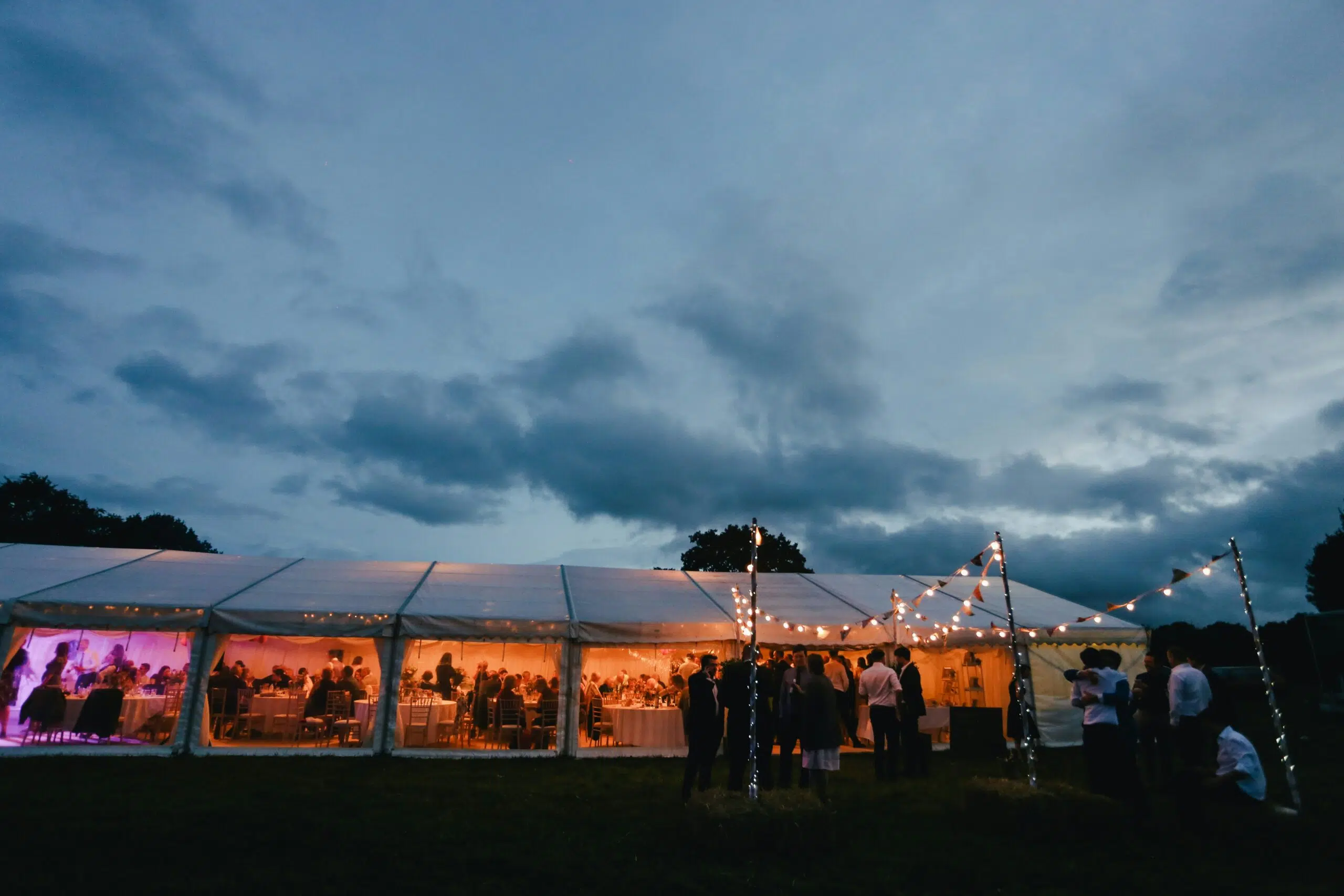
A wedding tent should support the full flow of the day, not just cover one area. Before selecting a tent size, couples should think through how guests will arrive, move through the ceremony, transition to cocktail hour, sit for dinner, gather near the bar, dance, and exit at the end of the night.
A Single Tent Creates One Central Event Space
One large tent can give the wedding a clear focal point. This works especially well when dinner, speeches, dancing, and entertainment are all happening in the same area. Guests know where to go, the design feels unified, and vendors can focus setup around one central structure.
A single tent can also simplify the reception timeline. Guests can sit for dinner, listen to toasts, and transition into dancing without being asked to move across the property. For formal receptions, this can create a polished and cohesive atmosphere.
This approach works best when the venue has one large usable area, such as a lawn, courtyard, terrace, or reception pad. It can also be helpful when the couple wants the reception to feel like one complete room, even though the event is outdoors.
Multiple Tents Can Support Different Wedding Moments
Multiple tents can create a more flexible wedding site. Instead of placing all activities under a single large structure, separate tents can accommodate different parts of the day. A smaller ceremony tent can protect guests during the vows, a cocktail tent can provide shade after the ceremony, and a main reception tent can hold dinner and dancing.
This approach can also help keep functional spaces separate. A bar tent, catering tent, welcome tent, or lounge tent can support the event without taking space away from the main reception. For larger properties, multiple tents may make the wedding feel more natural because guests can move through the venue in phases.
Separate tented areas can also create a sense of progression. Guests arrive in one area, move to the ceremony, gather for cocktails, then enter the reception. When planned well, multiple tents can make the wedding feel layered and intentional.
The Venue Layout Should Guide the Tent Plan
The venue should determine the tent strategy. A compact courtyard may work best with one large tent. A sprawling estate, vineyard, ranch, or private home may work better with several tented zones. The shape of the property, available surfaces, views, pathways, access points, and service areas all matter.
Before choosing between one tent or multiple tents, couples should look at how the property already functions. Where will guests arrive? Where is the best ceremony view? Where can catering operate efficiently? Where will the bar line form? Where should guests gather after dinner?
A tent plan should work with the site rather than forcing the site to fit the tent. That site-first approach is one of the top tips for planning outdoor events in Santa Barbara because the property itself often determines what guests need most, whether that is shade, clear walkways, service access, separate gathering areas, or a more defined reception space.
When One Large Wedding Tent Works Best
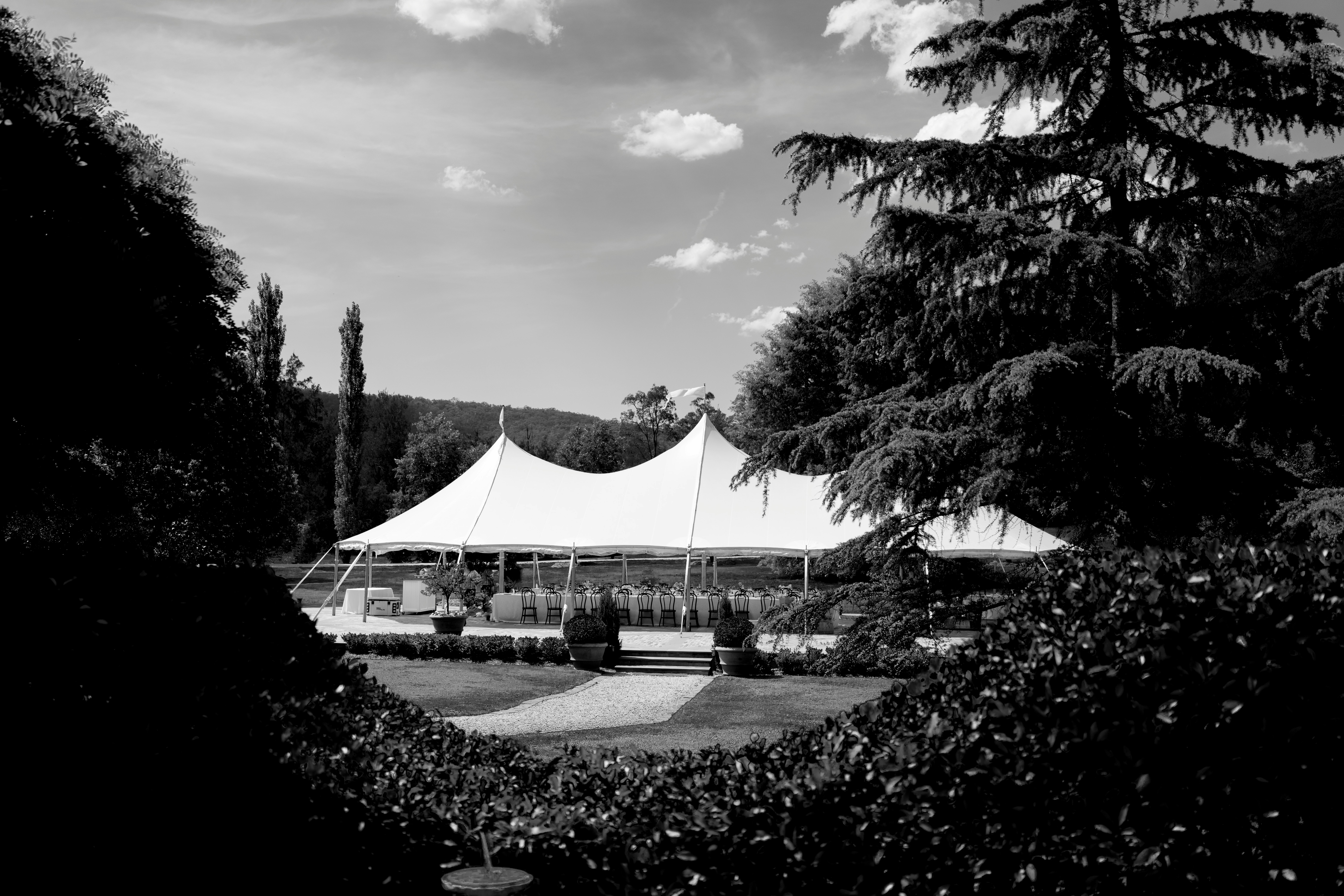
One large tent can be the strongest choice when the wedding has one clear reception area and the couple wants a unified event environment. This approach can simplify the layout, keep guests together, and create a single central space for dining, speeches, dancing, and celebration.
Formal Seated Receptions
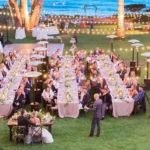
A formal seated reception often works well under one large tent. Guests can enter the tent, find their tables, enjoy dinner, listen to toasts, and remain in the same space as the event transitions into dancing. This creates a clear sense of occasion and helps the reception feel organized.
For weddings with assigned seating, full dining tables, a head table or sweetheart table, and a structured timeline, one tent can create a strong visual center. The couple can design the space as one complete reception environment with coordinated tables, chairs, linens, lighting, and tabletop rentals.
This approach also makes it easier for guests to understand the flow of the evening. Once they enter the reception tent, they know they are in the main event space.
Dinner and Dancing in One Space
A single tent can work well when dinner and dancing are planned in the same area. The dance floor can be placed in the center or near the entertainment, with dining tables arranged around it. After dinner, guests can move naturally from their seats to the dance floor without leaving the tent.
This layout helps keep the energy contained. Guests who are not dancing can still feel connected to the celebration from nearby tables or lounge seating. The bar can also be positioned close enough to support the reception without blocking the dance floor or service paths.
For evening weddings, this setup can be especially effective when lighting is planned around the transition from dinner to dancing.
Venues With One Clear Lawn, Courtyard, or Reception Area
Some Santa Barbara venues naturally support one main tent because they have one large usable space. A broad lawn, open courtyard, terrace, or designated reception area may be the obvious location for dining and dancing.
In this case, one tent can help define the event space without overcomplicating the site plan. Instead of spreading guests across multiple areas, the wedding can center around one polished reception environment.
This strategy is also useful when the venue has limited access, limited setup space, or restrictions on where tents can be placed. If there is only one practical tent location, one well-planned structure may be the best option.
When Multiple Tented Areas Make More Sense
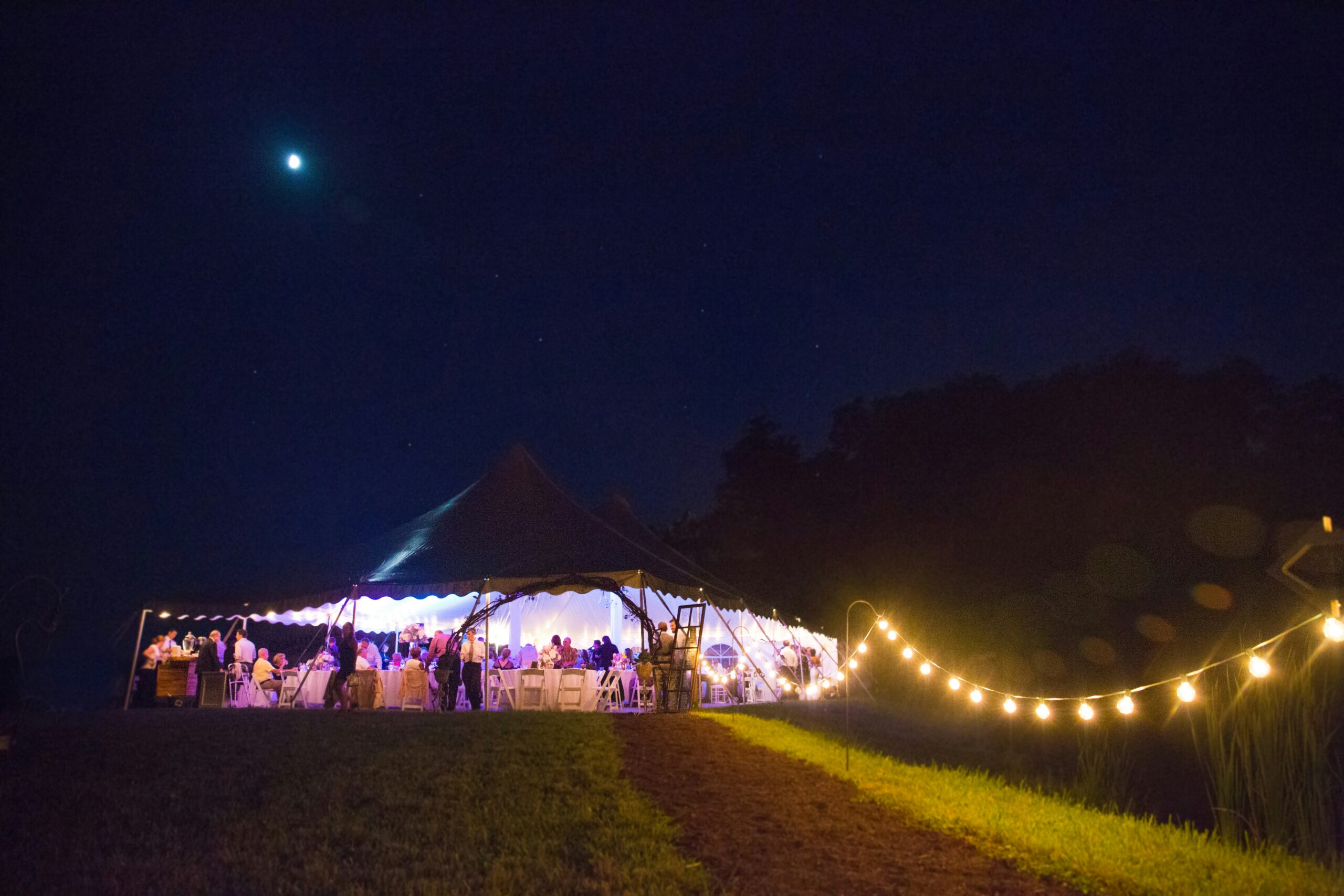
Multiple tents can be useful when a wedding property has several distinct event areas or when different parts of the day need different types of coverage. Instead of forcing every activity into one structure, smaller tents can help the site feel more intentional and easier to use.
Separate Ceremony, Cocktail, and Reception Spaces
Some weddings are designed around separate ceremony, cocktail, and reception locations. A couple may want the ceremony on a lawn with a view, cocktail hour near a garden or patio, and dinner in a separate reception area. In this case, multiple tents can support each part of the day without making one tent do everything.
A ceremony tent may provide shade or weather protection for guests while keeping the focus on the vows. A cocktail tent may offer a comfortable place for drinks and hors d’oeuvres. A reception tent may create the main dining and dancing environment.
When each tent has a clear role, the wedding site can feel organized rather than scattered.
Large Properties With Spread-Out Guest Areas
Estates, ranches, vineyards, and private homes may have several usable outdoor areas. One space may be ideal for the ceremony, another for cocktails, and another for dinner. Multiple tents can help activate these areas and guide guests through the property.
On larger sites, one tent may not be enough to support the full event flow. Guests may need shade near the arrival point, coverage for cocktail hour, a main reception tent, and a separate tent for catering or vendor needs.
The key is to make each tent feel connected to the wedding timeline. Guests should move naturally from one area to the next without feeling like the event is split into unrelated locations.
Events With Food Stations, Bars, Lounges, or Vendor Needs
Multiple tents can also help when the wedding includes several functional areas. Food stations, bar setups, lounge spaces, coffee service, dessert displays, catering prep, check-in tables, and vendor storage may all need some form of coverage.
A smaller bar tent can keep drink service organized without crowding the main reception. A lounge tent can create a comfortable gathering area near cocktail hour or the dance floor. A catering tent can keep service operations close to the reception while remaining outside the main guest area.
These smaller tents can improve both guest experience and vendor efficiency.
How to Decide Which Wedding Moments Need Coverage
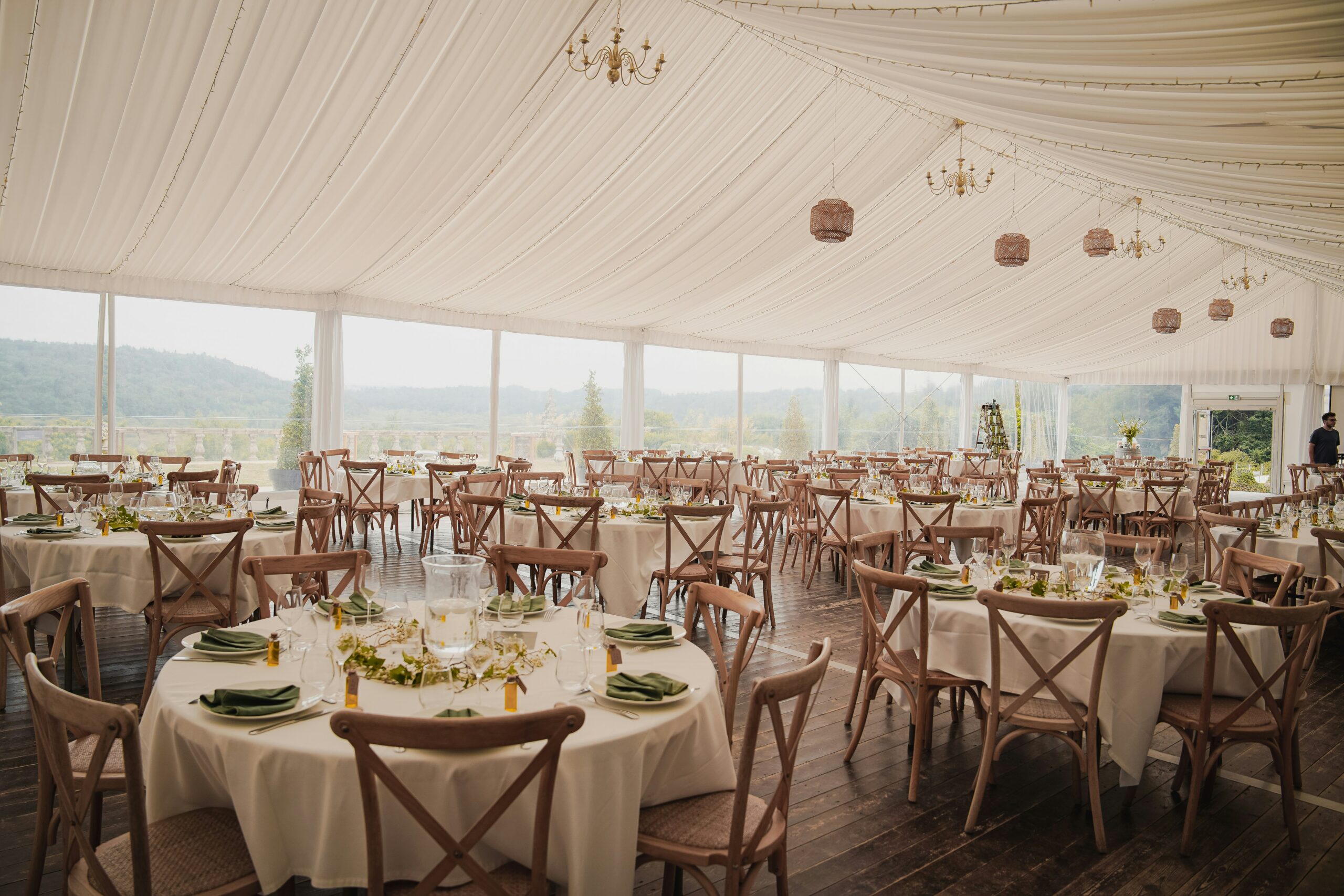
Not every part of a wedding needs the same type of tent coverage. Couples should identify which moments require shade, protection, structure, or visual definition before deciding how many tents to rent.
Ceremony Coverage
A ceremony tent may be useful if guests will be seated in direct sun, if the ceremony area is exposed, or if the couple wants added protection for the most formal part of the day. This is especially relevant for outdoor ceremonies on open lawns, coastal sites, or properties with limited natural shade.
Ceremony coverage does not always require a large tent. A smaller structure, canopy, or carefully placed shade solution may be enough depending on the guest count and setting. The goal is to protect guests while preserving the visual focus of the ceremony.
Couples should also think about sightlines. The tent should not block the view of the couple, the backdrop, or the natural setting that made the ceremony location appealing.
Cocktail Hour Shade
Cocktail hour often involves standing, mingling, bar lines, and passed appetizers. Guests may be moving between the ceremony and reception, so a shaded or tented area can make this part of the day more comfortable.
A cocktail tent can include high-top tables, lounge furniture, bar service, beverage stations, and light seating. It does not need to feel as formal as the reception tent, but it should provide a clear destination after the ceremony.
This is especially helpful when the main reception tent is not ready for guest entry or when the couple wants to reveal the reception space later.
Dining and Reception Coverage
The reception tent is usually the largest tent on the property. It may need to support dining tables, chairs, a dance floor, entertainment, lighting, bars, lounge seating, and guest circulation.
If the reception includes dinner and dancing in the same tent, the layout should leave enough room for both. If dancing will happen elsewhere, the dining tent can be planned more tightly around tables and service flow.
This tent should be planned around the full reception timeline, not just the dinner setup. Speeches, first dances, cake cutting, bar service, and late-night activity can all affect the layout.
Bar, Catering, and Service Coverage
Bar, catering, and service areas often need their own covered spaces. These tents may not be as visible as the main reception tent, but they are essential for keeping the event organized.
A catering tent can provide space for prep, plating, storage, and service support. A bar tent can help manage drink service and prevent crowding inside the main reception tent. A smaller service tent can protect supplies, extra rentals, or vendor equipment.
These functional tents help the guest-facing areas feel cleaner and more polished.
Plan Guest Flow Between Tented Zones
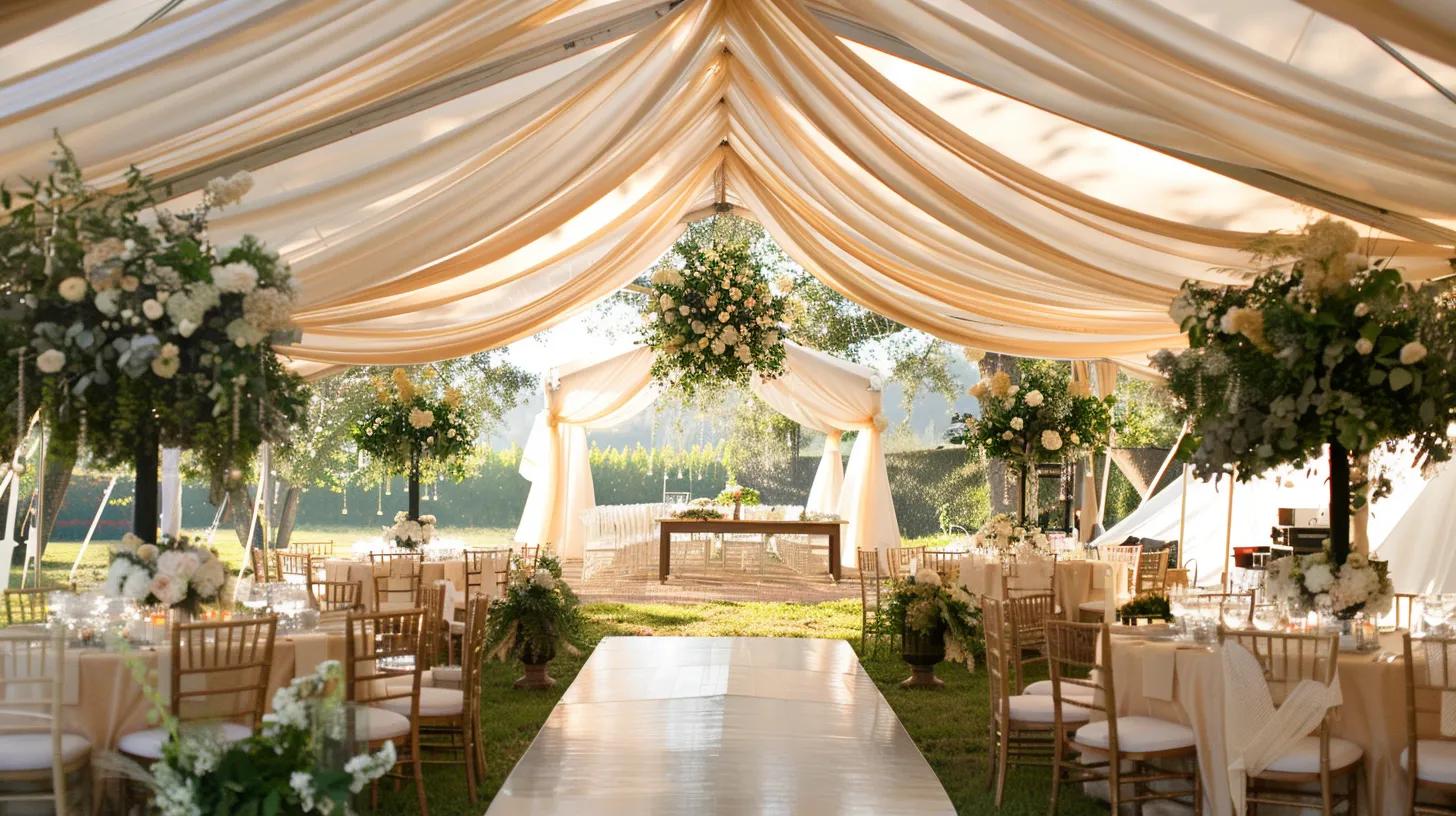
If a wedding uses more than one tent, the spaces need to feel connected. Guests should understand where to go next without confusion, long walks, or awkward transitions between ceremony, cocktail hour, dinner, and dancing.
Arrival to Ceremony
The guest experience begins before the ceremony. A welcome area, small tent, or shaded station near arrival can help guests orient themselves. This area may include programs, refreshments, signage, a guest book, or a check-in table.
From there, guests should be guided toward the ceremony. Clear pathways, visible seating, and simple directional signs can help prevent confusion, especially on larger properties.
If the walk from parking or shuttle drop-off to the ceremony is long, consider whether guests need shade, water, or seating along the way.
Ceremony to Cocktail Hour
After the ceremony, guests need a clear destination. A cocktail tent or shaded lounge area can give them somewhere to gather while the couple takes photos or the reception space is finalized.
This transition should feel intuitive. Guests should be able to see where to go or be guided by signage, staff, lighting, or a visible bar area. If the cocktail space is too far from the ceremony, the event may feel disjointed.
The best transitions feel natural. Guests move because the next area feels inviting and easy to reach.
Cocktail Hour to Dinner
The move from cocktail hour to dinner is one of the most important transitions of the wedding day. Guests need to find the main reception tent, locate seating assignments, and enter the dining area without bottlenecks.
If the reception tent is separate from the cocktail tent, the entrance should be visible and welcoming. Escort card displays, signage, pathway lighting, or staff direction can help guide the transition.
This is also the moment when the reception design is revealed. A well-placed main tent can create a strong sense of arrival as guests enter the dinner space.
Dinner to Dancing and Late-Night Areas
After dinner, guests may move toward the dance floor, bar, lounge, dessert station, or late-night snack area. These spaces should remain easy to access and visually connected.
If dancing happens under the same tent as dinner, the transition can happen with lighting changes and furniture adjustments. If dancing happens in another tent or nearby area, the path should be clear and well-lit.
Late-night areas should not feel isolated. A dessert table, coffee station, lounge, or after-party tent should be placed where guests can find it easily without leaving the energy of the celebration.
Match the Tent Strategy to the Santa Barbara Venue Type
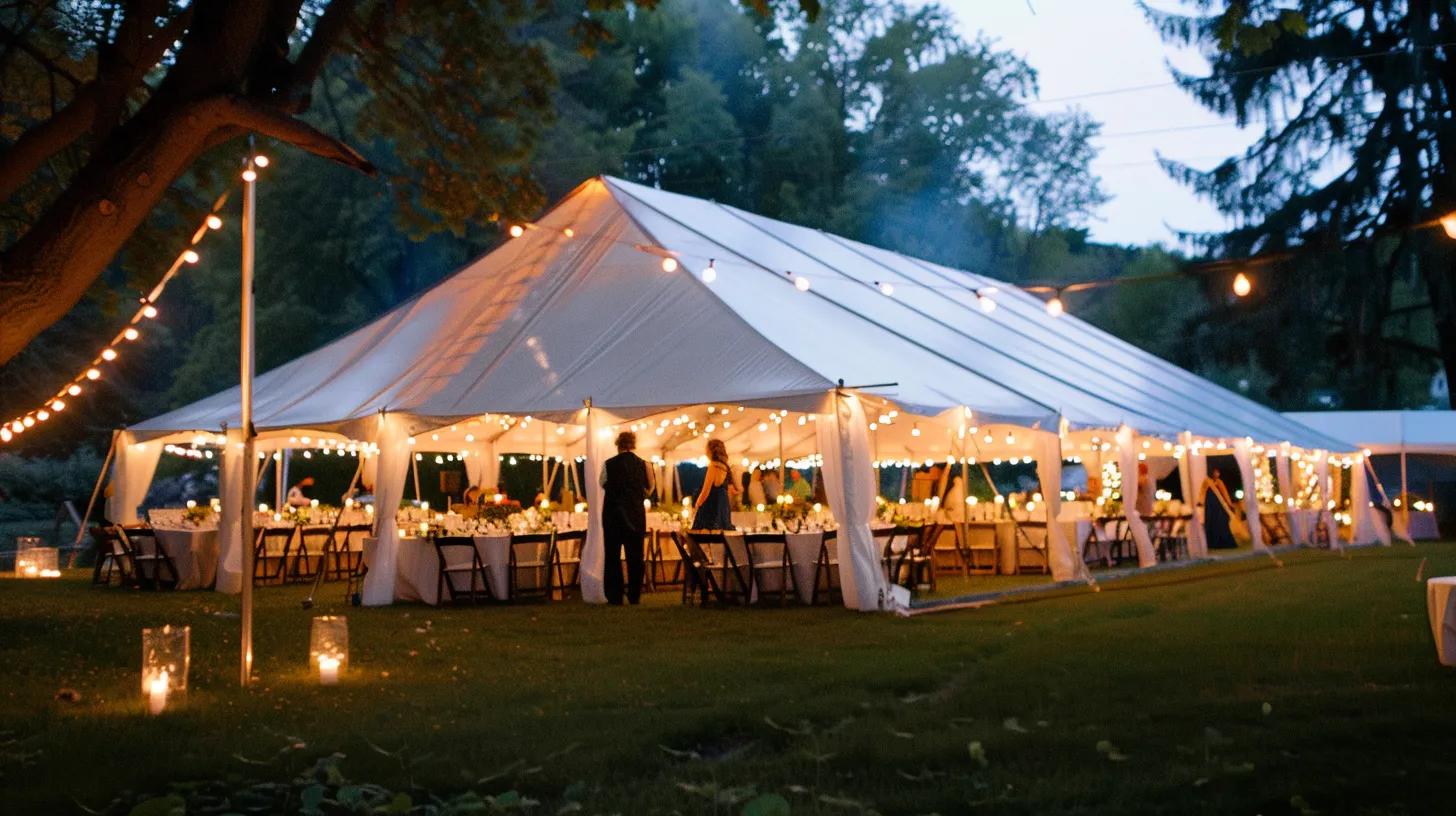
Santa Barbara weddings can take place across very different properties, so the tent strategy should respond to the venue. A coastal site, garden estate, vineyard, ranch, or private backyard may each require a different approach to tent placement and event flow.
Coastal Venues
Coastal venues often have views that couples want to preserve. A tent should provide comfort and structure without blocking the scenery. This may mean placing the main tent slightly away from the best view, keeping sides open where possible, or using smaller tents for specific guest areas instead of one large structure.
Coastal sites may also have wind exposure, limited access, or stricter placement rules. The tent plan should account for these conditions before finalizing the layout.
For many coastal weddings, the goal is to create coverage while still keeping the event connected to the ocean setting.
Garden and Estate Venues
Garden and estate venues often include lawns, patios, pathways, trees, and architectural features. These spaces may work beautifully with multiple tented zones because different parts of the property can support different moments of the day.
A ceremony may happen in one garden area, cocktail hour on a patio, and dinner under a reception tent on the lawn. Smaller tents can be used to support bars, welcome areas, or catering without disturbing the natural flow of the property.
The tent strategy should work around the landscaping rather than covering it completely.
Vineyard and Ranch Venues
Vineyard and ranch venues often have larger footprints and more spread-out event areas. A main reception tent may be needed for dinner and dancing, while smaller tents can support cocktail hour, catering, bars, lounges, or guest arrival.
These venues may also require more attention to walking distances, lighting, service routes, and vendor access. If guests are moving across a large property, the tent plan should make each destination clear.
Multiple tents can help create structure without losing the open, outdoor feeling that makes vineyard and ranch venues appealing.
Private Homes and Backyard Weddings
Backyard weddings can be highly personal, but they often require careful space planning. Pools, fences, patios, trees, gardens, outdoor kitchens, slopes, and neighboring structures can all limit where tents can be installed.
A single tent may work if the yard has one clear open area. Multiple smaller tents may be better if the property has separate zones for ceremony, dining, bar service, and lounge seating.
For private homes, it is especially important to think through access, delivery, vendor movement, restrooms, and breakdown logistics before deciding on the tent layout.
Frequently Asked Questions
Is one large tent better than multiple smaller tents for a wedding?
It depends on the venue layout, guest count, wedding timeline, and event style. One large tent works well when the couple wants one central reception space for dinner, speeches, dancing, and entertainment. Multiple tents can work better when the property has separate areas for ceremony, cocktail hour, reception, catering, bars, or lounges.
When should I use multiple tents for a wedding?
Multiple tents may be helpful when the wedding uses several outdoor spaces or when different activities need separate coverage. This can include a ceremony tent, cocktail hour tent, reception tent, catering tent, bar tent, lounge tent, or welcome tent. Larger properties, private homes, vineyards, ranches, and estates often benefit from this approach.
Can I use one tent for both dinner and dancing?
Yes, one tent can work for both dinner and dancing if the layout includes enough room for tables, chairs, a dance floor, entertainment, bar access, and guest movement. The design should also support the transition from dinner to dancing so the space does not feel crowded.
Do catering and vendor areas need separate tents?
They may, depending on the venue, food service style, weather exposure, and vendor requirements. Catering teams often need covered prep, plating, storage, or service areas. A separate catering or vendor tent can keep those functions close to the reception while keeping guest-facing spaces clean and organized.
How do I make multiple tents feel connected?
Multiple tents can feel connected through clear pathways, lighting, signage, consistent furniture, coordinated linens, similar décor, and thoughtful placement. The layout should follow the wedding timeline so guests move naturally from arrival to ceremony, cocktail hour, dinner, dancing, and departure.