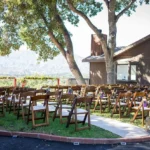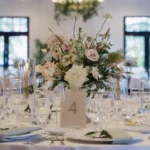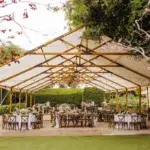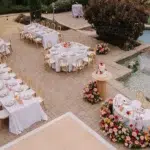

For planners organizing a tented celebration, the goal is not to treat the tent as a guarantee against every possible condition. Instead, effective planning brings together the tent configuration, sidewalls, climate-control equipment, flooring, lighting, and event layout so the space can remain comfortable and functional as conditions change.
This guide explains how to approach fall tent rentals in Santa Barbara with guest comfort, site conditions, and weather flexibility in mind.
Start With the Event Schedule and Site Conditions
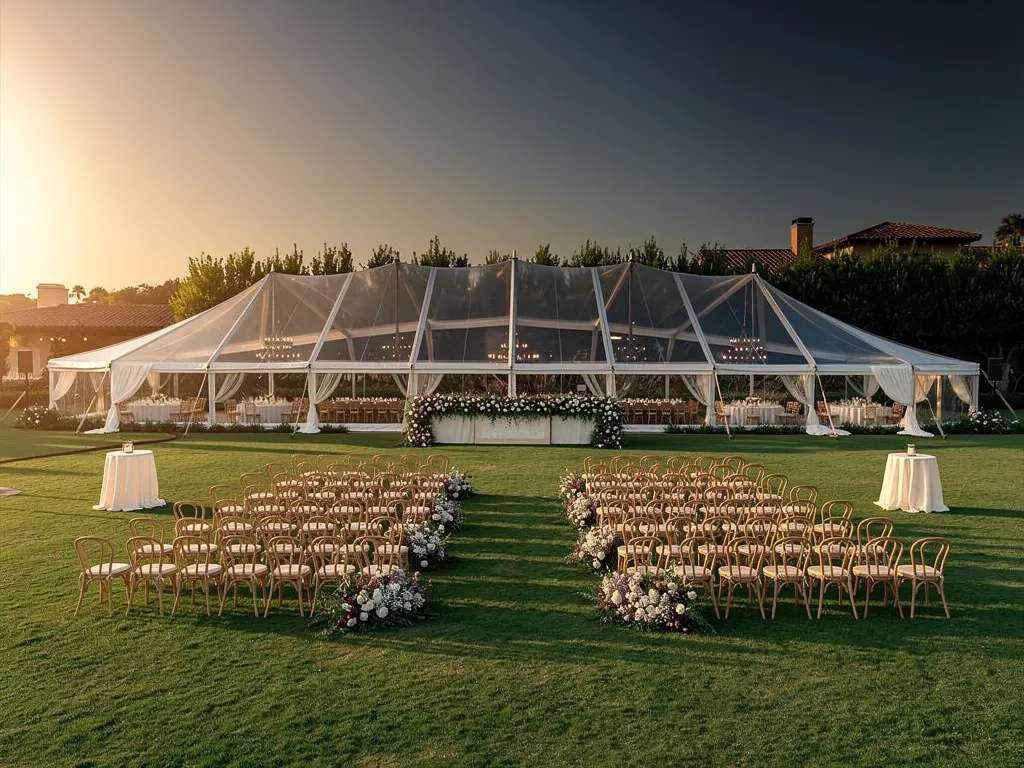
Weather planning should begin before heaters, sidewalls, flooring, or other supporting rentals are selected. The timing of the event and the characteristics of the venue determine what the tent may need throughout the day.
A reception beginning in the afternoon and continuing well after sunset, for example, can have very different comfort requirements at different points in the event.
Consider How Conditions May Change During the Event
Rather than planning around the season alone, event planners should consider the actual timeline.
Important details include:
-
Event start and end times
-
Sunset timing
-
Length of the outdoor portion
-
Ceremony, cocktail, dining, and entertainment schedules
-
Whether guests transition between indoor and outdoor areas
-
How long guests will remain beneath the tent
An afternoon cocktail hour may benefit from an open, airy configuration, while dinner and dancing later in the evening may require a different approach as temperatures change.
Viewing the tent as a space that needs to function across the entire event timeline helps planners make more deliberate comfort decisions.
Evaluate the Tent Location and Surrounding Exposure
Two tent locations at the same venue can experience different conditions.
A space surrounded by buildings or landscaping may feel more protected, while an exposed lawn or open area may experience more wind. Direct afternoon sun can also affect how the tent feels before temperatures begin dropping later in the day.
Planners should consider:
-
Exposure to open areas
-
Nearby buildings and landscaping
-
Sun direction
-
Wind exposure
-
Connections to indoor spaces
-
Main guest entrances and exits
Understanding these characteristics makes it easier to determine how open or enclosed the tent should be and where comfort equipment may be useful.
Confirm the Venue Surface and Installation Requirements
The surface beneath the tent also affects the planning process.
Grass, hardscape, and other surfaces can influence tent placement, the choice between a frame or pole tent, flooring decisions, guest pathways, and installation requirements. Venue restrictions may further determine where structures can be installed and how the rental team can access the site.
These conditions should be confirmed with the venue and rental provider before the layout is finalized rather than making assumptions about installation methods.
Plan Tent Sidewalls Around Weather and Guest Flow
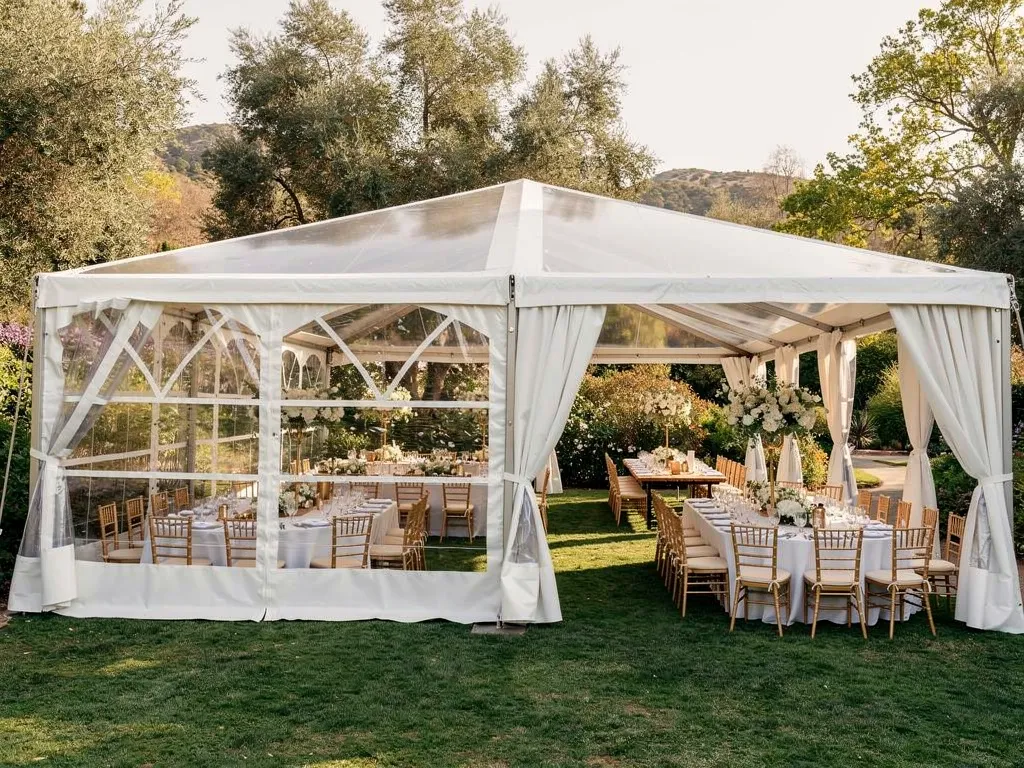
Sidewalls can give planners additional flexibility when outdoor conditions change, but they should be considered as part of the overall tent layout rather than automatically added to every fall event.
Their usefulness depends on the venue, event schedule, expected conditions, and how guests need to move between spaces.
Determine When Sidewalls May Be Appropriate
Sidewalls may help reduce exposure to cooler air, wind, or rain when conditions call for additional enclosure.
Their role can depend on:
-
Time of day
-
Venue exposure
-
Tent orientation
-
Expected temperatures
-
Rain considerations
-
Guest activity inside the tent
-
Nearby indoor or covered spaces
An event taking place primarily during daylight hours may require a different configuration from an evening reception that keeps guests outdoors for several hours.
The objective is to create the right degree of protection without unnecessarily closing off the space.
Keep Entrances and High-Traffic Areas Functional
Adding sidewalls changes how guests enter, leave, and circulate through the tent.
Planners should consider the routes between the tent and other important areas, including:
-
Ceremony spaces
-
Restrooms
-
Bars
-
Indoor buildings
-
Catering areas
-
Transportation or valet points
-
Adjacent lounges or gathering areas
Entrances should remain intuitive and comfortable to use, particularly when large numbers of guests move between spaces at the same time.
A weather plan that protects the tent but creates congestion at the entrances can introduce a different set of problems.
Coordinate Sidewalls With the Overall Tent Layout
Sidewalls should also be reviewed alongside the furniture plan.
Dining tables, bars, lounges, service stations, and entertainment areas may need different spacing when portions of the tent are enclosed. A layout that works well with an open tent may feel crowded once additional boundaries are introduced.
Considering sidewall configurations while developing the floor plan gives planners more flexibility if conditions change.
Choose Climate-Control Equipment Based on the Event
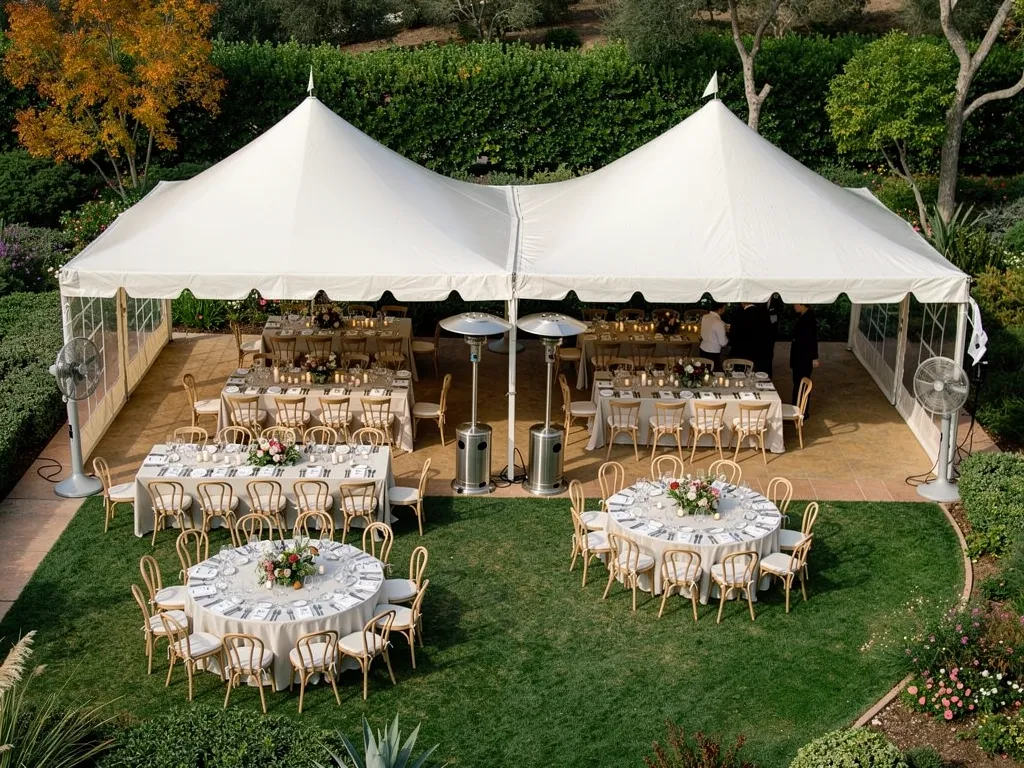
Climate control should respond to the event rather than follow a one-size-fits-all seasonal formula. Some fall events may benefit from heaters, while others may require greater air circulation during warmer portions of the day.
The event schedule, tent size, guest count, configuration, and venue exposure should guide these decisions.
Plan for Cooler Evening Temperatures
Outdoor temperatures can feel noticeably different after sunset, particularly when guests are seated for an extended dinner or remain outside for dancing and entertainment.
For events continuing into the evening, planners can evaluate whether patio heaters should be incorporated into the tent setup.
Their placement should be coordinated early enough that they do not interfere with tables, guest circulation, bars, or entertainment areas.
The need for heating should be based on the specific event rather than assuming that every fall celebration requires the same setup.
Account for Warmer Afternoon Conditions
Fall does not necessarily mean cool conditions throughout the entire event.
Earlier portions of the day may still feel warm, particularly when guests are gathered under a tent for cocktails, ceremonies, or daytime receptions. Tent openness and appropriate air circulation can therefore be just as important as planning for later temperature drops.
A setup that can respond to both portions of the day provides more flexibility than designing exclusively around evening conditions.
Position Comfort Equipment Without Disrupting the Floor Plan
Climate-control equipment becomes part of the physical layout.
Planners should review its placement alongside:
-
Dining tables
-
Guest pathways
-
Lounge groupings
-
Bars
-
Tent entrances
-
Dance floors
-
Stages
-
Entertainment areas
Comfort equipment should support the event without becoming an obstacle or visual distraction.
This is why temperature planning works best when it happens alongside the floor-plan process rather than after the major rental pieces have already been positioned.
Use Flooring to Support the Tent Interior
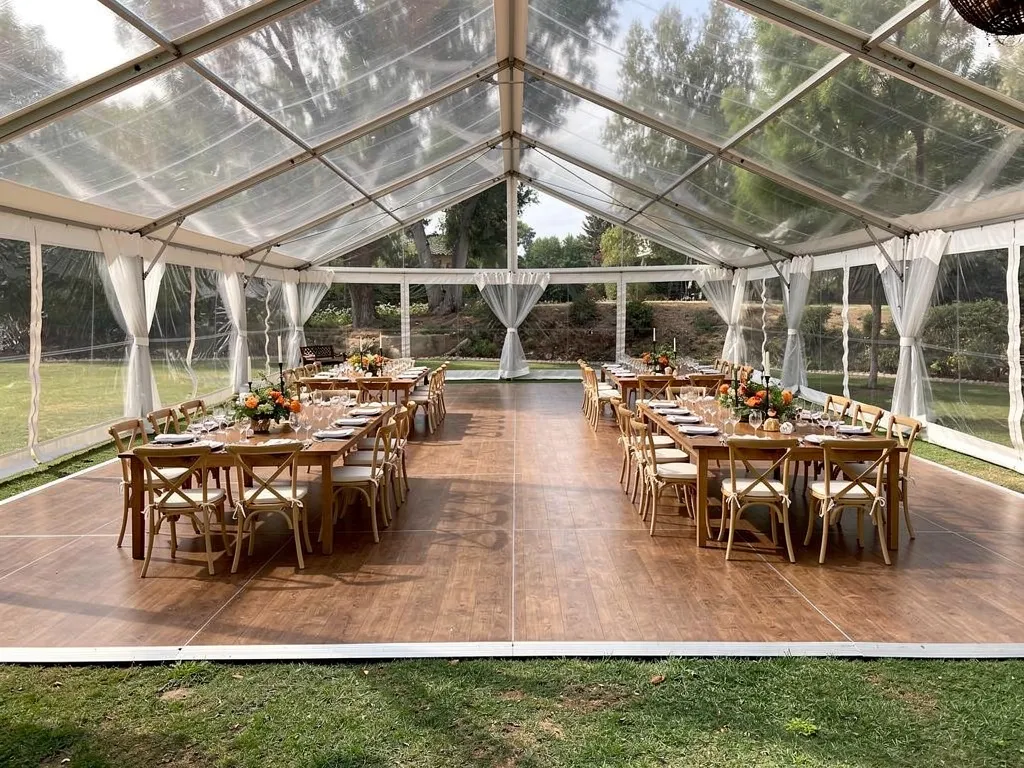
Flooring can contribute to a more consistent tent environment when the venue surface or event format calls for it. It should be considered in relation to how guests will use the space rather than added simply as a decorative feature.
Evaluate the Surface Beneath the Tent
The underlying surface can influence both furniture placement and the guest experience.
Planners should evaluate:
-
Grass
-
Hardscape
-
Changes in elevation
-
Transitions between surfaces
-
Heavily trafficked areas
-
Locations where guests will stand or sit for extended periods
Understanding the site conditions helps determine whether flooring should be incorporated and where it provides the most practical benefit.
Determine Which Areas Need Flooring
Not every tented event requires the same flooring configuration.
Depending on the layout, planners may prioritize flooring for:
-
Dining areas
-
Dance floors
-
Entertainment zones
-
High-traffic pathways
-
Transition points between surfaces
The decision should reflect how guests will actually use the space.
A large reception, for example, may require a different flooring strategy from a smaller tented dinner where guests remain primarily around dining tables.
Coordinate Flooring With Furniture and Tent Placement
Flooring dimensions influence other layout decisions.
The placement of tables, lounges, entertainment areas, and dance floors should be reviewed together so that different surfaces connect logically and guest circulation remains comfortable.
Addressing flooring early enough also helps prevent situations where the interior layout needs to be redesigned after other rental selections have already been finalized.
Plan the Tent Interior for Changing Conditions
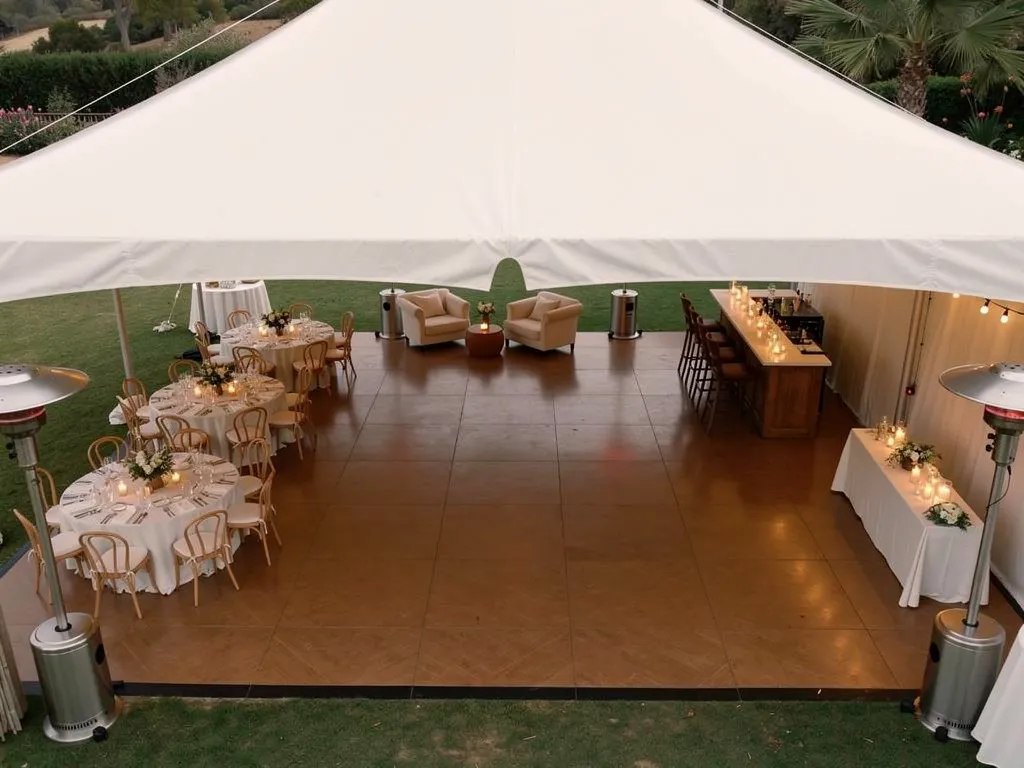
A tent interior should continue to function even if the tent configuration needs to adapt during the event. This means prioritizing essential guest activities and leaving enough flexibility in the layout for comfort-related adjustments.
Protect Important Event Functions
Some areas are more important to protect than others if conditions change.
Depending on the event, priority areas may include:
-
Dining
-
Primary guest seating
-
Bars
-
Entertainment
-
Speeches or presentations
-
Ceremony elements
-
Catering and service areas
Planners should identify these spaces while determining how covered areas will be allocated.
For a seated dinner, keeping the dining environment comfortable may be the primary concern. At a reception centered around entertainment, the dance floor and adjacent guest areas may deserve more attention.
Maintain Clear Guest Circulation
Guest movement becomes even more important when sidewalls, heaters, flooring, or other equipment are introduced.
Pathways should connect the most frequently used areas without forcing guests through service zones or narrow spaces between furniture.
Particular attention should be given to transitions between the heated tent and restrooms, indoor areas, bars, and other portions of the venue.
A comfortable tent for the season is not simply one with an appropriate temperature; it also needs to remain easy to navigate.
Avoid Overcrowding the Tent
It can be tempting to fill every available portion of a tent with seating, lounges, bars, or decorative elements.
However, leaving some breathing room can improve both circulation and adaptability.
Additional open space can become particularly valuable if sidewall configurations change or comfort equipment needs to be incorporated. It also gives vendors more room to work without interfering with guest areas.
The strongest layouts balance capacity with practical movement and flexibility.
Coordinate Evening Lighting With the Tent Setup

Lighting becomes particularly important as fall events transition from daylight into evening. For a tented event, it should support visibility, guest movement, and the atmosphere of the space without turning the article into a separate lighting-design exercise.
Identify Functional Lighting Needs First
Before considering decorative effects, planners should determine which areas need dependable illumination.
These may include:
-
Tent entrances
-
Guest pathways
-
Dining areas
-
Bars
-
Entertainment areas
-
Transition points between tented and untented spaces
These locations become especially important once natural daylight fades.
Lighting should help guests understand how to move through the event while supporting the activities taking place within the tent.
Use Lighting to Support the Evening Atmosphere
Once functional areas are addressed, lighting can help shape how the tent feels after sunset.
General illumination can establish the overall environment, while more focused lighting can draw attention to bars, architectural features, entertainment areas, or other visual focal points.
A layered approach allows the tent to transition naturally from an afternoon gathering into an evening reception.
Coordinate Lighting With the Event Timeline
Lighting requirements should reflect when different activities take place.
A cocktail hour beginning before sunset may require relatively little artificial illumination at first, while dinner, speeches, and dancing later in the evening may depend much more heavily on the lighting plan.
Reviewing lighting against the event timeline helps ensure that the space continues to function as natural conditions change.
Build a Practical Weather Contingency Plan
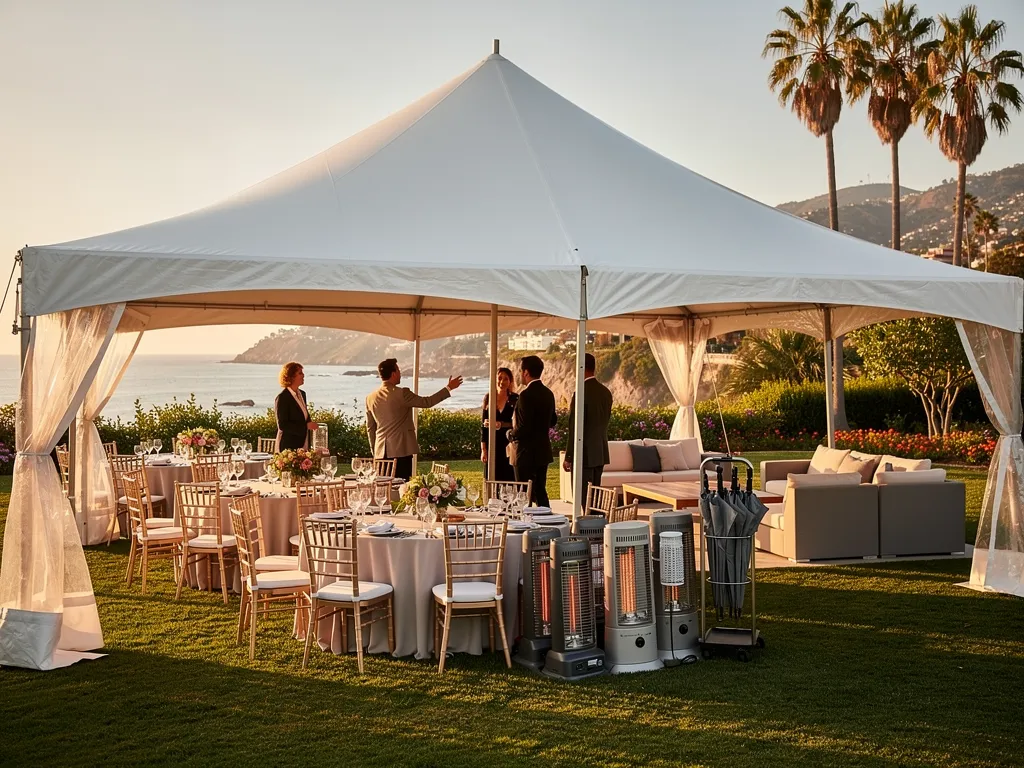
A tent can provide valuable covered event space, heated or cooled for coastal conditions, but weather planning should still include contingencies. The objective is to determine what can reasonably be adjusted and which decisions need to be made before the event begins.
Identify the Areas That Need the Most Protection
Planners should identify the portions of the event that must remain functional if conditions shift.
For many events, these may include dining, primary seating, entertainment, bars, and scheduled program elements.
Knowing these priorities helps guide decisions about tent coverage, sidewalls, flooring, and climate control rather than attempting to treat every part of the venue in exactly the same way.
Decide Which Adjustments Can Be Made Before the Event
A flexible plan may include reviewing:
-
Sidewall configurations
-
Heating or air-circulation requirements
-
Covered guest areas
-
Flooring needs
-
Tent entrances and transitions
-
Indoor backup spaces when available
These adjustments should be coordinated with the venue and rental team rather than treated as informal event-day changes.
Understanding the available options in advance helps planners respond more deliberately if conditions evolve.
Know When Conditions Require a Larger Planning Decision
Tent rentals and comfort equipment are useful planning tools, but they should not be presented as guarantees against every weather condition.
If weather creates conditions that affect installation or event safety, planners should follow the guidance of the venue and professional rental team.
A realistic contingency plan recognizes both what the tent setup can accommodate and when a broader change to the event plan may be necessary.
What Should Planners Confirm Before Finalizing a Fall Tent Setup?
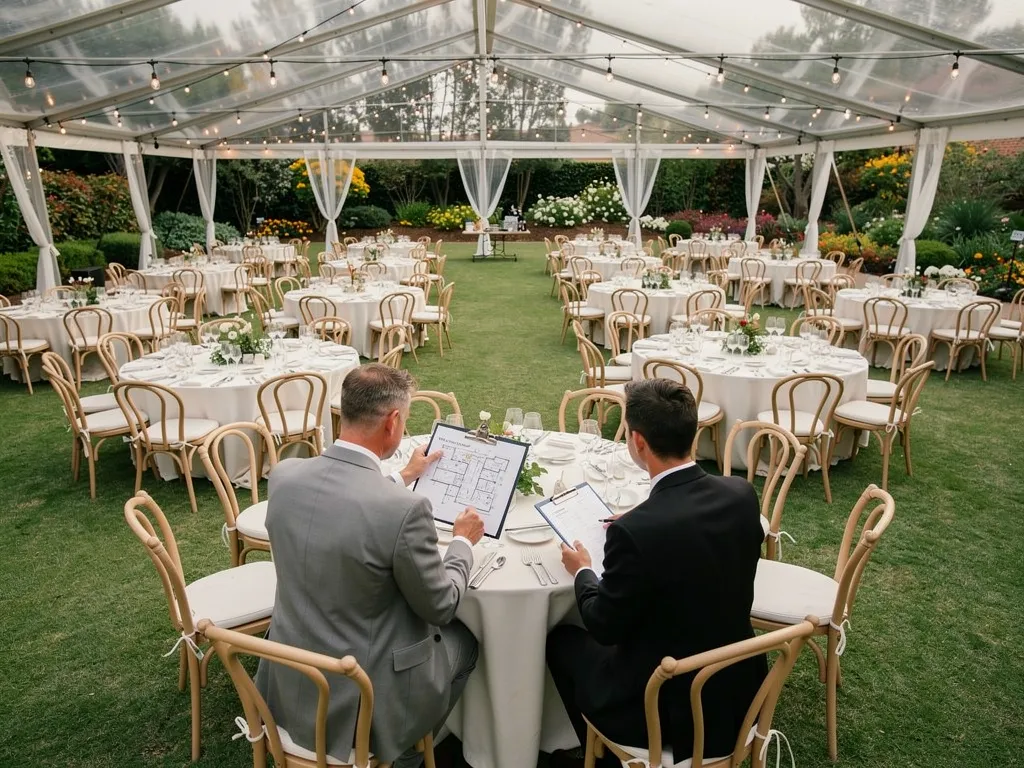
As the event approaches, the tent plan should be reviewed against the latest guest count, schedule, floor plan, venue conditions, and anticipated weather. Details established months earlier may need adjustment as the final setup becomes clearer.
Review the Latest Floor Plan
Tables, bars, lounges, dance floors, stages, and service areas should all be compared against the final tent footprint.
Any significant layout changes may also affect:
-
Sidewall placement
-
Flooring
-
Heater or fan positioning
-
Lighting
-
Guest entrances
-
Vendor access
Keeping these components coordinated is more effective than updating one rental category without considering the others.
Revisit Guest Comfort Requirements
The event schedule or expected conditions may look different from when the original rental plan was created.
Planners can revisit whether the setup still requires the same combination of:
-
Sidewalls
-
Heaters
-
Fans or air circulation
-
Flooring
-
Lighting
-
Covered transition areas
This review helps align the final configuration with the latest information rather than relying entirely on assumptions made earlier in the planning process.
Confirm Installation and Vendor Coordination
The final tent plan should also account for how and when the space will be installed.
Important details can include:
-
Venue access
-
Installation windows
-
Breakdown requirements
-
Catering setup
-
Lighting installation
-
Entertainment requirements
-
Other vendor schedules
-
Final event timing
Ventura Rental can coordinate its rental components with the broader event plan so that the tent, flooring, furnishings, and supporting elements are considered as parts of the same environment rather than isolated rentals.
Frequently Asked Questions
Do fall tent events in Santa Barbara always need heaters?
No. Heater needs depend on the event date, time, venue exposure, tent configuration, expected conditions, and how long guests will remain outdoors.
An afternoon event may have different requirements from a reception continuing several hours after sunset.
Are sidewalls necessary for every fall tent rental?
No. Sidewall requirements depend on the event schedule, venue exposure, anticipated conditions, and tent configuration.
Some events may benefit from a more open setup, while others may require additional enclosure during certain portions of the event.
Can tent sidewalls be incorporated into the weather plan?
Yes. Sidewalls can be considered when additional protection from wind or rain is appropriate.
Their placement should be coordinated with entrances, exits, furniture arrangements, and guest circulation so that the tent continues to function comfortably.
Should flooring be included in every outdoor tent?
Not necessarily.
The venue surface, event format, tent use, guest activities, and layout should determine whether flooring is appropriate and which areas should receive priority.
When should climate-control needs be finalized?
Climate-control planning should begin while the tent layout is being developed because equipment placement can affect furniture and circulation.
Requirements can then be reviewed again closer to the event as the schedule, layout, and anticipated conditions become clearer.
What information should planners provide when discussing a fall tent setup?
Helpful details include the event date, venue, estimated guest count, schedule, activities taking place beneath the tent, preliminary floor plan, surface conditions, entertainment requirements, and known venue restrictions.
The more complete the event picture is, the easier it becomes to coordinate the tent configuration with guest comfort and logistics. Compare canopy and tent sizes for your guest count in our tent and canopy rentals.
Plan a Comfortable Fall Tent Event With Ventura Rental
Successful fall tent planning is based on adaptability, not on trying to make an outdoor event completely unaffected by the weather. Tent placement, sidewalls, climate control, flooring, lighting, and guest circulation all need to work together around the venue and the event schedule.
For tented events in the Santa Barbara area, Ventura Rental can help planners coordinate tents with the supporting rental elements needed to create a functional event environment. By evaluating site conditions early, accounting for daytime-to-evening changes, and reviewing the final configuration as the event approaches, planners can create an outdoor setting that remains thoughtful, comfortable, and cohesive throughout the celebration. To check availability for your date, reach out to our rental team.