
Textured linens can give a fall reception warmth and visual depth, but not every table needs several heavy fabrics. The strongest designs usually begin with one anchor texture and repeat it selectively through a tablecloth, runner, napkin, drape, or focal-table treatment.
For Santa Barbara events, the linen should also respond to the venue. A jacquard can complement a historic courtyard, a subtle woven fabric can connect with a garden or vineyard, and velvet can give an evening focal table greater depth. The goal is to create dimension without crowding the tabletop or overpowering the architecture and landscape.
Give Each Texture a Clear Role

Texture should serve a defined purpose within the reception design. It may establish the foundation for the dining tables, distinguish the sweetheart table, soften an exposed wood surface, or add detail through napkins and runners.
Without a clear hierarchy, several individually attractive materials can compete. A heavily textured tablecloth, patterned runner, woven napkin, metallic charger, detailed china, and elaborate centerpiece may leave the table feeling crowded rather than layered.
Choose an Anchor Texture
The anchor texture is the fabric that establishes the table’s main visual character. It is usually the largest textile surface, such as a full tablecloth, substantial runner, or fitted drape.
A velvet linen can create a deep foundation for an evening focal table. A woven linen offers a quieter surface that can work across the full dining area. A jacquard provides both pattern and texture, reducing the need for several additional decorative layers.
Once the anchor is selected, the rest of the tabletop should support it. If the linen has a visible woven pattern or rich surface, the china, glassware, and florals may remain more restrained. If the foundation is subtle, a distinctive napkin, plate, or metallic finish can supply contrast.
Scale matters as well. A fabric that looks refined on one sweetheart table may become visually heavy when repeated across every guest table.
Use Accent Texture for a Lighter Effect
A full textured tablecloth is not the only way to introduce depth. Runners, napkins, and draping can provide tactile detail while allowing the primary linen or table surface to remain quieter.
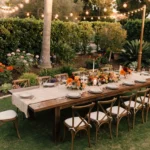
Accent texture is particularly useful on finished wood tables. Covering the entire surface may hide the grain and character that led to selecting the table, while a runner or woven napkin can add color and softness without concealing it.
Potential applications include:
-
Woven napkins over a simple neutral linen
-
A jacquard runner on an exposed wood table
-
Velvet on a sweetheart or cake table
-
Textured draping behind a bar or display
-
Patterned linens on selected cocktail tables
Woven napkins over a simple neutral linen
A jacquard runner on an exposed wood table
Velvet on a sweetheart or cake table
Textured draping behind a bar or display
Patterned linens on selected cocktail tables
The accent should still connect to the rest of the reception through color, pattern, or material.
Avoid Giving Every Linen Equal Visual Weight
Not every textile needs to command the same amount of attention.
A reception may use a textured tablecloth with a smooth tonal napkin. Another design may begin with a simple linen and use patterned napkins as the main textile detail. A focal table can use velvet while guest tables rely on a quieter weave.
Before adding another fabric, planners should ask whether it creates a useful contrast or simply adds one more decorative surface. When the chairs, china, flowers, candles, and architecture already contribute detail, the linen plan may need less variation rather than more.
Match the Fabric Weight to the Santa Barbara Setting
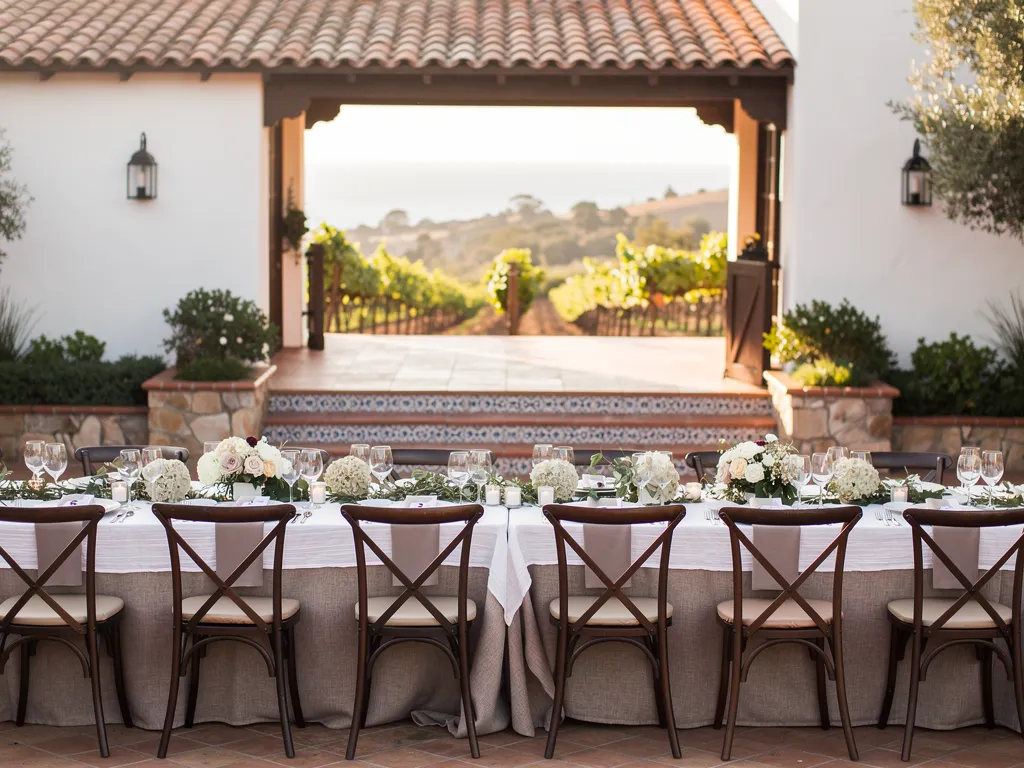
Santa Barbara venues provide their own material palette. Stucco, terracotta, patterned tile, dark wood, stone, gardens, vineyard rows, and coastal landscapes all contribute texture before rentals are installed.
The linen should complement those materials rather than impose a generic autumn theme.
Use Refined Texture in Historic Courtyards
Historic courtyards often contain several visually active details within a compact space. Arches, tiled surfaces, fountains, stucco walls, wood doors, and established landscaping may all remain visible from the dining tables.
A refined woven or jacquard linen can complement these elements without making the reception feel overly rustic. Warm ivory, adobe, latte, sage, and restrained patterns generally allow the architecture to remain prominent.
The fabric should also relate to the chair and tabletop choices. A patterned linen paired with decorative chairs, patterned tile, elaborate china, and dense florals may create too much competition. A softly woven neutral fabric can provide texture while allowing the other elements to stand out.
A stronger jacquard may be better reserved for the sweetheart table, cake display, or welcome table, where its pattern can be appreciated without repeating it throughout the courtyard.
Bring Natural Texture to Gardens and Vineyards
Garden and vineyard receptions often benefit from fabrics that feel connected to wood, greenery, stone, and the surrounding landscape.
A woven tablecloth or napkin can create that connection without relying on burlap or other overtly rustic materials. Adobe, khaki, sage, terracotta, olive, and warm neutral tones can provide an organic quality while remaining suitable for a polished wedding or private dinner.
The amount of texture should respond to the table itself. A vineyard dinner with finished wood tables may require only woven napkins and runners. Standard banquet tables may benefit from full textured linens to create a finished foundation.
Keep Coastal Tables Visually Light
Coastal venues often have expansive views, pale architecture, bright daytime conditions, and fewer visual boundaries than courtyards or indoor spaces.
Heavy fabrics used on every surface may make the reception feel disconnected from the property’s openness. Texture can instead be introduced through a subtle woven tablecloth, a lightweight runner, a patterned napkin, or a focal linen.
Warm white, sand, muted blue, sage, pale terracotta, and natural tones can provide fall depth without competing with the ocean, sky, or surrounding landscape.
Darker velvet or jacquard can still be used, but it may be more effective on a sweetheart table, bar, cake display, or another evening focal point than across the entire reception.
Compare Textured Linen Families by Visual Effect
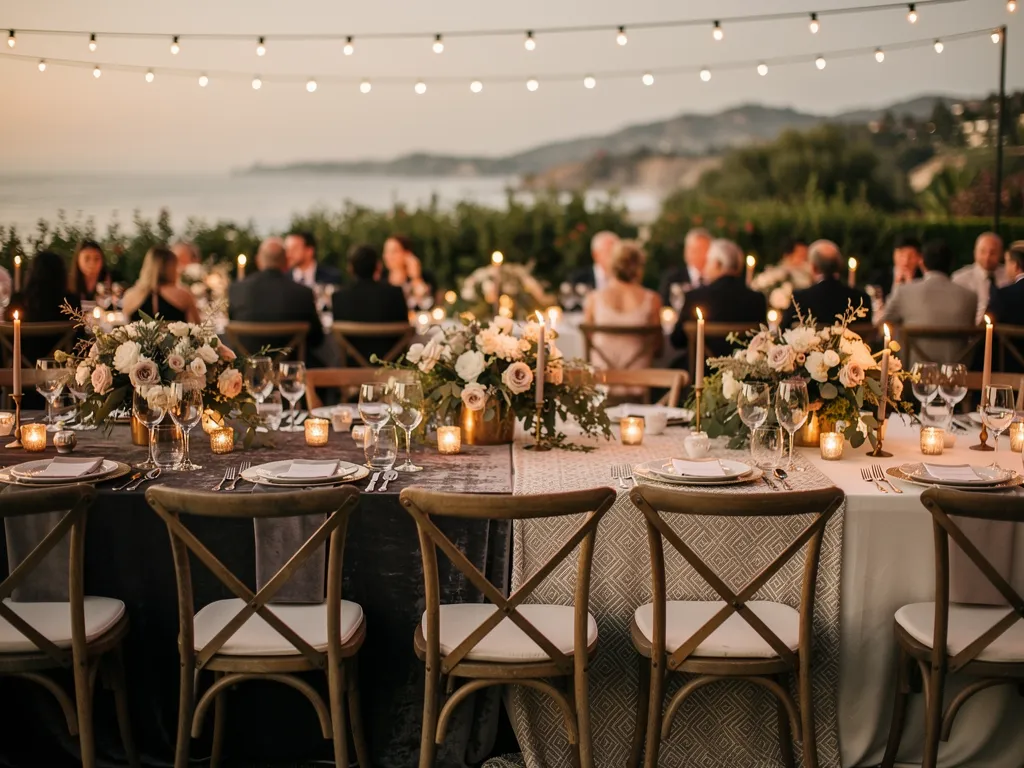
Fabric names do not always communicate how a linen will behave within a complete reception. The more useful comparison is the visual effect each textile creates from guest level and under evening lighting.
Ventura Rental’s inventory includes velvet, woven, jacquard, Lamour, Shantung, printed, and standard linen options, subject to current availability.
Use Velvet for Depth and Low-Light Drama
Velvet has a directional surface that creates changing highlights and shadows as light reaches it from different angles. Its color may appear deeper in shaded areas and brighter where the pile catches candlelight, chandeliers, or nearby uplighting.
This makes velvet effective for evening focal tables. It can give a sweetheart table, cake display, guest-book table, bar detail, or selected dining table greater presence without requiring a strong printed pattern.
Velvet should be balanced with quieter tabletop elements. Clean china, clear glassware, restrained florals, or matte metallic details can prevent the table from becoming visually dense.
Placement also matters. A velvet focal table inside a ballroom or beneath a covered structure may be more predictable than one placed in a fully exposed outdoor setting.
Use Woven Linens for Subtle, Natural Texture
Woven linens provide surface variation without the stronger sheen or visual weight associated with velvet. Their texture is noticeable at close range while remaining quiet enough to support detailed china, glassware, florals, or architectural surroundings.
This makes woven fabrics particularly flexible for Santa Barbara courtyards, gardens, estates, and vineyards.
Cambria and Ashley Woven options are available in selected tablecloth, runner, drape, and napkin formats. A reception may use full woven tablecloths, or it may introduce the texture through runners and napkins over a simpler foundation.
Woven fabrics are also useful when the event needs warmth without becoming explicitly seasonal. Their texture communicates softness and depth, while the color can remain neutral enough to work with Spanish architecture, garden greenery, or wine-country surroundings.
Use Jacquard When Pattern Should Supply the Texture
Jacquard creates dimension through a woven design rather than an applied print. Depending on the lighting, the pattern may appear subtle from a distance and more detailed when guests approach the table.
Because the fabric already includes both pattern and texture, it can replace several separate decorative layers. Ventura Rental lists Geo Jacquard designs such as Vanilla Casablanca and Matisse Spa Blue in selected tablecloth, runner, drape, and napkin formats.
A jacquard may serve as:
-
The main guest-table fabric
-
A runner over a quieter foundation
-
A distinctive napkin
-
A focal-table linen
-
Draping for a selected display
The main guest-table fabric
A runner over a quieter foundation
A distinctive napkin
A focal-table linen
Draping for a selected display
The remaining tabletop pieces should respond to the pattern. Simple plates, controlled florals, and restrained glassware allow the woven design to remain visible.
Place the Strongest Texture on the Right Table
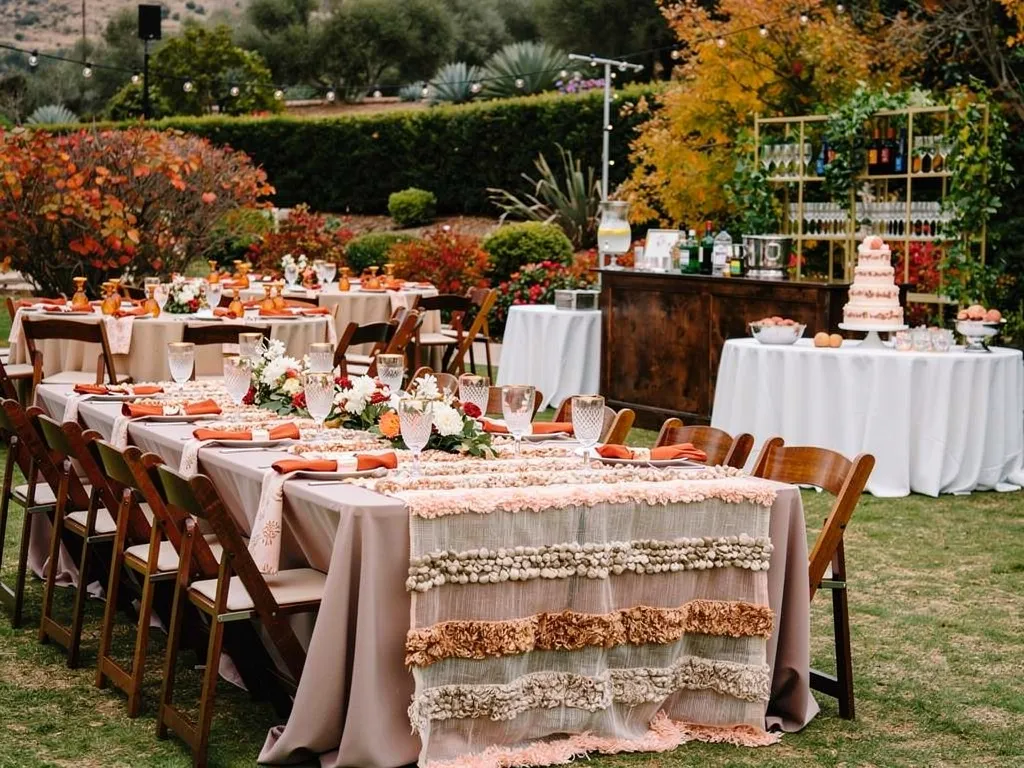
Guest dining tables, sweetheart tables, bars, cake displays, cocktail tables, and service stations do not need equal linen treatments. Texture can be concentrated where guests will see and experience it most, while operational tables use simpler foundations.
Make Guest Tables Cohesive, Not Identical
Guest tables need a clear visual relationship, but they do not need to be exact copies. When a reception combines rounds and banquet tables, one repeated fabric family or color can connect the layouts. Another approach is to use one consistent neutral foundation and introduce the same woven napkin at every place setting.
Variation should remain controlled. Alternating several unrelated textured linens may cause the dining area to feel divided into separate concepts.
Continuity can come through:
-
One shared fabric family
-
One consistent linen color
-
The same napkin across multiple table shapes
-
A repeated jacquard runner
-
A common metallic or glass finish
One shared fabric family
One consistent linen color
The same napkin across multiple table shapes
A repeated jacquard runner
A common metallic or glass finish
The goal is cohesion rather than rigid uniformity.
Reserve Distinctive Linen for a Focal Table
A focal table can support a stronger texture because it performs a different role from general guest dining.
Velvet or jacquard may work especially well on:
-
The sweetheart table
-
A cake or dessert display
-
A welcome table
-
A guest-book table
-
A champagne or beverage display
-
A selected cocktail table
The sweetheart table
A cake or dessert display
A welcome table
A guest-book table
A champagne or beverage display
A selected cocktail table
The linen should still connect with the rest of the event. Marine Velvet might repeat a blue tone found in guest napkins or glassware. A Vanilla Casablanca jacquard could relate to ivory guest linens and warm metallic flatware. The distinction should be noticeable but not arbitrary. The focal table needs a clear reason to receive the stronger treatment.
Keep Service Tables Visually Secondary
Buffets, catering stations, water tables, dish-return areas, and operational surfaces are necessary, but they generally should not compete with guest-facing tables.
A clean, simple linen can help these areas blend into the venue while concealing equipment or storage. Strong jacquards, velvet, and distinctive woven patterns are usually better reserved for dining tables and focal displays unless the buffet itself is intentionally part of the design.
The floor plan should identify which service tables remain visible. A buffet positioned prominently in a courtyard may require a more finished treatment than a catering table placed behind a screen.
Build Contrast Without Crowding the Place Setting

Texture works through contrast. A woven surface appears more noticeable beside smooth china, while velvet gains definition next to clear glass or matte metal. The objective is not to make every item different. It is to combine a small number of finishes that remain distinct without competing for the same visual role.
Pair Texture With a Quieter Surface
When the tablecloth already contains a strong texture or pattern, the place setting can provide a calmer counterpoint. Velvet may be paired with clean white or softly colored china, transparent glassware, and simple flatware. A Geo Jacquard linen may work with restrained plates and low arrangements that leave more of the pattern visible. Conversely, a quieter Cambria or woven linen can support patterned china, colored glassware, or sculptural florals.
Before finalizing the design, identify the principal feature:
-
The linen
-
The china
-
The glassware
-
The florals
-
The charger
-
The venue surface
The linen
The china
The glassware
The florals
The charger
The venue surface
Only one or two should carry strong visual detail.
Contrast Matte and Reflective Finishes Carefully
Evening lighting can make polished finishes more prominent. Metallic flatware, glass chargers, glossy plates, candleholders, and clear glassware may reflect chandeliers, candles, or bistro lights.
A matte or softly woven linen can provide a stable foundation for those reflective elements. Velvet absorbs some surrounding light while creating more concentrated highlights across its surface.
Lamour and Shantung produce different effects from woven or velvet fabrics and may introduce additional sheen. When the linen already reflects light, planners may choose matte chargers or simpler glassware. If metallic flatware and candleholders are important, a quieter fabric may provide better balance.
Preserve Space Around the Place Setting
Texture cannot compensate for an overcrowded table.
A complete place setting may include plates, flatware, several glasses, a napkin, a menu, a place card, a charger, candles, florals, and serving pieces. Each guest still needs enough room to dine comfortably and interact with others.
Large arrangements and broad runners can reduce the usable center of the table. Heavy linen folds can also crowd chair positions if the linen is the wrong size.
The table should be evaluated from a seated position. Guests should be able to reach their glasses, move their chairs, use their flatware, and see one another without having to navigate around decorative layers.
A well-layered table is not the one with the most components. It is the one in which each surface and object has enough room to be noticed.
Evaluate Texture in Daylight and Evening Lighting
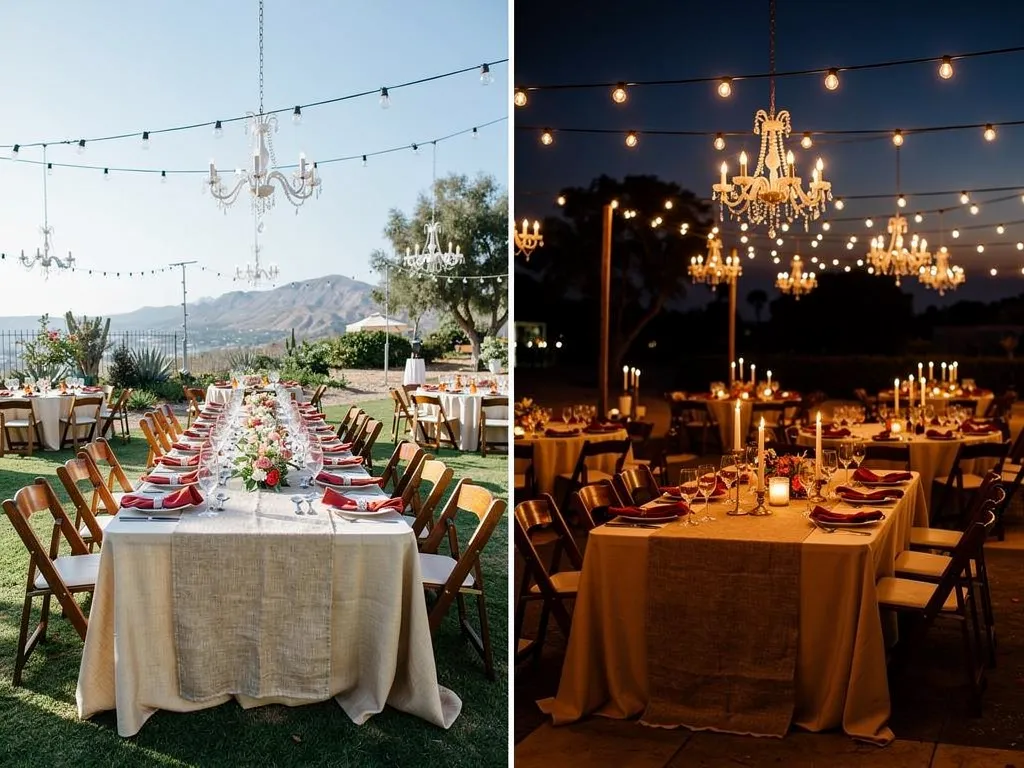
Fabric does not look the same throughout an event. A reception may begin in bright afternoon light and continue beneath candles, chandeliers, bistro strands, or uplighting.
The linen should be reviewed under conditions similar to those expected during the main part of the reception.
Check How the Surface Responds to Directional Light
Velvet changes its appearance depending on the direction of its pile and the position of the light. Jacquard reveals more of its woven pattern as light crosses the raised and recessed areas. Shantung and Lamour may display more sheen under chandeliers or candlelight than in indirect daylight.
The orientation of a runner or tablecloth can therefore affect how consistent the table appears. Lighting should reveal the fabric without producing distracting glare.
Test the Complete Tabletop Palette
A fabric swatch cannot show whether the complete table will feel balanced.
Review the linen with:
-
China
-
Napkins and runners
-
Chargers
-
Flatware
-
Glassware
-
Floral colors
-
Candleholders
-
Menus and stationery
-
Chair finishes
China
Napkins and runners
Chargers
Flatware
Glassware
Floral colors
Candleholders
Menus and stationery
Chair finishes
A warm adobe linen may look different beside white china than beside stoneware. A blue jacquard may appear more prominent with clear glass than with colored goblets. Marine Velvet may shift depending on whether the accents are silver, gold, copper, or wood. Viewing the complete palette makes it easier to remove competing elements before the order is finalized.
Review Colors at the Venue When Possible
Warm stucco can make ivory or adobe textiles appear richer. Garden greenery may intensify sage or olive tones. White tent fabric can reflect color across the reception, while dark interior walls may reduce the apparent brightness of the linen.
Catalog images are useful references, but actual color, condition, texture, and availability should be confirmed before final selections are made.
When a venue visit is not possible, planners can use photographs, architectural samples, floral references, and complete tabletop mockups to approximate the setting.
Make the Linen Fit the Table Properly
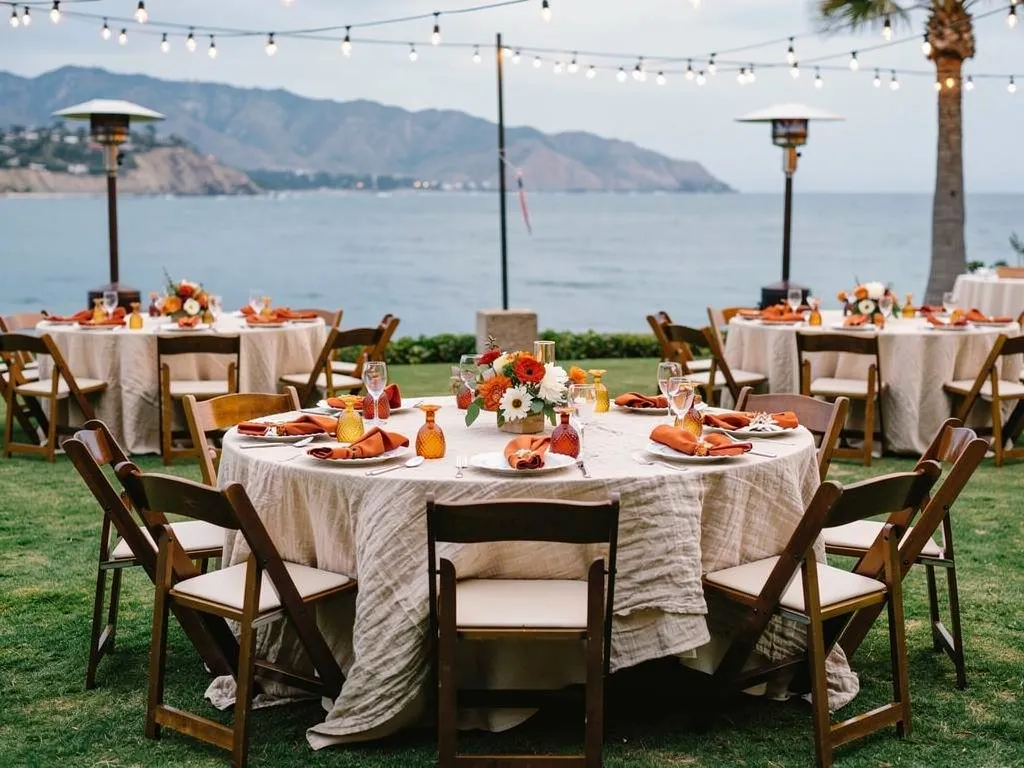
Texture is most effective when the linen hangs cleanly and fits the table as intended. An incorrect size can create exposed legs, uneven folds, excessive pooling, or a drop that interferes with guest seating.
Confirm the Table Shape and Desired Drop
Round, banquet, cocktail, and specialty tables require different linen proportions.
The desired treatment may include:
-
A full floor-length tablecloth
-
A partial drop
-
A fitted or king drape
-
A runner
-
An overlay
-
An exposed finished table
A full floor-length tablecloth
A partial drop
A fitted or king drape
A runner
An overlay
An exposed finished table
A floor-length linen can conceal standard table legs and create a formal base. A runner can preserve a finished wood surface while introducing color and texture.
The table dimensions and intended effect should be confirmed before the linen is ordered.
Account for Heavy and Structured Fabrics
Velvet carries greater visual and physical weight than many standard linens. It may form broader folds and appear denser around the base of the table. Woven and jacquard fabrics may also hold their structure differently from smoother textiles.
Seams, fabric direction, and table edges can become more visible in heavier materials. Excess fabric may also interfere with chairs or foot traffic in compact layouts.
Confirm Available Sizes Before Selecting the Fabric
Specialty linen families are not always offered in every size or format.
Marine Velvet may be suitable for a specific round or draped focal table but unavailable for every guest-table shape. Cambria and Geo Jacquard collections may offer a broader mix of tablecloths, runners, drapes, and napkins, but the exact options should still be verified.
When the preferred fabric is not available in the required size, alternatives may include:
-
Using it only on focal tables
-
Selecting a runner or napkin from the same family
-
Choosing a related woven fabric for guest tables
-
Using a coordinated color in a more widely available linen
-
Revising the table shape when practical
Using it only on focal tables
Selecting a runner or napkin from the same family
Choosing a related woven fabric for guest tables
Using a coordinated color in a more widely available linen
Revising the table shape when practical
The solution should preserve the design hierarchy rather than force an incorrect fit.
Create a Texture Distribution Plan
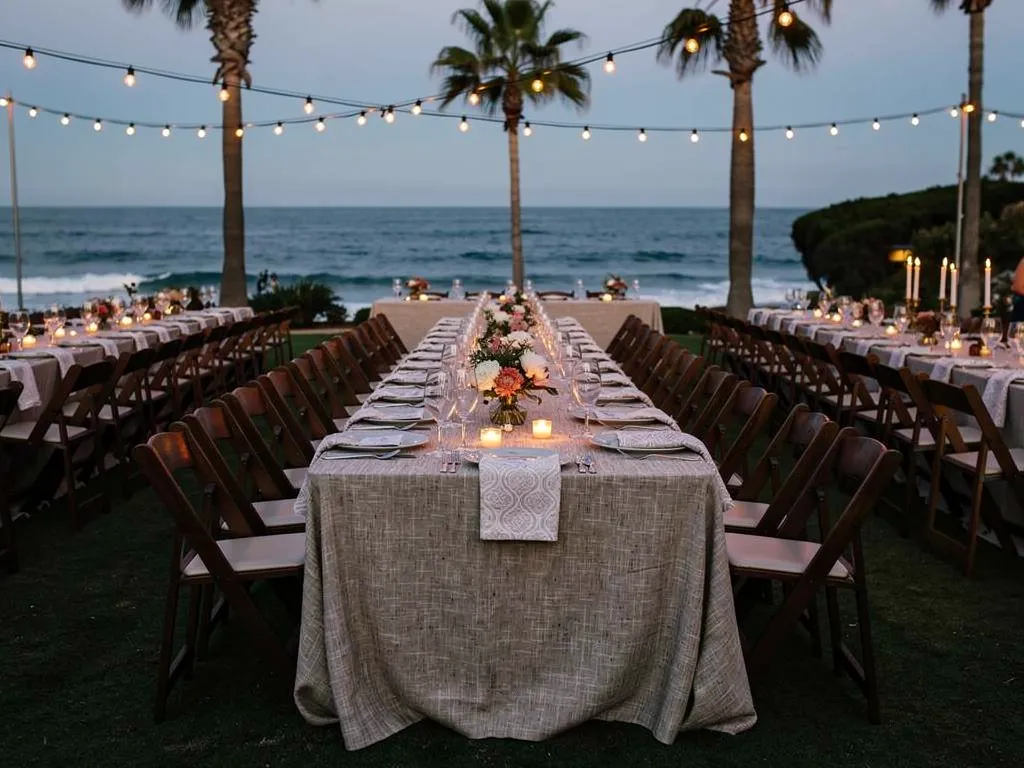
A texture distribution plan identifies where each linen belongs and how the fabrics relate across the reception. It can be a simple part of the rental order, but it should be specific enough that the planner, florist, caterer, and setup team understand the intended placement.
Assign One Foundation and One Accent
Begin by recording the primary guest-table foundation and one supporting textile.
For example:
-
Cambria Adobe tablecloths with terracotta woven napkins
-
Exposed wood tables with Vanilla Casablanca runners
-
Cambria White linens with Matisse Spa Blue napkins
-
Neutral guest tables with Marine Velvet on the sweetheart table
Cambria Adobe tablecloths with terracotta woven napkins
Exposed wood tables with Vanilla Casablanca runners
Cambria White linens with Matisse Spa Blue napkins
Neutral guest tables with Marine Velvet on the sweetheart table
A third texture should be added only when it serves a separate purpose, such as draping behind a bar or covering a cake display.
Map Linen to Each Table Type
List each table category separately:
-
Guest dining tables
-
Sweetheart or head table
-
Cocktail tables
-
Bar
-
Cake or dessert table
-
Welcome and guest-book tables
-
Buffet and food-service tables
-
Water stations
-
Catering areas
Guest dining tables
Sweetheart or head table
Cocktail tables
Bar
Cake or dessert table
Welcome and guest-book tables
Buffet and food-service tables
Water stations
Catering areas
Assign the fabric, size, color, and quantity to each category. This often reveals that some tables need a stronger treatment while others should remain simple.
Review Samples With Other Rental Categories
The linen order should be evaluated with the tables, chairs, china, glassware, flatware, lighting, and florals.
A coordinated review can identify practical conflicts such as:
-
A runner that is too wide for the table
-
A linen color that clashes with the chair finish
-
A jacquard competing with detailed china
-
A velvet focal table placed in an unsuitable exposed location
-
A napkin color that changes significantly under the planned lighting
A runner that is too wide for the table
A linen color that clashes with the chair finish
A jacquard competing with detailed china
A velvet focal table placed in an unsuitable exposed location
A napkin color that changes significantly under the planned lighting
Confirming the complete table before the event reduces last-minute substitutions and design changes.
Frequently Asked Questions
Should Every Reception Table Use the Same Textured Linen?
No. Repeating one fabric across every guest table can create cohesion, but it is not the only approach.
A subtle woven linen may work throughout the dining area, while a stronger velvet or jacquard is reserved for the sweetheart table. Another reception may use simple tablecloths with the same textured napkin at each setting. The linen plan should provide one clear connection between the tables without requiring every surface to be identical.
Can Velvet Linens Be Used for an Outdoor Fall Event?
Velvet may be appropriate for some outdoor events, but suitability depends on the venue, forecast, surface, exposure, and whether the table is beneath a tent or covered structure.
The placement should be reviewed with Ventura Rental rather than assuming every specialty linen is suitable for an uncovered lawn. A covered sweetheart table or indoor focal display may provide a more predictable setting.
How Early Should Specialty Linens Be Reserved?
Specialty linen quantities and sizes may be more limited than standard fabrics, especially during peak fall wedding dates.
Preferred textiles should be confirmed early when they influence the color palette, tabletop design, floral plan, or table selection. Peak fall weddings should generally reserve major rental selections several months in advance, subject to event date and inventory availability.
Add Depth Without Making the Table Feel Heavy
Textured linens should give a fall reception greater dimension, not cover every surface in competing fabrics. The most effective approach begins with one anchor texture, matches its visual weight to the Santa Barbara venue, and repeats it selectively through tablecloths, runners, napkins, draping, or focal-table treatments.
Velvet can create depth under evening lighting, woven linens can add quiet natural texture, and jacquard can provide pattern without requiring several additional decorative layers. Each fabric should be balanced with the china, glassware, flatware, flowers, candles, and table proportions around it.
Fit and availability matter as much as appearance. The linen size should be confirmed against the selected table, and specialty fabrics should not be built into the final design until their formats and quantities are verified.
Ventura Rental Party & Events offers velvet, woven, jacquard, Lamour, Shantung, printed, and standard linen rentals alongside tables, chairs, china, glassware, flatware, lighting, and other event rentals. With coordinated planning, delivery, setup, breakdown, and pickup, the linen design can support a layered Santa Barbara fall reception without making the tables feel visually heavy.