
Choosing between an outdoor and indoor wedding ceremony affects nearly every part of the event: budget, guest comfort, weather risk, décor options, rentals, vendor logistics, accessibility, photography, and the overall atmosphere. Both options can create a beautiful ceremony, but they require different planning priorities.
Outdoor ceremonies offer scenery, open air, and natural atmosphere. Indoor ceremonies offer structure, climate control, and logistical predictability. The right choice depends on what matters most to the couple, the venue, the guest count, the season, and the level of rental support required.
This guide compares outdoor and indoor wedding ceremonies side by side so couples can make a practical decision based on cost, comfort, setup requirements, and guest experience.
Outdoor vs Indoor Wedding Ceremonies at a Glance
Before comparing each planning category in detail, it helps to see how outdoor and indoor ceremonies differ across the most important decision points. This overview gives couples a quick way to understand where each option tends to perform best.
Atmosphere and Visual Impact
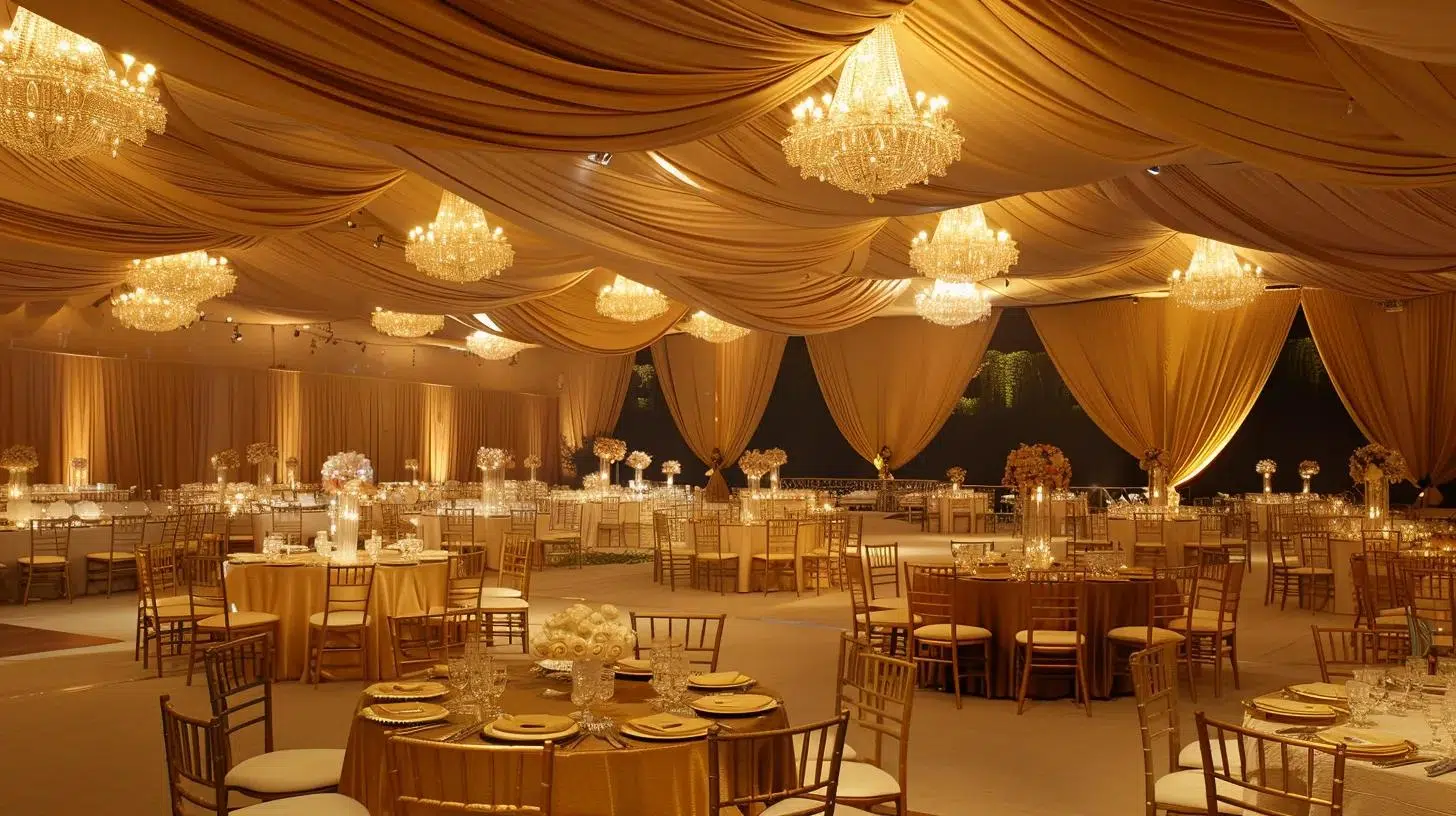
The ceremony setting has a major effect on how the wedding feels from the moment guests arrive. Outdoor and indoor spaces create different visual experiences, so couples should think about whether they want the setting itself to feel natural and scenic or structured and highly designed.
Outdoor Ceremony Advantage
Outdoor wedding ceremonies are strongest when the setting is part of the wedding vision. Gardens, vineyards, beaches, estates, mountain views, and courtyards can provide a natural backdrop that feels personal and visually memorable.
An outdoor ceremony may need less décor if the scenery already carries the design. A vineyard row, ocean view, garden path, or estate lawn can become the main focal point, with rentals used to frame the moment rather than dominate it.
Outdoor ceremonies are especially effective for couples who want a relaxed, romantic, or nature-focused atmosphere.
Indoor Ceremony Advantage
Indoor ceremonies offer a more controlled and structured visual environment. Ballrooms, churches, museums, event halls, historic buildings, and private clubs often provide architectural detail, defined entrances, controlled lighting, and a formal sense of place.
Indoor venues can also support layered décor more precisely. Draping, candles, floral installations, aisle décor, furniture groupings, and lighting effects are easier to manage when wind, direct sun, and weather exposure are not factors.
Indoor ceremonies are often better for couples who want a polished, formal, or highly controlled design.
Comparison Takeaway
Choose an outdoor ceremony if the view and natural setting are central to the wedding style. Choose an indoor ceremony if structure, polish, and controlled design matter more.
Weather and Climate Control
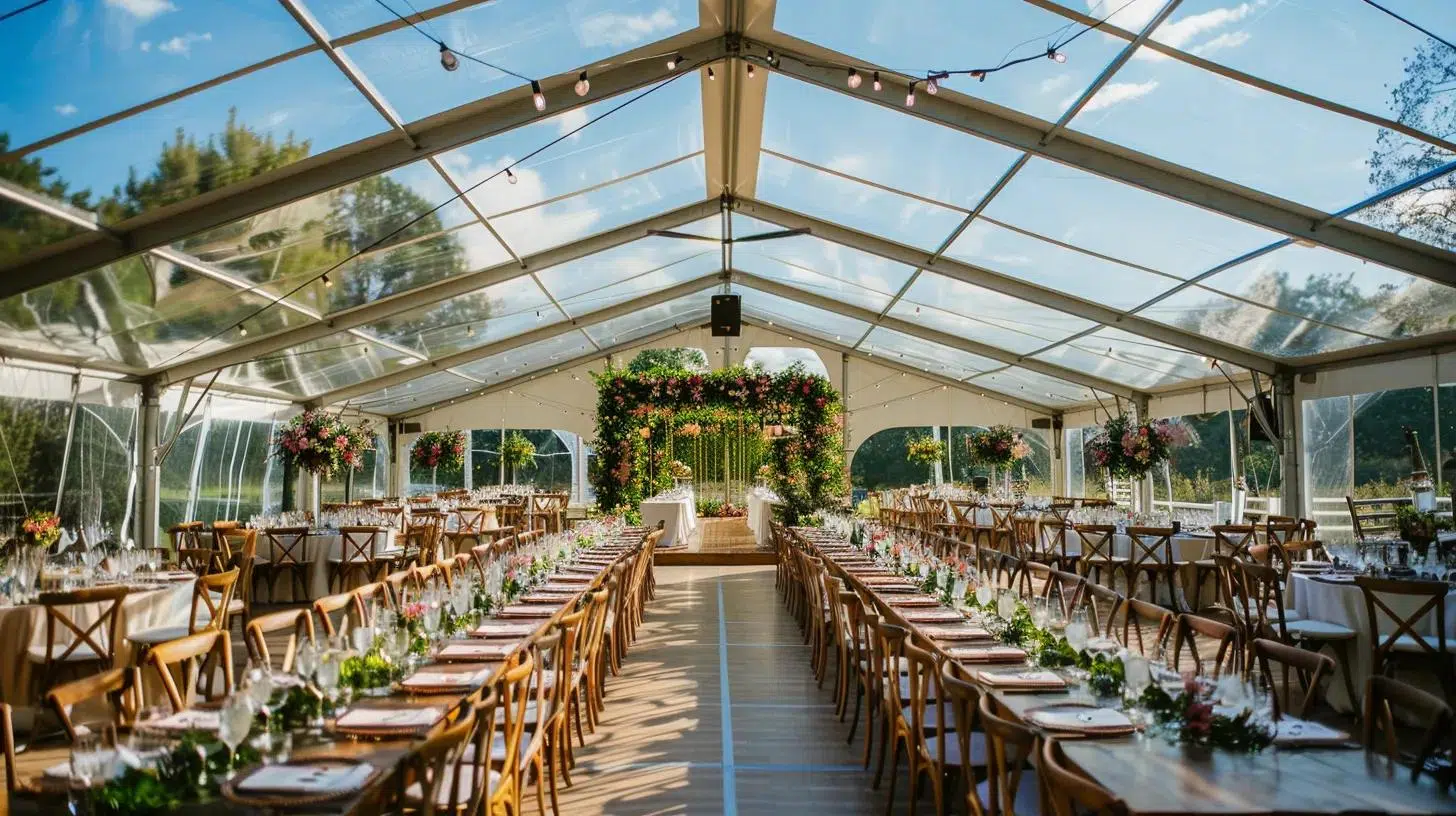
Weather is one of the biggest practical differences between outdoor and indoor ceremonies. Even a beautiful venue can become difficult to manage if guests are exposed to heat, wind, rain, or cold without the right backup plan.
This is why weather planning is one of the most important parts of planning outdoor events in Santa Barbara, especially for ceremonies where shade, wind protection, seating comfort, and backup coverage can directly affect the guest experience.
Outdoor Ceremony Considerations
Weather is the biggest variable in an outdoor wedding ceremony. Outdoor settings may be affected by rain, wind, heat, cold, direct sun, coastal moisture, or sudden temperature changes.
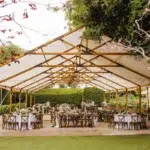
Depending on the site and season, an outdoor ceremony may require tents, canopies, umbrellas, heaters, fans, sidewalls, shade structures, or a backup layout. Even when rain is unlikely, guests may still need protection from sun, wind, or evening cool-downs.
Outdoor ceremonies require a weather plan before the final rental order is confirmed.
Indoor Ceremony Considerations
Indoor ceremonies reduce weather risk almost entirely. Guests are protected from rain, wind, heat, cold, and direct sun. Most indoor venues also include heating, air conditioning, walls, ceilings, level floors, and restrooms.
Because the environment is controlled, couples usually need fewer weather-related rentals. Comfort is easier to manage, and the ceremony is less likely to be disrupted by the forecast.
Comparison Takeaway
Outdoor ceremonies require a weather plan. Indoor ceremonies offer stronger comfort control and lower weather risk.
Cost Comparison
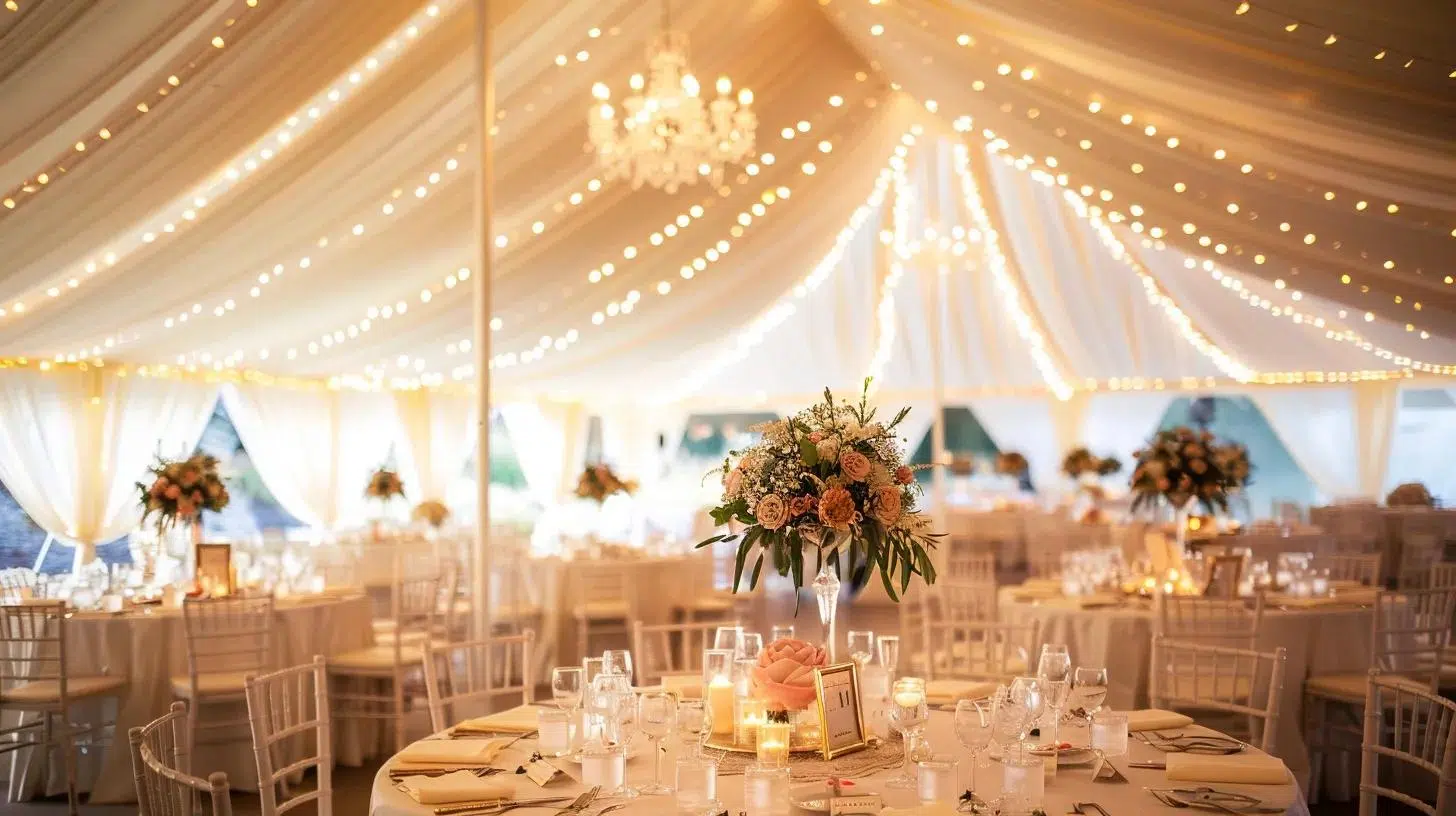
The total cost of a ceremony depends on more than the venue fee. Couples should compare what is included, what must be rented separately, and how much protection or infrastructure is needed to make the ceremony comfortable and functional.
Outdoor Ceremony Costs
Outdoor venues may have a lower base fee than indoor venues, especially when using gardens, private estates, parks, beaches, or open-air spaces. However, the lower venue cost can be offset by rental and infrastructure needs.
Common outdoor ceremony costs may include tent rentals, flooring, power, lighting, restrooms, permits, heaters, fans, delivery labor, weather backup items, signage, and accessibility pathways.
Outdoor ceremonies can be cost-effective when the venue already includes key amenities or when the guest count is small. They can become more expensive when the site requires extensive setup.
Indoor Ceremony Costs
Indoor venues may have a higher base rental fee, but they often include more infrastructure. Restrooms, power, lighting, climate control, basic furniture, parking or valet options, built-in sound systems, and defined guest entrances may already be part of the venue.
Because more amenities are built in, indoor ceremony costs can be easier to predict. Couples may still choose to rent upgraded chairs, aisle décor, lighting enhancements, linens, or backdrops, but fewer basic infrastructure items are usually needed.
Comparison Takeaway
Outdoor ceremonies may look cheaper upfront but often require more rentals. Indoor ceremonies may cost more upfront but usually include more infrastructure.
Rental Requirements
Rental needs can change significantly depending on whether the ceremony takes place outdoors or indoors. Outdoor spaces often require more foundational items, while indoor spaces usually need fewer basics and more design-focused upgrades.
Outdoor Ceremony Rental Needs
Outdoor ceremonies usually need more functional rentals because the event environment must be built around the site. Common outdoor ceremony rentals include ceremony chairs, a tent or canopy, flooring or aisle support, lighting, audio equipment, heaters or fans, a welcome table, water station, signage, and portable restrooms if needed.
Outdoor rentals must also account for surface conditions, weather exposure, guest movement, and power access. A garden ceremony, beach ceremony, or estate ceremony may each require a different rental plan.
Indoor Ceremony Rental Needs
Indoor ceremonies usually need fewer functional rentals because the venue already provides structure and basic support. Common indoor rentals include upgraded chairs, linens, a ceremony backdrop, décor, lighting enhancements, aisle markers, lounge furniture, and sound upgrades if the built-in venue system is limited.
Indoor rentals are often more aesthetic than operational. Couples may focus on transforming the room rather than creating the basic event infrastructure.
Comparison Takeaway
Outdoor ceremonies usually need more functional rentals. Indoor ceremonies usually need more aesthetic or enhancement rentals.
Setup Complexity
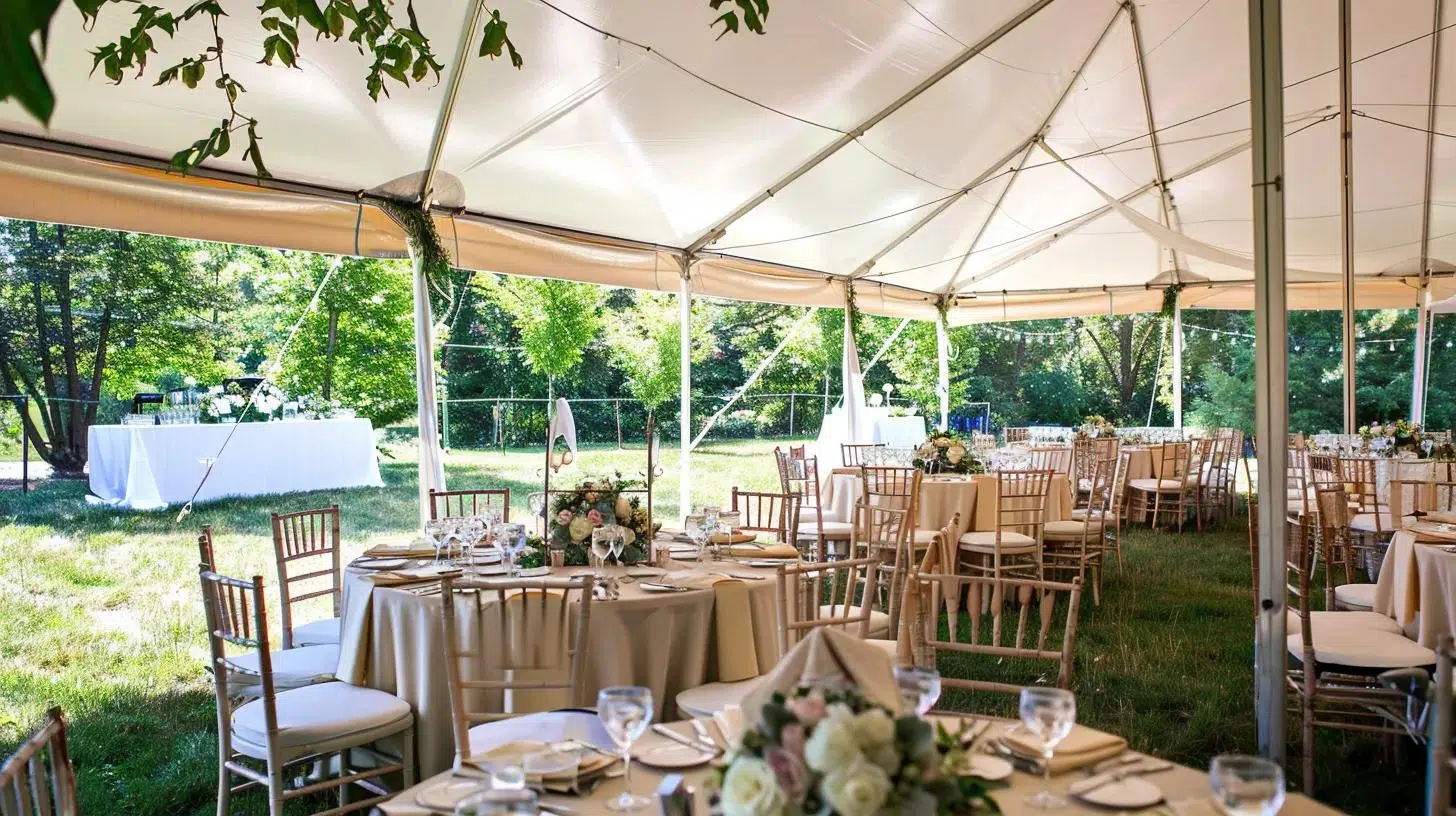
Setup planning affects vendor timing, labor costs, rental delivery, and the overall flow of the wedding day. The more variables a space has, the more detailed the setup plan needs to be. We cover this further in The Complete Guide to Wedding Rentals in Santa Barbara CA.
Outdoor Ceremony Setup
Outdoor ceremony setup is usually more complex. Vendors must account for terrain, load-in access, weather, power, tent installation, flooring, guest pathways, vendor staging, and permits.
If the site is on grass, gravel, sand, a slope, or a private estate, the rental team may need additional time and labor. Outdoor ceremonies may also require backup plans for wind, rain, heat, or ground conditions.
The more remote or exposed the location, the more coordination is required.
Indoor Ceremony Setup
Indoor ceremony setup is generally simpler because the venue already provides walls, ceilings, power access, restrooms, climate control, level flooring, and defined entrances and exits.
Vendors still need to coordinate load-in windows, venue rules, décor restrictions, and setup timing, but there are usually fewer environmental variables.
Comparison Takeaway
Outdoor ceremonies need stronger logistics planning. Indoor ceremonies are generally easier to install and manage.
Guest Comfort
A ceremony should feel beautiful, but it also needs to feel comfortable for the people attending. Seating, temperature, shade, walking distance, restrooms, and accessibility all influence how guests experience the event.
Outdoor Ceremony Comfort Factors
Guest comfort at an outdoor ceremony depends on shade, seating, temperature, wind protection, walking surface, restroom access, hydration, and distance from parking.
Without planning, outdoor ceremonies can become uncomfortable quickly. Guests may be seated in direct sun, walk across uneven ground, struggle with heat or cold, or have difficulty finding restrooms. These issues are manageable, but they must be addressed before the ceremony day.
Indoor Ceremony Comfort Factors
Indoor ceremony comfort is easier to control. Air conditioning or heating, stable seating, indoor restrooms, clear walkways, controlled sound, and predictable lighting are often built into the venue.
Guests are less exposed to environmental discomfort, and mobility is usually easier to manage.
Comparison Takeaway
Outdoor guest comfort must be built into the plan. Indoor guest comfort is usually built into the venue.
Décor Flexibility
Décor possibilities vary depending on the setting, venue rules, weather exposure, and available structure. Couples should choose a ceremony space that supports their design goals without creating unnecessary installation challenges.
Outdoor Ceremony Décor
Outdoor ceremonies offer strong creative flexibility. Couples can use natural backdrops, floral arches, aisle markers, grounded florals, lanterns, custom seating layouts, and open-air installations.
However, outdoor décor must be wind-safe and weather-aware. Tall arrangements, lightweight signage, loose fabric, candles, and delicate items may require additional support or alternatives.
Outdoor décor works best when it complements the landscape rather than competing with it.
Indoor Ceremony Décor
Indoor venues allow more delicate décor because the environment is protected. Draping, candles, tall florals, statement backdrops, chandeliers, fabric installations, and detailed aisle treatments are easier to control indoors.
The main limitation is venue policy. Indoor venues may restrict open flame, hanging installations, wall attachments, confetti, aisle runners, or heavy décor pieces.
Comparison Takeaway
Outdoor ceremonies offer more natural styling freedom. Indoor ceremonies offer more controlled decorative execution.
Lighting and Photography

Lighting plays a major role in how the ceremony looks in person and in photos. Outdoor ceremonies depend heavily on natural light and timing, while indoor ceremonies often rely more on venue lighting and professional enhancements.
Outdoor Ceremony Lighting and Photos
Outdoor ceremonies can photograph beautifully because they offer natural light, scenic views, golden-hour opportunities, and organic backdrops. Gardens, vineyards, beaches, and estates can provide strong photo settings without extensive décor.
The main challenges are harsh sun, backlighting, shade imbalance, sunset timing, and weather changes. Outdoor photography requires careful attention to ceremony time and altar placement.
Indoor Ceremony Lighting and Photos
Indoor ceremonies offer more lighting consistency. Photographers and lighting teams can work with controlled conditions, production lighting, flash, architectural detail, and predictable indoor environments.
The challenges are dim rooms, mixed lighting, limited natural light, and less scenic variety. Some indoor venues may require additional lighting rentals to improve the ceremony look.
Comparison Takeaway
Outdoor ceremonies can photograph beautifully with correct timing. Indoor ceremonies offer more lighting consistency.
Sound and Audio
Clear audio is essential during vows, readings, music, and officiant remarks. Whether the ceremony is indoors or outdoors, couples should confirm that every guest will be able to hear the important moments clearly.
Outdoor Ceremony Audio
Outdoor ceremony audio can be affected by wind, waves, traffic, open space, and distance between guests and the officiant. Sound does not carry as predictably outdoors as it does indoors.
Outdoor ceremonies usually require microphones, speakers, a power source, cable planning, and weather protection for equipment. Even a smaller ceremony may need audio support if the site is open, breezy, or near background noise.
Indoor Ceremony Audio
Indoor ceremony audio is easier to manage because sound is contained by walls and ceilings. Some venues provide built-in sound systems, microphones, or AV support.
Additional microphones or speakers may still be needed for larger rooms, soft-spoken officiants, live musicians, or video recording.
Comparison Takeaway
Outdoor ceremonies almost always need planned audio support. Indoor ceremonies may need less equipment but still require sound checks.
Accessibility
Accessibility should be considered early in the planning process, especially for guests with mobility needs, older guests, or anyone who may have difficulty with uneven surfaces or long walking distances. The ceremony location should be easy to enter, navigate, and enjoy.
Outdoor Ceremony Accessibility
Outdoor accessibility depends heavily on the site. Grass, gravel, sand, slopes, long walking distances, uneven ground, temporary pathways, and restroom access can all affect guests with mobility needs.
Outdoor ceremonies may require ramps, flooring, accessible seating, shuttle drop-offs, clear signage, and shorter walking routes. These details should be planned early.
Indoor Ceremony Accessibility
Indoor venues are usually easier to assess for accessibility. Many include elevators, ramps, level flooring, indoor restrooms, shorter walking distances, and clear exits.
Couples should still confirm venue-specific accessibility, but indoor sites generally require fewer temporary solutions.
Comparison Takeaway
Outdoor accessibility may require additional rentals. Indoor accessibility is usually simpler to confirm.
Venue Rules and Restrictions
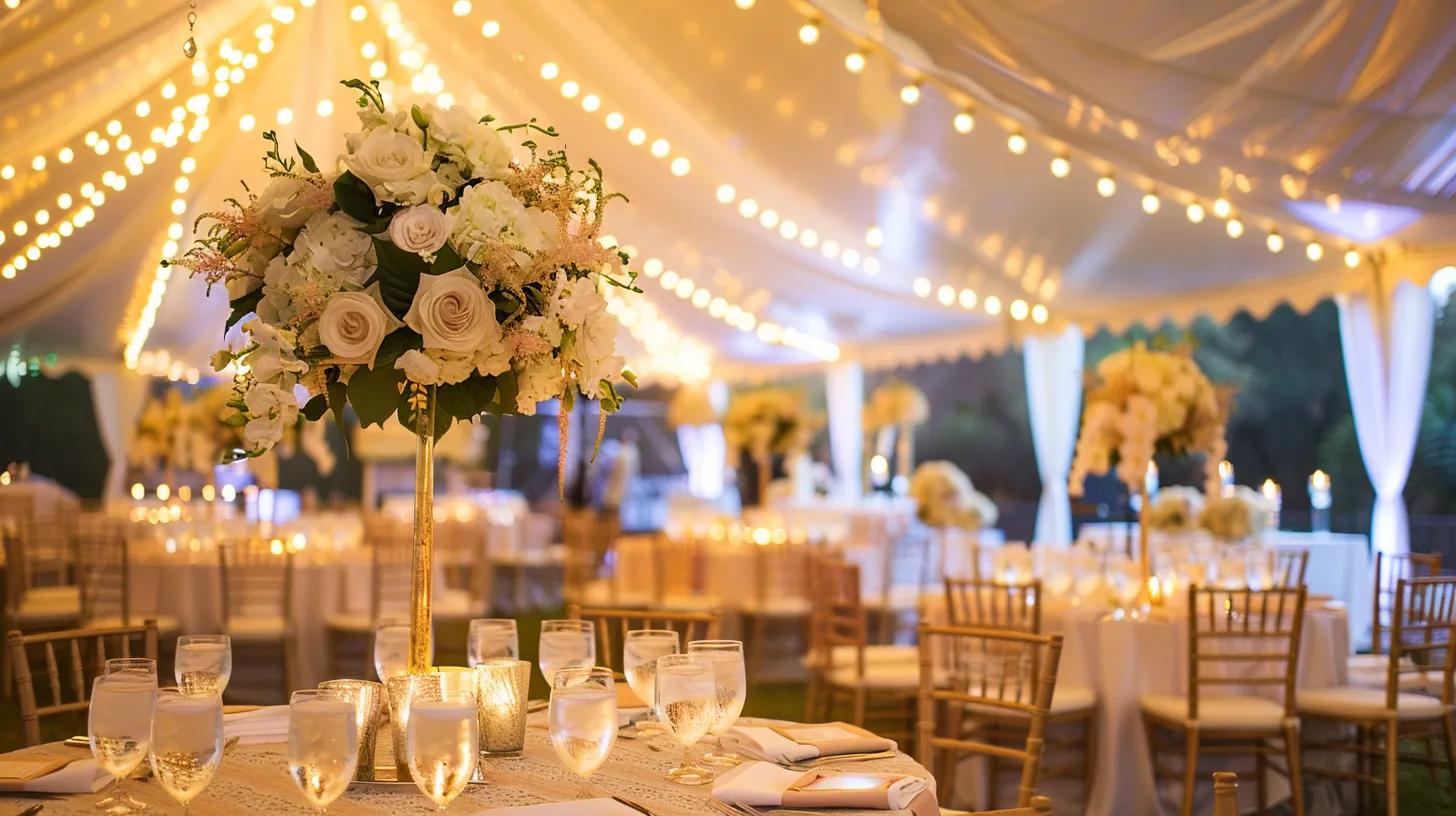
Every ceremony venue has rules that affect what couples can install, rent, decorate, and schedule. Understanding these restrictions early helps prevent last-minute changes and keeps the rental plan realistic.
Outdoor Ceremony Restrictions
Outdoor ceremonies may involve park permits, beach permits, noise ordinances, tent permits, fire rules, environmental restrictions, and limited setup windows.
Public outdoor spaces often have stricter rules around amplified sound, alcohol, open flame, décor attachment, cleanup, and event timing. Private outdoor venues may also have restrictions related to terrain, parking, noise, or vendor access.
Indoor Ceremony Restrictions
Indoor ceremonies may involve preferred vendor lists, décor restrictions, open-flame rules, noise limits, load-in windows, capacity limits, insurance requirements, and building-specific policies.
Indoor venues may also restrict hanging décor, wall attachments, confetti, candles, or late-night breakdown.
Comparison Takeaway
Outdoor restrictions often relate to permits and the environment. Indoor restrictions often relate to venue policy and building rules.
Vendor Logistics
Vendor logistics influence how smoothly the ceremony comes together behind the scenes. Delivery access, power, setup windows, storage areas, and breakdown timing can all affect rental planning and event execution.
Outdoor Ceremony Logistics
Outdoor ceremony vendors may need to plan for truck access, long carries, tent installation, generator placement, outdoor power, weather delays, portable restrooms, and flooring installation.
Setup may require more time because the site may not have built-in infrastructure. Vendors often need a detailed site plan before event day.
Indoor Ceremony Logistics
Indoor vendors usually work within defined loading zones, existing power, indoor storage areas, stable flooring, venue-managed timing, and existing restrooms.
This makes setup more predictable, although vendors still need to follow venue rules and timing restrictions.
Comparison Takeaway
Outdoor logistics are more variable. Indoor logistics are usually more predictable.
Best Fit by Wedding Style
The best ceremony setting often depends on the overall wedding style. Some weddings benefit from natural scenery and open-air movement, while others need a more formal, protected, or architectural environment.
Outdoor Ceremony Is Best For
Outdoor ceremonies are best for garden weddings, vineyard weddings, coastal weddings, estate weddings, nature-focused ceremonies, relaxed outdoor styles, and couples who prioritize scenery and open-air atmosphere.
They are especially strong when the view is a central part of the wedding design.
Indoor Ceremony Is Best For
Indoor ceremonies are best for formal weddings, ballroom weddings, church ceremonies, winter weddings, large guest counts, AV-heavy ceremonies, and couples who prioritize comfort, control, and predictability.
They are especially strong when weather control and guest convenience are top priorities.
Comparison Takeaway
Outdoor ceremonies fit scenery-driven weddings. Indoor ceremonies fit structure-driven weddings. We cover this further in Outdoor vs Indoor Weddings: Which Is Best for You.
Best Fit by Budget Priority
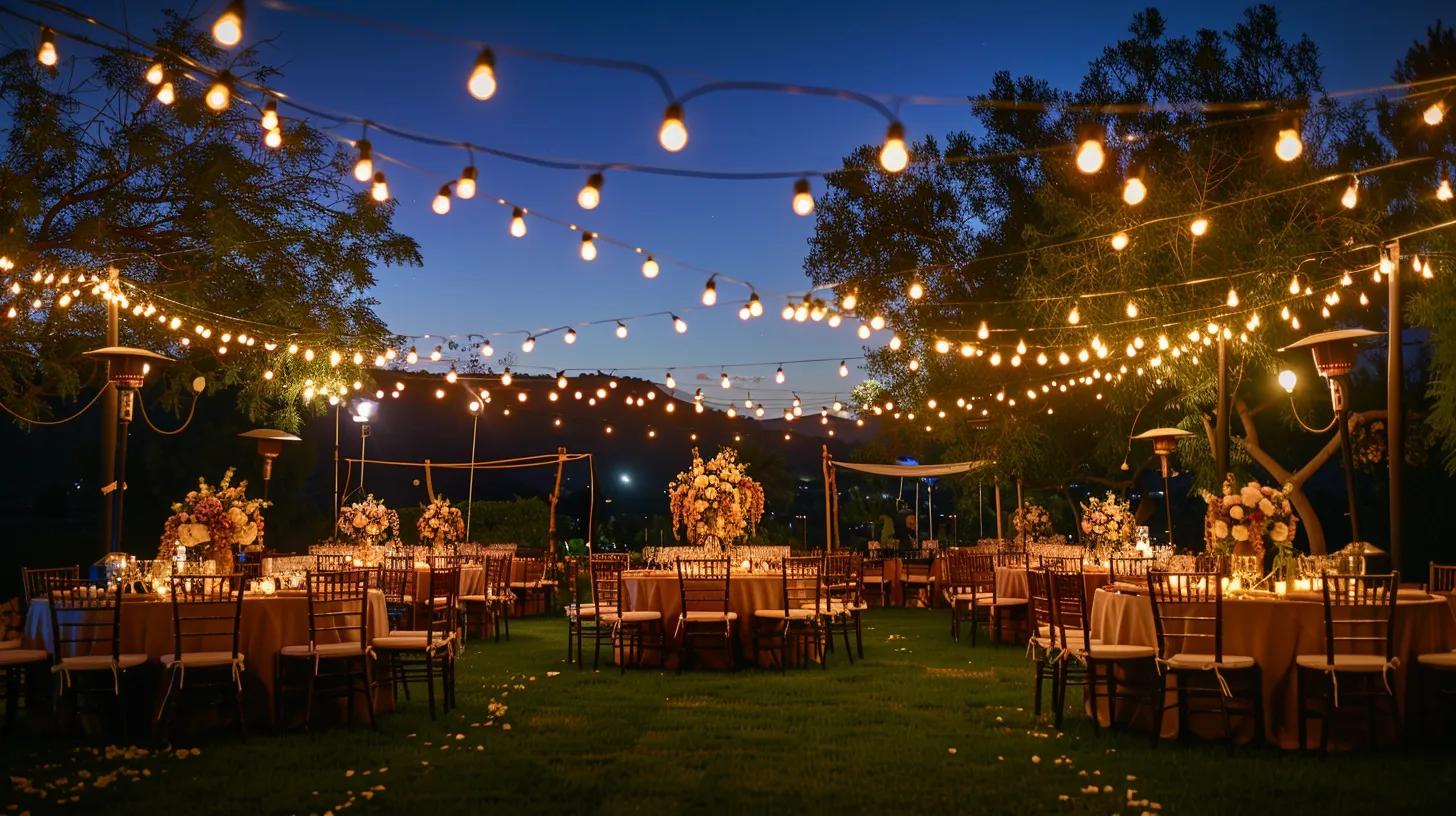
Budget decisions should be based on the full event setup, not just the ceremony location. Couples should compare venue fees, included amenities, rental needs, backup plans, and vendor labor before deciding which option is more cost-effective.
Choose Outdoor If Your Budget Priority Is
Choose an outdoor ceremony if the main budget priority is a lower venue base fee, natural scenery, flexible layout, minimal built-in décor needs, and an open-air guest experience.
Outdoor ceremonies may be especially cost-effective when the venue already has restrooms, parking, power, and a strong natural backdrop.
Choose Indoor If Your Budget Priority Is
Choose an indoor ceremony if the main budget priority is predictable costs, built-in amenities, less weather backup spending, fewer infrastructure rentals, and easier vendor coordination.
Indoor venues may be more cost-effective when the added cost of outdoor rentals would exceed the indoor venue fee.
Comparison Takeaway
Outdoor ceremonies may save on venue aesthetics. Indoor ceremonies may save on infrastructure.
Outdoor vs Indoor Wedding Ceremony Decision Matrix
A decision matrix can help couples move beyond personal preference and compare each setting by practical priority. By ranking what matters most, couples can choose the ceremony option that best supports their budget, guest experience, and wedding vision.
Use the matrix by identifying which categories matter most. If scenery, flexibility, and natural atmosphere are the top priorities, outdoor may be the better fit. If weather protection, accessibility, comfort control, and setup simplicity are more important, indoor may be the stronger choice.
Do not choose outdoor based on scenery alone if guest comfort, accessibility, or weather protection are major concerns. Do not choose indoor by default if the outdoor setting strongly supports the wedding vision and the budget can support the necessary rentals. You may also find Outdoor Wedding Planning Guide for Coastal California helpful.
Conclusion
Outdoor and indoor wedding ceremonies both have clear advantages. Outdoor ceremonies offer natural scenery, flexibility, and an open-air atmosphere. Indoor ceremonies offer control, comfort, and logistical predictability. For more detail, see our article What to Consider for Outdoor Wedding Rentals in Santa Barbara.
Choose outdoor if scenery, fresh air, and natural ambience are the top priorities and the budget can support weather protection, guest comfort, and rental needs. Choose indoor if climate control, accessibility, predictable setup, and built-in amenities matter most. When your date and guest count are set, request a rental quote from our team.
For both outdoor and indoor wedding ceremonies, Ventura Rental can support the event with tents, tables, chairs, flooring, lighting, linens, staging, and setup guidance tailored to the venue type and ceremony goals. See everything we rent for ceremonies and receptions on our wedding rentals page.