

An outdoor wedding on the California coast feels effortless when everything goes right, but wind, sand, and an evening chill can quickly change that. This guide walks you through the must-haves: tent types and features, flooring that works on sand or uneven terrain, and practical weather planning. With the right rentals and a little advance thinking, you’ll reduce surprises and spend more time celebrating.
Which Tent Rentals Work Best for Coastal Weddings?
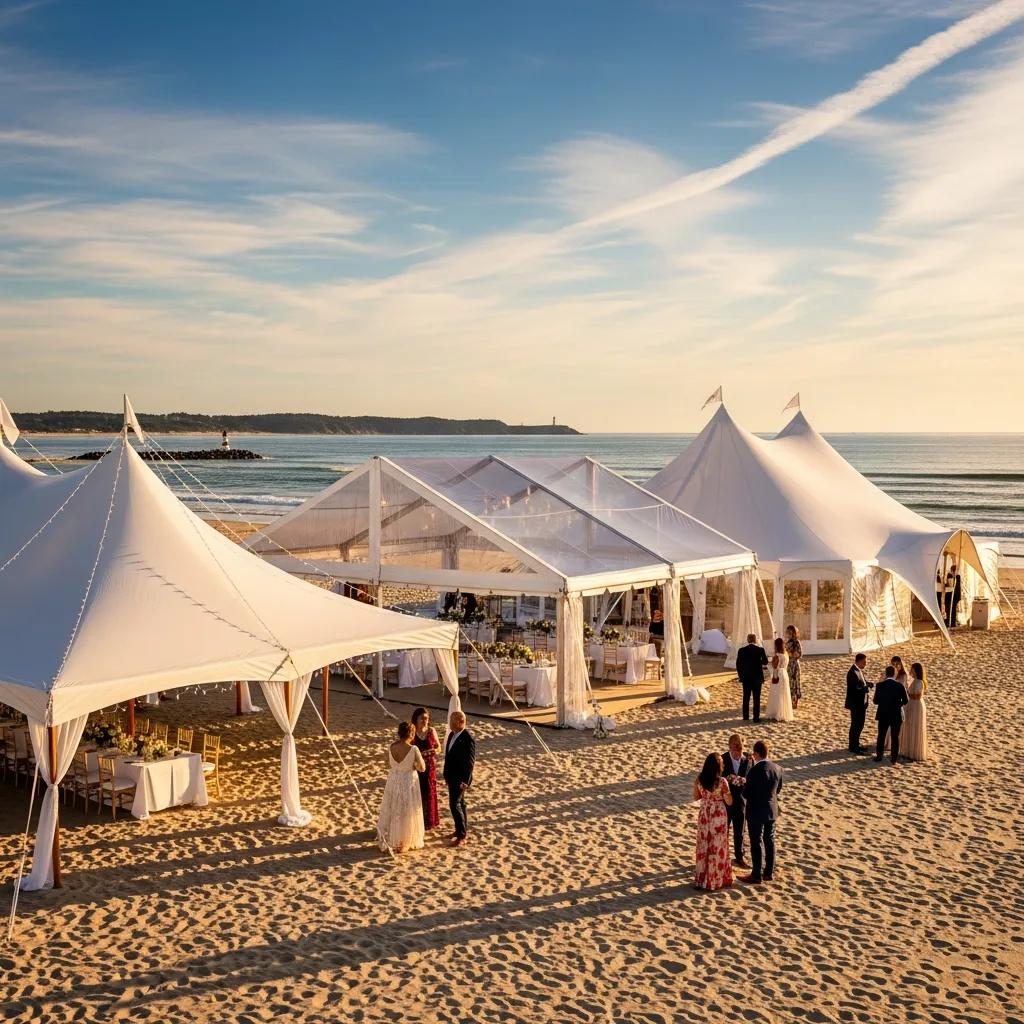
The right tent keeps guests comfortable and completes your design. Coastal venues require options that match guest count, style, and site conditions. Before you book, think about how many people you’ll host, the look you want, and any site challenges like sand or slope.
Tent Sizes & Styles: What Fits Your Coastal Wedding?
Tents scale from intimate to large celebrations. Choose a style that fits your vision and the site. Top tent rental choices for outdoor coastal conditions include:
- Pole Tents: Classic and graceful with high peaks. They need ground stakes, on sandy beaches you’ll want reinforced anchoring or ballast to keep them secure.
- Frame Tents: Sleek and versatile. These sit on a frame (no center poles), so they work well on decks, concrete pads, and uneven sandy surfaces.
- Sailcloth Tents: Light-filled and romantic. Sailcloth tents create a soft glow as daylight passes through, a favorite for coastal ceremonies and receptions.
Understanding these differences helps you pick a tent that looks right and performs reliably at your chosen spot.
Picking Tent Features for Beach & Coastal Conditions
Choose tent features that address wind, sand, and shifting temperatures to keep the structure safe and guests comfortable.
Proper anchoring is a core safety concern for temporary event structures, research on temporary shelters highlights its importance.
- Anchoring Systems: For sandy sites, prefer sand anchors, screw anchors, or heavy ballast. Proper anchoring cuts the risk that gusts will lift or shift a tent.
- Sidewalls: Removable sidewalls block wind and spray, and make temperature control easier if the weather shifts during the event.
- Ventilation: Vents, windows, or open sides let air circulate, which is important for comfort on warm afternoons and for reducing moisture inside.
Ask rental companies about anchor tests and sidewall options, balancing aesthetics and safety will protect your event.
Best Outdoor Wedding Flooring for Coastal Venues

Flooring turns uneven or sandy ground into a stable, comfortable surface for guests and vendors. The right option protects shoes, equipment, and décor while adding to your overall look.
Best Flooring Materials for Sandy or Uneven Coastal Ground
Consider these durable, site-friendly choices:
- Wooden Decking: Strong and customizable, temporary decking creates level walkways and platforms for sloped or sandy sites.
- Dance Floors: Modular panels deliver a smooth, secure surface for dancing that sits on top of most surfaces without permanent impact.
- Outdoor Rugs or Carpeting: Weather-resistant rugs add warmth and style while evening out small surface irregularities, just secure the edges to prevent trips.
Each option offers visual and practical benefits; pick the one that suits your layout, guest needs, and budget.
Installing & Maintaining Outdoor Flooring
Correct setup and quick maintenance keep flooring safe and looking great during the event. Practical tips:
- Installation: Level the site where possible. For decking, build a stable frame; for rugs, tape or weight edges to prevent tripping hazards.
- Maintenance: Check flooring during the event and keep a small toolkit handy to tighten panels or secure loose edges.
A thoughtful installation and a simple maintenance plan reduce hazards and keep your day running smoothly.
Preparing for Weather at Coastal Outdoor Weddings
Coastal weather can shift quickly; fog, wind, and cool evenings are all common. Planning for changes keeps guests comfortable and your timeline intact.
What Weather Prep Equipment Should You Rent for Beach Weddings?
Rent gear that protects guests and addresses typical coastal conditions:
- Tents: A properly anchored tent shelters guests from sun, wind, or light rain, make sure the vendor specifies coastal anchoring methods.
- Heaters or Fans: Portable heaters keep evening chills away; fans or misters help on warmer days.
- Rain Gear: Keep a stash of umbrellas or ponchos on hand and consider covered walkways between parking and ceremony areas.
Having these items ready takes the guesswork out of weather and keeps guests comfortable no matter what the sky does.
Building a Weather Contingency Plan
A clear, practiced plan makes weather disruptions manageable. Include simple, actionable elements:
- Backup Venue: Lock down an indoor or sheltered alternative early so logistics are settled before the day arrives.
- Communication Plan: Decide how you’ll notify vendors and guests of changes; text alerts, a designated point person, or posted signage all work.
- Timeline Adjustments: Build flexibility into the schedule for setup, travel, or weather-related delays.
A solid contingency reduces stress and helps keep your celebration on track, rain or shine.
Being ready to adapt to changing conditions is essential for any outdoor event, coastal weather can be especially unpredictable. Read more in What to Consider for Your Outdoor Wedding Ceremony.
With extreme weather events becoming more frequent, flexible plans and clear mitigation steps are increasingly important.
When to Book Wedding Equipment Rentals in California
Book early to secure the styles and sizes you want. Reserving rentals in advance gives you time to compare options and finalize logistics without last‑minute pressure.
Demand for outdoor events has increased, so planning ahead is the best way to lock in the equipment and dates you prefer. You may also find How to Plan an Outdoor Fall Wedding Ceremony in Santa Barbara helpful.
Recommended Timeline for Reserving Tents & Flooring
Aim to reserve tents and flooring about 3–6 months before your wedding. That window helps you: You may also find The Complete Guide to Wedding Rentals in Santa Barbara CA helpful.
- Secure Availability: Popular items and peak dates fill up quickly, especially in summer and on holiday weekends.
- Compare Options: Early planning gives you time to evaluate styles, prices, and upgrades.
- Plan Logistics: Booking ahead smooths delivery, setup, and teardown coordination with vendors.
Following this timeline reduces surprises and gives you space to refine details.
How Ventura Rental Helps with Bookings & Support
At Ventura Rental, we specialize in outdoor event equipment and hands‑on support. We help you choose the right gear and stay involved through setup and breakdown so you can focus on the celebration. You may also find What to Consider for Outdoor Wedding Rentals in Santa Barbara helpful.
- Personalized Consultations: Talk with a specialist about site conditions and style to recommend the best-fit solutions.
- Flexible Rental Options: Choose curated packages or build a custom rental list that matches your budget and aesthetic.
- On-Site Support: Our technicians assist with delivery, installation, and teardown to keep everything running smoothly.
With experienced support in place, you’ll spend less time troubleshooting and more time enjoying the day.
Local Climate Insights & Practical Tips for Coastal Weddings
Knowing local microclimates helps you plan timing, guest clothing guidance, and equipment. Coastal California can vary dramatically from beach to bluff, plan with that variability in mind.
How Coastal Weather Affects Your Setup
A few common coastal factors to watch for:
- Fog: The marine layer can roll in quickly, especially near sunrise and sunset. Have light blankets or heaters ready for guests.
- Wind: Gusts can impact tents, décor, and table settings, secure everything and prefer wind‑resistant decorations.
- Temperature Fluctuations: Expect warm afternoons and noticeably cooler evenings; offer clothing guidance and climate control where possible.
Planning around these patterns keeps your event comfortable and predictable.
Expert Tips for Successful Coastal Outdoor Weddings
A few practical choices make a big difference on the day:
- Timing: Late‑afternoon or early‑evening ceremonies often avoid the harshest sun and the densest fog.
- Guest Comfort: Provide shade, hydration, and layers; small comforts like bottled water and a few extra blankets go a long way.
- Local Vendors: Hire vendors experienced at coastal venues; they know common challenges and quick fixes.
These choices help the day run smoothly and keep guests comfortable.
Frequently Asked Questions
What should I consider when selecting a wedding date for a coastal wedding?
Think about local climate patterns and peak tourist seasons. Coastal California can be foggy and windy in spring and fall; summer is popular but busier. Also check local events or holidays that could affect venue availability and guest travel. Being flexible with dates often helps you find better options and avoid weather-related conflicts.
How can I incorporate local culture into my coastal wedding?
Bring local flavor through food, drink, and entertainment; regional cuisine, local wines or craft beers, and musicians rooted in the area all create an authentic experience. Use local flowers, art, or decor, and hire vendors from the community to add genuine regional touches.
What are the best ways to keep guests informed about weather changes on the wedding day?
Set a communication plan in advance. Use group texts, a wedding app, or a designated point person to share real‑time updates. Include a brief weather note with invitations so guests arrive prepared, and post signs at key locations on the day if plans change.
How can I ensure my wedding setup is safe and secure in coastal conditions?
Prioritize proper anchoring for tents and temporary structures, sand anchors or weighted ballast are common for beach sites. Inspect setups regularly during the event and choose durable flooring and décor that resist wind and moisture. Always have a contingency plan for severe weather.
What are some tips for choosing the right vendors for a coastal wedding?
Look for vendors with outdoor and coastal experience. Read reviews, ask for references, and schedule consultations to confirm they understand your site’s challenges. Clear communication about expectations, timelines, and responsibilities helps build a reliable team.
How can I create a timeline for my coastal wedding planning?
Break planning into stages: set a date and book your venue first, then secure major vendors and rentals. Finalize decor and catering about a month before the event, and leave buffer time for weather or logistics. Review and adjust the timeline regularly as details firm up.
What are the key considerations for choosing a wedding venue in Coastal California?
Pick a venue that balances views with logistics: accessibility, guest capacity, restrooms, and parking. Prefer locations with an indoor backup or covered options for bad weather. Also confirm rules on noise, decorations, and vendor policies to avoid surprises on the day.
How can I ensure my outdoor wedding is eco-friendly?
Choose venues that support sustainability, rent rather than buy where possible, and use biodegradable or compostable serviceware. Source flowers and food locally, encourage carpooling or shuttles, and send digital invitations to reduce paper waste.
What should I include in my wedding day emergency kit?
Pack a small kit with a sewing kit, safety pins, stain remover, extra makeup, hair ties, pain relievers, bandages, and a basic first‑aid kit. Add snacks and bottled water for the wedding party and a few spare chargers or batteries for essential devices. Browse tents, dance floors, linens and more for your day on our wedding rentals in Ventura and Santa Barbara page.
How can I manage guest comfort during an outdoor wedding?
Offer shaded seating, hydration stations, and temperature‑appropriate items like fans or blankets. Clear signage and accessible seating help guests of all ages, and a short weather note with invitations helps guests come prepared.
What are some creative ideas for outdoor wedding decor?
Use local, natural elements, seasonal flowers, driftwood, and greenery to create cohesive decor. Add string lights or lanterns for evening warmth, and create lounge areas with cushions or picnic-style seating to make spaces feel inviting and personal.
How can I effectively communicate with vendors during the planning process?
Start with a clear brief covering vision, budget, and key deadlines. Use a shared document or project tool to track tasks, hold regular check-ins, and confirm agreements in writing. Vendors value clarity and a single point of contact for day‑of coordination. For a quote built around your venue and guest count, contact our event rental team.
Conclusion
Successfully planning a coastal outdoor wedding means balancing style and logistics. Select the right tents and flooring, prepare for changing weather, and secure rentals well in advance to reduce stress. Working with local rental experts provides valuable, site‑specific advice so you can relax and enjoy the day. Start planning early and prioritize guest comfort to make your celebration unforgettable. We cover this further in Outdoor vs Indoor Wedding Ceremonies: Which Is Best.