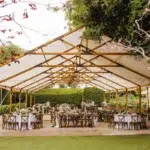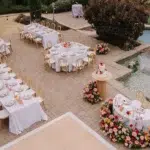
Lighting and staging shape how guests experience an event after they arrive. Lighting defines dining areas, highlights architecture, guides movement, and creates atmosphere, while staging provides a clear focal point for speeches, entertainment, ceremonies, and presentations. When these elements are planned together, the entire venue feels more intentional and functional.
Santa Barbara presents a wide range of event settings, including vineyards, private estates, historic properties, coastal venues, gardens, and outdoor spaces. Each environment brings different considerations for lighting placement, stage positioning, access, and event flow.
Choosing the right event lighting and staging rentals in Santa Barbara starts with understanding the property, event format, and areas guests will use throughout the celebration. This guide covers practical ways to coordinate lighting and staging while keeping the venue and overall event design in focus.
Planning Lighting and Staging for Santa Barbara Event Settings

The venue should influence the lighting and staging plan from the beginning. Existing architecture, outdoor surfaces, views, pathways, and available installation areas can determine which equipment works best and where it should be positioned.
Rather than applying the same setup to every event, consider how lighting and staging can support the unique character of the Santa Barbara location.
Historic and Spanish-Inspired Venues
Historic properties and Spanish-influenced venues often include courtyards, arches, textured walls, tiled areas, gardens, and other architectural details worth highlighting.
Uplighting can draw attention to selected walls, columns, entrances, or landscaping without overwhelming the property. Chandeliers and decorative lighting may also complement covered spaces, dining areas, or reception settings when they fit the venue.
Stage placement should preserve important architectural features while giving guests a clear view of speakers or entertainment.
Vineyard and Estate Events
Vineyards and private estates often involve larger outdoor spaces, which can benefit from lighting that creates defined event zones after sunset.
Bistro lighting can help establish dining or cocktail areas, while uplighting may highlight nearby structures, landscaping, or selected event features. Staging for music, toasts, or entertainment should be incorporated into the broader reception layout so it remains connected to seating and guest activity.
The surrounding views should also remain part of the experience wherever possible.
Coastal and Outdoor Settings
Outdoor and coastal events require careful attention to placement, access, surfaces, and venue requirements. Lighting should provide comfortable visibility around gathering areas and major pathways while supporting the event atmosphere.
Staging should be positioned on a suitable surface and coordinated with nearby seating, dance areas, tents, or other event elements. Early planning helps ensure the equipment fits naturally within the site.
Choosing Event Lighting for Different Areas of the Venue
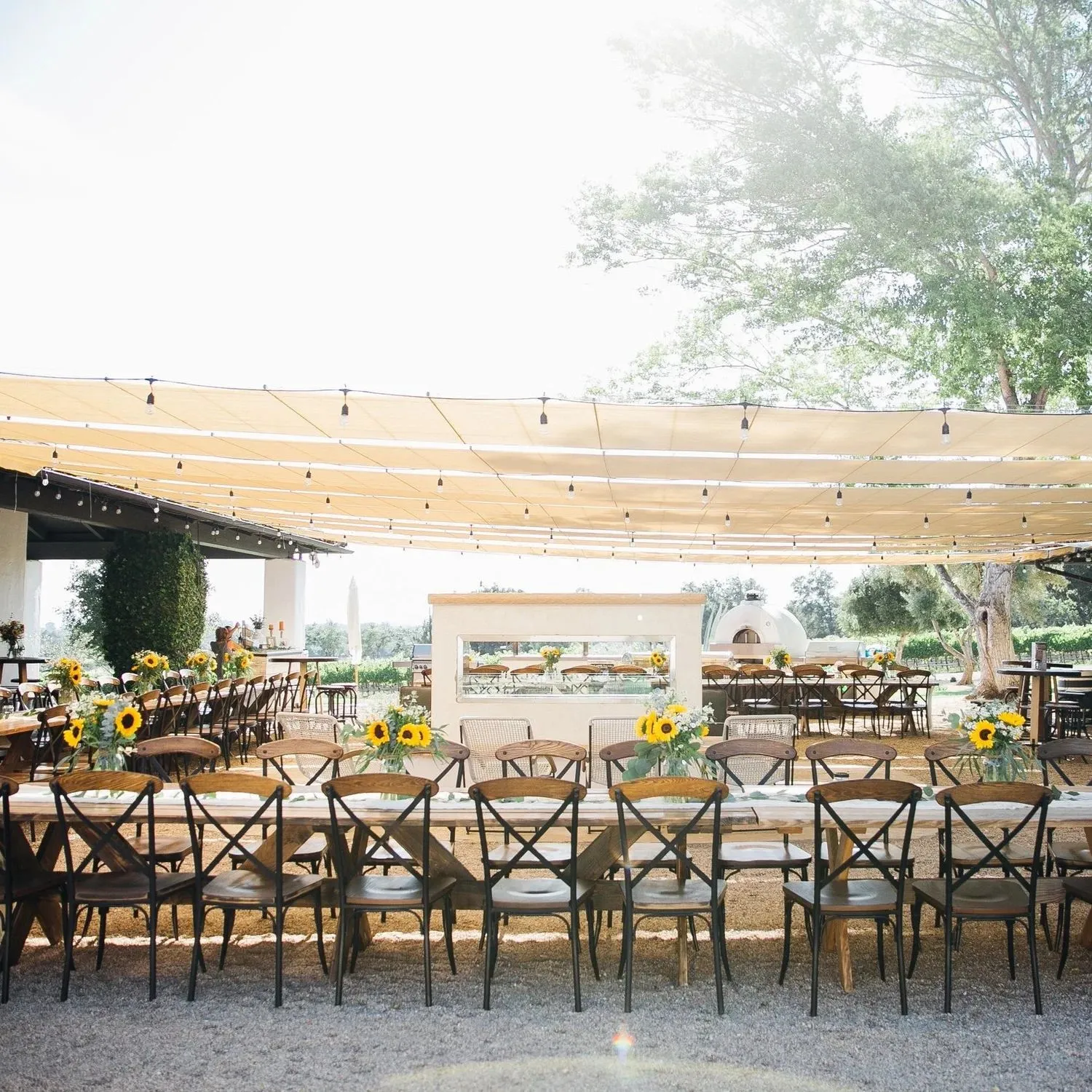
A complete lighting plan usually involves more than one type of fixture. Dining spaces, architecture, bars, lounges, stages, and other gathering areas often have different lighting needs. Selecting lighting according to how each area will function helps create a more cohesive event after daylight fades.
Bistro and Overhead Lighting for Dining Areas
Bistro-style lighting can define open-air dining areas, tent interiors, courtyards, and reception spaces. The repeated pattern of overhead lights creates a clear visual boundary while providing an inviting atmosphere for evening events.
Placement should account for tables, service areas, walkways, and nearby structures. The goal is to create a balanced lighting effect without making the space feel cluttered.
Uplighting for Architecture and Event Features
Uplighting is useful for adding depth to walls, columns, entrances, landscaping, and other venue features. It can also help separate different areas visually without using physical dividers. For Santa Barbara’s historic and estate settings, thoughtful uplighting can complement existing architectural details while preserving the character of the property.
Chandeliers and Decorative Lighting
Chandeliers can provide a focal point above dining areas, lounges, bars, or tented reception spaces. Decorative fixtures can also help connect the lighting design with furniture, linens, and other event rentals.
Scale is important. Large lighting pieces should suit the dimensions of the space and surrounding rentals rather than overpower the setting.
Lighting for Lounge, Bar, and Reception Areas
Lounges and bars often become key social spaces during receptions. Adding lighting to these areas helps make them visually distinct and easier for guests to use throughout the evening. Lighting around lounge furniture, cocktail spaces, and bars should coordinate with the broader event design so these areas feel connected rather than separate.
Matching Lighting to the Event Format
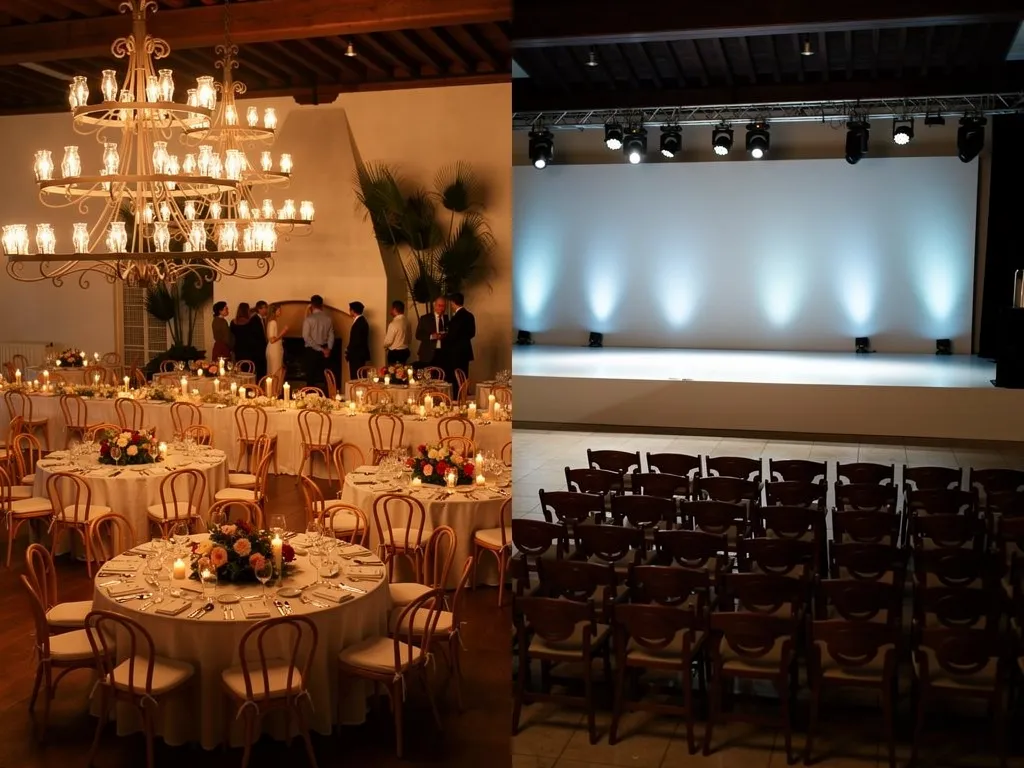
Different events use venues in different ways. A wedding reception may move through several phases, while a corporate gathering may require greater focus on presentations and staging. Matching the lighting setup to the program helps support the activities planned throughout the event.
Weddings and Receptions
Wedding lighting can help distinguish the ceremony, cocktail, dining, lounge, and dance areas as the event progresses. Bistro lighting may define outdoor dining, chandeliers can create focal points, and uplighting can bring attention to architecture or selected design features. Lighting near the dance floor and entertainment area should also work with the stage or DJ setup.
Corporate Events and Presentations
Corporate events may require a clearer visual focus around speakers, presentations, or entertainment. The stage should be positioned where guests can see it comfortably from the main seating area. Lighting can then reinforce that focal point while maintaining visibility in dining, networking, and lounge areas. The overall design should remain polished without distracting from the program.
Dinners and Private Celebrations
Private dinners, milestone celebrations, and social gatherings often benefit from a more intimate lighting approach. Lighting can define dining areas, highlight a bar or lounge, and add visual interest to the surrounding venue. If toasts, speeches, or entertainment are planned, a small stage may help create a designated focal point without dominating the event.
Choosing Staging for Santa Barbara Events
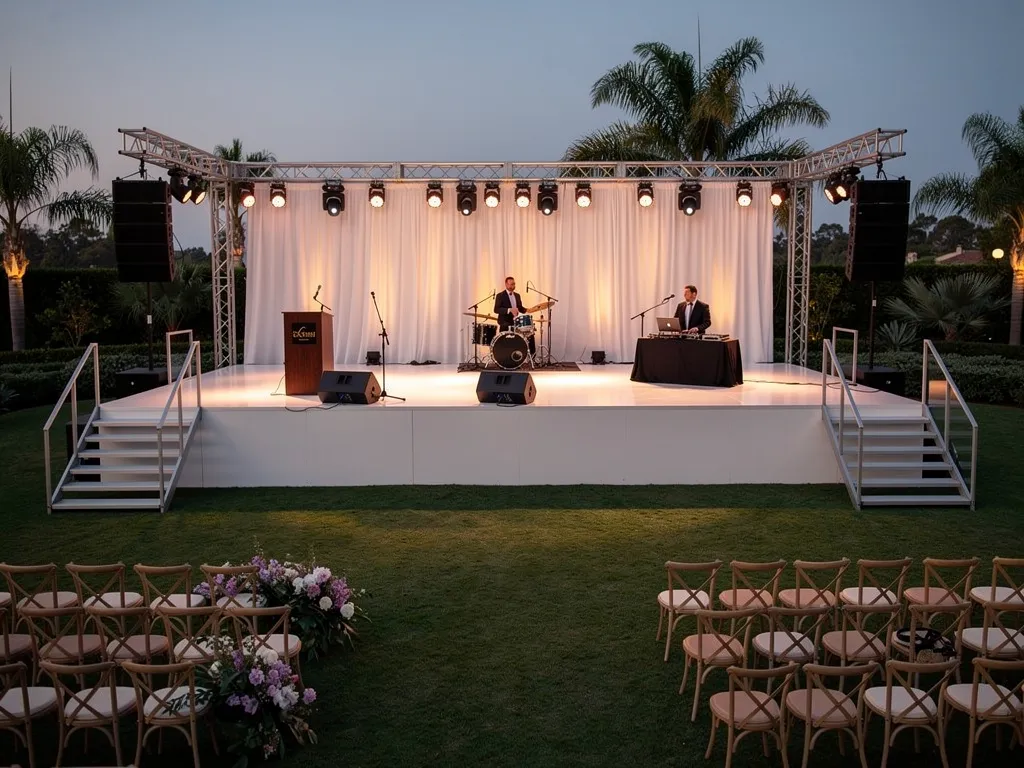
Staging gives speakers, musicians, DJs, and performers a defined place within the event layout. The appropriate setup depends on what will happen on the stage, how many people will use it, and how the audience or guests will be positioned. Stage dimensions, height, access, and placement should all be considered before the rest of the surrounding layout is finalized.
Stages for DJs and Live Entertainment
DJs, bands, and other performers need enough space for equipment and movement. The stage should support the entertainment setup while fitting comfortably within the venue.
Positioning it near the dance floor often creates a natural relationship between the entertainment and guest activity.
Staging for Toasts and Speakers
A stage can also provide a clear focal point for wedding toasts, awards, corporate presentations, announcements, or other speaking moments.
For these uses, visibility is especially important. The stage should be positioned so guests can see the speaker without needing to turn away from the main event area or move through crowded pathways.
Stage Size, Height, and Placement
The stage should be sized according to its purpose rather than selected from guest count alone.
A DJ setup may require less space than a live band, while a presentation with several speakers may need room for additional equipment or furniture. Stage height should also support visibility without feeling disproportionate to the room or outdoor space.
Steps, access points, nearby equipment, and surrounding furniture should be included in the layout.
Coordinating Lighting and Staging in One Event Layout
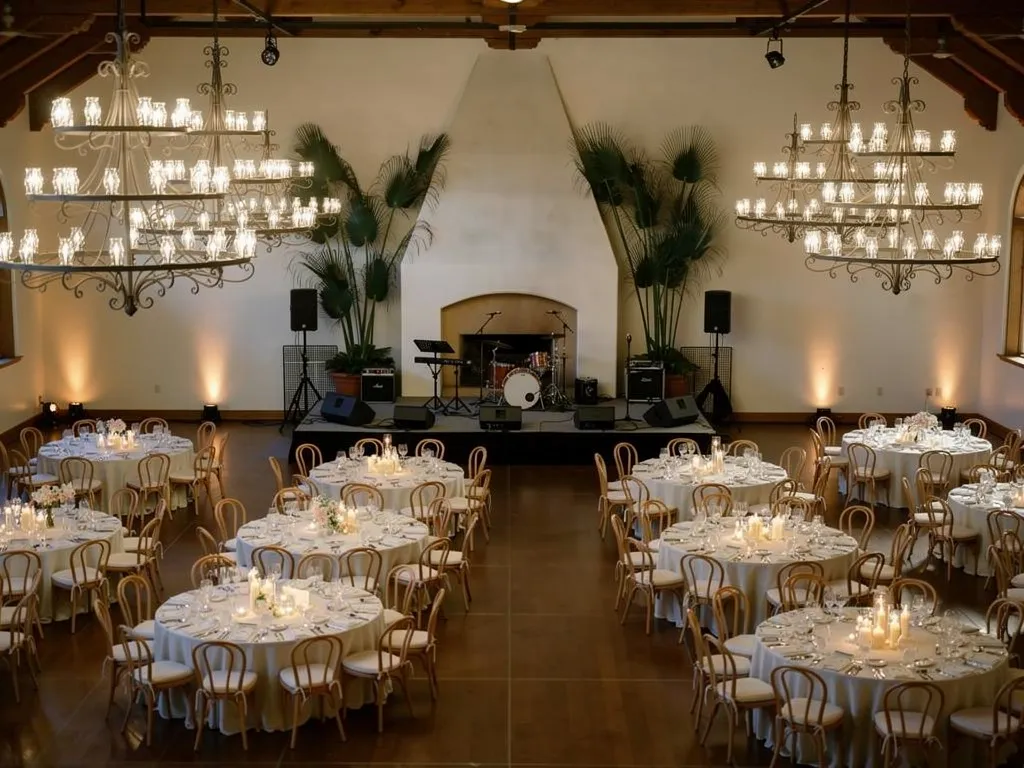
Lighting and modular staging should be planned together because decisions about one often affect the other. Stage location influences fixture placement, guest sightlines, seating arrangements, and circulation.
Creating one coordinated floor plan helps these elements function as part of the complete event rather than as separate rental decisions.
Keep Important Sightlines Open
Guests should be able to see the stage from the primary seating or gathering areas. Avoid placing large furniture pieces, bars, installations, or other structures directly between guests and the stage.
Sightlines should be reviewed from several areas of the venue, particularly when the event includes both seated and standing portions.
Connect the Stage With Seating and Dance Areas
For receptions, the stage often works best when it has a clear relationship with the dance floor and nearby guest seating.
Corporate and presentation-focused events may require a more direct orientation toward rows, tables, or a central audience area. The layout should reflect how guests will interact with the stage during the event.
Plan Lighting Around Stage Placement
Once the stage location is established, lighting can be arranged to support surrounding spaces and preserve the intended focal point.
Dining, lounge, and bar lighting should feel coordinated with the stage area without competing for attention. The transition between these areas should remain visually comfortable throughout the event.
Maintain Clear Guest Circulation
Stages, lighting equipment, cables, furniture, and other rentals should not interfere with major pathways.
Guests need clear routes between dining areas, restrooms, bars, lounge seating, and entertainment spaces. Planning these routes early can prevent crowded areas and awkward furniture placement.
Planning Lighting and Staging for Outdoor Events
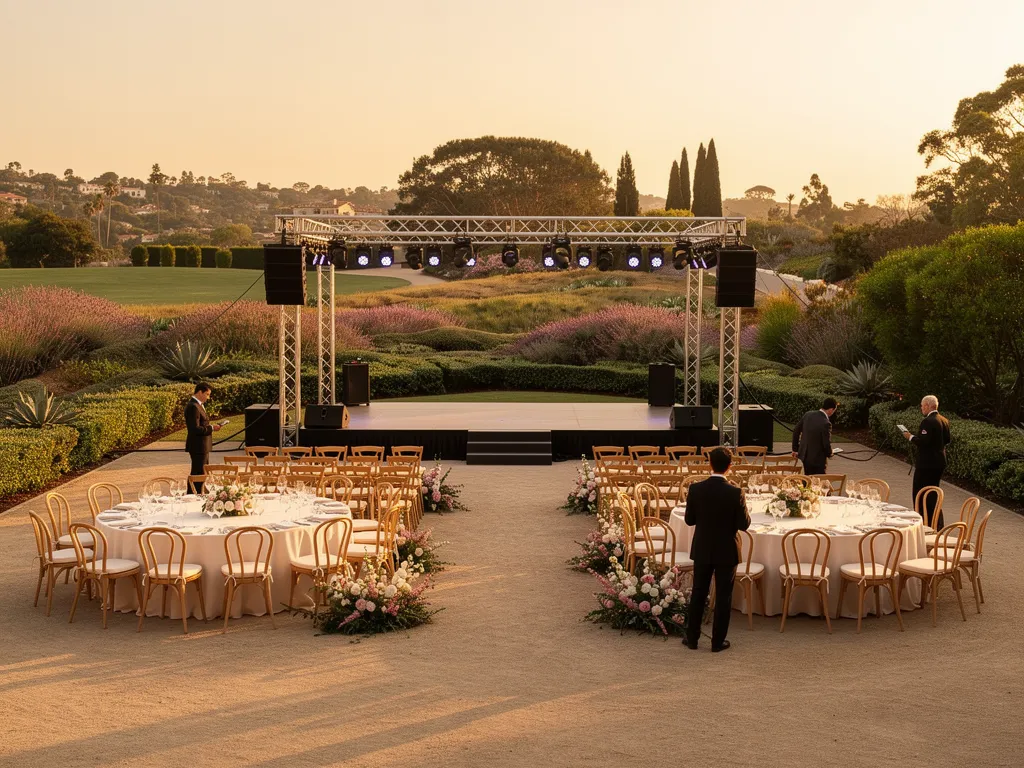
Outdoor Santa Barbara events introduce additional site considerations. Surfaces, power access, installation locations, venue rules, and changing conditions can all influence equipment selection and setup.
These details should be confirmed before the final lighting and staging plan is approved.
Confirm Power and Installation Requirements
Lighting equipment may have specific power and installation needs. Understanding available power sources and equipment locations early helps determine how the lighting plan can be implemented.
The rental team, venue, and other event professionals should coordinate these requirements before setup begins.
Consider Venue Surfaces and Access
Staging and lighting equipment may need to move through gates, private roads, stairs, courtyards, lawns, or other access points.
Share these conditions with the rental provider in advance. Accurate information about loading areas and surfaces helps the team plan delivery and installation more effectively.
Coordinate With Tents and Covered Areas When Relevant
When an event includes a tent or covered structure, lighting and staging should be included in the tent layout from the beginning.
Chandeliers, bistro lighting, stages, dance floors, bars, and guest seating all require space. Planning these rentals together helps create a more functional interior arrangement.
Working With Ventura Rental for Santa Barbara Events
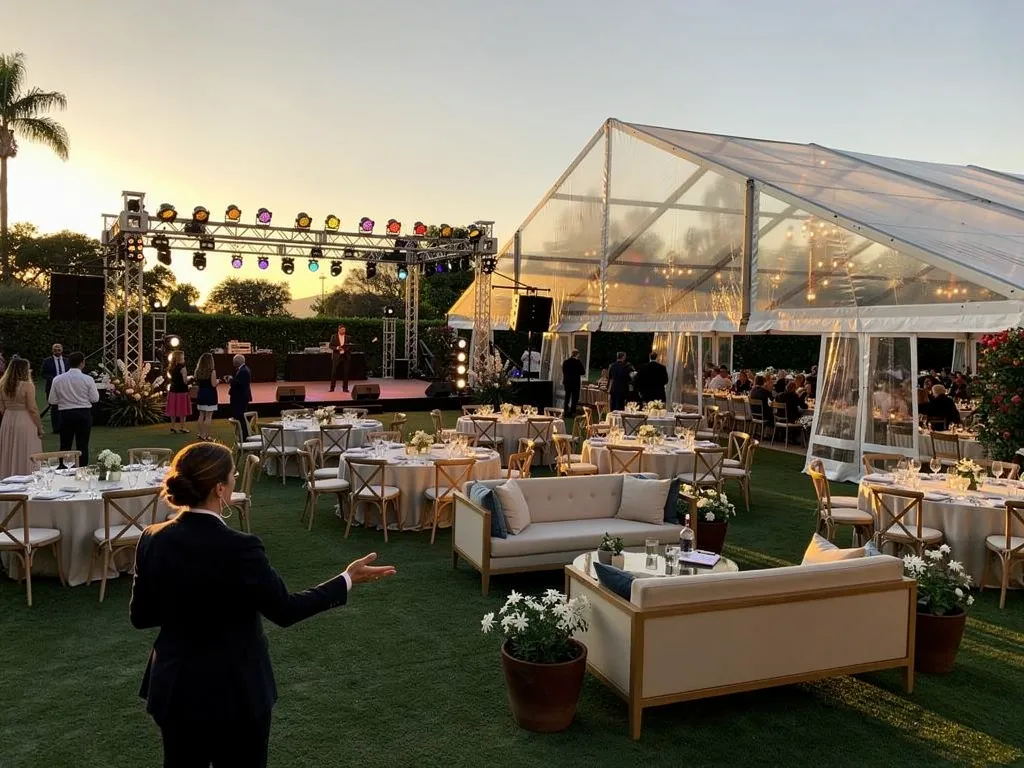
A successful lighting and staging plan depends on equipment selection, layout, venue conditions, and coordination. Working with a rental provider familiar with Santa Barbara event settings can help simplify these decisions.
Ventura Rental offers lighting, staging, furniture, tents, flooring, and other event rentals that can be coordinated as part of one overall design.
Select Lighting and Staging From the Rental Inventory
Different events call for different combinations of lighting and staging. Chandeliers, bistro lighting, uplights, decorative fixtures, stage sections, and related pieces can be selected according to the venue and program.
Reviewing the inventory with the complete event layout in mind can help clients avoid selecting pieces that compete for space or visual attention.
Use Layout and Rental Consultation Guidance
Rental consultation can help determine appropriate equipment, placement, quantities, and relationships between different event areas.
For complex outdoor venues, estates, or properties with distinctive layouts, this guidance can be especially useful when coordinating staging, lighting, dining, lounge areas, and other major rentals.
Coordinate Delivery, Setup, and Breakdown
Venue schedules, loading access, installation requirements, and event timing should be communicated before delivery.
Ventura Rental can coordinate delivery and applicable setup based on the selected rentals and venue requirements. Clarifying responsibilities in advance helps the venue, planner, and rental team work from the same schedule.
Frequently Asked Questions
What Lighting Works Well for Outdoor Santa Barbara Events?
Bistro lighting, uplighting, chandeliers, and decorative fixtures may all work for outdoor settings depending on the venue and installation requirements. The best combination depends on which areas need to be defined or highlighted.
How Can Lighting Highlight a Historic or Estate Venue?
Uplighting can emphasize walls, columns, landscaping, entrances, and other architectural features. Decorative fixtures may also complement courtyards, tented areas, dining spaces, or reception settings without covering the property’s existing character.
When Does an Event Need a Stage?
A stage may be useful when the event includes a band, DJ, speaker, presentation, awards program, ceremony, or other activity that benefits from a defined focal point.
The need for staging depends on the venue layout and program rather than the size of the event alone.
How Should a Stage Be Positioned?
The stage should provide good visibility from the primary guest area while remaining connected to the rest of the event. Consider nearby seating, dance floors, entertainment equipment, pathways, and lighting before finalizing its location.
Can Lighting and Staging Be Used With a Tent?
Yes, depending on the tent design and event requirements. Lighting, staging, dance floors, furniture, bars, and other elements should be planned together so the interior layout provides enough room for each area.
What Information Should Be Shared Before Setup?
Provide the rental team with the venue address, access instructions, loading information, event schedule, floor plan, stage requirements, lighting locations, surface conditions, and any venue restrictions that may affect installation. See floor sizes and finishes in our dance floor rentals catalog.
Plan a Cohesive Lighting and Staging Setup for Your Santa Barbara Event
Lighting and staging have the greatest impact when they are integrated into the event layout from the beginning. Lighting can define gathering areas, highlight architecture, and support evening activities, while staging creates a clear focal point for entertainment, speeches, ceremonies, or presentations.
For Santa Barbara weddings, corporate gatherings, private celebrations, vineyard events, and outdoor receptions, Ventura Rental can help coordinate lighting and staging selections with the surrounding event rentals. A thoughtful plan that considers the venue, guest flow, installation needs, and program creates an event space that feels polished, functional, and connected from one area to the next. To check availability for your date, reach out to our rental team.