
We make outdoor winter events feel effortless. Heated tent rentals give hosts a comfortable, weather-ready space so holiday nights stay memorable—without moving everyone indoors. This guide walks planners through how heating and smart seating design work together to keep guests warm, protect catering and AV, and expand your event season across Southern California. You’ll find practical advice on why heated tents deliver consistent comfort, which tent styles and heaters suit common footprints, how to build cozy lounge zones with the right furniture and fabrics, plus local planning and safety tips. We cover technical basics—BTU sizing, heater types, and essentials like sidewalls and flooring—along with creative direction for lighting, texture, and traffic flow, and finish with local service options and a clear next step for a quote or consultation.
Why Choose Heated Tent Rentals for Your Outdoor Winter Event?
Adding heat to an outdoor tent keeps guests comfortable and helps your event run smoothly. Heated tents protect food service and electronics, reduce weather-related cancellations, and give you the freedom to design intimate lounges or open reception areas using sidewalls, flooring, and lighting. Below are the main reasons planners choose heated tents for winter gatherings.
- Guest Comfort and Longer Events: Reliable warmth encourages guests to arrive early and stay later.
- Protection for Service and Equipment: Controlled temperatures cut condensation and guard catering and AV gear.
- Weather Resilience: When paired with sidewalls and flooring, heating reduces wind, dew, and light-rain issues.
- Design Flexibility and Ambiance: Heating lets you layer textiles, warm lighting, and lounge layouts for a cozy atmosphere.
Those benefits equal fewer surprises and a more predictable guest experience. Next, we’ll match tent types and heater pairings to common event sizes and needs.
What Are the Benefits of Heated Tents for Winter Parties?
Heated tents create a stable, comfortable environment that boosts guest satisfaction and event reliability. Keeping interior temperatures steady prevents food spoilage and protects fragile equipment—reducing vendor issues and service interruptions. Heated tents also let you use luxe textiles—velvet throws, wool blankets, layered rugs—without worrying about dew or dampness, which raises perceived comfort and elevates the look of winter weddings and curated holiday lounges.
How Do Heated Tents Enhance Holiday Night Events?
On holiday evenings, heating amplifies ambiance when paired with warm, low-level lighting and plush seating. String lights, lanterns, and soft uplighting create intimate pockets while preserving clear circulation for guests. Anchor social zones with velvet sofas and ottomans to encourage lingering conversation—making festive nights feel both relaxed and refined. In short, heating adds comfort and expands your creative options for memorable storytelling.
What Types of Heated Tents and Heating Systems Are Available?
Picking the right tent and heater affects efficiency, safety, and how the space performs. Tent style determines interior volume and heat retention; heater choice governs fuel logistics, BTU output, and zoning control. Together they shape the thermal profile that keeps guests comfortable. Use the table below as a quick reference to match common tent styles with recommended heater types and typical BTU ranges for planning. Read more in Tent Rentals in Ventura County: Local Guide to Sizes, Styles & Pricing.
Introductory note: Use this table to align tent form factor with practical heater recommendations for sizing and use-case planning.
This quick chart helps you estimate heater scale; the sections that follow explain tent pros and cons and heater fundamentals in more detail.
Which Tent Styles Work Best for Winter Events?
Frame tents are adaptable and install well on uneven sites, making them a strong choice for smaller gatherings where sidewalls are needed; they usually perform well with lower-BTU heaters. Clear span tents offer an open interior with fewer obstructions—ideal for dance floors and larger groups, and often more efficient to heat. Engineered structures are built for tougher conditions and longer events and pair best with higher-output, indirect-fired systems and full winterization packages. Choose a tent based on site constraints, guest count, and the interior look you want.
What Heating Solutions Are Recommended for Outdoor Winter Tents?
Heater selection depends on tent volume, ventilation needs, and fuel logistics. Indirect-fired heaters are common for large clear-span tents; forced-air systems work well for smaller frames. Start with a rough estimate of BTUs using the tent volume, then adjust for sidewalls, insulation, and zoning. Propane is a common fuel for portability, with thermostat controls used for zoned comfort. Safety and certified installation are essential; always plan heater placement with the required clearances and proper ventilation.
Common heater types include indirect-fired heaters for large, ventilated spaces, forced-air heaters for quick warm-up in smaller tents, and lectric heaters where power and local code allow.
How to Create Cozy Seating and Lounge Areas for Winter Events?
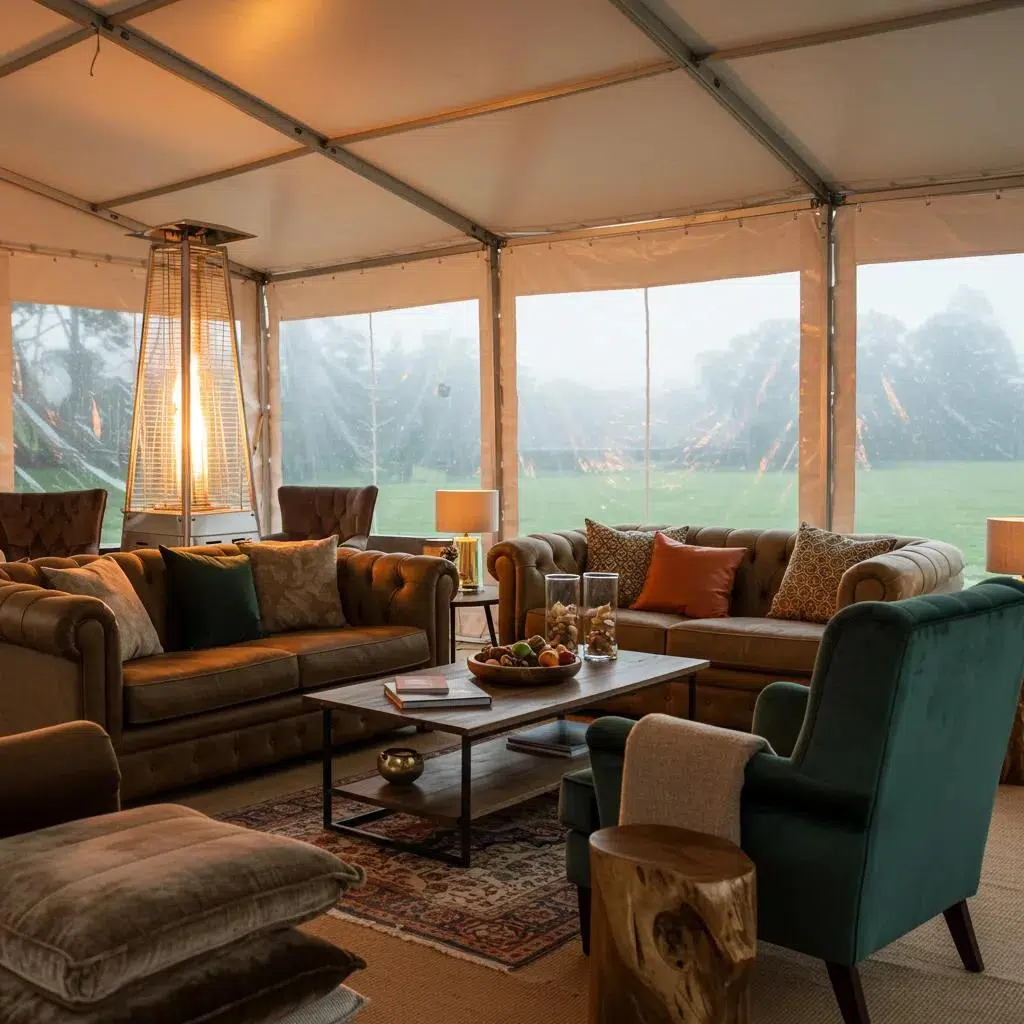
Designing warm seating zones is about texture, scale, and thoughtful layering. Combine furniture silhouettes and durable fabrics with throws, pillows, and rugs to build tactile warmth that complements mechanical heating. Mix seating heights to encourage small-group conversation while keeping heater clearances and egress paths unobstructed. Evaluate options by comfort and maintenance needs before finalizing layouts.
The table below helps planners compare furniture by warmth and suggested use.
Choosing warmer materials like velvet or plush fabric supports a cohesive cozy design. The next section outlines layout strategies that balance warmth with smooth guest flow.
What Furniture Styles and Fabrics Are Ideal for Cozy Winter Seating?
Velvet sofas and plush armchairs read as both comfortable and elevated—perfect for layering with blankets and pillows and for event photography. Durable fabric blends and stain-resistant finishes keep pieces looking great across rentals while staying comfortable for guests. Accent items—low tables, rugs, and closed side tables—add surface warmth and function. Deep jewel tones and warm neutrals pair well with seasonal decor and enhance the cozy vibe.
How to Arrange Seating for Warm and Inviting Holiday Gatherings?
Group seating into clusters of three to five pieces around a low focal table to encourage conversation and capture heat within each zone. Where practical, orient seating toward heaters but always respect clearance and keep walkways clear for service and emergencies. Layer rugs and throws to insulate the floor, and use vertical elements—plants or decorative screens—to create intimate nooks without blocking airflow. A thoughtful layout balances warmth, circulation, and aesthetics so lounges feel deliberate and safe.
After you plan layout and furniture, many clients prefer help sourcing matching furniture, linens, and tabletop items. Ventura Rental Party and Events offers regional inventory and design consultation to specify furniture packages and linens that bring your cozy vision to life, plus setup and takedown to simplify execution.
What Should You Know When Planning Outdoor Winter Events in Southern California?

Southern California winters are generally mild but can be unpredictable—think coastal chill, wind, and overnight dew. Planning should focus on contingency rather than overbuilding. A site assessment—drainage, anchoring, and exposure—will determine if sidewalls, insulated flooring, or engineered structures are needed. Local permits and fire-code rules may affect heater choices and placement. Emergency planning should include fuel storage, certified operators for heaters, and clear evacuation routes. Use the checklist below to guide local planning.
Site and weather checklist:
- Monitor forecasts and confirm contingency plans for rain and wind.
- Specify flooring that manages dew and adds insulation underfoot.
- Verify anchoring, drainage, and truck access to ensure smooth equipment delivery operations.
- Check local fire-code requirements for heater types and fuel handling.
Addressing these items up front reduces last-minute surprises and keeps your event safe and comfortable. The safety tips that follow provide operational guardrails for heater use and vendor coordination.
How to Prepare for Weather and Climate Challenges in Winter Events?
Start by monitoring local forecasts and building a contingency plan that includes sidewalls, flooring, and supplemental heaters for sudden temperature drops or wind. Prepare site drainage and anchoring to avoid water pooling and tent instability, and stage equipment for easy service or replacement. For coastal sites, plan for heavier overnight dew with insulated flooring and breathable sidewalls to limit condensation. Early vendor coordination and a day-of on-site check will prevent most common Southern California winter issues. For more detail, see our article Cozy Tent Styles for Winter Birthdays and Holiday Gatherings in Los Angeles.
What Are the Key Safety Tips for Using Heaters in Event Tents?
Safe heater use depends on certified installation, correct ventilation, and strict fuel-storage procedures—always hire technicians experienced with event-scale systems. Maintain manufacturer-recommended clearances, use thermostats or zone controls to prevent overheating, and store propane or fuel per code in ventilated, secured areas away from guests. Equip staff with an emergency response plan, fire extinguishers, and a clear chain of command for shutdowns. Professional installers and operators ensure compliance and smooth operation.
For a site-specific consultation, tailored quote, or help bundling heated tent rentals with flooring, furniture, and linen packages in Ventura, Santa Barbara, or Los Angeles counties, contact Ventura Rental Party and Events to request a proposal and schedule a planning conversation. For more detail, see our article How to Plan a Heated Tent for a Santa Barbara Fall Event.
Frequently Asked Questions
1. How do I choose the right size heated tent for my event?
Estimate based on your guest count and event type. A common guideline is about 10 square feet per seated guest and 5–7 square feet per person for a standing reception. Also factor space for catering, entertainment, and equipment. Talk with a rental specialist to confirm the best tent size and heating needs for your layout.
2. What are the costs associated with renting a heated tent?
Costs vary by tent size, type, location, and extras like sidewalls or flooring. Expect roughly $500 to $2,500 for the tent, with heating adding about $200 to $1,000 depending on BTU needs. Get multiple quotes to compare packages and services that fit your budget and event goals.
3. Are there any permits required for using heated tents in Southern California?
Often, yes—especially when heaters are involved. Local fire codes can dictate heater types, placement, and fuel handling. Check with your city or county and coordinate with your rental company to ensure all permits and inspections are handled before the event.
4. How can I ensure the safety of my guests when using heaters?
Follow strict safety protocols: hire certified installers, ensure proper ventilation and clearances, and keep fire extinguishers accessible. Train staff on emergency procedures and monitor equipment during the event. Using professionals for installation and operation minimizes risk.
5. What types of flooring are best for heated tents?
Choose flooring that insulates and protects against moisture. Common options include plywood with carpet, specialty insulated flooring systems, or commercial carpet—each helps retain heat and improves comfort. Make sure the flooring is durable and easy to clean for food-and-drink events.
6. Can heated tents be used for events other than winter gatherings?
Absolutely. Heated tents are ideal for spring and fall events when temperatures can dip, and for any outdoor occasion that benefits from climate control—weddings, corporate events, or festivals. Their versatility makes them useful year-round. Read more in Best Tent Options for Spring, Summer, Fall, and Winter Events.
7. How do I maintain the temperature in a heated tent during an event?
Start by choosing a properly sized heating system and setting it before guests arrive. Use sidewalls to reduce drafts, monitor temperatures throughout the event, and adjust zoning as needed. Keeping a backup heat source on hand provides extra peace of mind. Ready to price it out? Contact Ventura Rental Party & Events for a custom quote.
Conclusion
Heated tent rentals are a practical way to create warm, inviting outdoor events in winter—protecting guests, food, and equipment while expanding your design possibilities. If you’re planning a holiday gathering and want reliable comfort with thoughtful design, explore our heated tent options tailored to your needs. Contact Ventura Rental Party and Events today to discuss your vision and get a personalized quote.