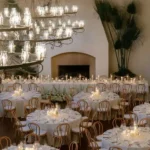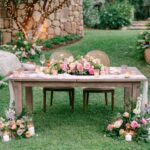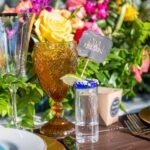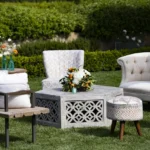

A wedding coffee bar can create a natural transition from dinner to dessert, conversation, and dancing. The most effective setup is not an elaborate café display added to an empty corner. It is a coordinated service area with the right beverages, dispensing equipment, cups, accessories, and guest flow.
For a Santa Barbara fall reception, the station must also fit the venue. Historic courtyards, private estates, gardens, coastal properties, and vineyard locations each present different considerations for placement, lighting, power, and weather protection. This guide explains how to plan a wedding coffee bar that looks connected to the reception and functions smoothly after dinner.
Treat the Coffee Bar as a Reception Transition
The timing of the coffee bar affects nearly every other decision, including where it should be placed, how much equipment it needs, and how long the beverages must remain available.
Opening the station at the wrong time can draw guests away from speeches or formal dances. Opening it too late may leave guests waiting for coffee after dessert has already been served.
Open the Station as Dinner Service Ends
The coffee bar should generally be prepared before guests begin leaving their dining tables.
A practical opening point is when dinner plates are being cleared or shortly before cake and dessert service begins. At that stage, the urns or carafes should already be filled, cups and saucers should be arranged, and cream, sugar, tea, and other additions should be ready.
The goal is to prevent guests from seeing staff unpacking cups, filling dispensers, or arranging supplies after the station has technically opened.
This timing also allows the coffee bar to support the shift from a structured seated dinner into the less formal portion of the reception. Guests can collect a drink, move toward dessert, join a lounge area, or return to the dance floor without waiting for a separate service announcement.
Coordinate Coffee With the Dessert Timeline
Coffee and dessert are naturally connected, but that does not mean they should occupy the same table or share one narrow queue.
The planner and caterer should establish when cake cutting, plated desserts, or a dessert display will become available. The coffee bar can then open shortly before or at the same time.
When the timing is coordinated, guests understand that both services are part of the same transition. They can choose dessert, coffee, or both without wondering whether one station is still being prepared.
The staff responsible for coffee should also know whether dessert will be served at the dining tables or collected from a display. Table-side dessert service may create a slower, more distributed demand for coffee. A self-service dessert table may create one immediate rush.
Keep It Available Through the Appropriate Event Phase
Not every wedding coffee bar needs to operate until the final song.
Some couples may want coffee available only during cake and dessert. Others may keep the station open through dancing, late-evening conversation, or guest departures.
The service window affects:
-
The amount of coffee and hot water required
-
Whether replenishment is planned
-
How long insulated vessels must hold temperature
-
The number of cups and saucers needed
-
Staffing responsibilities
-
The station breakdown time
The amount of coffee and hot water required
Whether replenishment is planned
How long insulated vessels must hold temperature
The number of cups and saucers needed
Staffing responsibilities
The station breakdown time
The station should remain open long enough to support the reception schedule without requiring unnecessary equipment or staff attention after demand has ended.
Build a Focused After-Dinner Menu

A wedding coffee bar does not need a long list of syrups, toppings, flavors, and specialty drinks to feel complete. A focused menu is easier for guests to understand and easier for the caterer to prepare and maintain. For most receptions, the practical foundation is regular coffee, decaffeinated coffee, tea, cream, sweeteners, and selected alternatives.
Begin With Regular Coffee, Decaf, and Tea
Regular coffee will usually require the largest serving vessel because it is likely to receive the greatest demand. Decaf can be placed in a smaller urn, air pot, or insulated carafe when fewer guests are expected to choose it.
Tea should have a separate hot-water source. Guests should not need to use a coffee urn for hot water or guess whether one unlabeled dispenser contains decaf, water, or another beverage.
Each option should have a clearly visible label. Labels reduce questions, prevent guests from opening lids, and help the service move quickly.
The menu may include:
-
Regular coffee
-
Decaffeinated coffee
-
Hot water
-
A concise selection of teas
-
Milk or cream
-
Sugar
-
One or two common sweetener alternatives
Regular coffee
Decaffeinated coffee
Hot water
A concise selection of teas
Milk or cream
Sugar
One or two common sweetener alternatives
The exact beverage quantities should be coordinated with the caterer rather than estimated from the total guest count alone. Dessert timing, reception length, weather, and the number of guests who typically drink coffee will all influence demand.
Add Specialty Drinks Only With the Right Provider
Hot chocolate, cider, lattes, cappuccinos, and other specialty beverages can be appealing at a fall reception, but they may require different preparation and holding equipment.
A vessel designed to dispense prepared coffee should not automatically be used for milk-based drinks, thick beverages, or anything containing ingredients that may settle, separate, or require active temperature control.
Before a specialty drink is added to the menu, the caterer and rental provider should confirm:
-
How the beverage will be prepared
-
Whether it can be held in the selected equipment
-
Whether stirring or active monitoring is required
-
How it will be replenished
-
Which cups and service pieces are appropriate
-
Who will operate the equipment
How the beverage will be prepared
Whether it can be held in the selected equipment
Whether stirring or active monitoring is required
How it will be replenished
Which cups and service pieces are appropriate
Who will operate the equipment
When a staffed espresso service or specialty coffee experience is desired, a professional beverage provider may be more appropriate than expanding a traditional self-service rental station.
Keep Additions Useful and Controlled
Coffee additions should be easy to identify and use without turning the station into an oversized topping display.
Cream, sugar, sweeteners, teaspoons, tea bags, and napkins generally provide a complete after-dinner service. A small number of flavor additions may be included when they can be stored, labeled, and replenished properly.
Too many small containers can create clutter and slow the line as guests review every option. They can also reduce the pouring space around the urns.
The additions should be placed after the coffee and hot-water dispensers so guests can prepare their drinks without blocking access for those still pouring.
Choose Rentals by Function, Not Appearance
Coffee urns, hot-water boilers, air pots, and insulated carafes may all appear suitable for warm beverages, but they do not perform the same job. Some equipment prepares a beverage. Other pieces only hold or dispense a beverage that has been prepared elsewhere. The function of each item must be verified before the caterer develops the service plan.
Use Coffee Urns for the Main Service Point
Large coffee urns can provide a clear centralized service point for regular coffee or another confirmed compatible beverage.
Ventura Rental currently lists polished 50-cup and 80-cup coffee urns. The 80-cup model is specifically described as a non-powered vessel with a spigot. It does not plug in or brew the coffee, so prepared coffee must be supplied and placed in the urn by the appropriate service provider.
This distinction is important. A caterer should not arrive expecting every urn to heat cold water or brew coffee on-site.
The stated cup capacity is also only one planning reference. It does not necessarily equal the number of guests the urn will serve because actual use depends on:
-
The size of the cups
-
Whether refills are expected
-
The amount of decaf and tea offered
-
How long the station remains open
-
Whether coffee is also served at the tables
-
Whether the urn will be replenished
The size of the cups
Whether refills are expected
The amount of decaf and tea offered
How long the station remains open
Whether coffee is also served at the tables
Whether the urn will be replenished
The final quantity should be confirmed with the caterer and rental team after the service format and menu have been established.
Use Air Pots and Carafes for Smaller Volumes
A large urn may be appropriate for regular coffee, while smaller insulated vessels can support beverages with lower demand.
Ventura Rental’s catalog includes a 2.2-liter air pot, listed at approximately 74.4 ounces, as well as an insulated coffee carafe.
These smaller vessels may be useful for:
-
Decaf
-
An intimate reception
-
Table-side service
-
A selected family table
-
A lounge or secondary seating area
-
A lower-demand beverage
-
A limited late-evening refill
Decaf
An intimate reception
Table-side service
A selected family table
A lounge or secondary seating area
A lower-demand beverage
A limited late-evening refill
Using an air pot or carafe for decaf can prevent the station from requiring two large urns when demand is not expected to be equal.
Carafes may also suit receptions where guests remain seated during dessert. Staff can place coffee at selected tables rather than asking every guest to move toward one central station.
Give Tea a Separate Hot-Water Setup
Tea service should have its own hot-water source.
Ventura Rental currently lists a 196-cup hot-water maker or boiler within its beverage-service inventory. The product’s operating requirements and suitability for the venue should be confirmed through the rental proposal.
Tea service may also require:
-
Tea bags or loose-tea service supplied by the caterer
-
Clearly labeled varieties
-
Cups and saucers
-
Teaspoons
-
A holder for used tea bags
-
Cream, milk, lemon, or other selected additions
-
A nearby waste or dish-return point
Tea bags or loose-tea service supplied by the caterer
Clearly labeled varieties
Cups and saucers
Teaspoons
A holder for used tea bags
Cream, milk, lemon, or other selected additions
A nearby waste or dish-return point
The hot-water vessel should be positioned so guests are not reaching across the coffee urns to access it.
Place Coffee Beside Dessert
Coffee and dessert should feel connected within the reception layout, but they should not compete for the same narrow service area.
A separate coffee station allows guests to collect a beverage without interrupting cake cutting, plated dessert distribution, or access to a dessert display.
Keep the Two Stations Within the Same Guest Zone
The coffee bar should be easy to find once dessert service begins. For more detail, see our article Party Bar Hacks: Rentals That Make Serving Easy and Stylish.
It may be placed:
-
On an adjacent wall
-
Across a wide aisle from the dessert table
-
At the opposite end of a broad dessert zone
-
Near the dining area but outside the service route
-
Between the dining tables and lounge area
-
Close to the reception exit for later use
On an adjacent wall
Across a wide aisle from the dessert table
At the opposite end of a broad dessert zone
Near the dining area but outside the service route
Between the dining tables and lounge area
Close to the reception exit for later use
The exact location should make the relationship between coffee and dessert clear without forcing both services onto one small table.
A guest carrying a dessert plate should be able to reach the coffee station without navigating a long route or crossing the dance floor.
Give Each Service Its Own Access
Cake cutting and dessert presentation often require working space for catering staff. A coffee urn positioned directly beside the cake can interfere with plating, photography, and guest access.
Separate entry points allow guests to choose only what they want. A guest collecting coffee should not need to join the dessert line, and a guest choosing cake should not block the beverage dispensers.
The two stations may still share common design elements, including linens, signs, trays, flowers, or tabletop pieces. Their operational areas should remain distinct.
Protect Major Reception Routes
A coffee queue should not extend across the dance-floor entrance, bar line, restroom route, or guest exit.
The station should also remain outside catering pathways used to carry trays, collect dishes, or move between the kitchen and dining tables.
Potential conflicts include:
-
Guests gathering at the coffee bar during dancing
-
Staff carrying hot beverages through a bar queue
-
Cups and saucers narrowing an exit
-
Electrical cables crossing a guest route
-
The station blocking access to a lounge
-
Coffee service interfering with transportation pickup
Guests gathering at the coffee bar during dancing You may also find Bar Rentals for Santa Barbara Fall Cocktail Parties helpful.
Staff carrying hot beverages through a bar queue Read more in Elevate Your Event with Stylish Bar and Beverage Rentals.
Cups and saucers narrowing an exit
Electrical cables crossing a guest route
The station blocking access to a lounge
Coffee service interfering with transportation pickup
The coffee bar should therefore appear on the scaled floor plan before the venue setup is finalized.
Style the Station as Part of the Reception

The coffee bar should feel like part of the wedding rather than a separate themed display.
It does not need an unrelated coffee-shop aesthetic, rustic signage, or an excessive collection of fall decorations. The table, linen, cups, and accessories can connect the station to the existing reception design. Read more in How to Plan a Bar Area for a Santa Barbara Fall Reception.
Select a Properly Sized Table and Linen
The service table needs enough depth for the equipment and enough width to create a logical guest sequence.
The table may need to hold:
-
Coffee urns
-
An air pot or carafe
-
A hot-water vessel
-
Cups and saucers
-
Cream and sugar
-
Tea selections
-
Teaspoons
-
Napkins
-
Labels
-
Trays
-
Spill-management supplies
Coffee urns
An air pot or carafe
A hot-water vessel
Cups and saucers
Cream and sugar
Tea selections
Teaspoons
Napkins
Labels
Trays
Spill-management supplies
Placing all of these items on one undersized table can reduce pouring space and make replenishment difficult.
A second table may be useful when the service includes several large vessels or when the design separates beverages from additions.
The linen should coordinate with the dining tables or another major reception textile. It can also conceal the standard table base and selected backup supplies stored underneath, provided staff can access them safely.
Coordinate Cups With the Dinner Service
China cups and saucers can make the coffee bar feel connected to a formal seated reception.
Ventura Rental’s White With Silver Band china collection includes coffee cups, saucers, and a matching cream-and-sugar set. The coffee cups are listed in ordering increments of 25, which should be considered when final quantities are confirmed.
The cup selection should relate to:
-
The dinner china
-
Flatware finish
-
Dessert plates
-
Linen palette
-
Overall level of formality
-
Service method
The dinner china
Flatware finish
Dessert plates
Linen palette
Overall level of formality
Service method
When cups and saucers are used, teaspoons must also be included in the order. The saucers should be stacked or arranged so guests can collect them without slowing access to the dispensers.
Keep Décor Away From the Working Area
A small floral arrangement, menu sign, framed label, or restrained seasonal accent can make the station look finished.
Decorations should not:
-
Obstruct the urn spigots
-
Cover beverage labels
-
Reduce pouring space
-
Interfere with cup stacks
-
Sit too close to hot equipment
-
Block the caterer’s refill route
-
Create loose materials in an outdoor setting
Obstruct the urn spigots
Cover beverage labels
Reduce pouring space
Interfere with cup stacks
Sit too close to hot equipment
Block the caterer’s refill route
Create loose materials in an outdoor setting
The equipment and guest service should remain the priority.
A coffee bar that is orderly, well lit, and coordinated with the reception will generally look more polished than one crowded with decorative objects.
Design a Service Sequence Guests Can Read
Guests should be able to understand the coffee bar immediately.
A one-direction layout reduces crossing and helps prevent guests from standing in front of the dispensers while adding cream or sugar.
Begin With Cups, Saucers, and Teaspoons
Cups should appear at the beginning of the station.
When saucers are used, they should remain together with the cups. Teaspoons may be placed with the saucers or near the additions, depending on the available space and service sequence.
The beginning of the station should allow guests to collect the required drinkware before reaching the beverage dispensers.
If cups are stacked, the setup should remain stable and easy to replenish. Decorative arrangements that require guests to remove cups from a complex display can slow the service.
Follow With Beverages and Additions
A practical sequence is:
-
Cups and saucers
-
Regular coffee
-
Decaf
-
Hot water
-
Tea selections
-
Cream and sweeteners
-
Teaspoons and napkins
Cups and saucers
Regular coffee
Decaf
Hot water
Tea selections
Cream and sweeteners
Teaspoons and napkins
Regular coffee may be placed first because it is likely to receive the greatest demand. Decaf and hot water should have clear labels that are visible before guests reach the spigots.
Cream, sugar, and other additions should follow the beverage vessels. This keeps guests who are preparing their drinks from blocking those who only need to pour coffee.
The pouring area should remain open enough for guests to hold a cup beneath the spigot without reaching around decorations, trays, or other people.
Provide Staff Access and Used-Dish Collection
Staff need a separate way to reach the station.
The refill route may be located behind the table or at one end, depending on the venue layout. Caterers should be able to replace coffee, replenish cups, wipe the surface, and remove empty vessels without entering the guest queue.
Used-cup collection may be positioned at the end of the station or at a nearby secondary table. It should be convenient, but it should not become the visual center of the display.
Waste bins, bussing tubs, cleaning materials, and backup supplies should remain discreet and accessible to staff.
Prepare the Station for the Venue After Sunset
Santa Barbara wedding venues include historic downtown properties, Spanish-style courtyards, gardens, coastal locations, hillside estates, and wine-country settings. Ventura Rental’s Santa Barbara service includes local delivery, professional setup, venue coordination, breakdown, and pickup across these varied locations.
The coffee bar must be adapted to the actual venue rather than planned as an isolated tabletop display.
Use Stable, Protected Placement Outdoors
At a garden, vineyard, or coastal property, the station should sit on a stable, level surface.
Suitable locations may include:
-
A covered patio
-
A veranda
-
A tented reception area
-
An interior room connected to the reception
-
A level paved courtyard
-
A protected section near the dining area
A covered patio
A veranda
A tented reception area
An interior room connected to the reception
A level paved courtyard
A protected section near the dining area
Avoid placing the station on soft ground, an exposed property edge, or within an irrigation zone.
Wind can affect napkins, labels, tea bags, lightweight cups, and other small service pieces. Evening moisture can also influence the placement of equipment and electrical connections.
The weather plan should identify whether the station can remain in its original position or needs a covered alternate location.
Confirm Power Before Finalizing the Layout
The equipment plan should distinguish between powered and non-powered pieces.
Ventura Rental’s 80-cup polished urn is a non-powered dispenser, while a hot-water boiler or other equipment may require electricity.
The event team should confirm:
-
Outlet locations
-
Circuit availability
-
Extension requirements
-
Cable routes
-
Whether the circuit is shared
-
Other catering or entertainment equipment using power
-
Venue restrictions
-
Outdoor protection requirements
Outlet locations
Circuit availability
Extension requirements
Cable routes
Whether the circuit is shared
Other catering or entertainment equipment using power
Venue restrictions
Outdoor protection requirements
Cables should not run unprotected through the guest queue or across major walkways.
The equipment should be confirmed before the station is placed on the final floor plan. Moving it later to reach an outlet may create congestion or separate the coffee bar from dessert.
Provide Enough Light for Safe Service
Guests need enough light to identify beverages, read labels, pour safely, and see cream, sugar, tea, and other additions.
A coffee station placed in a dark corner may be difficult to use even when the surrounding reception has decorative lighting.
The lighting should make the service surface visible without creating harsh glare on polished urns. A nearby sconce, overhead fixture, lamp, or controlled event-lighting source may provide sufficient illumination.
Candles can add warmth to the presentation but should not replace functional light or sit where guests are pouring hot beverages.
Frequently Asked Questions
When Should a Wedding Coffee Bar Open?
The coffee bar should generally be ready as dinner concludes or shortly before dessert begins.
It should not open during speeches, first dances, or another formal moment when guests leaving their seats would become distracting.
The planner and caterer should select a clear transition point based on how dessert will be served.
How Close Should the Coffee Bar Be to Dessert?
It should be close enough for guests to recognize that the services are connected but far enough away to provide separate access.
Placing the coffee bar on an adjacent wall, across a wide aisle, or at the opposite end of a broad service zone can keep the relationship clear without merging the queues.
Can a Wedding Coffee Bar Be Set Up Outdoors?
Yes, when the location provides a stable surface and the equipment, power plan, lighting, weather protection, and venue rules support outdoor service.
Finish the Reception With a Thoughtful Final Service
A successful wedding coffee bar depends more on timing, equipment selection, and guest flow than elaborate decoration. The station should open as dinner ends and dessert begins. Regular coffee, decaf, and tea should be clearly separated, and each rental item should be selected according to whether it prepares, holds, or dispenses the beverage. Browse tents, dance floors, linens and more for your day on our wedding rentals in Ventura and Santa Barbara page.
The guest sequence should begin with cups and progress through coffee, tea, additions, and napkins without requiring people to cross paths. Coffee should remain close to dessert without sharing the same narrow queue, and the station should stay outside the dance floor, bar line, catering route, and guest exit. See every option in our bar rentals.
At a Santa Barbara fall reception, the venue is part of the planning process. Historic surfaces, outdoor exposure, power access, lighting, and service routes should all be resolved before the final floor plan is approved.
Ventura Rental Party & Events offers coffee urns, hot-water equipment, air pots, insulated carafes, cups, saucers, cream-and-sugar sets, tables, linens, and other beverage-service rentals. With coordinated planning, delivery, professional setup, breakdown, and pickup, the wedding coffee bar can feel like a considered final service rather than an equipment table added after the reception design is complete. For more detail, see our article Set Up a Fully Stocked Party Bar for Your Holiday Event.