
A wedding stage does more than give a band or DJ a place to set up. For Santa Barbara weddings, a stage or platform can define the entertainment area, improve guest sightlines, support speeches and announcements, and help the reception layout feel more intentional. Whether the celebration takes place at a coastal venue, private estate, garden, courtyard, or formal reception space, staging should be planned around the entertainment style, dance floor, lighting, guest movement, and overall event design.
Santa Barbara venues often have strong visual character and unique setup needs. Outdoor lawns, ocean-view terraces, historic courtyards, and estate grounds may not come with a built-in entertainment area, so the rental plan has to create one. With the right stage placement and supporting rentals, the band, DJ, emcee, or ceremony musicians can feel naturally connected to the rest of the celebration instead of tucked into an unused corner.
Make the Entertainment Area a Clear Focal Point
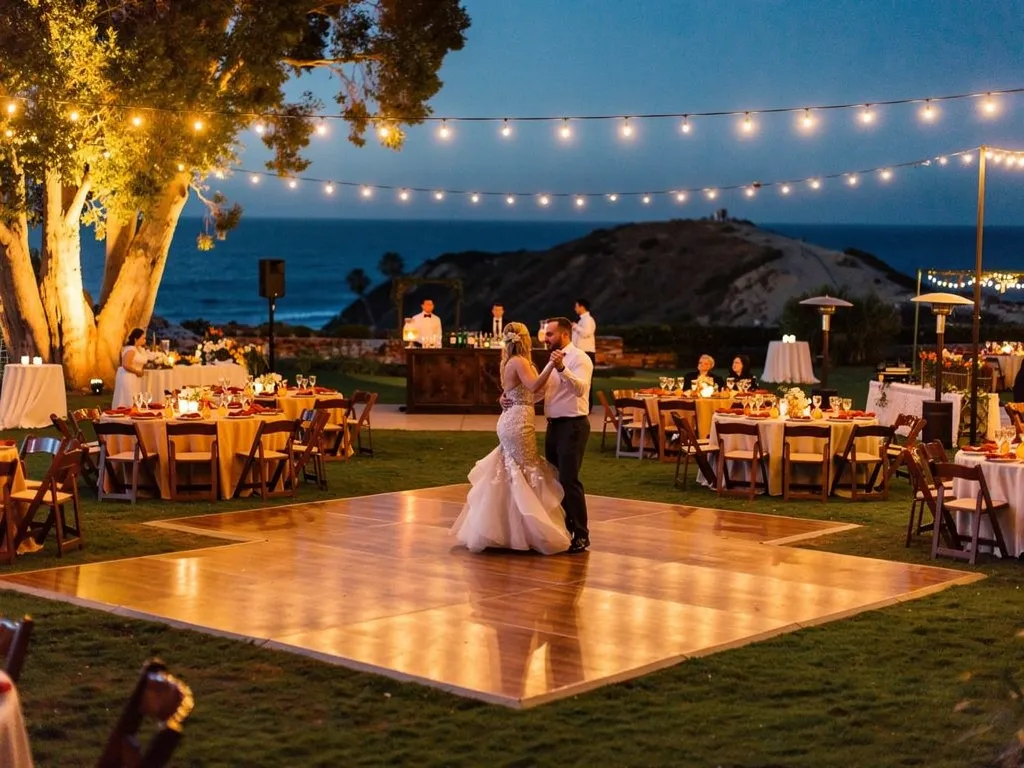
The entertainment area should feel like a deliberate part of the reception layout. A stage or platform helps anchor the performance space so guests understand where key moments will happen, from introductions and speeches to the first dance and open dancing. For Santa Barbara weddings, where many layouts are built from open outdoor spaces, defining this area early can make the entire reception feel more organized.
Why Bands and DJs Need Different Setup Plans
A live band and a DJ usually need different types of staging support. A band may need room for vocalists, musicians, instruments, monitors, stands, and movement. A DJ may need a more compact platform that supports equipment, speakers, and a clean visual presentation.
The setup should match the entertainment style rather than follow a generic stage plan. A small DJ platform may be enough for a streamlined reception, while a live band may need a wider layout that gives performers space to work comfortably. When the stage is scaled to the entertainment, the reception feels more balanced and professional.
Creating Better Sightlines for Guests
A stage helps guests see the entertainment, especially during announcements, speeches, introductions, and live performances. This matters for larger receptions, outdoor venues, and layouts where guests may be seated across a wide area.
Sightlines should be considered from the guest tables, lounge areas, bar, and dance floor. A stage placed behind floral installations, columns, tents, or furniture may technically fit the space but still fail to serve the event. The best placement gives the entertainment area visibility without disrupting movement through the venue.
Keeping the Stage Connected to the Dance Floor
The stage and dance floor should feel connected. If the stage is too far from the dance floor, guests may not naturally move toward the music once dancing begins. If it is placed too close without enough surrounding space, the area can feel crowded.
A strong layout gives the band or DJ a clear relationship to the dance floor while preserving room for guests to circulate. The entertainment area should also avoid blocking bar access, dining transitions, lounge spaces, and vendor pathways.
Choose a Platform Style Based on the Wedding Format
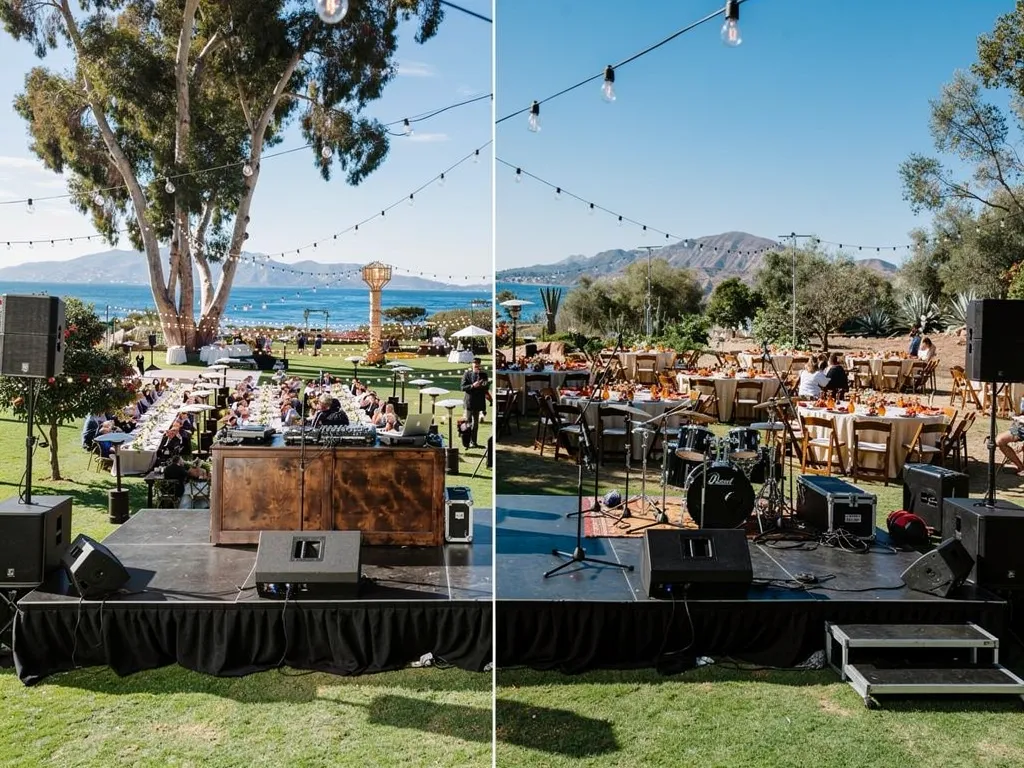
Not every Santa Barbara wedding needs the same staging setup. Some celebrations only need a small platform for ceremony musicians or a DJ, while others need a larger stage for a live band, emcee, or multi-part reception program. The right choice depends on the event format, venue layout, guest count, and how the celebration will move from ceremony to cocktail hour, dinner, and dancing.
Small Platforms for DJs and Ceremony Musicians
Smaller platforms can work well for DJs, solo musicians, string ensembles, ceremony sound setups, or acoustic performers. These platforms help define the entertainment space without taking over the venue.
For ceremonies, a small platform can give musicians or speakers a polished place to perform while keeping the focus on the couple. For receptions, a DJ platform can keep the equipment organized and visually contained, especially when the entertainment area is visible from the dining tables or lounge spaces.
Larger Stages for Live Bands
Live bands often need more space than couples initially expect. A stage must account for instruments, microphones, speakers, monitors, stands, cables, and performer movement. If the band is squeezed into a tight area, the performance can look crowded and the setup may interfere with the reception flow.
A larger stage can help the band feel like a central part of the celebration. It also makes the performance area easier for guests to see, which can encourage a stronger dance floor experience once the music begins.
Multi-Use Platforms for Speeches and Special Moments
A stage or platform can support more than music. It may also be used for speeches, toasts, announcements, awards, cultural performances, or formal introductions. For weddings with a detailed program, this can make transitions smoother and give important moments a more defined location.
If the platform will be used for multiple purposes, the layout should be flexible. The stage should support the entertainment team while still allowing speakers, family members, or the couple to access the area comfortably when needed.
When a Dance Floor Should Be Planned With the Stage
The dance floor and stage should be planned together from the start. Their placement affects guest movement, photography, lighting, bar access, and the energy of the reception. A dance floor that feels disconnected from the stage can make the entertainment area feel less inviting.
For Santa Barbara weddings, especially those hosted outdoors or at private estates, the dance floor may also help define the reception space. When the stage, dance floor, lighting, lounge furniture, and bar are arranged together, the entertainment zone feels complete.
Plan Stage Placement Around the Venue Layout
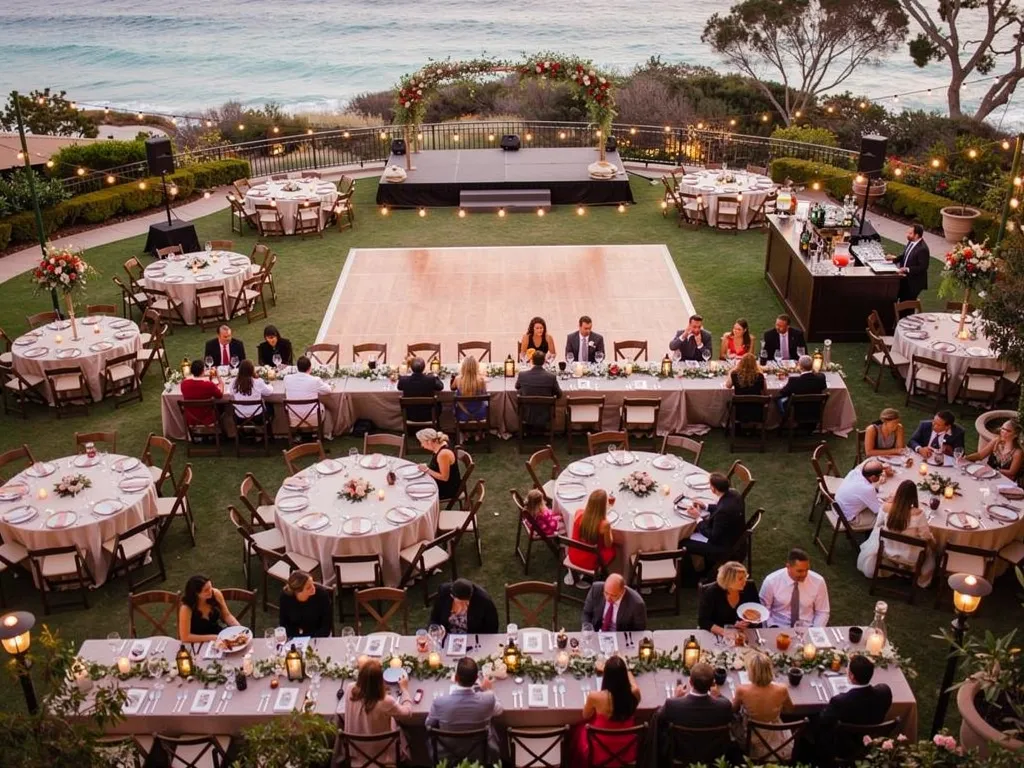
Santa Barbara wedding venues vary widely. A coastal terrace, garden lawn, private estate, historic courtyard, and indoor reception room each create different staging considerations. Stage placement should account for the shape of the space, guest seating, dance floor location, service routes, power access, vendor setup, and photo or video sightlines.
Coastal Venues and Open-Air Receptions
Coastal weddings often need staging plans that account for open space, changing light, breeze, and guest movement between ceremony, cocktail hour, dinner, and dancing. The stage should be visible without being exposed in a way that makes the entertainment area feel disconnected from the rest of the event.
For open-air receptions, the stage can help create structure. It gives the entertainment a defined home and helps guests understand where the reception energy will shift later in the evening.
Garden, Lawn, and Estate Setups
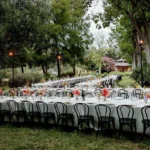
Garden, lawn, and estate weddings often require a layout built from the ground up. Unlike a ballroom, these spaces may not have an obvious entertainment area. The stage, dance floor, lighting, seating, lounge areas, and bars should all be placed intentionally.
The stage should not interrupt the natural beauty of the setting. Instead, it should work with the landscape, sightlines, and guest pathways. A well-planned platform can make an outdoor reception feel structured while still allowing the venue’s surroundings to remain part of the experience.
Courtyards and Historic Venues
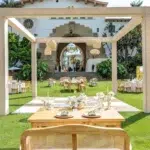
Courtyards and historic venues can create beautiful wedding backdrops, but they may also have tighter access points, fixed architectural features, and more defined boundaries. Stage placement should respect these conditions.
In these settings, the stage should support the program without overwhelming the space. It may need to be placed where guests can see the entertainment clearly while leaving room for dining tables, service access, and post-dinner movement.
Indoor Reception Rooms and Ballroom Layouts
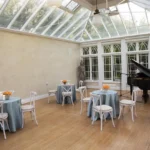
Indoor receptions still require thoughtful stage planning. The stage should relate naturally to the dance floor, head table, sweetheart table, bar, and guest seating. If the stage is too dominant, it can crowd the room. If it is too small or hidden, the entertainment may feel secondary.
For indoor weddings, the goal is balance. The entertainment area should feel polished and visible while still allowing the room to function comfortably for dinner, speeches, dancing, and guest circulation.
Coordinate Staging With Lighting, Power, and Production Needs
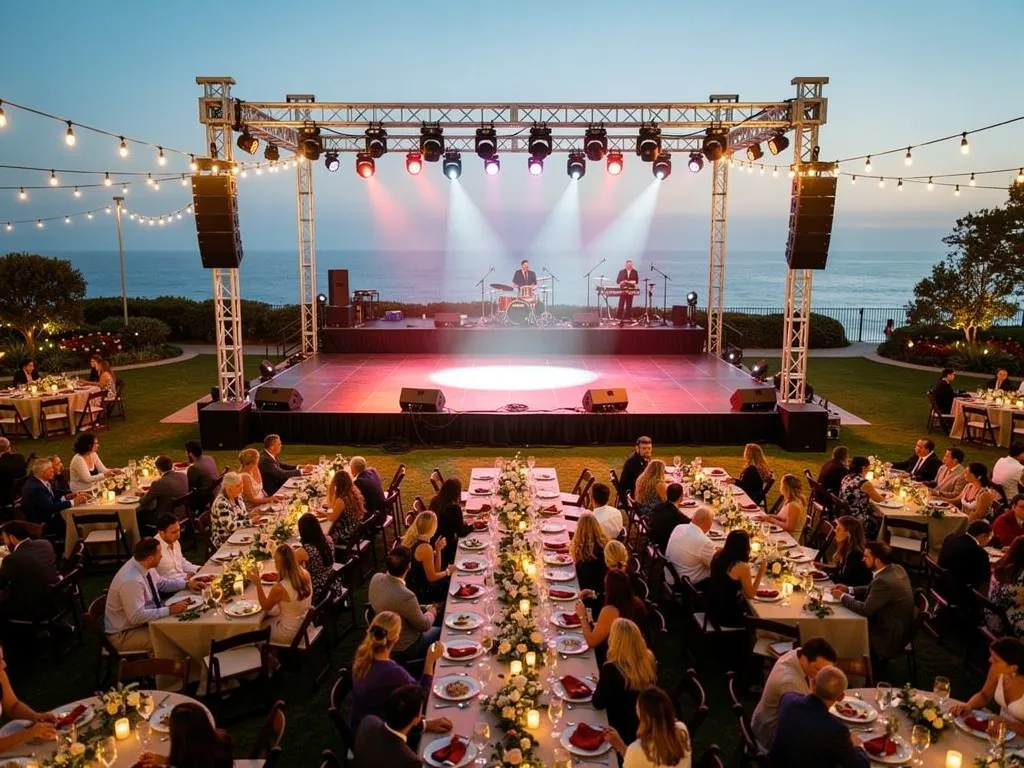
A stage is only one part of the entertainment setup. Lighting, power access, audio-visual equipment, speaker placement, and cable management all affect how the stage functions. For outdoor Santa Barbara weddings and estate receptions, these details should be discussed early because the venue may not have built-in infrastructure where the entertainment area is being created.
Lighting That Highlights the Entertainment Area
Lighting helps the entertainment area feel intentional and visible. It can highlight the band, DJ, emcee, first dance, speeches, and open dancing. Without enough lighting, a stage may disappear once the event transitions into the evening.
The lighting plan should match the tone of the wedding. A formal reception may call for a more polished lighting approach, while an outdoor estate wedding may use lighting to create warmth and atmosphere around the stage and dance floor.
Power Access for DJs, Bands, and Event Teams
Power access is essential for DJs, bands, lighting, sound, and other vendor equipment. This is especially important for outdoor weddings, private estates, and tented receptions where power sources may not be located near the entertainment area.
Power should be planned around the stage location, not added after everything else is placed. If the stage is positioned far from usable power, the layout may require additional planning for safe and clean equipment setup.
Keeping Cables and Equipment Out of Guest Pathways
Cables, speakers, lighting stands, and vendor equipment should not interrupt guest movement. Walkways between the dining area, bar, lounge space, restrooms, and dance floor should remain clear.
This is where layout planning matters. The stage should be positioned so the entertainment team has what they need without creating visual clutter or safety concerns in guest areas. A clean setup also helps the reception look more refined in photos and videos.
Aligning the Stage With Photographer and Videographer Needs
Stage placement affects photography and videography. Key moments such as speeches, first dances, performances, and parent dances should be visible and well-positioned for coverage. If the stage is placed in a difficult corner or blocked by furniture, the visual record of the event may suffer.
Photographers and videographers also need space to move. The stage and dance floor layout should allow them to capture important moments without obstructing guests or interfering with the entertainment team.
Connect the Stage to the Full Reception Flow
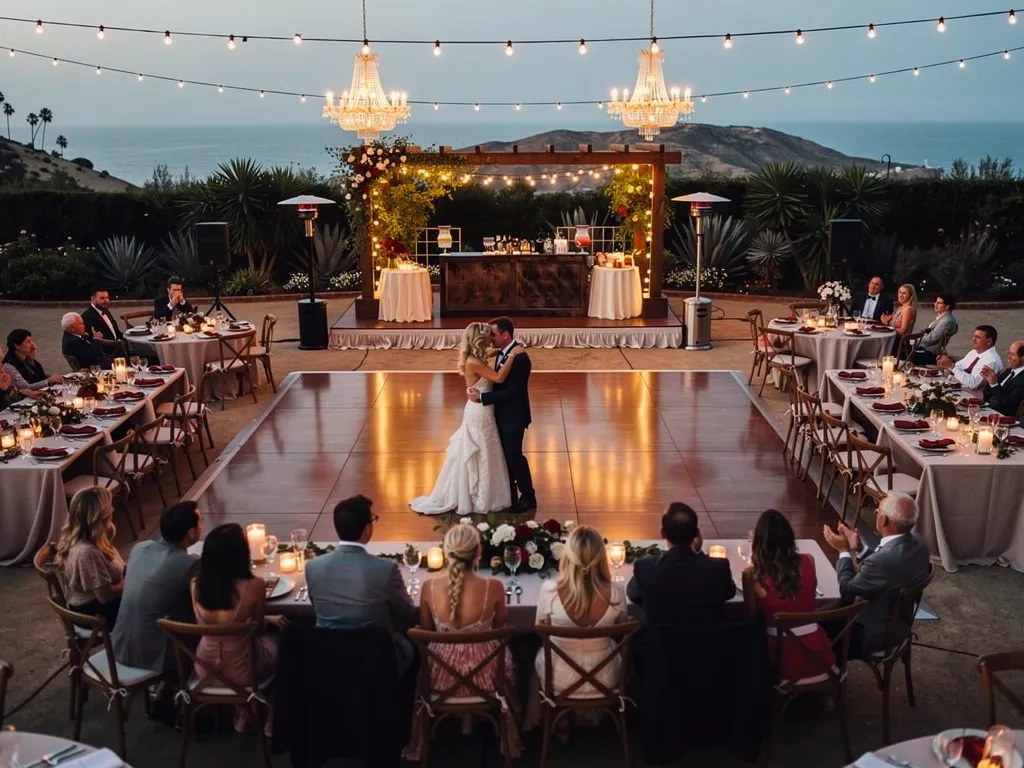
The stage should support the full timeline of the reception, not just the dance portion of the evening. Guests may move from cocktail hour to dinner, then to speeches, the first dance, open dancing, and lounge areas. A strong staging plan helps each part of the evening feel connected.
From Dinner to Toasts and Speeches
If speeches or announcements are part of the reception, the stage or platform can give those moments a clear focal point. Guests should not have to turn awkwardly or search the room to see who is speaking.
For seated dinners, stage placement should consider the direction guests will face during the program. The stage should support visibility from guest tables while leaving enough room for servers and event staff to move through the dining area.
From First Dance to Open Dancing
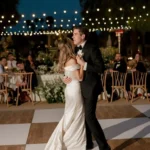
The transition from first dance to open dancing should feel natural. When the stage and dance floor are planned together, the music, lighting, and guest movement all work in the same direction.
If the stage is too removed from the dance floor, guests may hesitate to gather. If the dance floor is too far from the main seating or bar area, the energy may feel divided. A connected layout helps the reception build momentum.
From Live Music to DJ Sets
Some weddings include both a live band and a DJ. In that case, the stage layout should account for shared space, equipment placement, and transitions between entertainment styles.
A band may need a larger stage area, while the DJ may need a dedicated equipment position that remains accessible later in the evening. Planning this early prevents the entertainment zone from feeling crowded or improvised.
Lounge Areas Near the Entertainment Zone
Lounge furniture can help support the entertainment area by giving guests a place to gather near the music without standing directly on the dance floor. This is especially useful for guests who want to stay close to the celebration while taking a break from dancing.
The lounge should be close enough to feel connected but not so close that it blocks stage views, performer access, or dance floor movement. When placed well, lounge seating makes the reception feel more comfortable and complete.
Build a Weather-Aware Outdoor Entertainment Setup
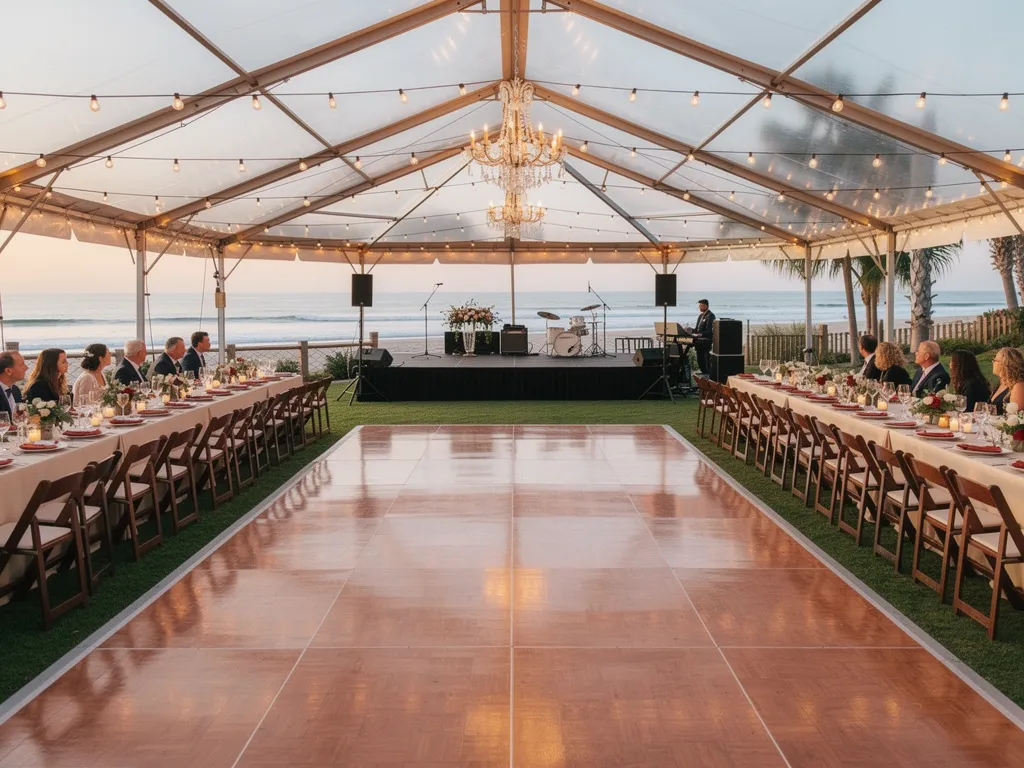
Outdoor Santa Barbara weddings benefit from an entertainment setup that considers the full venue environment. Staging, tents, flooring, lighting, power, dance floors, and nearby seating should work together so guests can comfortably see and access the entertainment area. Coordinating these rentals early also helps the stage feel integrated with the reception rather than treated as a separate element.
When to Pair a Stage With a Tent or Canopy
A tent or canopy can help define the entertainment area for an outdoor reception. It may also help the stage feel more integrated into the overall event design, especially when paired with lighting, flooring, and surrounding décor.
For outdoor weddings, the tent or canopy should be planned with the stage, dance floor, guest seating, and vendor access in mind. If these pieces are placed separately without a layout strategy, the reception can feel disjointed.
Flooring Support for Lawns, Gardens, and Uneven Surfaces
Lawns, gardens, and estate grounds may require additional flooring considerations around the stage and dance floor. Flooring can help define guest pathways, support the dance area, and make the entertainment zone feel more complete.
The stage should also be planned with the surface in mind. A platform placed on an outdoor area needs a layout that supports performers, guests, and vendor movement throughout the evening.
Evening Visibility for Outdoor Performances
Many Santa Barbara weddings move from daylight into evening. Once the sun sets, the entertainment area needs enough visibility for guests to see the band, DJ, emcee, dance floor, and important reception moments.
Lighting should be considered around the stage, dance floor, pathways, bar, and lounge areas. This helps the event feel polished after dark and keeps guests moving comfortably through the space.
Vendor Access for Setup and Breakdown
Outdoor venues, private homes, and estates may have specific access limitations. Delivery paths, parking, load-in areas, setup windows, and pickup timing can all affect the staging plan.
Planning vendor access early helps the setup run more smoothly. The stage, dance floor, lighting, power, lounge furniture, and other rentals should be placed with both the guest experience and the vendor workflow in mind.
Avoid Common Wedding Stage Planning Mistakes
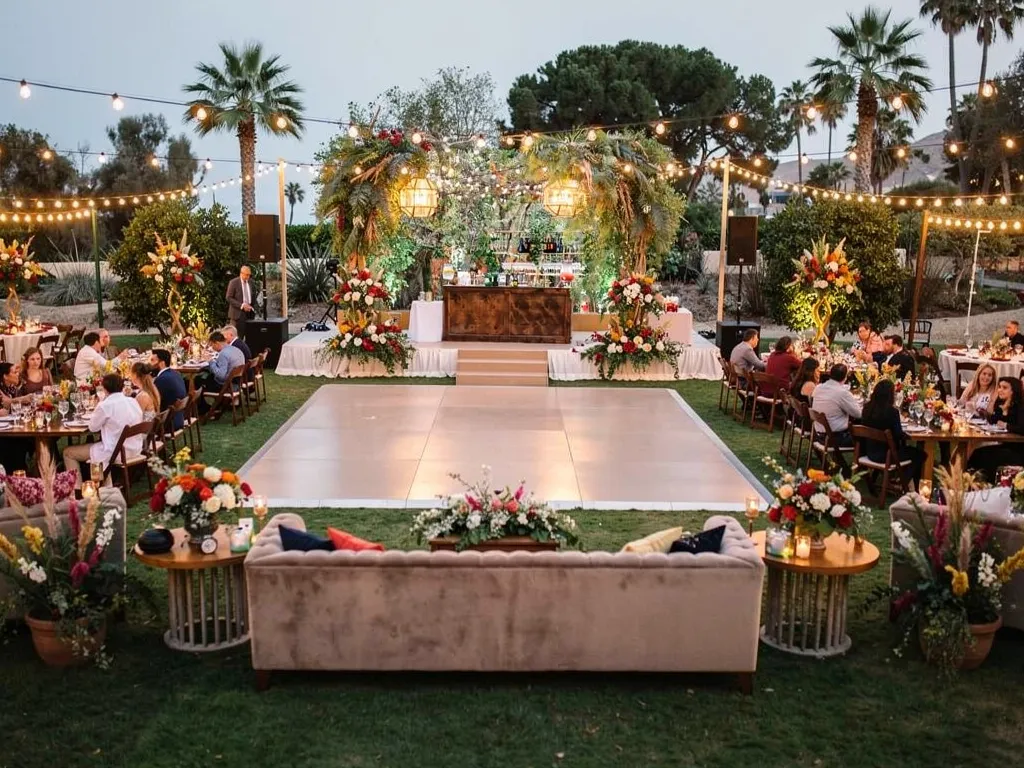
Stage planning can affect the entire reception experience. The most common issues happen when the stage is selected before the entertainment is confirmed, when it is placed too far from the dance floor, or when lighting and power are treated as final details instead of core parts of the layout.
Choosing the Stage Before Confirming the Entertainment
The entertainment should guide the stage plan. A DJ, live band, ceremony musician, emcee, and cultural performance may each require different space, equipment, and visibility.
Before selecting a platform, couples and planners should understand who will use the stage, how long they will use it, what equipment they will bring, and whether the stage will serve more than one purpose during the wedding.
Placing the Stage Too Far From the Dance Floor
The stage and dance floor should feel like one connected area. If they are separated, the energy of the reception can feel split. Guests may not know where to gather once dancing begins, and the entertainment may feel removed from the celebration.
A better approach is to plan the stage, dance floor, lighting, and guest seating as a connected zone. This keeps the reception flow clear and helps the music feel central to the event.
Forgetting About Guest Sightlines
Sightlines are easy to overlook. A stage may fit into the layout but still be blocked by tables, floral installations, tent poles, columns, lounge furniture, or décor. Before finalizing the placement, it helps to think through what guests will see from different areas of the venue.
This is especially important for speeches, introductions, and first dances. Guests should be able to see important moments without needing to stand, move chairs, or crowd the performance area.
Treating Power and Lighting as Last-Minute Details
Power and lighting should be planned with the stage from the beginning. A stage without the right support can create setup challenges, especially outdoors or at private estates.
When power, lighting, cable routes, and equipment placement are considered early, the entertainment area is easier to set up and more comfortable for guests to experience. It also helps the stage look cleaner and more polished.
Use Ventura Rental to Bring the Entertainment Layout Together
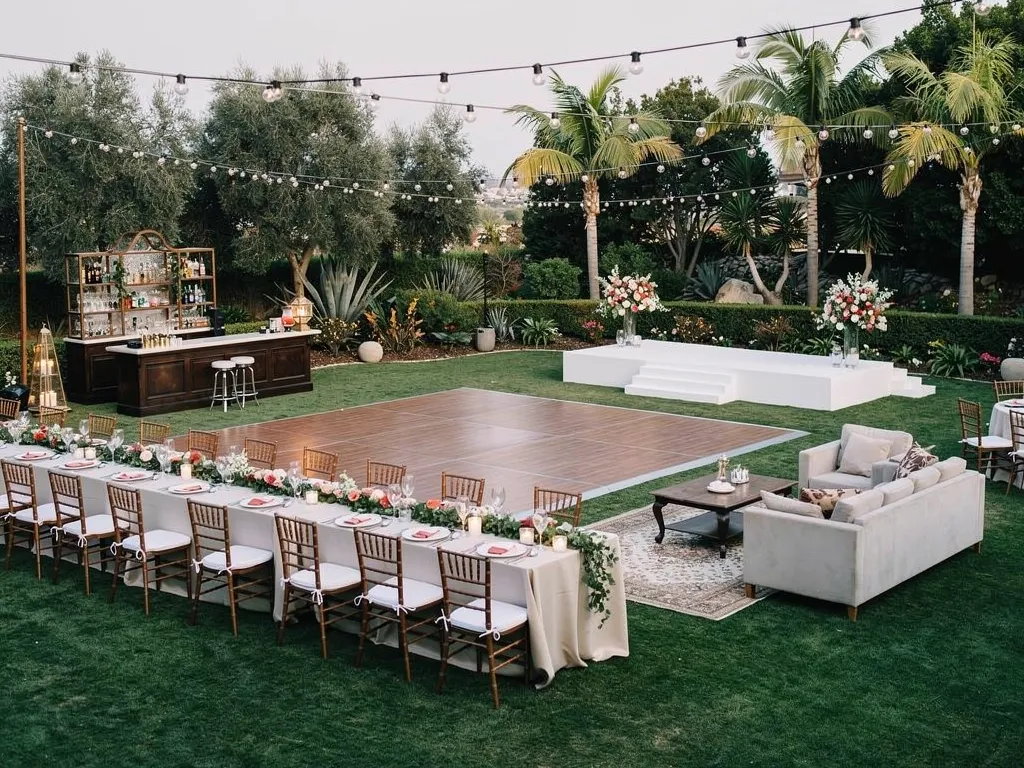
A wedding stage works best when it is planned as part of the full rental layout. The entertainment area should coordinate with the dance floor, lighting, power, tents, tables, chairs, lounge furniture, bars, and décor. For Santa Barbara weddings, this complete approach helps the event feel cohesive from ceremony to reception.
Staging as Part of a Complete Rental Plan
Staging should not be treated as a standalone item. It affects where the dance floor goes, how guests move through the space, where lighting is placed, how the bar functions, and where lounge furniture can be positioned.
When these details are planned together, the entertainment area feels integrated instead of added on later. This is especially important for outdoor venues and private estates where the event environment is built almost entirely through rentals.
Support for Santa Barbara Weddings and Outdoor Events
Santa Barbara weddings often take place in settings that require thoughtful rental planning. Coastal venues, gardens, private estates, courtyards, and formal reception spaces each have different layout needs.
A stage for a coastal wedding may need to work with open-air conditions and guest pathways. A garden or estate setup may need to coordinate with lawns, lighting, power, and lounge areas. A courtyard or indoor venue may require a more compact approach that respects the existing architecture.
Layout Guidance for Entertainment Areas
Entertainment layout planning helps determine where the stage, dance floor, bar, lounge furniture, guest seating, lighting, and vendor access should go. These choices affect the atmosphere of the reception and the way guests experience each part of the evening.
The goal is to make the entertainment area feel visible, comfortable, and connected. Guests should be able to move naturally from dinner to speeches, from speeches to dancing, and from dancing to lounge or bar areas.
Delivery and Setup Coordination
Delivery and setup coordination are especially important for outdoor spaces, private homes, estates, and venues with access limitations. Stages and platforms may need to be placed before other rental pieces, or coordinated with lighting, flooring, tents, and power.
A clear setup plan helps the entertainment area come together efficiently and ensures that the final layout matches the event vision. When the stage is installed in the right location and supported by the right surrounding rentals, the reception feels more polished and easier for guests to enjoy.
Frequently Asked Questions
Do I need a stage for a wedding DJ?
Not every DJ needs a large stage, but a platform can help define the entertainment area and improve visibility. It can also give the DJ setup a cleaner, more intentional look, especially when the entertainment area is visible from the dining tables, dance floor, or lounge spaces.
What type of stage works best for a live wedding band?
The best stage for a live band depends on the number of performers, instruments, equipment, and movement needed during the performance. A larger band usually needs more space than a DJ or solo musician, and the stage should be planned around both performance comfort and guest sightlines.
Should the stage and dance floor be planned together?
Yes. The stage and dance floor should be planned together because they function as one entertainment zone. The stage should feel connected to the dance floor without blocking guest movement, bar access, service routes, or seating areas.
Can a stage be used for speeches or ceremony music?
Yes. A stage or platform can support ceremony musicians, emcees, speakers, announcements, cultural performances, or special reception moments. If the platform will serve multiple purposes, the layout should allow easy access and clear visibility throughout the event.
What should I consider for an outdoor wedding stage in Santa Barbara?
For an outdoor wedding stage, consider the surface conditions, guest sightlines, lighting, power access, vendor setup routes, tenting or canopy needs, dance floor placement, and the event timeline. These details help the entertainment area function well from setup through the end of the reception.
Can Ventura Rental help with staging and related wedding rentals?
Yes. Ventura Rental can support staging and related wedding rentals, including flooring and staging, tents, lighting, power, furniture, lounge rentals, tables, chairs, bars, and décor. Coordinating these rentals together helps the entertainment area feel connected to the full wedding layout.
Conclusion
A stage or platform can shape how guests experience wedding entertainment, from ceremony music and speeches to the first dance and late-night DJ set. For Santa Barbara weddings, the right staging plan should account for the venue, entertainment style, guest sightlines, dance floor placement, lighting, power, and outdoor setup needs.
When staging is planned as part of the full rental layout, the entertainment area feels polished, practical, and connected to the rest of the celebration. Whether the wedding takes place at a coastal venue, garden, private estate, courtyard, or formal reception space, thoughtful stage and platform rentals help create a clearer focal point for the moments guests will remember.