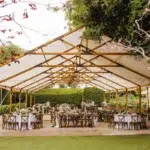

Choosing the right tent size for a wedding in Santa Barbara depends on three main factors: guest count, seating layout, and the additional space required for reception activities. For couples planning with wedding rentals in Santa Barbara, tent sizing is an important part of creating a comfortable outdoor event space that can accommodate dining tables, dance floors, bars, service areas, and guest circulation.
As a starting point, planners typically allocate 10–12 square feet per guest for seated dining. Additional space is then added for movement, entertainment areas, and vendor operations. Understanding how these elements affect the overall footprint helps ensure the tent supports both guest comfort and smooth event flow.
The sections below explain how to calculate tent size, provide examples for common guest counts, and outline layout considerations for Santa Barbara outdoor weddings.
How Can You Calculate Wedding Tent Size Using Guest Count?

Using guest count as the starting point allows couples and planners to estimate tent size quickly before contacting rental providers. This approach helps determine whether a venue has enough space for the planned setup.
Simple Wedding Tent Size Formula
A common method for estimating tent size is to multiply the number of guests by the square footage required per person.
Typical guidelines include:
| Event Type | Space Needed Per Guest |
|---|---|
| Ceremony seating | 8–10 sq ft |
| Seated dinner reception | 10–12 sq ft |
| Cocktail-style reception | 6–8 sq ft |
Example calculation:
100 guests × 12 sq ft = 1,200 square feet
This calculation covers dining and seating but does not include additional reception features such as a dance floor or buffet stations.
Quick Tent Size Estimate by Guest Count
The following table shows common starting points for tent size based on guest count.
| Guests | Estimated Tent Size |
|---|---|
| 50 guests | 20 x 30 or 20 x 40 |
| 100 guests | 30 x 40 or 30 x 60 |
| 150 guests | 40 x 60 |
| 200 guests | 40 x 80 |
These estimates provide general planning guidance. The final tent size should reflect the event layout and activities planned within the space.
What Tent Size Is Needed for Common Wedding Guest Counts?
Guest count is the primary factor that determines the minimum tent size. As the number of attendees increases, additional square footage is needed not only for seating but also for circulation and reception features.
Understanding common tent sizes used for typical wedding guest counts can help simplify the early stages of planning.
Tent Size for 50 Guest Weddings
Smaller weddings often fit comfortably inside tents measuring 20 x 30 or 20 x 40 feet. These tents provide enough space for dining tables and basic circulation while maintaining an intimate atmosphere.
If a dance floor or buffet service is included, planners may increase the footprint slightly.
Tent Size for 100 Guest Weddings
For a 100 guest wedding, a 30 x 40 tent is often used as a starting point for seating and circulation. Many couples expand the tent size to 30 x 60 when adding a dance floor, bar, or lounge seating.
This larger footprint ensures that tables remain comfortably spaced and guest movement remains unrestricted.
Tent Size for 150–200 Guest Weddings
Larger weddings typically require tents measuring 40 x 60 feet or larger. For guest counts around 200 people, planners often choose tents around 40 x 80 feet or combine multiple tent sections.
This larger footprint provides room for multiple reception zones such as dining, dancing, and lounge areas.
Wedding Tent Size Chart for Common Guest Counts
The table below provides a quick reference for common tent sizes used for weddings based on guest count and a seated reception layout. Read more in Tent Rentals in Ventura County: Local Guide to Sizes, Styles & Pricing.
| Guest Count | Recommended Tent Size | Square Footage |
|---|---|---|
| 50 guests | 20 x 30 | 600 sq ft |
| 75 guests | 20 x 40 | 800 sq ft |
| 100 guests | 30 x 40 | 1,200 sq ft |
| 150 guests | 40 x 60 | 2,400 sq ft |
| 200 guests | 40 x 80 | 3,200 sq ft |
These estimates assume a traditional seated dinner arrangement. If the event includes large dance floors, buffet stations, lounge areas, or staging, additional space may be required.
How Does Wedding Layout Affect the Tent Size You Need?

Tent size is influenced not only by guest count but also by how the interior layout is organized. Different seating arrangements require varying amounts of space per guest.
Understanding these layout differences helps ensure the tent remains comfortable and functional throughout the event.
Banquet Table Layouts
Banquet-style layouts use long rectangular tables arranged in rows. This style can be efficient in narrow spaces but still requires generous aisle spacing for guests and servers.
Because the tables run lengthwise, planners must account for circulation paths between rows.
Round Table Reception Layouts
Round tables are one of the most common seating arrangements for wedding receptions. These tables typically seat eight to ten guests and allow for comfortable conversation.
However, round tables often require more space per guest due to the circular footprint and additional aisle space needed between tables.
Mixed Layouts With Lounge or Cocktail Areas
Some weddings incorporate multiple seating styles, such as dining tables combined with cocktail areas or lounge seating. While this layout adds variety and flexibility, it also increases the amount of space required within the tent.
Planners should account for these additional zones when determining the overall tent size. For more detail, see our article Effective Tent Size Guide for Your Upcoming Event.
How Much Space Should Be Reserved for Dance Floors and Reception Areas?

Reception features such as dance floors, bars, and food stations can significantly affect the tent footprint. These elements should be included in the space plan early in the design process to prevent overcrowding.
Recommended Dance Floor Sizes by Guest Count
Dance floor size is typically determined by the number of guests expected to dance at the same time.
| Guest Count | Recommended Dance Floor Size |
|---|---|
| 50 guests | 100–150 sq ft |
| 100 guests | 200–300 sq ft |
| 150 guests | 300–400 sq ft |
| 200 guests | 400–600 sq ft |
These sizes allow guests to move comfortably without overcrowding.
Placement of the Dance Floor Within the Tent
Many reception layouts place the dance floor near the center of the tent to encourage participation and maintain visibility from surrounding tables.
A central dance floor also allows the DJ or band to interact easily with guests throughout the reception.
Space Needed for Bars, Buffets, and Service Areas
Bar stations and buffet tables also require designated areas within the tent layout. Planners should allow space for guest lines and staff movement so service areas remain organized and accessible.
Strategically positioning these stations near entrances or along the tent perimeter can help prevent congestion.
What Local Factors Affect Wedding Tent Size in Santa Barbara?
Santa Barbara venues present unique environmental and logistical considerations that can influence tent size and design. Outdoor weddings often take place in coastal locations, vineyards, or private estates where site conditions vary. Read more in Tent Size Guide for Ventura & Santa Barbara Weddings.
Planning for these factors helps ensure the tent performs well throughout the event.
Coastal Wind and Weather Conditions
Coastal winds and changing temperatures are common in Santa Barbara. Tents designed for outdoor weddings may include sidewalls or ventilation options that improve comfort and weather protection.
Venue Space and Terrain Limitations
Some venues may have uneven terrain, limited installation areas, or surrounding landscaping that affects the size and placement of the tent.
Measuring the available footprint during a site visit helps determine the maximum tent size that can be installed.
Permit or Setup Restrictions
Certain venues and public locations require permits or have restrictions on tent size and installation methods. Understanding these rules early in the planning process helps avoid unexpected adjustments later.
How Can a Rental Company Help Determine the Right Tent Size?
Experienced rental providers can help couples determine the appropriate tent size by reviewing guest counts, layouts, and venue conditions. Their expertise can simplify planning and ensure the tent supports both the design vision and operational needs of the event.
Site Measurements and Layout Planning
Rental professionals often assist with measuring the event space and recommending tent sizes based on the layout and available footprint.
Tent Style Options That Affect Interior Space
Different tent styles can influence usable interior space. For example, frame tents and clear-span tents provide open interiors without center poles, which allows greater flexibility for table placement.
Working With Local Rental Experts in Santa Barbara
Local rental companies familiar with Santa Barbara venues can recommend tent configurations that perform well under coastal conditions and meet venue requirements.
If you are planning an outdoor wedding in Santa Barbara, Ventura Rentals provides tent options and event equipment designed for weddings of all sizes. The team can help determine the appropriate tent size, recommend layouts, and coordinate installation to ensure the event space is prepared for dining, dancing, and guest comfort. Read more in Tent Flooring Options That Elevate Wedding Venues.
Frequently Asked Questions
What size tent do I need for 100 wedding guests?
A wedding with 100 seated guests typically requires around 1,200 square feet of tent space, often achieved with a 30 x 40 or 30 x 60 tent depending on the reception layout.
How much space is needed for a wedding dance floor?
Dance floors typically require 2–4 square feet per dancing guest. For a 100 guest wedding, planners often include a dance floor measuring approximately 200–300 square feet.
Can wedding tents be installed on uneven ground?
Yes, many tents can be installed on uneven surfaces with proper flooring or leveling techniques. Rental companies can recommend appropriate installation methods based on the site conditions.
When should wedding tents be reserved?
Wedding tents are often reserved six to twelve months in advance, particularly during peak wedding seasons when demand for rental equipment is highest.
Conclusion
Selecting the right tent size for a Santa Barbara wedding begins with understanding guest count, layout preferences, and the additional space needed for reception activities. Tables, dance floors, service areas, and circulation paths all influence the total footprint required for a comfortable event. Questions about delivery, setup or pricing? Talk to our team about your event.
By calculating square footage carefully and consulting with experienced rental providers, couples and planners can select a tent that supports both the design and functionality of the celebration. Early planning helps ensure the tent fits the venue, accommodates guests comfortably, and creates an inviting environment for the wedding day. Compare canopy and tent sizes for your guest count in our tent and canopy rentals.