
Winter events work best when the layout feels warm, easy to move through, and intentionally cozy. A thoughtful “cozy winter layout” pairs furniture clusters, soft textiles, layered lighting, and targeted heating so guests stay comfortable and linger. In this guide we explain why planning indoor, outdoor, and hybrid zones matters, how to choose furnishings and heaters, and which layout moves improve conversation and circulation. You’ll find practical steps for lounge clusters, tent placement, heater selection, and decor pairings so your event reads as one unified experience across thresholds — solving the common problems of chilled guests and broken flow. The article is organized into four focused sections: indoor warmth strategies, outdoor shelter and heating, blending indoor–outdoor transitions, and decor & ambiance tactics. Each section includes quick checklists, comparison tables, and real-world examples. Key phrases like cozy winter event layout, winter party layout guide, and winter event lounge furniture rental appear naturally to help planners match design choices to comfort goals and rental options.
How can you create warm, inviting indoor winter event spaces?
Indoor winter comfort starts with clear zones: group seating into social clusters, choose tactile textiles, and layer lighting so warmth, sightlines, and service flow work together. Think in thermal and visual zones — define lounge, dining, and service areas so heat sources and circulation align. That reduces drafts and encourages guests to stay. Below are the top strategies you can implement right away; they focus on touchable materials, concentrated seating, and accessible hot-drink stations to keep guests comfortable. These moves tie directly to the furniture choices in the comparison table that follows.
Create inviting indoor spaces with these primary strategies:
- Place lounge clusters near heat sources and away from exterior doors.
- Choose heavy linens and layered throws to increase perceived warmth.
- Layer ambient, task, and accent lighting to add depth and intimacy.
- Locate catering and hot beverage stations to limit traffic through cold zones.
Which lounge furniture and textiles boost indoor winter comfort?
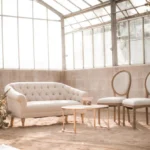
Pick pieces by material and scale: sofas and loveseats anchor zones while armchairs and ottomans add flexible seats and easier sightline control. Velvet and wool-blend textiles feel warmer to the touch and trap a little heat; rugs and layered throws add insulation at floor level and make seating areas more inviting. The table below compares common pieces and fabrics to guide short-term rental choices, helping planners balance capacity, cozy factor, and indoor suitability. Use these attributes to plan layout density and keep service access clear so seating supports circulation rather than blocks it.
Mixing a velvet sofa with movable armchairs and wool throws maximizes comfort and flexibility, and that combination informs lighting choices next.
How does ambient lighting enhance indoor winter ambiance?
Ambient lighting changes perceived warmth and highlights cozy focal points. Warm color temperatures and dimming deepen intimacy while task lights keep plates and pathways visible. Use three layers — overhead ambient, table or floor lamps at seating clusters, and accent uplighting to show texture — to create depth and guide movement between zones. Warm LED bulbs (2700K–3000K) give visual warmth without overheating the room, and dimmers let staff lower intensity as the evening evolves. Position lamps near textiles and seating to emphasize texture and invite guests to linger, supporting traffic flow and the beverage/service layout covered earlier.
What are the best heating and shelter solutions for outdoor winter events?
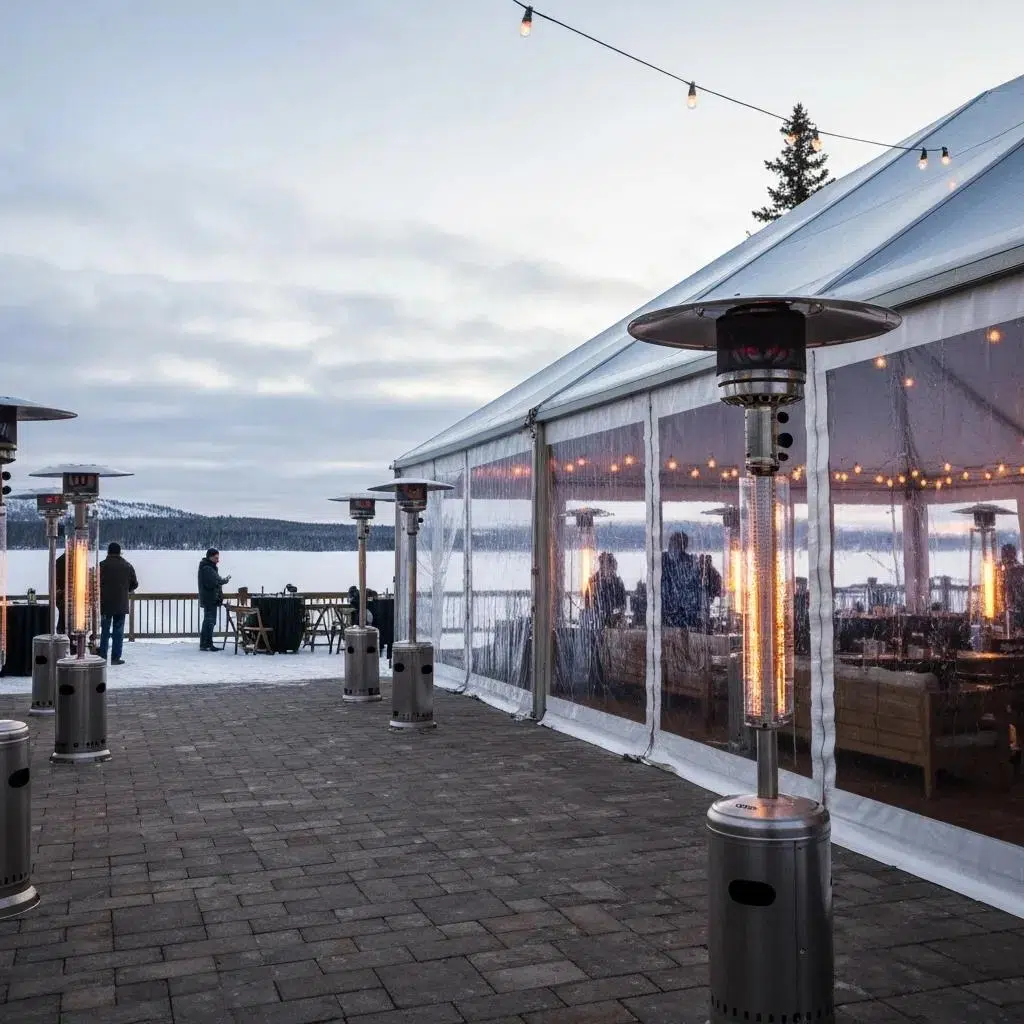
Outdoor winter comfort depends on choosing the right heater and shelter so open-air ambiance stays safe and warm. Propane patio heaters perform well in open setups; enclosed tents need integrated heating for consistent temperatures. Match coverage area to fuel type and safety constraints: select heaters or fire features based on BTU needs, venue rules, and whether open flames are allowed. Below is a concise heater/fire checklist and a comparison table to match warmth levels to typical guest areas; those choices also guide tent selection and placement later.
When choosing outdoor heating, consider:
- Coverage area and estimated BTU per square foot.
- Fuel type (propane vs. electric) and on-site availability.
- Safety constraints, permits, and required clearances.
In short: propane heaters cover wide-open areas well, while enclosed tents usually need integrated heating and flooring for steady temperatures.
How do you choose the right patio heaters and fire pits for outdoor comfort?
Match heater output to each guest area by calculating square footage and layering warmth sources. Radiant heaters serve small clusters; tall patio heaters warm standing cocktail zones. Safety and permits are the deciding factors: fire pits create atmosphere but often need barriers and attendants, while electric or propane heaters trade ambiance for reliable coverage and simpler permit compliance. For example, on a mixed lounge and dining yard of about 1,000 sq ft, plan multiple propane heaters spaced evenly plus a single gas fire pit as a social focal point — keeping 3–4 ft clearances and a dedicated fuel storage area. These choices flow directly into tent decisions where enclosure and heating integration matter.
What tent options give shelter and heat for winter outdoor events?
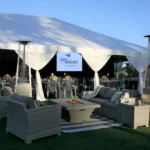
Choose tents by balancing sightlines and thermal control, especially when evaluating wind-resistant tents for exposed venues: clear-panel walls preserve views and daylight; solid-wall or fully enclosed tents deliver better thermal performance when paired with flooring and heating. The key is envelope control — solid walls and floors reduce cold air infiltration while clear panels keep the connection to the outdoors. Consider temporary flooring to create a thermal buffer, integrated staging for service, and tent-compatible heating that vents properly. Tent choices determine how heaters are deployed and where thresholds form between indoor and outdoor spaces, which is essential for smooth flow planning.
Overall, flooring plus solid walls gives the strongest thermal performance for longer, seated events.
How do you seamlessly blend indoor and outdoor spaces for cozy winter events?

Make indoor and outdoor feel like one place by keeping sightlines clear, using consistent decor, and designing obvious pathways. Create transition thresholds — ramps or runners, matched lighting temperatures, and aligned seating styles — to shrink the cognitive gap between spaces and encourage natural movement. Below is a step-by-step checklist for transitions and a short comparison table of transition elements to help you decide what to rent and where to place it.
Follow these steps for cohesive indoor-outdoor flow:
- Establish clear, wide pathways from indoor exits to outdoor tents or lounges.
- Match color temperature and fixture styles on both sides of the threshold.
- Add flooring or runner treatments at entrances to reduce slips and heat loss.
Aligning these elements reduces bottlenecks and keeps guests comfortable, which supports optimal tent and heater placement described earlier.
What are effective strategies for tent placement and guest flow?
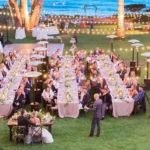
Locate tents close to main indoor exits but clear of service paths — the goal is to minimize distance between indoor amenities (kitchen, restrooms) and heated outdoor areas. Plan ADA-compliant routes and separate service lanes, similar to considerations in backyard wedding setup planning, so staff can work without cutting through guest clusters. Use signage and layered lighting to define routes and ease navigation, and maintain buffer zones between heaters and furniture to meet safety clearances. These placement rules create predictable flow and let you concentrate heating where guests actually gather.
How can lighting and decor create a cohesive indoor–outdoor ambiance?
Unify spaces by repeating materials, textures, and warm color temperatures so guests feel a single cohesive environment. Run string lights across thresholds, carry indoor rug patterns into outdoor lounges, and use consistent lamp styles and bulbs to tie the look together. Keep focal points — bar, fire pit, stage — brighter with task lighting while seating areas stay softer. Coordinating lighting and decor with tent placement and heating keeps both comfort and presentation polished.
What decor and ambiance elements are essential for styling cozy winter events?
Decor signals warmth and season without clutter. Heavy textures, layered rugs, and restrained seasonal accents create richness while adding insulation and visual weight. The principle is sensory layering: tactile textiles boost perceived warmth, warm lighting provides atmosphere, and curated accents draw guests into zones. Below are essential decor items and lighting techniques you can apply right away.
- Heavy linens and velvet or wool throws for tactile warmth.
- Layered rugs and runners to define and insulate zones.
- Minimal seasonal accents (pinecones, berries) used sparingly for polish.
How do textiles and themed decorations enhance winter event warmth?
Textiles affect both thermal performance and perceived comfort: wool, velvet, and heavy cotton trap heat and invite touch, while throws and cushions let guests self-regulate. Layer rugs, runners, and floor cushions to insulate surfaces and clearly define seating areas, which helps reduce drafts at foot level. Use themed decorations sparingly — pick three complementary accents per zone to suggest season without overwhelming. These textile and accent choices dovetail with furniture selection and rental options for a cohesive plan.
What lighting techniques set the perfect mood for winter gatherings?
Use warm color temperatures, dimming control, and layered placement to create intimacy while keeping pathways safe. Set a warm base (2700K–3000K), add task lights near bars and food stations, and use accent uplighting to highlight textiles and architecture. Put lighting on dimmers and grouped circuits so you can shift mood through the evening, and avoid harsh overhead glare by favoring lamps and string lights. These lighting moves work with textiles and heating to keep the whole venue feeling comfortable.
Ventura Rental Party & Events offers a broad inventory and hands-on design help to put these layouts into practice. We supply lounge furniture, linens, lighting, tents, and heaters — and we’ll help you plan placement so your event is comfortable and cohesive. Browse our catalog, request a quote, or contact our design team to get started.
Frequently Asked Questions
What are the key considerations for planning a cozy outdoor winter event?
Focus on heating, shelter, and guest flow. Choose heaters that match the space and venue rules, pick tents that balance insulation and visibility, and plan clear pathways with signage and lighting so guests move easily between indoor and outdoor areas.
How can I ensure my indoor and outdoor spaces feel cohesive?
Use matching decor, color palettes, and lighting temperatures on both sides of the threshold. Repeat textiles and patterns, and add transitional elements like runners or pathway lighting to visually and physically connect the spaces.
What types of textiles are best for enhancing warmth at winter events?
Choose heavy, tactile materials such as wool, velvet, and thick cotton. Layer rugs and throws to add insulation and define seating areas, and include cushions so guests can adjust their comfort.
How can I effectively manage guest flow during a winter event?
Plan furniture and tent placement to keep main routes clear. Provide wide, ADA-compliant pathways, separate service lanes for staff, and use signage and layered lighting to guide guests and reduce congestion.
What are some effective heating solutions for hybrid indoor–outdoor events?
Use a mix of heaters: propane patio heaters for open-air zones, electric heaters for covered areas, and fire pits for ambiance where permitted. For tents, use integrated heating and flooring to maintain a consistent temperature.
How can I incorporate seasonal decor without overwhelming the space?
Opt for a few well-chosen accents and keep the palette cohesive. Layer textures with rugs and throws and limit decorative elements to a few complementary pieces per zone to maintain a refined, seasonal look.
What lighting strategies can enhance the ambiance of a winter event?
Set a warm base (2700K–3000K), use task lighting at food and drink stations, and add accent uplighting to highlight features. Rely on dimmers and grouped circuits to control mood and favor lamps and string lights over harsh overhead fixtures.
Conclusion
A well-planned cozy winter layout keeps guests comfortable and engaged — and makes your event memorable. By arranging furniture thoughtfully, choosing warm textiles, and deploying the right heating and lighting, you can create a seamless, inviting experience indoors and out. Explore our rental options and talk to our team to bring your winter event vision to life.