
Picking the right tent size makes the whole day smoother: guests stay comfortable, service runs without hiccups, and every essential zone — dining, dancing, catering ; fits the space. This guide shows how to turn a guest count into a tent footprint, how to budget space for dance floors and service stations, and offers sample layouts that match typical Southern California guest ranges. You’ll get simple square‑feet‑per‑guest rules, practical adjustments for layout features, and local site and weather considerations for Ventura County and Santa Barbara County. At the end we point to local tools — a tenting questionnaire and our rental catalog — so you can request accurate quotes and finalize a layout. Read on for direct formulas, quick tables, and annotated layout options to size your tent with confidence.
Ventura Rental Party & Events is a local event partner that can turn these estimates into a firm quote. We offer tent rentals and planning tools — including a tenting questionnaire and a wedding rental checklist — to simplify site assessments and itemize needs. Use our catalog to match tent styles and add‑ons to your layout, then request a consultation to confirm site specifics. With that help you move from rough measurements to a binding equipment and logistics plan. For more detail, see our article Tent Rentals in Ventura County: Local Guide to Sizes, Styles & Pricing.
How Do I Calculate the Right Wedding Tent Size for My Guest Count?
Start with a per‑guest square‑foot rule, then add dedicated zones for non‑seating elements. The basic formula is: (square feet per guest × number of guests) + dance floor + buffet + bar + stage = required tent footprint. That prevents overcrowding and keeps service aisles and emergency access clear. The sections below break down standard per‑guest ranges and show how common layout elements change the footprint so you can apply the formula easily.
Before you use the lookup table, follow these quick calculation steps to get a reliable estimate.
- Estimate base guest area using the per‑guest ranges for your event type.
- Add fixed zones: dance floor, buffet, bar, and stage areas.
- Round up to the next standard tent size and add a 10–15% buffer for circulation.
This short checklist gets you from a headcount to a tentative tent size quickly and sets you up for the sample layouts that follow.
What Is the Recommended Square Footage Per Guest for Seated Dinners and Cocktail Receptions?
Seated, plated dinners need more room because tables and service lanes take fixed space. Plan on 10–12 sq ft per guest for a plated, seated dinner (this covers 60‑inch rounds, chairs, and aisles). Cocktail receptions usually require less seated space but more standing and circulation — allow 8–10 sq ft per guest for cocktail‑style events with high‑tops and mingling areas. Use these industry standard ranges as a starting point and increase them if you plan large stages, lounge areas, or long buffet lines.
Quick example: for 100 seated guests use 100 × 12 = 1,200 sq ft base before you add other zones. That number shows how layout elements affect the final tent size. You may also find What Size Tent Do I Need for a Wedding in Santa Barbara CA helpful.
How Do Dance Floors, Buffet Tables, and Other Layout Elements Affect Tent Size?
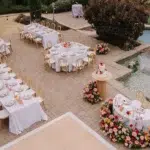
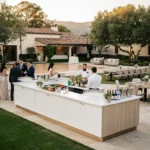
Fixed layout elements add clear square‑foot requirements that change which tent you choose. Typical allowances are: 100–144 sq ft for a modest dance floor (about 8–12 couples), 200–300 sq ft for a larger floor, 60–100 sq ft for a buffet line (varies with stations), 40–80 sq ft for a staffed bar, and 100–200 sq ft for a raised stage or band area. Add these to your base guest area and then choose a tent footprint that leaves a 10–15% circulation buffer. Planning these elements early avoids last‑minute moves or the need for multiple tents.
Worked example: 100 seated guests (1,200 sq ft) + 144 sq ft dance floor + 200 sq ft buffet + 60 sq ft bar = 1,604 sq ft; round up to a tent that covers ~1,800–2,000 sq ft so aisles and service paths are comfortable.
What Are the Best Tent Types for Ventura & Santa Barbara Weddings?
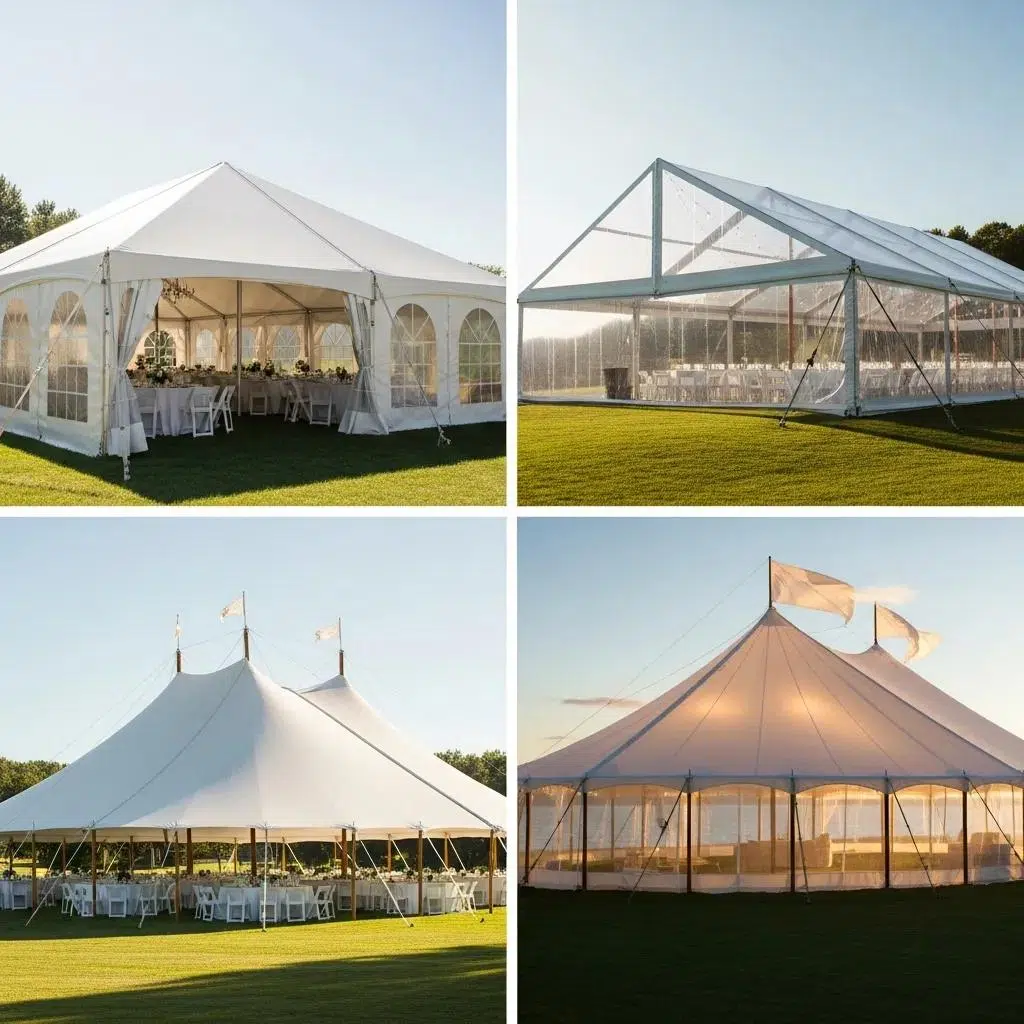
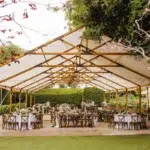
Choose a tent type based on aesthetics, site limits, and wind/anchoring needs common near the coast. Frame tents offer a low profile and no interior poles, making them flexible for hard surfaces and patios. Pole tents give a classic peaked look but have center poles that create interior obstructions. Clear span tents provide a fully unobstructed interior for large receptions and staging, and sailcloth tents bring a translucent, coastal‑friendly look with moderate anchoring requirements. Each choice affects layout options and how you plan circulation.
What Are the Benefits and Layout Options of Frame and Pole Tents?
Frame tents give an unobstructed floor plan, which simplifies table layouts and maintains consistent sightlines for ceremonies and speeches. Their anchoring options work well on hardscape or soft ground where stakes are limited. Pole tents create dramatic peaks but introduce center poles that must be integrated into table and dance‑floor placement. Identifying these interior obstructions early helps you decide whether one tent will work or whether multiple tent bays are smarter for separate service zones.
Choosing between frame and pole tents usually comes down to anchoring possibilities on site and the visual style you want — which then points to clear span or sailcloth as alternatives.
How Do Clear Span and Sailcloth Tents Enhance Wedding Experiences?
Clear span tents remove interior structural constraints and give continuous floor space for big dance floors, stages, and tiered seating. They’re ideal when unobstructed sightlines and flexible staging are priorities. Sailcloth tents offer a soft, luminous canopy that flatters coastal light and upscale décor while providing moderate wind resistance and anchoring flexibility. Both require professional anchoring plans and can affect HVAC and lighting strategies inside the tent envelope.
Choosing these types typically enables grander staging and uninterrupted layouts — an important consideration for larger or visually driven celebrations.
Can You Show Sample Wedding Tent Layouts for Different Guest Sizes?
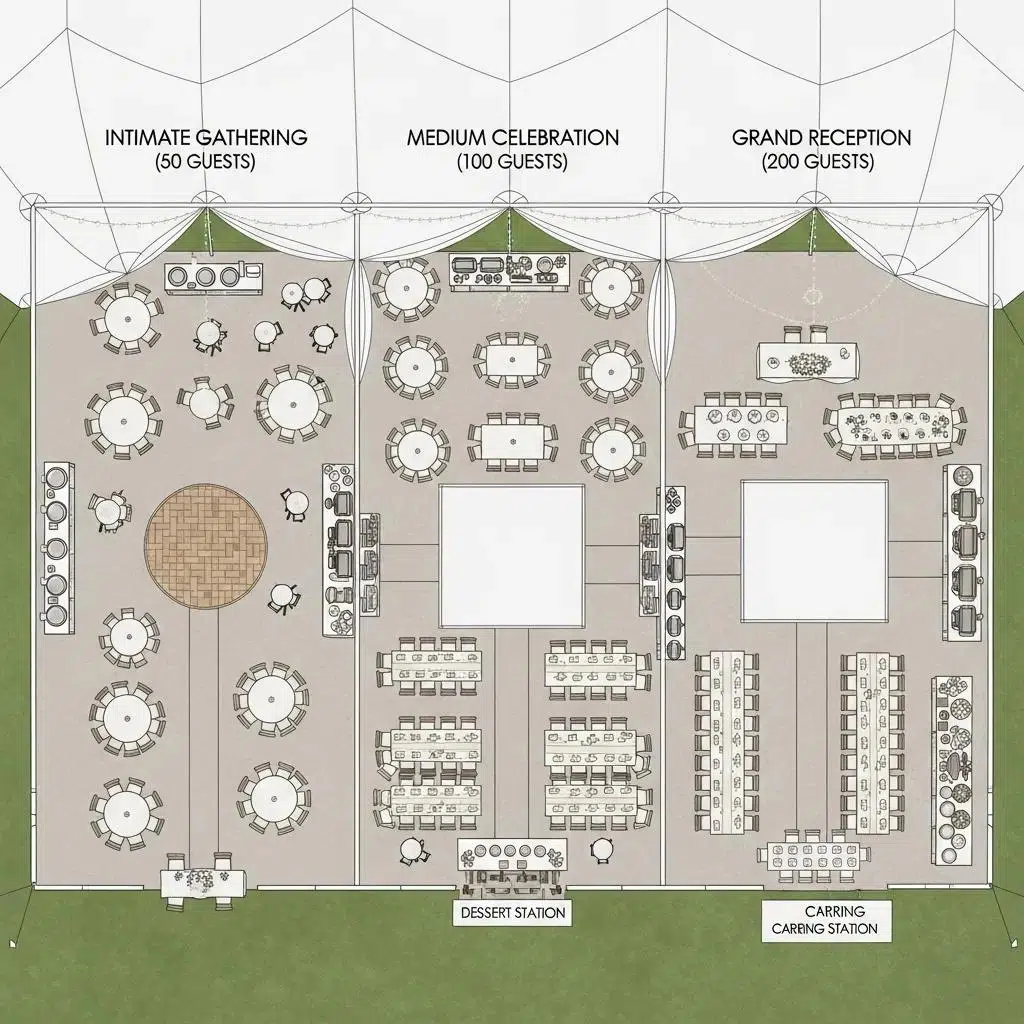
Sample layouts convert the calculations above into standard tent dimensions you can reserve or request in a quote. Below are concise examples that map guest ranges to common footprints and note optional elements that affect size. Use these as starting points, then refine with site measurements and your service plan. Read more in Effective Tent Size Guide for Your Upcoming Event.
- 50 guests: 20×30 (600 sq ft) tent with a small dance area and compact buffet.
- 100 guests: 30×50 (1,500 sq ft) tent for a seated dinner plus a modest dance floor.
- 200 guests: 40×80 or multiple clear‑span bays (3,200 sq ft) to include a stage and a large dance floor.
These quick captions align with the square‑foot‑per‑guest rules and the layout additions discussed earlier.
Below is a compact reference table linking guest ranges to recommended footprints and typical layout elements.
The table helps you move from guest counts to practical tent footprints you can request in a catalog or quote. Read more in Backyard Tent Weddings in Ventura County.
Ventura Rental Party & Events keeps a tent catalog and can provide quotes and layout consultations based on these sample footprints. If you have a guest count and a preferred layout, request a quote and complete our tenting questionnaire to get a site‑specific plan. Our planning tools convert these samples into equipment lists and crew schedules for installation.
What Local Factors Should I Consider When Planning a Wedding Tent in Ventura & Santa Barbara?

Local site and weather conditions influence tent selection, anchoring methods, and accessory needs for comfort and safety. Coastal wind patterns, sun exposure, and occasional rain in Ventura and Santa Barbara affect sidewall, anchoring, and HVAC choices. A proper site inspection should check for overhead wires, ground type (soil or hardscape), vehicle access for delivery, and nearby buildings that affect staging and egress. These local factors determine whether you need heavier anchors, added sidewalls, or multiple tent bays to work around obstacles.
Use this checklist to prepare for a site inspection and permit review.
- Check wind exposure and preferred tent orientation.
- Verify ground surface and anchoring options.
- Confirm vehicle and crew access for delivery and installation.
This checklist frames the permitting and inspection conversation and leads into the steps for tent installation permits.
How Does Weather Impact Tent Selection and Setup in Southern California?
Coastal wind, sun, and occasional rain change which tent features and setup strategies you’ll need for guest comfort and safety. Use wind‑rated anchors and consider removable sidewalls to block gusts while keeping views when possible. Strong sun may require extra shading or cooling; cool evenings may call for heating or enclosed sidewalls. Include weather‑mitigation items in the footprint so HVAC units, generator access, and ducting clearances are planned into the layout.
These weather‑driven choices should be captured during the site inspection and included in the installation plan to avoid last‑minute changes.
What Site Inspection and Permitting Steps Are Needed for Tent Installation?
A thorough site inspection inventories obstructions, measures the usable footprint, and identifies anchoring methods that meet local permit requirements. Key items include noting overhead utilities, confirming surface type for stake or ballast anchoring, checking stormwater paths, and making sure emergency egress routes stay clear. Permitting typically asks for a tent layout, anchoring plan, and sometimes structural calculations or fire‑safety documentation depending on local authorities. Preparing these items ahead of time speeds permit review and reduces installation delays.
Ventura Rental Party & Events helps with site inspections, permitting guidance, and a tenting questionnaire to document site constraints and equipment needs. Our team can translate inspection findings into a permitting package and a personalized quote to finalize tent selection and layout. For a quote built around your venue and guest count, contact our event rental team.
- Inspection: Document access, utilities, and the exact footprint.
- Permitting: Compile layout, anchoring, and safety documentation.
- Coordination: Schedule installation windows and finalize equipment lists.
Completing these steps ensures regulatory compliance and aligns installation with your event timeline.
Frequently Asked Questions
What Should I Consider When Choosing a Tent Location?
Choose a location that’s accessible, close enough to utilities, and free of obstructions like trees or power lines. A level site makes installation easier; think about guest flow so entrances, exits, and service areas are intuitive. Local rules can limit where tents go, so check permits or ask your rental company about restrictions.
How Can I Ensure My Tent is Secure Against Wind and Weather?
Use anchoring methods suited to local conditions — stakes, weights, or ballast systems — and ask your rental partner about wind‑rated tents. Sidewalls help against rain and gusts. Keep an eye on forecasts in the days before the event and be ready to adjust the setup for safety and comfort.
What Are the Costs Associated with Renting a Wedding Tent?
Tent rental costs vary by size, type, and extras like sidewalls, lighting, and flooring. Expect a range from around $500 up to several thousand dollars depending on needs. Always request detailed quotes — include delivery, setup, and takedown fees when budgeting. You may also find Lighting Ideas for Tent Weddings in Coastal California helpful.
How Do I Plan for Electrical Needs at My Tent Event?
Review power needs for lighting, sound, and other equipment with your rental company. You may need generators or local electrical service. Make sure setups follow safety codes and are weather‑protected — for complex installations, use a licensed electrician.
What Are the Best Practices for Tent Setup and Take Down?
Do a full site inspection before installation and clear the area of debris. Schedule setup early enough to allow adjustments. On takedown, return equipment in good condition and leave the site clean. Have a timeline and assigned people to oversee both setup and takedown so nothing is left to chance.
Can I Customize My Tent Layout for Different Activities?
Yes — customizing the layout is encouraged. Separate dining from dancing, create dedicated cocktail or lounge zones, and plan service aisles so staff can work efficiently. Work with your rental company to design a layout that fits your program and maximizes usable space.
Conclusion
Right‑sizing your wedding tent makes the day feel effortless — guests are comfortable, vendors can work smoothly, and your design looks as intended. Use the square‑foot rules and sample footprints here as a starting point, then reach out for a site‑specific quote. We’ll help turn your layout into a complete equipment list and installation plan so your celebration goes off without a hitch. See sizes and styles in our tent rentals catalog.