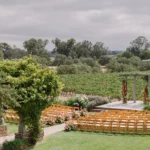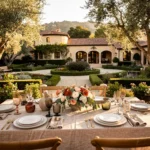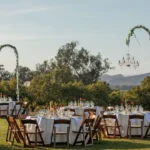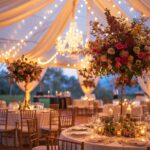

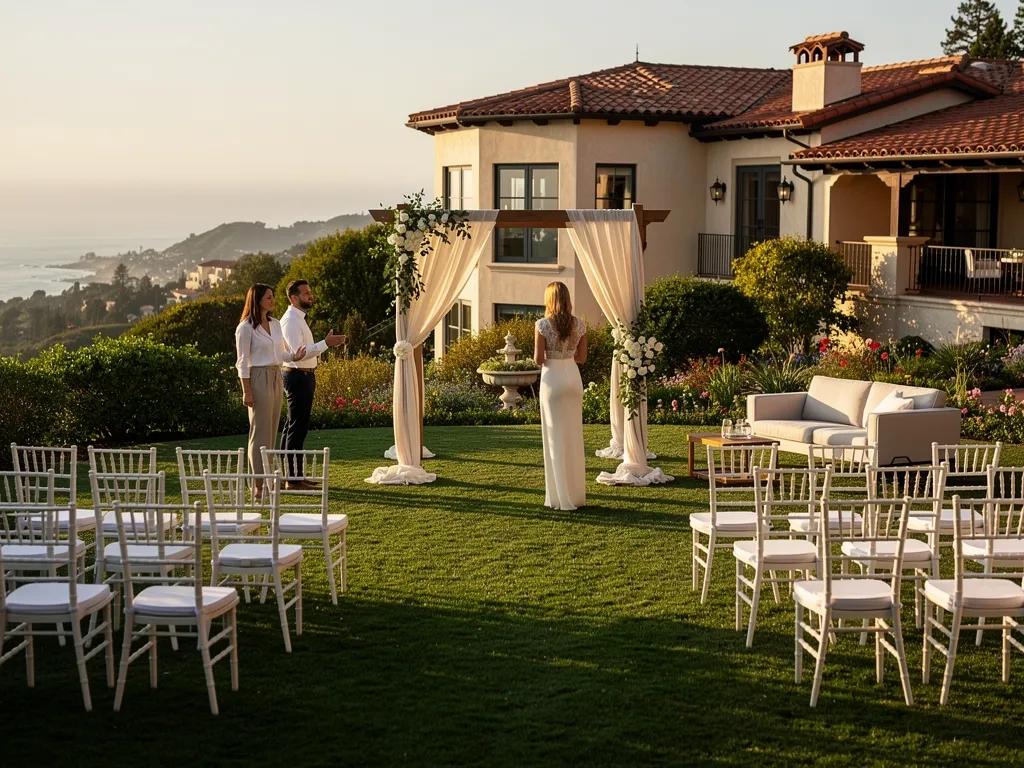
A ceremony arch or chuppah can do more than create a backdrop for the vows. At a Montecito estate wedding, the structure helps establish where the ceremony belongs within the property, directs attention toward the couple, and creates a visual relationship between the setting, florals, seating, and the rest of the celebration.
Choosing ceremony arch rentals in Montecito therefore begins with more than selecting a preferred style. The structure needs to make sense within the garden, lawn, courtyard, or terrace where the ceremony will take place. Its scale, material, floral treatment, and placement should support the setting rather than competing with it.
For couples incorporating a chuppah into a Jewish wedding ceremony, the planning process also needs to respect the structure’s ceremonial meaning. In either case, the strongest result comes from considering the structure, landscape, seating, and overall wedding design together.
Why the Ceremony Structure Matters at a Montecito Estate Wedding
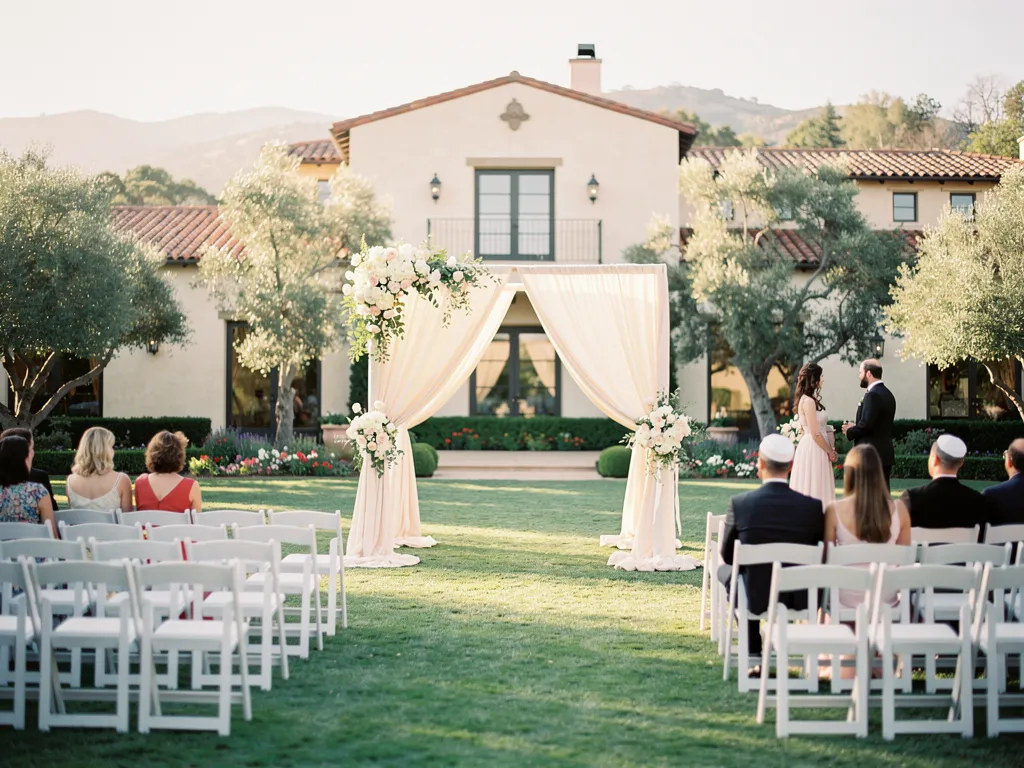
A ballroom or traditional ceremony venue often provides an obvious architectural focal point. An estate lawn or garden may not.
That openness is part of what makes an outdoor ceremony appealing, but it also means the ceremony space needs enough definition for guests to understand where their attention should naturally fall. An arch or chuppah can provide that visual anchor while still allowing the estate to remain part of the experience.
Create a Clear Visual Focal Point
The ceremony structure frames the place where the couple, officiant, and wedding party will gather. From the first guest row to the back of the seating area, it helps establish the visual center of the ceremony. That becomes particularly valuable on a broad lawn or garden where there may otherwise be several competing features in view.
The structure does not need to be large or heavily decorated to accomplish this. A restrained frame can provide just as much definition when its proportions and placement suit the space.
Work With the Property Rather Than Against It
A Montecito estate may already provide substantial visual character through gardens, mature trees, stonework, terraces, or surrounding architecture. The ceremony structure should respond to those features rather than attempting to replace them.
A simple frame may allow an existing garden or architectural detail to become part of the backdrop. In a more open setting, the structure itself may need slightly more presence to establish the ceremony area. The objective is to create enough definition for the vows while preserving what made the location appealing in the first place.
Think About the Ceremony in Photographs and From the Guest Seats
A ceremony backdrop is often evaluated from directly in front of it, but guests and photographers will experience it from many different positions. Consider how it will look from the aisle, from the side seating, and against the wider landscape. Florals, draping, and structural elements should not unintentionally block the couple or create an unbalanced view from certain rows. Thinking beyond the close-up view usually leads to a more complete ceremony composition.
Wedding Arch or Chuppah? Start With the Purpose of the Structure
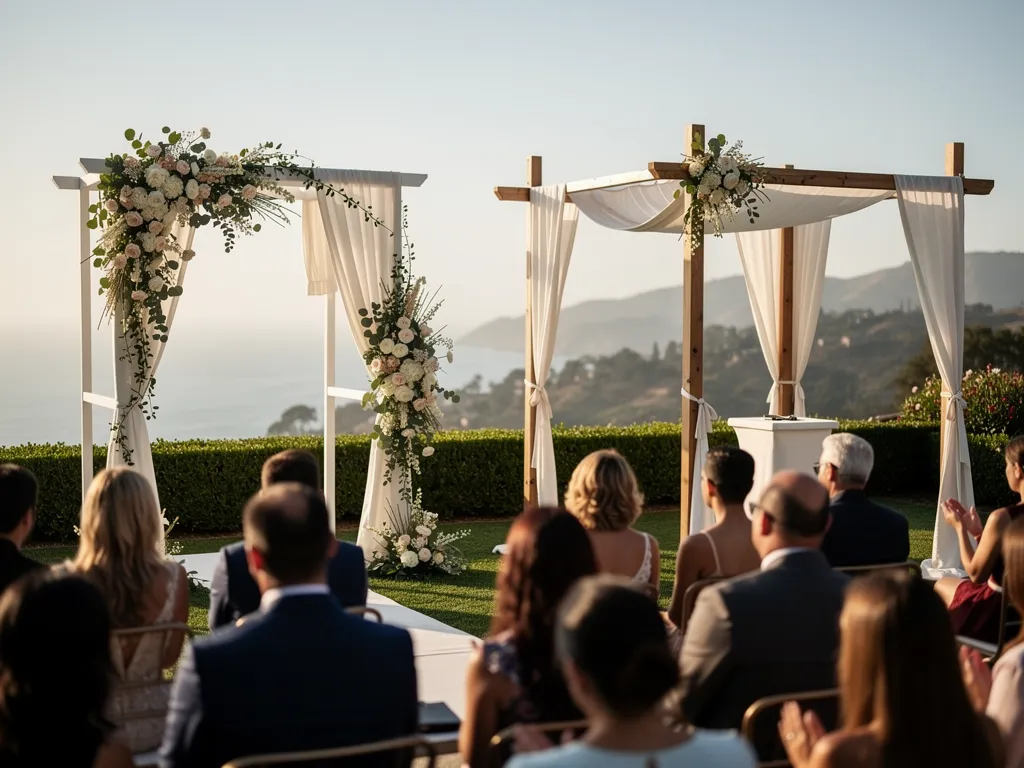
Wedding arches and chuppahs may both frame the ceremony area, but they do not serve exactly the same purpose. Understanding that distinction should come before aesthetic decisions.
When a Wedding Arch Fits the Ceremony
A wedding arch functions primarily as a visual and decorative frame. It can establish a focal point on an open lawn, define the end of the aisle, or add structure to a ceremony location that otherwise has few built-in visual boundaries.
The style can range from natural and garden-oriented to cleaner and more architectural. The right direction depends on the property, florals, event formality, and broader wedding design.
When a Chuppah Is Part of the Ceremony
A chuppah carries specific significance within Jewish wedding traditions and represents more than a decorative backdrop. Its design should therefore begin with the couple’s ceremonial requirements and traditions. The physical structure, canopy, draping, floral treatment, and surrounding design can then be coordinated around those needs. Couples may choose a restrained chuppah that allows the symbolism to remain central or incorporate florals and textiles that connect the structure to the wider wedding design.
Do Not Treat the Two as Interchangeable
Although both structures can occupy a similar physical position within the ceremony, their purposes may be different. A decorative arch can be selected primarily for its relationship to the venue and visual direction. A chuppah should first support the traditions and meaning of the ceremony. The design process can still connect either structure to the rest of the wedding, but that connection should respect the role the structure is intended to serve.
Choosing a Style That Belongs in the Estate Setting
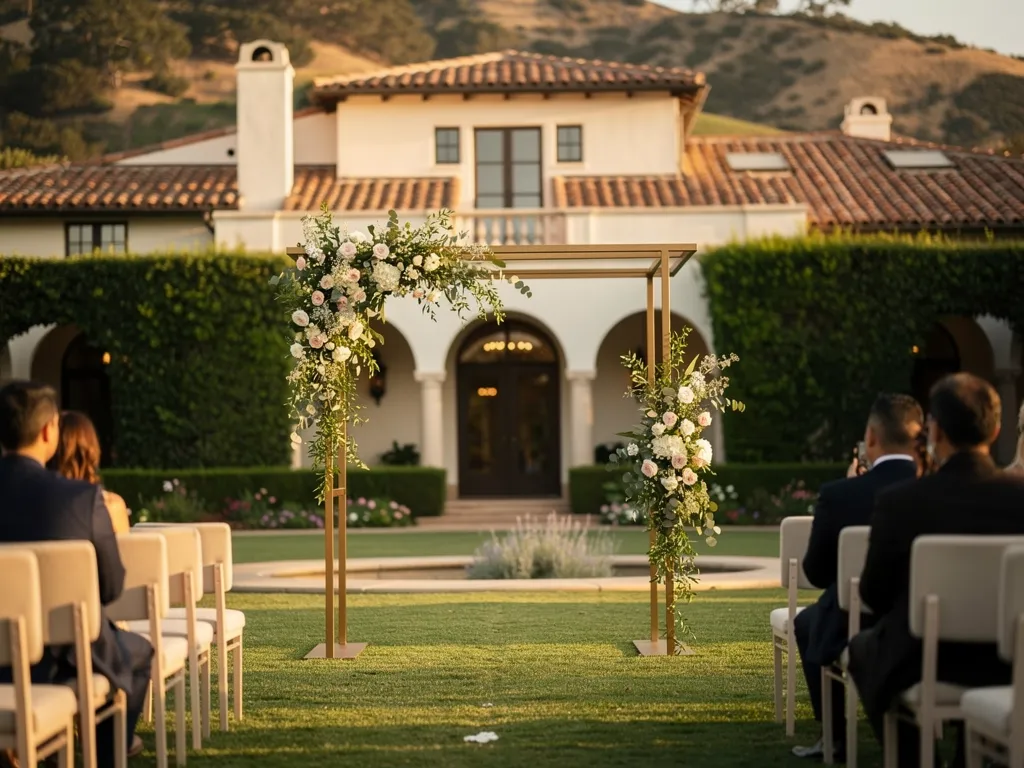
The ceremony structure should feel appropriate for the property without disappearing into it completely. Material, silhouette, scale, and ornamentation all contribute to that relationship.
Natural and Wood-Forward Structures
Wood-forward structures can work naturally in gardens, lawns, and settings where landscape plays a major role in the ceremony. Their warmth can complement greenery, exposed wood furniture, organic floral design, and other natural materials elsewhere in the event.
That does not require the overall wedding to feel rustic. A simple wood structure paired with restrained florals and elegant seating can still support a highly refined ceremony.
Cleaner or More Architectural Frames
A simpler or more architectural frame may work well when the setting already has strong geometry or when the wedding design takes a more restrained direction. Clean lines can provide contrast against softer gardens and floral arrangements while allowing the structure itself to remain visually light. This can be particularly effective when the couple wants the ceremony backdrop to feel defined without becoming the dominant decorative element.
Let the Landscape Determine How Much Visual Weight the Structure Needs
An elaborate garden may not need an equally elaborate ceremony structure. If the setting already provides layers of greenery, architectural detail, or a strong natural backdrop, a simpler frame can preserve visual balance.
An open lawn with fewer surrounding features may support a more substantial structure or fuller floral treatment. The strongest design responds to what is already present rather than adding detail simply because space is available.
Plan the Structure Around the Ceremony Backdrop
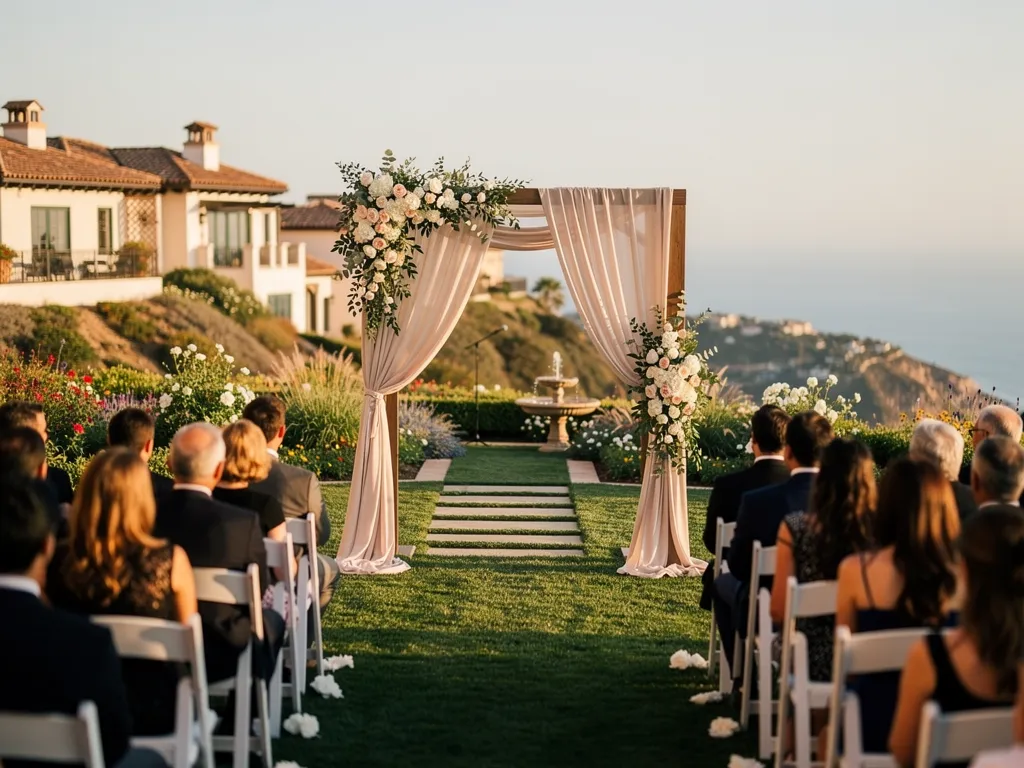
Placement determines how effectively the arch or chuppah works with the property. The question is not only where the structure physically fits, but what guests will see through and around it.
Preserve Garden and Architectural Features
A structure can frame an existing landscape feature rather than block it. Garden walls, mature trees, terraces, or architectural lines may provide a natural backdrop that becomes stronger when viewed through a carefully positioned ceremony frame. This approach helps the structure feel integrated into the estate rather than placed in front of it.
Consider Sightlines From Every Row
The couple and officiant should remain visible from the seating area without decorative elements interrupting important views. The width of the structure, floral placement, aisle alignment, and row positioning all influence those sightlines. Reviewing the ceremony from several guest perspectives can identify issues that may not be obvious when standing directly beneath the structure.
Think About Light and Time of Day
The ceremony may look different depending on when it takes place. A frame that feels subtle in bright afternoon light may become more visually prominent later in the day. Draping, florals, and material finishes can also read differently as the light changes. Considering the ceremony time alongside the design helps ensure the structure works within the atmosphere the couple wants to create.
Coordinate the Arch or Chuppah With Florals and Draping

Florals and textiles can completely change the character of a ceremony structure. The goal should be to create a clear hierarchy rather than layering every decorative idea onto the same frame.
Decide Whether the Structure or Florals Should Lead
A distinctive structure may need only a restrained floral treatment. Conversely, a simple frame can serve as the foundation for a more expressive floral installation.
Deciding which element should lead helps prevent the backdrop from becoming visually crowded. It also makes it easier to coordinate the structure with the surrounding estate rather than treating it as an isolated decorative object.
Use Draping Selectively
Fabric can soften a structure, introduce movement, or make the ceremony feel more formal. It does not need to be used automatically.
An outdoor estate setting may benefit from a cleaner structure that allows gardens and florals to remain visible, while another ceremony may use fabric to create a more defined sense of enclosure. The choice should follow the ceremony’s visual direction and any cultural or traditional requirements.
Repeat Ceremony Details Elsewhere Carefully
Materials and colors from the ceremony can reappear later in the celebration without recreating the same design. A wood tone might return in reception tables or bars. A floral color could appear in the tabletop. A textile used around the ceremony could influence linens elsewhere. These subtle repetitions help connect the event from one space to the next while allowing each part of the wedding to have its own identity.
How Ceremony Seating Should Relate to the Structure
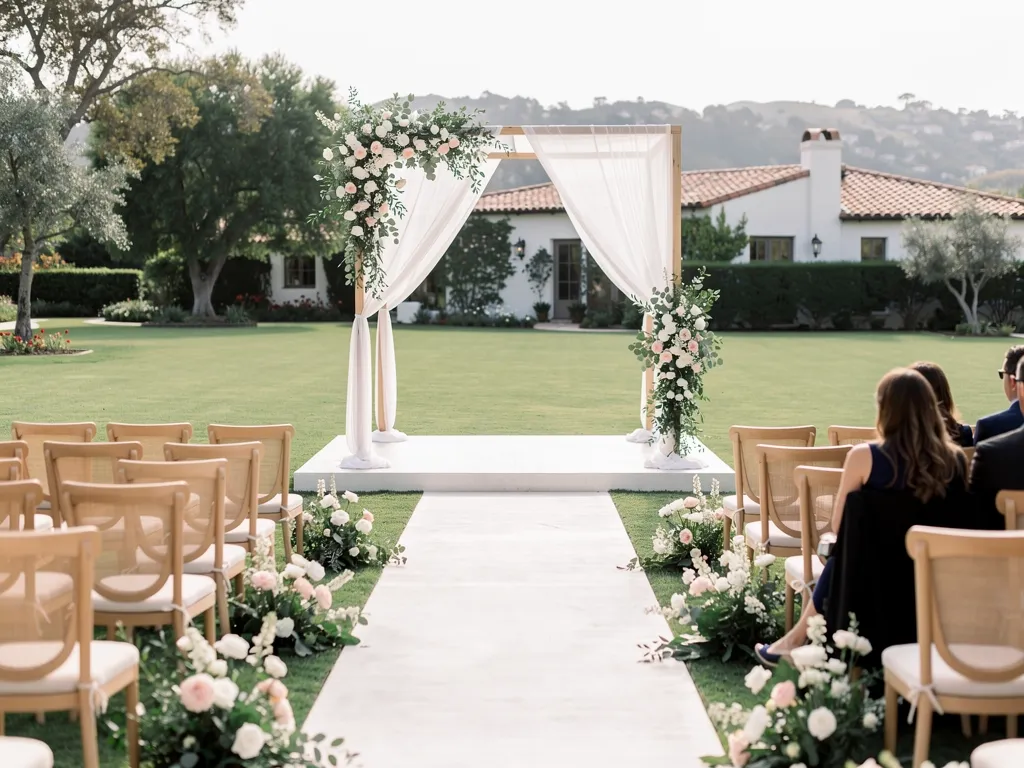
The ceremony structure and guest seating are viewed together throughout the vows. Chair placement, aisle dimensions, and seating style should therefore support the focal point rather than being planned independently.
Use the Aisle to Direct Attention
The aisle naturally draws the eye toward the ceremony structure. Its width and alignment can reinforce the relationship between the seating area and the backdrop. When the aisle, structure, and guest rows feel properly proportioned, the ceremony has a clearer visual hierarchy. The aisle should also remain functional for the processional and recessional rather than being narrowed simply to fit additional seating.
Preserve Comfortable Sightlines
Row placement should give guests an unobstructed view of the couple and officiant. That becomes particularly important when the ceremony area contains floral installations, trees, columns, or other features close to the structure. Seating should work with those elements rather than forcing guests to look around them.
Let Chair Style Support the Overall Ceremony Design
Ceremony chairs do not need to match the arch or chuppah literally. Instead, they can share a similar tone, material language, or level of formality.
A natural chair may support a garden-focused design, while a cleaner silhouette can reinforce a more restrained ceremony. The relationship should feel intentional without becoming overly coordinated.
Connect the Ceremony Design to the Reception
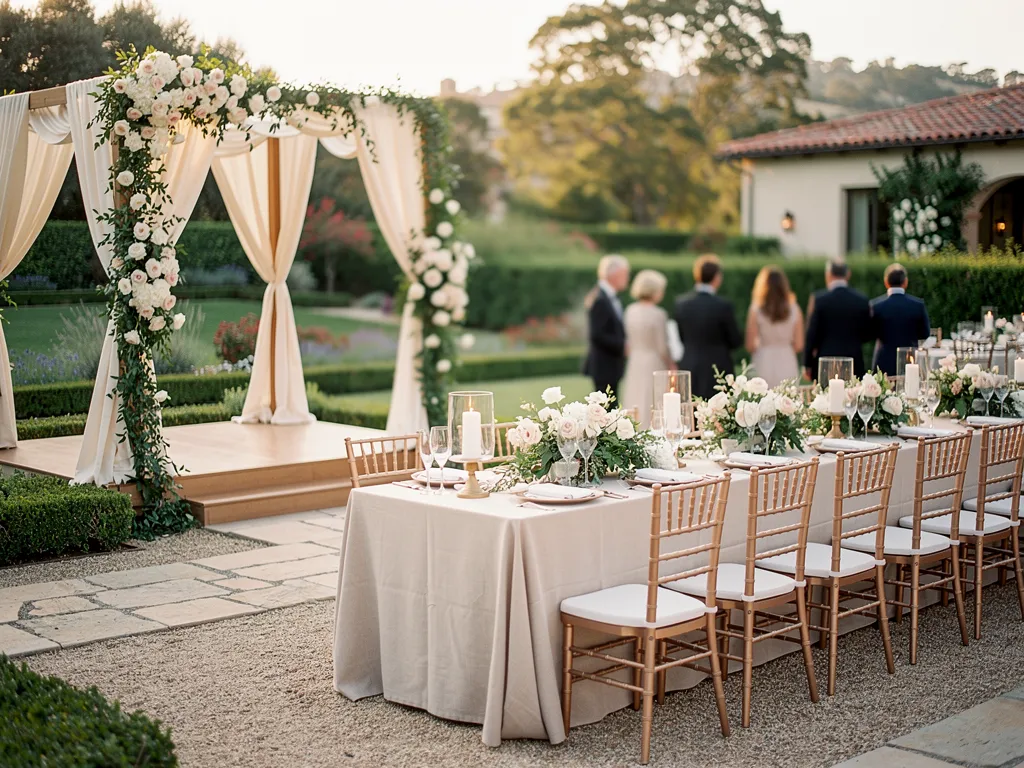
The ceremony is the beginning of the visual experience, but the reception does not need to reproduce it exactly. Selected materials or design ideas can create continuity as guests move from one part of the estate to another.
Repeat Selected Materials Rather Than the Entire Design
A small number of repeated details are usually enough. The material of the ceremony structure might influence a bar or table finish. A floral color may appear again in linens or tabletop pieces. Draping used during the ceremony could inspire a softer textile direction later in the evening. This creates continuity without making the reception feel like a copy of the ceremony.
Coordinate Ceremony Seating With Reception Furniture
The same chair style can sometimes work for both spaces, but it is not required. Ceremony seating and reception furniture perform different functions and may have different design needs. The two spaces can still feel connected through finish, material, scale, or overall level of formality. Thinking about both environments together helps prevent abrupt visual changes as guests move into the reception.
Carry the Design Language Into Other Rental Areas
Bars, lounge furniture, linens, and tabletop pieces can echo selected elements introduced at the ceremony. Again, the objective is not exact matching. A consistent design language across these categories can make the wedding feel considered from ceremony through dinner and dancing while still allowing each setting to serve its own purpose.
Planning Ceremony Rentals on an Estate Property
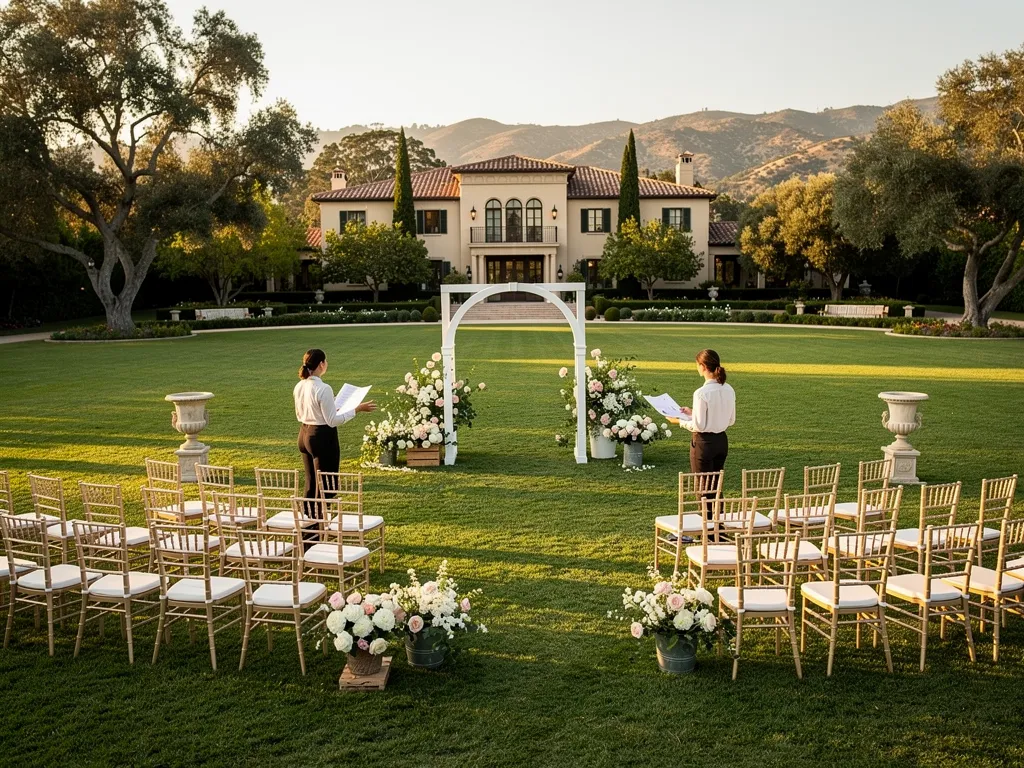
Estate ceremonies often begin with a relatively open space that needs to be transformed temporarily for the vows. That makes early coordination between the structure, seating, florals, and property particularly useful.
Start With the Ceremony Location
Identify where the ceremony will take place before choosing the structure. A lawn, terrace, courtyard, garden, or another outdoor area may each suggest different proportions and design approaches. The available width, surrounding landscape, and route of the processional should all be considered before the backdrop is finalized.
Confirm the Structure Before Final Floral Design
Florists need to understand the physical framework they are decorating. Finalizing the arch or chuppah first provides clearer dimensions and allows the floral design to be planned specifically around the selected structure. This also helps prevent the floral treatment from becoming too heavy or visually disproportionate once it is installed.
Review Installation and Access Requirements
Different structures and properties may have different installation considerations. The ceremony location, property rules, available access, and selected structure should be reviewed before the event so the setup plan reflects actual site conditions. Keeping these requirements general until the specific property and structure are known avoids making assumptions that may not apply to every estate.
How a Ceremony Zone Fits Within a Montecito Estate Layout
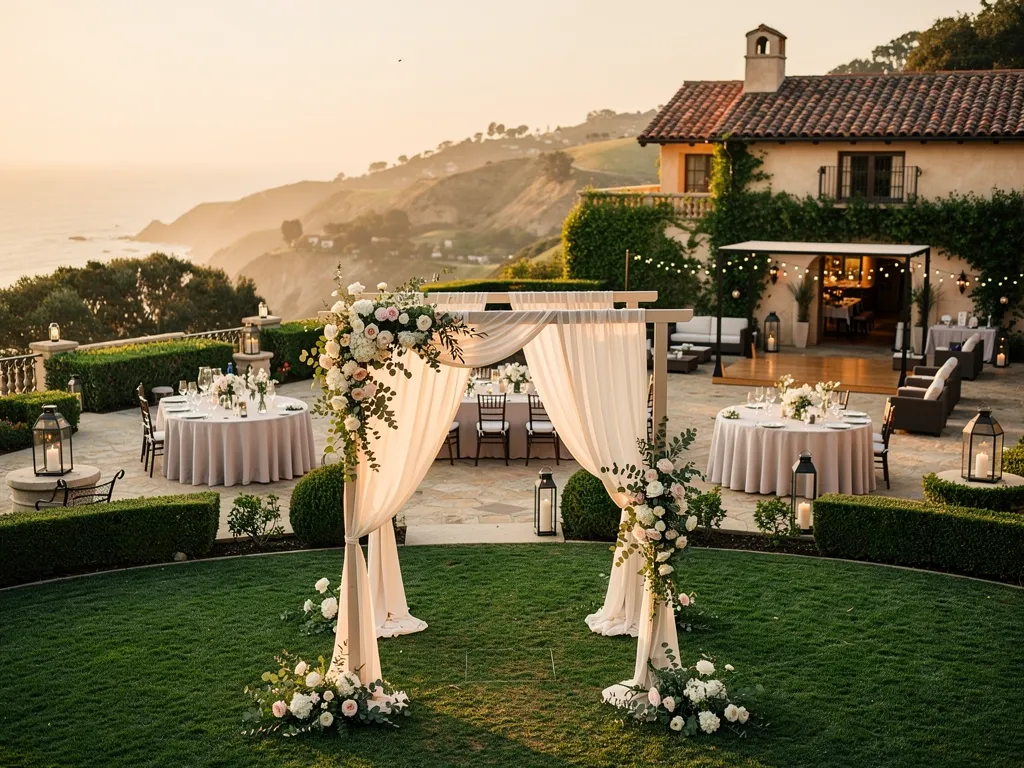
At an estate wedding, the ceremony is usually only the first of several environments guests will experience. After the vows, they may move into a garden or terrace for cocktail hour, into a dining area, and later gather around the dance floor and lounge spaces. The ceremony structure can establish the visual tone for this progression without having to define every later space.
A restrained material palette or floral direction introduced at the ceremony can return subtly throughout the property. Furniture and other rentals can then help distinguish each event phase while maintaining enough continuity that the wedding feels like one connected experience.
Thinking about that progression early also helps with physical flow. The ceremony seating, aisle, cocktail-hour route, and reception entrance should work together so guests can move through the property naturally.
Planning Ceremony Rentals With Ventura Rental
Ventura Rental Party & Events serves celebrations throughout Santa Barbara County, including Montecito, and provides ceremony structures, seating, furniture, and related event rentals that can be coordinated within the wider wedding plan.
Begin With the Property and Ceremony Style
Start with the ceremony location, approximate guest count, wedding style, and any cultural or traditional requirements that influence the structure. Those details provide a useful foundation for selecting an arch, chuppah, or related ceremony rentals.
Coordinate the Structure With Seating and Related Rentals
Review the ceremony structure alongside chairs, aisle arrangement, florals, and the wider event design. This makes it easier to create a ceremony that feels connected to the reception without requiring every rental element to match.
Confirm Installation Requirements and Timing
Once the structure and ceremony location are established, confirm relevant property access, installation considerations, and timing with the rental and planning teams. Addressing these details in advance gives the ceremony design a practical foundation as well as a visual one.
Frequently Asked Questions
What is the difference between a wedding arch and a chuppah?
A wedding arch primarily serves as a decorative ceremony frame. A chuppah has specific significance within Jewish wedding traditions and should be planned around the couple’s ceremonial requirements as well as the event design.
How should an arch style be chosen for an estate wedding?
Consider the ceremony location, surrounding architecture and landscape, floral design, level of formality, and how prominent the structure should be within the setting. The best choice should complement the property without unnecessarily competing with it.
Can florals and draping be added to a rented ceremony structure?
Depending on the structure and installation requirements, florals or draping may be incorporated into the design. These elements should be coordinated with the florist and rental team once the specific structure has been selected.
Should ceremony chairs match the arch or chuppah?
They do not need to match exactly. Chairs can complement the structure through material, finish, tone, or overall formality while still having their own visual character.
When should couples reserve ceremony rentals for a Montecito wedding?
Ceremony rentals should be considered once the venue, ceremony location, guest count, and general design direction are established. Starting early allows the structure to be coordinated with florals, seating, and the broader wedding rental plan.
Create a Ceremony That Belongs in the Setting
Successful ceremony arch rentals in Montecito are not simply about selecting an attractive structure. The arch or chuppah should support the meaning of the ceremony, provide a clear focal point, work with the estate setting, and connect naturally to the seating and wider event design.
For a decorative arch, that may mean choosing a material and silhouette that complement the landscape. For a chuppah, it begins with respecting the structure’s ceremonial role and then coordinating its physical design around the couple’s traditions.
When the structure, florals, seating, and property are considered together, the ceremony can feel defined without losing the character of the estate around it. Couples and planners can work with Ventura Rental Party & Events to coordinate ceremony structures, chairs, and related wedding rentals as part of a complete Montecito celebration.