
Picking the right dance floor makes your event more comfortable, keeps traffic moving smoothly, and gives performers safe space to shine. This guide breaks down what “dance floor size” means in real terms, why correct sizing matters for guest comfort and safety, and how to translate guest counts into square footage and common assembled dimensions. You’ll find simple thumb rules, an easy calculator-style formula, and practical examples for both low-key and high-energy receptions. We include quick reference tables that link guest counts to likely dancer numbers, a repeatable calculation with worked examples, a comparison of common rental floor types and panel sizes, plus straightforward layout and installation tips. Where helpful, we note Ventura Rental Party & Events options for readers ready to request a quote or schedule a consultation.
What Is the Ideal Dance Floor Size Based on Guest Count?
Sizing a dance floor means estimating how many guests will be dancing at once and giving each person enough room. Planners commonly expect 30–50% of guests to dance at peak times. Space guidelines run from about 4–5 sq ft per person for light movement up to 9–12 sq ft per person for active or couple-style dancing. Using those ranges gets you familiar assembled dimensions like 12×12 or 15×15 and helps you choose the number of modular panels and the best layout orientation. Below is a quick-reference chart to match guest counts with realistic dancer estimates and recommended floor sizes so you can decide faster.
Estimate how many guests are likely to hit the floor, then choose a recommended size from the table to get started.
This table converts guest counts into realistic dancer estimates and suggests modular dimensions that align with standard panel layouts. Use the lower participation rate for more formal or mixed-age events and higher percentages for energetic receptions.
How Many Guests Typically Dance at Weddings and Events?
On average, 30%–50% of guests are on the dance floor at the same time for weddings and similar celebrations. High-energy events can spike to 60–70% during peak moments. Factors that boost participation include a great band or DJ, open bar timing, culturally dance-focused guests, and scheduling the first dance early. For planning, use a conservative estimate (around 30%) for mixed-age or formal receptions and an optimistic one (45–50%) for younger, music-driven parties. Planning with a range instead of a single number helps you pick a slightly larger floor so peak moments never feel cramped.
What Are the Recommended Square Footage and Dimensions per Number of Dancers?
Convert dancer counts into floor size by applying per-person area guidelines: 4–5 sq ft for light dancing, 6–8 sq ft for casual couple dancing, and 9–12 sq ft for energetic or choreographed movement. For example, 30 dancers need roughly 120–360 sq ft depending on activity level, which corresponds to assembled dimensions like 12×10, 12×12, or 15×15. If most guests dance as pairs, think in terms of about 9 sq ft per couple. Always round up to the nearest standard panel layout to simplify installation. These quick conversions move you from an estimate to a practical floor plan you can order.
How to Calculate the Right Dance Floor Size for Your Event
Use three simple inputs: guest count, expected participation rate, and square feet per dancer — multiply them to get the needed area. The core formula is: dancers = guests × participation %; area = dancers × sq ft per dancer. That makes sizing repeatable across weddings, corporate receptions, festivals, and private parties. Add buffer space for tables, traffic lanes, and performer areas. The table below summarizes these factors and shows a short worked example so you can follow the steps.
What Formula Should You Use to Estimate Dance Floor Space?
For a quick estimate use: required area = guests × participation % × sq ft per dancer. Example: 100 guests, 35% participation, 6 sq ft per person → 100 × 0.35 × 6 = 210 sq ft, which often maps to a 15×14 or 12×18 assembled layout. When unsure, use a lower participation rate and a higher sq ft/person, then convert to standard panel counts when you order. This makes conversations with venues and installers straightforward and helps avoid surprises on the day of the event.
How Does Event Type Influence Dance Floor Size Requirements?
Event type affects both participation and comfortable space per dancer: weddings usually have higher participation (35–50%) and often need more couple-friendly room; corporate events trend lower (15–30%) and require space for networking; festivals and concerts need open, high-capacity areas with generous circulation. Private parties vary widely, so use cues like guest age, music style, and schedule to pick participation defaults. Tailor your inputs by event type so the final recommendation matches the atmosphere you want to create.
What Types of Dance Floors Are Available for Rental and Their Sizes?
Rental dance floors come as modular panels or finished-surface assemblies. Common choices include wood parquet, white or black vinyl, LED-lit panels, and portable panel systems with subfloor options for outdoor sites. Standard panel sizes scale to familiar assembled dimensions, which makes ordering straightforward. Material affects traction, appearance, and outdoor suitability, so match the floor to the venue and your event’s look. The table below summarizes typical panel sizes, common assembled dimensions, and best-use scenarios to help you choose the right style for your reception or party.
This table shows how different materials translate into panel counts and event contexts so you can balance appearance, safety, and budget when choosing a rental floor.
- Wood parquet: Classic finish with reliable traction for formal receptions.
- Vinyl (white/black): Clean, modern look that’s easy to maintain for tents and halls.
- LED: A centerpiece effect—plan for power and placement logistics.
- Portable panels: Ideal for outdoor or uneven sites when paired with a subfloor.
Ventura Rental Party & Events keeps a full inventory of flooring options across Southern California and can match floor type and assembled dimensions to your event needs. Request a catalog view or a consultation to confirm availability and exact panel counts.
What Are the Features of Portable Dance Floors and Their Size Options?
Portable dance floors use interlocking panels, typically around 2’x2′ or 24″x24″, so installers can build the surface in rows and columns to hit target sizes like 12×12, 15×15, or 20×20. Systems often include edge trim, locking hardware, and optional subfloor support for soft or sloped ground, which makes outdoor installs on grass or uneven terrain possible. Portability speeds setup and teardown but requires coordinated logistics for transport and leveling—factor crew time into your plan. When unsure, round up panel counts to ensure a clean edge and comfortable traffic flow.
How Do Different Dance Floor Materials Affect Size and Usage?
Material choice affects dancer comfort, slip resistance, and how much clearance you should leave around the active surface. Slick vinyl may need a slightly larger perimeter buffer than textured wood. Durability also varies: wood parquet handles repeated assemblies well, while vinyl is low-maintenance for heavy use. LED floors create a strong visual but usually need service access and extra clearance for wiring and control equipment. Match material to the event’s energy and the venue surface to ensure safety and the look you want.
How to Plan Your Dance Floor Layout and Placement for Optimal Use
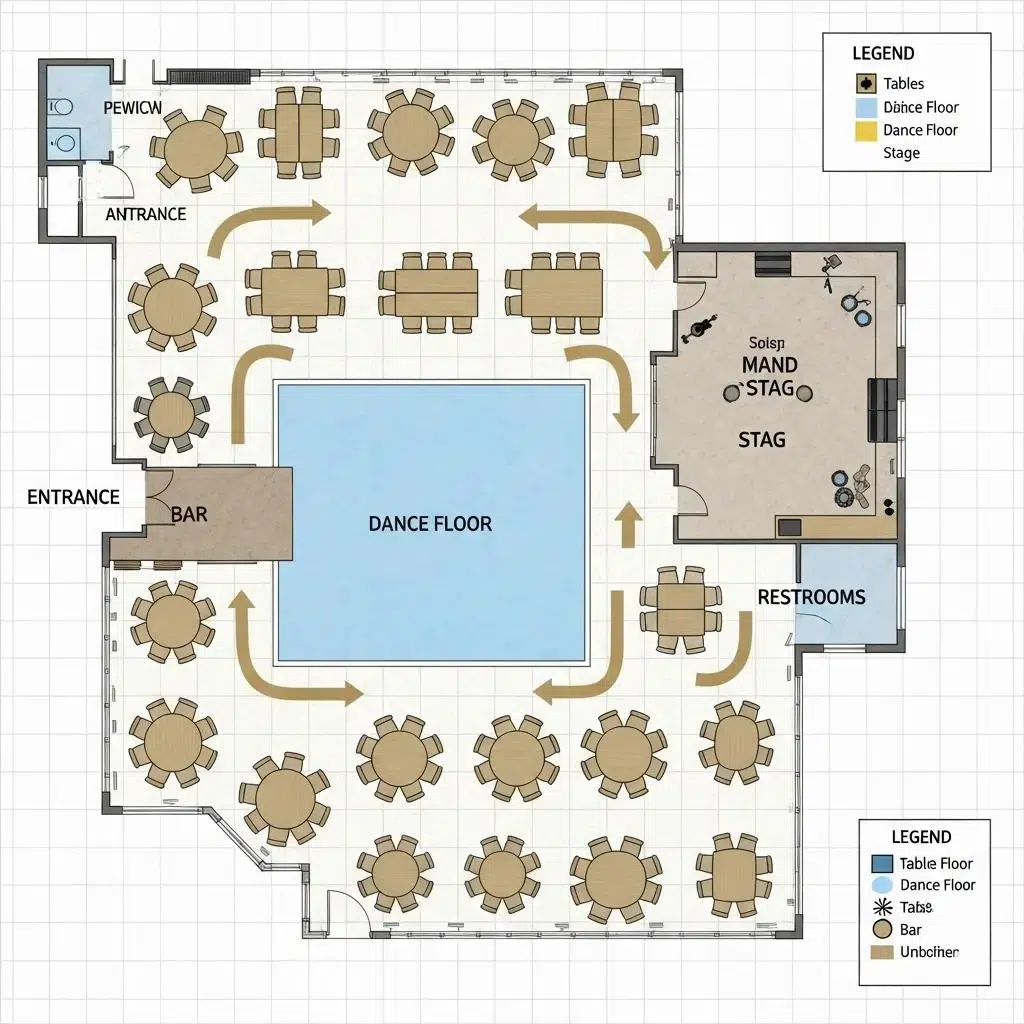
Good placement balances sightlines, guest flow, and proximity to sound while keeping emergency egress and service routes clear. A well-placed floor improves visibility and prevents dancing from interfering with dining or buffet areas. Central placement encourages guests to join the floor but needs more surrounding clearance; corner placement saves banquet space but can limit visibility and reduce participation. Factor in band or DJ position, bar lines, and buffet traffic so performers and guests aren’t competing for the same space. The checklist below outlines practical steps to plan layout and installation.
Follow this short layout checklist when planning a dance floor installation.
- Assess sightlines and traffic: Place the floor where most guests can see it without crossing key service routes.
- Coordinate with sound and staging: Keep the floor close to the band/DJ while leaving room for speakers and cables.
- Provide clearance and egress: Maintain a minimum buffer for servers and emergency access.
These steps help the dance floor support catering, seating, and entertainment rather than conflict with them.
Where Should the Dance Floor Be Located Within the Venue?
A central location makes the floor a natural focal point, encouraging guests to gather and dance while providing easy performer access. Side or corner placement preserves seating when space is tight but can feel separate from the main activity and lower participation. Raised stages work well for performances and showcases but need secure railings and clear access to avoid trip hazards and to separate performers from social dancers. Balance sightlines, seating density, and program flow so the floor integrates smoothly with the rest of your event.
What Venue and Surface Considerations Affect Dance Floor Installation?
Indoor concrete and hardwood are great bases for most floors. Grass or uneven outdoor surfaces require engineered subfloor systems to prevent bounce and keep panels level. Confirm venue access for delivery trucks, door widths, and elevator clearances since installers need room for stacked panels and tools; tight access can increase labor time and cost. Verify load-bearing capacity when the floor sits above occupied areas, and coordinate with tenting or staging vendors to align footprints and anchor points. For outdoor or sloped sites, request a professional subfloor solution to protect guests and the floor surface.
Knowing how crowds interact with structures is key to a safe, stable dance floor installation.
Crowd–Structure Interaction for Event Floor Safety
Research on floor structural dynamics focuses on comfort and practical guidance to avoid failures in short-term (resonance) and long-term (fatigue) situations. While linear behavior is well understood, complex loading from crowd motion makes it hard to predict load amplitude and frequency. Crowd movement produces dynamic loads tied to human behavior, so accurate modeling is important—especially for light, slender floors. Experience from grandstands and concert halls since the 1990s has driven work on how crowds and structures interact during events.
Crowd-structure interaction on building floors for event use, 2024
Ventura Rental Party & Events offers a complimentary design consultation to finalize dance floor placement, subfloor needs, and panel counts for Southern California events. Request a quote or a calculator-based estimate during your planning to confirm requirements and scheduling.
Frequently Asked Questions
What factors should I consider when choosing a dance floor type for my event?
Think about the venue surface, likely weather, and your event’s style. Indoors, wood parquet gives an elegant look and good traction; vinyl is versatile and easy to clean. Outdoors, portable panels with a subfloor work best on uneven ground. Also factor in durability, maintenance, and special features like LED lighting, which adds impact but needs power and planning.
How can I ensure my dance floor layout accommodates all guests comfortably?
Start by mapping guest flow and overall space. Central placement boosts visibility and engagement, but keep clear paths for servers and emergency access. Place tables, bars, and stages so they don’t create bottlenecks, and allow buffer space around the floor to prevent congestion during peak dancing.
What is the best way to calculate the buffer space needed around the dance floor?
Add at least 3–5 feet of clearance on all sides as a baseline. That gives servers and guests room to move and preserves emergency access. If nearby furniture or equipment is present, increase the buffer. When in doubt, round up your clearance to ensure comfortable circulation during busy periods.
How do I determine the right dance floor size for a corporate event compared to a wedding?
Corporate events usually see 15%–30% participation, so they need less dance space than weddings, which often reach 35%–50%. Use the formula: area = guests × participation % × sq ft per dancer and adjust per-person square footage by event type—corporate events may need extra space for mingling, while weddings often prioritize couple-friendly layouts.
What are the advantages of using LED dance floors at events?
LED floors create a striking visual centerpiece and can be programmed with colors and patterns to match your theme. They do require reliable power, careful placement, and higher rental costs. Plan wiring and control access carefully to avoid trip hazards and to ensure smooth operation.
How can I prepare for unexpected weather conditions if my event is outdoors?
Rent a dance floor with a subfloor system that stabilizes panels on uneven ground, and have a backup plan such as a tent or an indoor alternative for rain or extreme heat. Secure the floor and provide adequate drainage to prevent water buildup. Check forecasts leading up to the event and discuss contingencies with your rental provider.
Conclusion
The right dance floor size keeps guests comfortable, supports smooth traffic flow, and creates the best setting for dancing at weddings and events. By estimating participation and applying square-foot guidelines, you can design a space that handles both lively dancing and practical circulation. With thoughtful planning and the right rental resources, your event’s dance floor becomes a seamless part of the celebration. Contact Ventura Rental Party & Events to explore flooring options and get personalized help for your upcoming event.