
Hosting a backyard tent wedding in Ventura County is wonderfully personal but it takes a bit of logistical work to get it right. This guide walks you through choosing the right tent, estimating power needs, and building weather‑safe contingency plans so your day feels effortless. We cover top tent styles and sizes, reliable generator and lighting options, practical weather strategies, and rental bundles that make setup simple. By the time you finish reading, you’ll have a clear checklist to move forward with confidence.
Which Outdoor Wedding Tent Rentals Are Best for Ventura County Backyards?
Picking the right tent is one of the biggest decisions for a backyard wedding. The best tent rentals balance size, style, and durability, and many now factor in sustainability. Below are tent options well-suited to different yard sizes and guest counts.
What Tent Types and Sizes Suit Different Backyard Wedding Venues?
When choosing a tent, keep layout, guest comfort, and aesthetics in mind. These common tent types cover most backyard needs:
- Frame Tents: Flexible and unobtrusive, frame tents work on grass, patios, or uneven yards. Sizes range from about 10×10 feet to 40×100 feet, so they fit small ceremonies to large receptions.
- Pole Tents: Pole tents have a classic, formal look but require extra clearance due to their center poles. Typical sizes range from 20×20 feet to 60×120 feet, making them ideal for big guest lists.
- Sailcloth Tents: Light‑filled and visually striking, sailcloth tents let daylight filter through for a breezy feel. Common sizes are 20×30 feet to 40×100 feet.
A practical sizing rule: plan on roughly 12 square feet per guest for a seated dinner to keep everyone comfortable.
How to Choose Modular Tent Designs for Your Wedding?
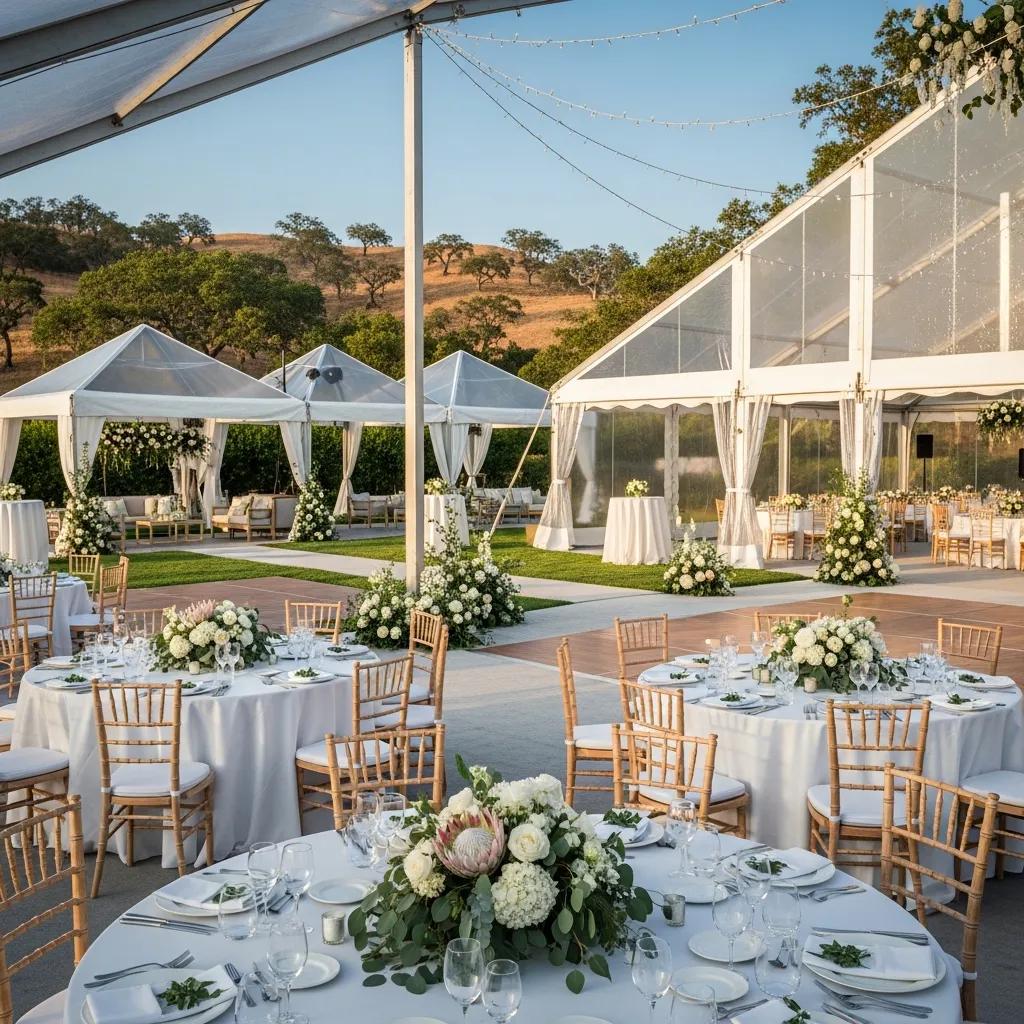
If sustainability matters to you, look for tents and suppliers that prioritize low‑impact materials and flexible setups. A few things to check:
- Sustainable Materials: Ask vendors about recyclable or longer-lasting fabrics and frames; many companies now offer greener options.
- Modular Designs: Modular systems make it easy to expand or reconfigure the footprint as your headcount or layout changes.
- Energy Efficiency: Choose LED lighting and energy‑smart fixtures to reduce power consumption during your event.
Thoughtful choices cut waste and often create a cleaner, more modern look—win‑win for the planet and your photos.
Making sustainable tent choices not only lowers environmental impact but can also elevate the overall design and guest experience.
Essential Tent & Canopy Rentals for Outdoor Weddings
For an outdoor wedding, provide a covering such as a tent or canopy to protect guests from sun or unexpected rain. Consider renting a tent that is made from recycled or sustainable materials, or one that can be reused for multiple events.
The Green Wedding Guide: Creating a Celebration That’s Elegant and Ethical, 2008
What Are the Essential Power Solutions for Backyard Weddings in Ventura County?
Power is what keeps lights, sound, catering equipment, and heating running smoothly. Planning your electricity needs early prevents last‑minute surprises.
Which Generator Rentals and Lighting Options Ensure Reliable Event Power?
For most backyard weddings, consider these generator and lighting approaches:
- Portable Generators: Good for smaller events; aim for at least 3,500 watts to cover basic lighting and audio needs.
- Standby Generators: For larger setups or critical loads, a standby unit provides higher capacity and steadier power throughout the event.
- Lighting Options: Mix string lights, LED uplights, and lanterns for atmosphere; verify each fixture’s power draw to ensure your generator can handle it.
Matching generator capacity to your lighting and sound plan keeps the celebration uninterrupted and your vendors happy.
Prioritizing reliable power sources increases resilience and reduces the chance of outages disrupting the event.
Ensuring Uninterrupted Power for Outdoor Events
In the event of failure of the main power supply, the islanded operation may improve the quality and continuity of the power supply. This can be particularly beneficial for critical loads or events where uninterrupted power is essential. In conclusion, even if the distribution network operation in islanded mode presents some challenges, it offers significant advantages in terms of reliability and resilience.
Temporary islanded operation of dispersed generation on distribution networks, R Turri, 2004
How to Integrate Outdoor Wedding Heating and Power Distribution Systems?
Comfortable temperatures and safe power distribution matter as much as pretty decor. Use these practical tips:
- Heating Options: Rent patio heaters or approved fire features to warm guests on cool evenings; always position them away from fabrics and decorations.
- Power Distribution: Run outdoor‑rated extension cords and power strips, organized and protected. Label circuits and avoid overloading a single outlet.
- Safety Considerations: Have a licensed electrician review complex setups and confirm compliance with local codes.
With a planned heating and distribution layout, guests stay comfortable and your vendors can focus on delivering a seamless experience.
How Can You Effectively Plan for Weather Contingencies at Outdoor Weddings?
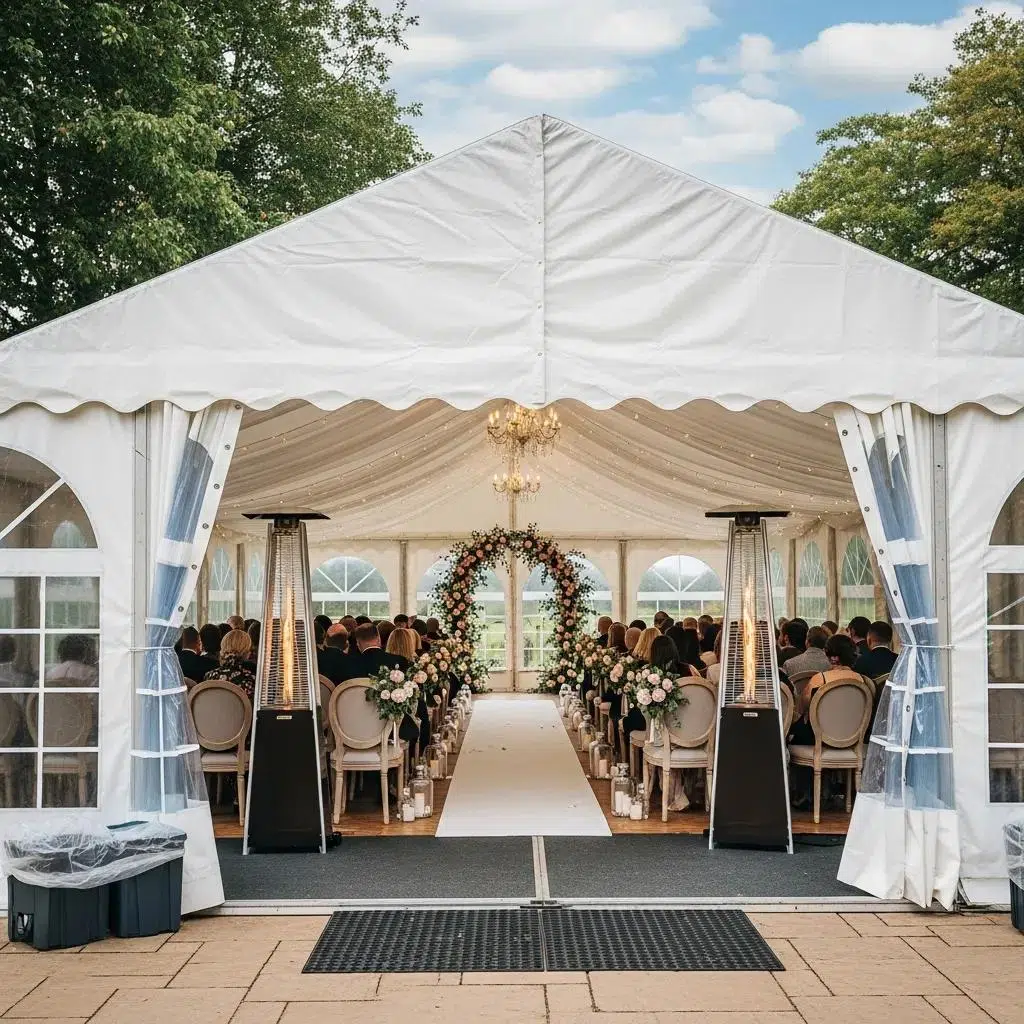
Weather is one variable you can’t control, but you can plan for it. Build contingencies that protect guests and preserve the event flow.
What Weather Planning Strategies Protect Your Backyard Tent Wedding?
Consider these steps to reduce weather‑related risk:
- Weather Forecasting: Monitor forecasts in the week before and the 48 hours leading up to the wedding to make timely adjustments.
- Backup Plans: Identify an alternative indoor site or reserve extra tents and sidewalls to shield against wind and rain.
- Communication: Share weather plans with guests and vendors so everyone knows what to expect and how the schedule may shift.
Proactive planning lowers stress and keeps the celebration on track, even if conditions change.
Considering climate and local weather patterns when planning events helps organizers build stronger, more practical contingency plans.
Outdoor Event Weather & Climate Contingency Planning
The current impact of weather and climate on event tourism in Canada’s National Capital Region found event managers aware of weather risks but varied in decision guidelines. The study highlights the need for better understanding of climate implications and stronger contingency development for outdoor events.
Implications of climate change for outdoor event planning: a case study of three special events in Canada’s
National Capital region, D Scott, 2006
How to Use Weather-Resistant Equipment and Backup Plans for Ventura County Events?
Weather‑resistant gear and smart backups can make an outdoor wedding feel dependable. Try these recommendations:
- Weather-Resistant Tents: Choose tents with reinforced seams, sturdy frames, and water‑resistant fabrics to withstand wind and rain.
- Backup Equipment: Reserve sidewalls, extra flooring, and weighted anchoring in case conditions require them.
- Local Resources: Work with local rental companies experienced in Ventura County weather—they can suggest the right gear and setup for your yard.
When you pair durable equipment with a clear backup plan, you’ll be ready for most weather surprises.
What Are the Best Setup and Logistics Tips for Seamless Backyard Tent Weddings?
Good logistics turn a backyard into a welcoming, functional venue. A clear process reduces last‑minute breakdowns and makes the day feel calm.
How to Efficiently Arrange Tent Setup and Equipment Placement?
Follow these practical steps to optimize your layout:
- Site Assessment: Walk the yard with your vendor to choose the best tent spot, taking into account sunlight, wind, slope, and delivery access.
- Equipment Placement: Place tables, service areas, and restrooms to promote smooth guest flow and easy vendor access.
- Early Planning: Schedule setup well before the ceremony to leave time for adjustments and a final walk‑through.
Planning the layout early saves time on the wedding day and helps vendors coordinate efficiently.
What Local Ventura Rental Services Assist with Event Setup and Weather Planning?
Local rental partners bring valuable regional experience. They typically offer:
- Expertise: Knowledge of Ventura County conditions and common yard layouts helps them recommend the right gear.
- Comprehensive Services: Many offer turnkey options, including delivery, setup, on‑site crew, and breakdown.
- Customer Support: Local teams can respond quickly if something changes on the day of the event.
Working with a trusted local provider shortens your planning list and adds a layer of practical support on the day.
Frequently Asked Questions
What is the best time of year to host a backyard tent wedding in Ventura County?
Spring and fall are usually the most pleasant seasons, with mild temperatures and a lower risk of rain. Summers can be hot, and winters are cooler, with occasional rain. Regardless of the season, have a backup plan so the weather won’t derail your day.
How can I ensure my backyard wedding is accessible for all guests?
Make clear, level pathways for wheelchairs and strollers, offer varied seating options, and confirm restroom accessibility. Check your tent layout for wide aisles and communicate with guests ahead of time about any special accommodations they may need.
What are some creative decoration ideas for a backyard tent wedding?
Simple, high‑impact ideas include layered string lights or fairy lights, mixed greenery and seasonal flowers, soft fabric draping, and personalized centerpieces. Small, thoughtful touches, like a photo display or custom signage, make the space feel uniquely yours.
How do I handle noise control during an outdoor wedding?
Position speakers thoughtfully, use directional sound equipment, and consider natural sound barriers like hedges or decorative screens. Talk to neighbors ahead of time and, if needed, hire a sound professional to manage volume during live music or DJ sets.
What should I include in my wedding day timeline for a backyard event?
Include setup and vendor arrival windows, ceremony time, cocktail hour, reception timing, and a realistic teardown window. Build in buffer time for hair/makeup and a private moment for the couple. A detailed timeline helps everyone stay on schedule.
Are any permits required to host a wedding in my backyard?
Possibly. Many cities require permits for temporary structures, amplified sound, and serving alcohol. Check with your local city or county office and your rental company, especially if you expect a large guest count or road/parking impacts.
Conclusion
A successful backyard tent wedding in Ventura County balances thoughtful tent choice, dependable power, and practical weather planning. Using local rental partners and clear rental bundles simplifies setup and gives you space to enjoy the day. Choose eco‑minded options where possible, and start your planning with a checklist that covers tents, power, heating, and backups, then let your vendors handle the heavy lifting.